Home > Uncategorized > Heavy-Duty Work Gloves for Construction Crews
Heavy-Duty Work Gloves for Construction Crews
17 May, 2026
By arafatshuvo509
Heavy duty work gloves for construction should be ordered by trade, not as one generic crew glove. Stock leather gloves for dry abrasion, reinforced-palm coated gloves for grip and dexterity, impact-rated gloves for demolition and pinch hazards, and insulated coated gloves for winter work. Require proper fit, task-based hazard ratings, and field samples before bulk ordering.
Buying gloves for a construction crew gets expensive when every worker receives the same pair. Framers, rebar crews, formwork teams, and demolition workers face different hand hazards. A GC buyer needs a practical order mix that protects workers without slowing them down. Start with the jobsite task, then match the glove material, coating, reinforcement, and fit to the work being done.
Which heavy-duty work gloves should a construction crew buy first?
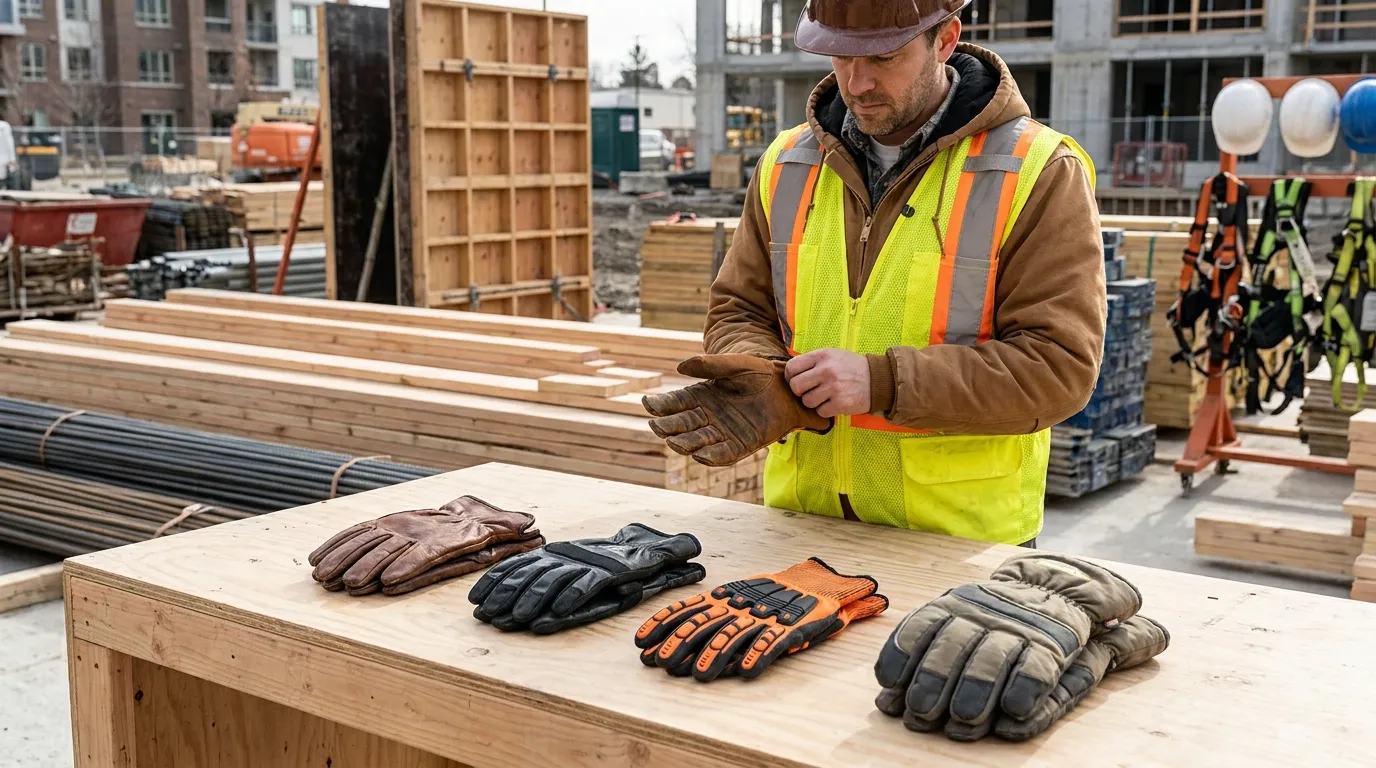
For mixed construction crews, buy three core glove types first: leather for dry abrasion, reinforced-palm coated gloves for grip and dexterity, and impact-rated gloves for pinch and demolition hazards. Add insulated coated gloves for winter outdoor work.
A single “heavy-duty” glove will not fit every construction trade well. Leather can handle dry rough material, but it may not give the best wet grip. Impact gloves can protect fingers and knuckles, but they may feel bulky for precision tasks.
OSHA requires construction PPE to fit properly and protect workers from the hazards they face. That matters in glove buying because a glove that is too loose, stiff, or oversized may not stay on the worker’s hand during real site work. The OSHA construction PPE rule gives buyers a strong reason to treat fit as part of the safety spec.
First order category
Best use
Main buyer note
Leather work gloves
Dry lumber, blocks, rough handling
Good abrasion protection, less ideal for wet grip
Reinforced-palm coated gloves
Framing, formwork, general handling
Better grip and dexterity for active crews
Impact-rated gloves
Demolition, rebar, pinch-point work
Adds back-of-hand and finger protection
Insulated coated gloves
Winter outdoor work
Must balance warmth, grip, and fit
What hazards should the glove spec cover on real construction sites?
A construction glove spec should cover abrasion, cut, puncture, impact, grip, fit, and weather exposure. OSHA requires hand protection to be selected against the hazards and task conditions workers actually face.
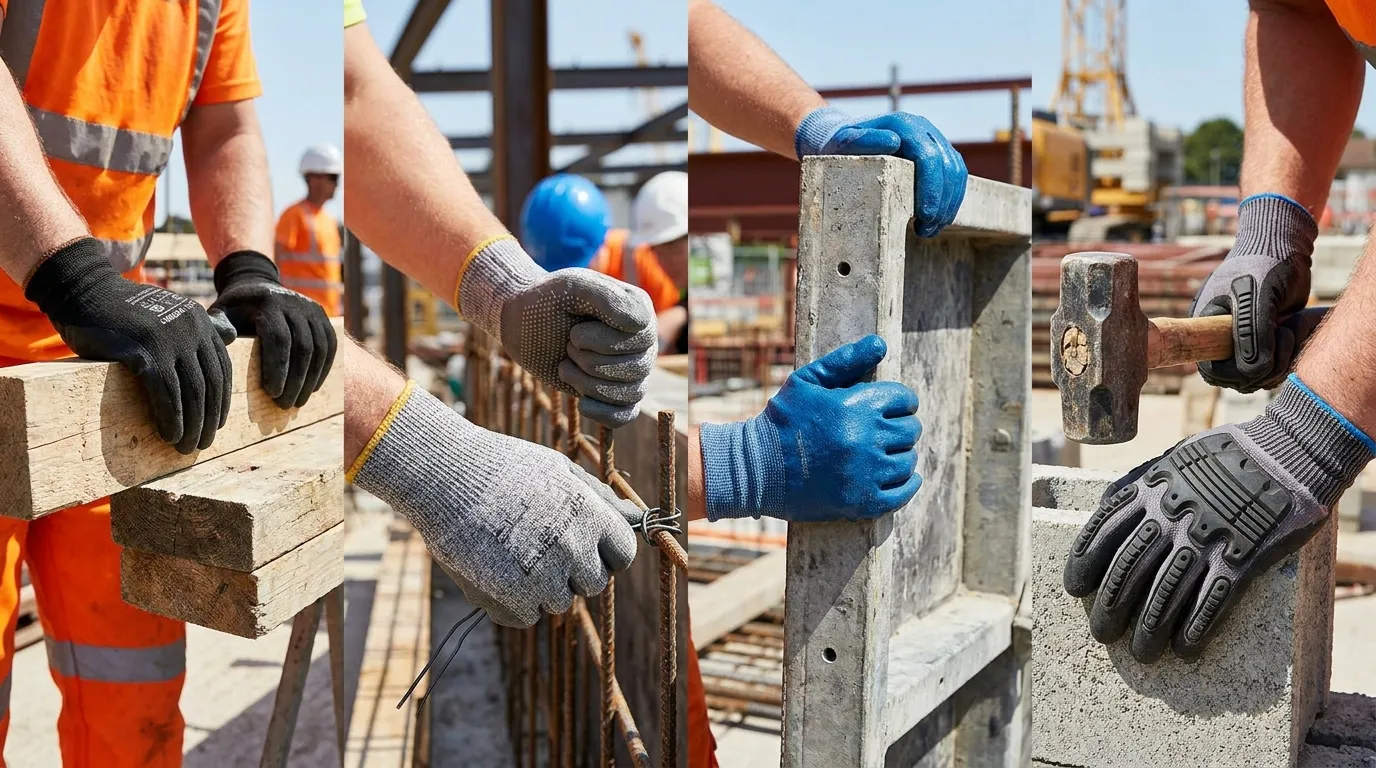
Start with the work, not the glove catalog. A framing crew handling lumber has different needs from a demolition worker sorting broken material. Rebar crews may need cut and puncture protection. Formwork teams often need wet grip, abrasion resistance, and enough dexterity to keep working fast.
The OSHA hand protection standard says hand protection should be selected based on hazards, task conditions, duration, and glove performance. For construction buyers, that means the purchase request should list jobsite hazards clearly.
Abrasion from lumber, blocks, forms, and rough materials
Cut hazards from rebar, wire, metal edges, and debris
Puncture risks from nails, tie wire, splinters, and broken materials
Impact or pinch hazards from tools, panels, demolition, and handling
Wet, oily, muddy, cold, or concrete-adjacent work conditions
Proper fit across the full crew size range
For deeper cut protection planning, hand off the full rating discussion to the cut resistant glove ratings guide instead of overloading this construction buying article.
Leather, coated, or impact-rated: which glove type fits each job?
Leather is best for dry rough handling, reinforced-palm coated gloves are better when grip and dexterity matter, and impact-rated gloves are the safer choice around pinch, crush, and demolition hazards.
Leather is not always the best heavy-duty construction glove. It works well for dry abrasion and rough handling, but coated or cut-resistant gloves are safer when wet grip, rebar, wire, or oily handling is involved. The best choice depends on the trade’s daily movement, not the word “heavy-duty” on the product page.
Buyers should also check performance language, not just material names. ANSI/ISEA 105 is used for hand protection classifications such as cut, puncture, and abrasion resistance, and ANSI/ISEA 138 covers impact-resistant glove performance levels through back-of-hand impact testing. Use those references when a job requires rated protection.
Glove type
Best construction use
Watch out for
Leather work gloves
Dry lumber, masonry, rough handling
Can lose grip in wet or oily work
Reinforced-palm coated gloves
Framing, formwork, general handling
Coating must match wet, dry, or oily conditions
Impact-rated gloves
Demolition, rebar, pinch-point work
Extra protection may reduce dexterity
Cut-resistant coated gloves
Rebar, wire, metal edges, debris
Cut rating should match the real hazard
When leather makes sense
Choose leather when crews handle dry lumber, block, plywood, pallets, and rough surfaces. Cowhide often feels durable for abrasion-heavy work, and goatskin may feel more flexible. For a fuller material choice, send readers to the leather glove comparison.
When coated gloves make sense
Choose coated gloves when crews need grip and finger movement. Sandy nitrile, latex, or other coated palms can help with panels, tools, and wet materials. The coating should match site conditions because a dry-grip coating may not perform the same in mud, water, or oil.
When impact-rated gloves make sense
Impact-rated gloves are worth the extra bulk for demolition and pinch-point work. They are not the best default for every framing task if they reduce dexterity and workers stop wearing them. Use them where back-of-hand, knuckle, and finger impact protection matter.
What should each trade receive in the glove order?
A GC should order gloves by trade group and hazard, not by one crew-wide label. The table below gives a practical SKU type recommendation for mixed construction crews.
Trade or crew
Main hazards
Recommended SKU type
Useful features
Avoid
Winter variant
Framing crew
Lumber abrasion, nails, tools, fasteners
Reinforced-palm coated glove or flexible leather glove
Secure grip, thumb reinforcement, good dexterity
Bulky impact gloves for all framing tasks
Insulated coated glove with flexible palm
Rebar crew
Cut, puncture, wire, pinch points
Cut-resistant coated glove or cut plus impact glove
Reinforced thumb crotch, puncture support, high grip
Thin general-purpose gloves
Insulated cut-resistant coated glove
Formwork crew
Wet panels, abrasion, concrete-adjacent handling
Sandy nitrile or latex-coated reinforced palm glove
Wet grip, abrasion resistance, snug wrist
Smooth coating with poor wet grip
Waterproof or water-resistant insulated coated glove
Demolition crew
Debris, impact, broken material, tools
Impact-rated glove with cut and puncture support
TPR back-of-hand protection, reinforced palm
Plain leather as the only protection
Insulated impact-rated glove
General labor
Mixed handling, cleanup, loading
Coated general-purpose glove with abrasion resistance
Good fit, grip, low fatigue
Cheapest glove with weak coating
Thermal coated work glove
Welding or hot work crew
Sparks, heat, rough handling
Welding glove option
Heat protection, leather shell, longer cuff
Standard coated gloves near heat
Task-specific winter welding glove if needed
A framing crew may not need the same protection as a demolition crew. For example, framers handling lumber, sheathing, nailers, and fasteners usually need grip, abrasion resistance, and finger movement. A flexible reinforced-palm coated glove often makes more sense than a bulky impact glove.
Rebar crews need a stronger spec. Tie wire, steel edges, and handling movement can create cut and puncture exposure. A cut-resistant coated glove with thumb-crotch reinforcement is a better base choice, and impact protection should be added when pinch hazards are common.
For hot work crews, do not treat a normal construction glove as heat protection. Link the buyer to dedicated welding glove options when welding, sparks, or higher heat exposure appears in the job scope.
What winter variant should a GC stock for outdoor crews?
For winter construction, stock insulated coated gloves with wet grip for general crews and impact-rated winter gloves for demolition, rebar, and equipment-adjacent work. Warmth should not come at the cost of grip or proper fit.
Cold-weather glove buying often goes wrong when insulation becomes the only goal. A glove can feel warm during a short test and still fail on site if it becomes stiff, slippery, or too bulky. Winter gloves still need grip, finger control, and the right size range.
OSHA’s 2024 construction PPE update, effective January 13, 2025, reinforces the need for properly fitting PPE. That matters in winter because oversized insulated gloves can reduce control around tools, ladders, panels, and equipment.
Winter site condition
Better glove choice
Why it fits
Cold and dry framing
Insulated coated glove
Keeps grip and movement for lumber handling
Cold and wet formwork
Water-resistant insulated coated glove
Helps with wet panels and muddy work
Cold demolition
Insulated impact-rated glove
Adds warmth and back-of-hand protection
Foremen using phones or tablets
Touchscreen winter glove
Reduces glove removal in cold weather
Rebar in cold weather
Insulated cut-resistant coated glove
Balances warmth with cut and grip needs
Some crews also need device access in cold weather. For foremen, site supervisors, and equipment-adjacent workers, touchscreen winter gloves can reduce the habit of removing gloves to use a phone or tablet.
What specs should be written into the purchase request?
A construction glove purchase request should specify hazard ratings, material, palm coating, reinforcement zones, cuff style, liner, size range, winter option, and sample trial requirements. Without those details, suppliers may quote gloves that look similar but perform differently.
A clean purchase request saves time because it tells the supplier what the glove must do. “Heavy-duty construction glove” is too broad. “Reinforced-palm nitrile coated glove for wet formwork handling with size range and sample trial” gives the supplier a real target.
Main trade or task: framing, rebar, formwork, demolition, general labor, winter
Main hazards: abrasion, cut, puncture, impact, wet grip, cold, heat
Material or shell: leather, HPPE blend, knit liner, insulated liner
Palm coating: nitrile, latex, PU, PVC, or task-specific coating
Reinforcement: palm, thumb crotch, fingertips, knuckles, TPR back-of-hand
Cuff style: knit wrist, safety cuff, gauntlet, longer cuff for special work
Size range: enough sizes for proper fit across the crew
Test request: samples for field trial before bulk purchase
This is also where a buyer can mention electronics-sensitive work if it exists on the project. That is not the normal construction glove path, so send those readers to the ESD glove guide instead of mixing ESD requirements into a general construction order.
How should crews test gloves before a bulk order?
A GC should test 2 to 3 glove samples per trade before placing a large order. The goal is simple: find the glove workers will keep wearing after several real shifts.
NMSafety’s buyer guidance supports trial testing because gloves only work when workers actually wear them. A glove can pass a catalog review and still fail the site if it slips, tears early, traps sweat, or makes tool handling awkward.
Test item
What to check
Score 1 to 5
Pass signal
Grip
Dry, wet, muddy, or oily handling
Workers control tools and materials
Dexterity
Fasteners, wire, panels, tools
Workers do not remove gloves for normal tasks
Comfort
Heat, sweat, stiffness, lining
Crew can wear gloves for full shifts
Durability
Palm wear, seams, coating loss
No early failure in the first week
Worker compliance
Actual glove use
Workers keep the glove on
Fit
Finger length, palm fit, cuff security
Glove stays secure without squeezing
Trade feedback
Crew comments by task
Same issue is not repeated by multiple workers
For example, give one framing team a flexible reinforced-palm coated glove and one leather glove for the same week. If the coated glove gives better grip and workers keep it on longer, that is a stronger buying signal than catalog thickness alone.
When should heavy-duty construction gloves be replaced?
Replace construction gloves when grip, coating, leather, padding, or insulation no longer performs. A glove that looks intact but has lost wet grip, palm reinforcement, or impact padding should not stay in rotation.
Replacement should be based on performance, not only appearance. A coated glove with a smooth, worn palm can fail even if it has no visible hole. A leather glove that becomes stiff, cracked, or slick may no longer give safe control.
Holes, tears, open seams, or exposed liner
Coating loss on the palm or fingertips
Leather that is stiff, cracked, slick, or oil-soaked
Torn TPR, missing padding, or damaged impact zones
Wet or compressed insulation in winter gloves
Grip loss during tool, panel, or material handling
Worker reports of rubbing, slipping, or poor fit
Track replacement separately by trade. Demolition and rebar crews may wear through gloves faster than general labor teams. Winter gloves also need separate checks because insulation can fail before the outer shell looks fully damaged.
What to Do Next
Start with the trade-to-glove matrix, then request samples for the highest-risk crews first. For most mixed sites, that means framing, rebar, formwork, demolition, and winter outdoor workers. Do not approve a bulk order until the glove passes a short field trial.
The best heavy duty work gloves for construction are the ones that match the task, fit the worker, and survive real site use. Build the order around hazards first, then refine by material, coating, reinforcement, and season.
Frequently Asked Questions
What are the best gloves for heavy duty use?
The best heavy duty gloves depend on the task. Leather works well for dry abrasion, coated gloves help with grip and dexterity, and impact-rated gloves are better for demolition, pinch points, and tool impact.
What materials are heavy duty gloves made of?
Heavy duty gloves may use leather, HPPE, Kevlar-style fibers, cotton blends, nitrile, latex, PU, PVC, TPR padding, or insulated liners. The material should match the hazard, grip need, and weather condition.
Are heavy duty gloves reusable?
Most heavy duty construction gloves are reusable if the coating, stitching, leather, liner, and grip remain in good condition. Replace them when protection is damaged or performance drops.
What gloves should I wear for winter construction?
Winter construction crews should use insulated gloves that still provide wet grip, flexibility, and proper sizing. For demolition, rebar, or equipment work, choose an insulated impact-rated or cut-resistant option.
Can I use heavy duty gloves for chemical handling?
Use heavy duty gloves for chemical handling only when the glove is specifically rated for the chemical exposure. General leather or abrasion gloves should not be treated as chemical-resistant gloves.
What are the different types of heavy duty work gloves for construction workers?
The main construction types are leather gloves, coated knit gloves, cut-resistant gloves, impact-rated gloves, winter work gloves, and specialty welding or chemical gloves. A GC should stock by task, not by label alone.