Home > BLOG > Industry Blog > Best Nitrile Coated Gloves Manufacturers In China: B2B Sourcing Guide
Best Nitrile Coated Gloves Manufacturers In China: B2B Sourcing Guide
20 Jul, 2026
By hqt
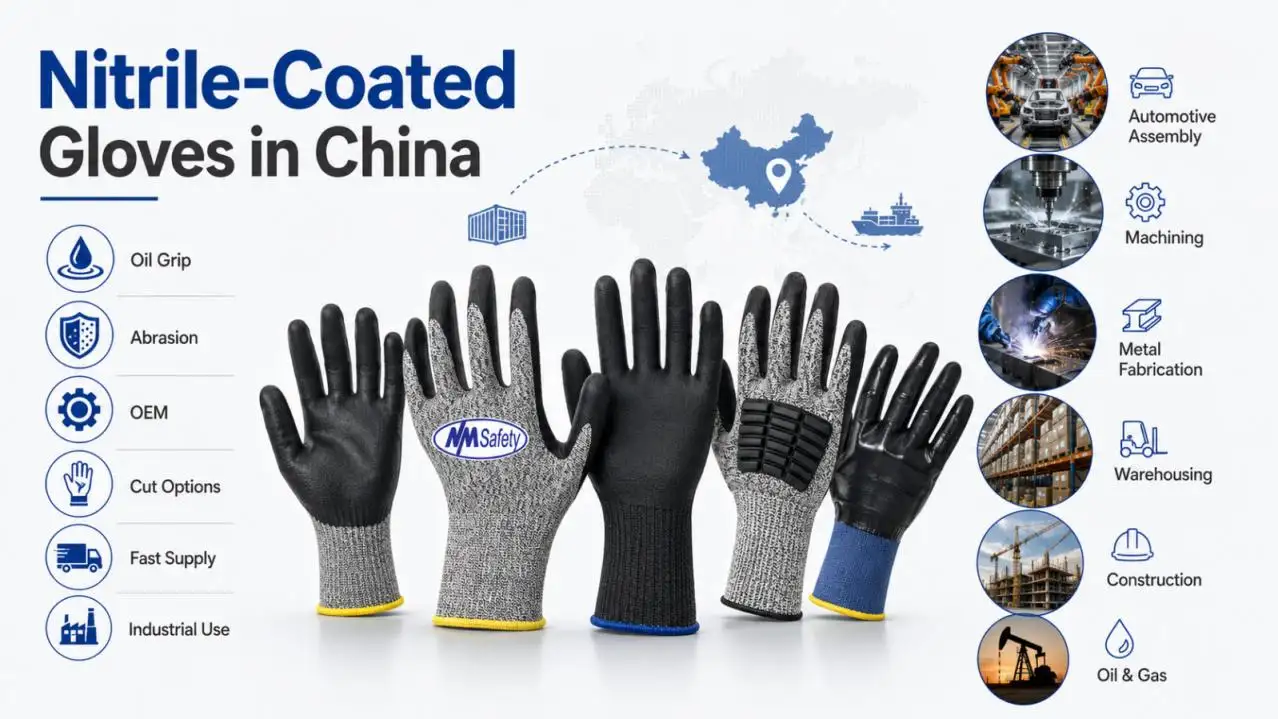
Nitrile-coated gloves are designed for industrial safety with improvement in grip, protection against abrasions and oils, and increased protection for hands. Use is prevalent in the assembly of vehicles, machining, metal fabrication, glass safekeeping, and warehousing and in the construction, mining, maintenance, and oil industries.
It is estimated that the global market for nitrile-coated safety gloves will be USD 4.22 billion in 2025 and valued at USD 6.58 billion in 2032 with a compound annual growth rate of 6.8%.
China remains a major global sourcing base because it combines seamless knitting, coating formulation, dipping, curing, testing, packaging, and export services within established manufacturing clusters. This guide compares the best nitrile-coated glove manufacturers in China according to production scale, coating technology, certification support, customization, and delivery capability.
China's Nitrile-Coated Glove Manufacturing Industry
Major production clusters are located in Shandong, Jiangsu, Zhejiang, and Guangdong. These regions support a complete industrial chain covering:
• Technical yarn preparation and seamless liner knitting
• Nitrile compound formulation and dipping
• Smooth, foam, microfoam, and sandy coating processes
• Printing, heat transfer, inspection, and packaging
• Export documentation and private-label services
China's hand-protection market reportedly reached RMB 39.14 billion in 2024, accounting for approximately 35.6% of the domestic occupational-protection market.
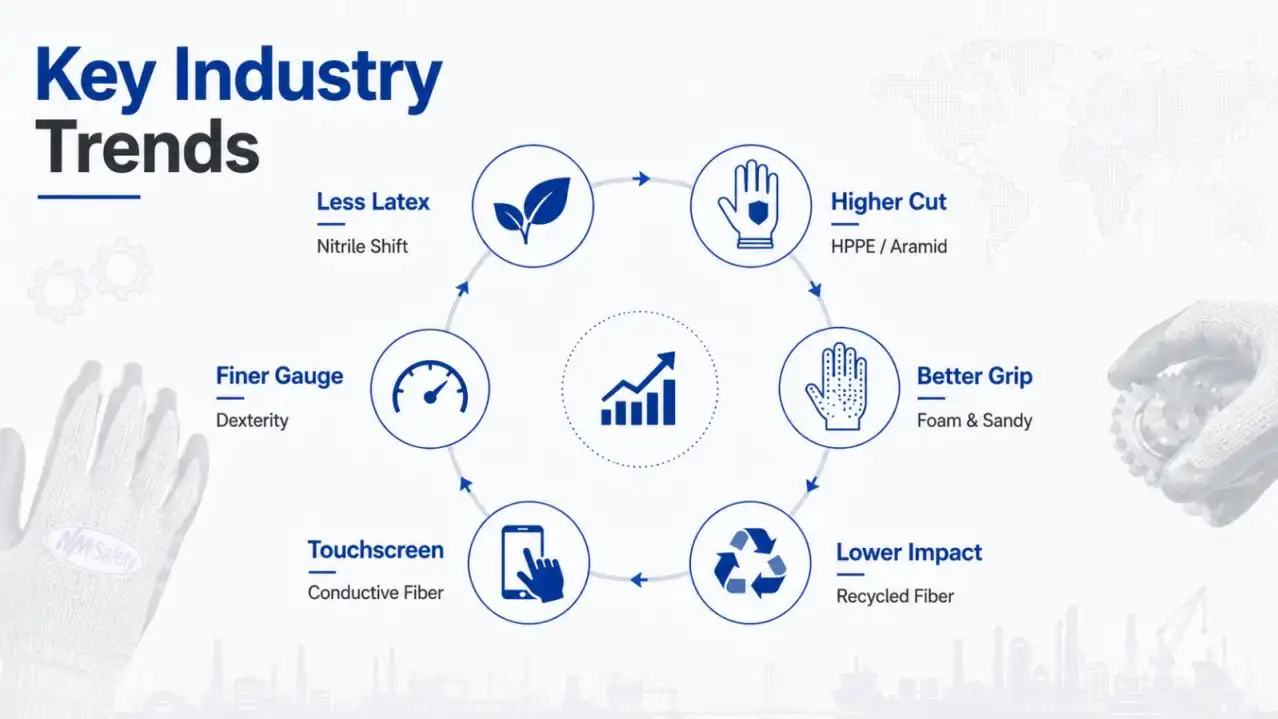
Key Industry Trends
China's PPE manufacturing is moving from basic volume production toward performance-driven industrial hand protection.
Key trends comprise:
• Reduced latex usage: By use of nitrile coatings, the number of gloves that contain natural latex is reduced.
• Increased cut protection: Glove designs incorporating nitrile coatings and HPPE, aramid, glass, steel fibers, or combinations thereof, continue to grow.
• Better grip: Nitrile coatings in a microfoam or sandy form provide a superior grip in dry, wet, or even oily conditions.
• Increased design: The Use of a higher gauge liner prevents gloves from becoming too bulky and allows for greater fingertip control.
• More glove designs allow for the use of touch screen devices: The use of conductive fibers in glove design allows for the use of touch screen devices.
• Reduced environmental impact: Use of recycled fibers and coatings with a longer life will reduce glove use per person.
Best Nitrile-Coated Glove Manufacturers in China: A Comparison
The following comparison is based on publicly available company information. Buyers should verify factory capacity, certificates, and test reports before placing an order.
Manufacturer
Manufacturing scale
Main capabilities
Buyer profile
Shandong Xingyu Gloves
Established in 1992; large production facilities and broad product range
Nitrile, latex, PU and PVC coatings
Large distributors and high-volume procurement programs
NMSafety
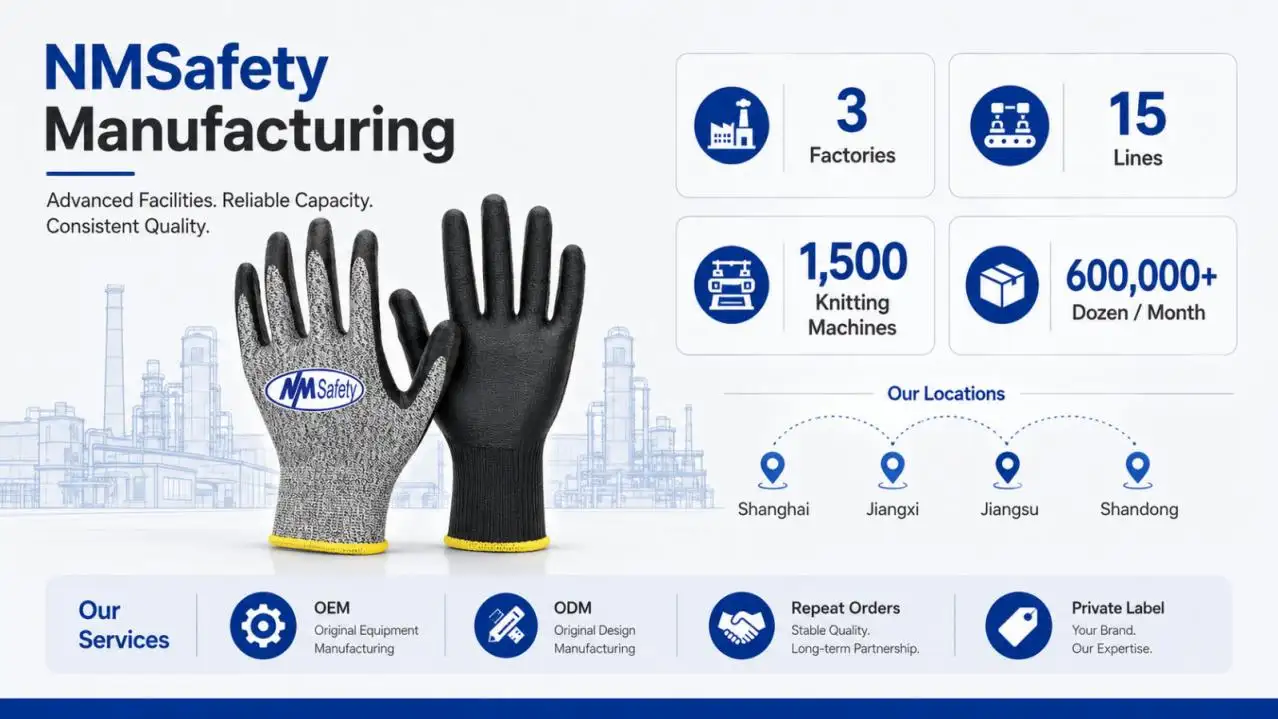
Established in 1998; three factories, 15 production lines and 1,500 knitting machines
Microfoam, sandy, double-dipped and fully coated nitrile gloves
PPE brands, importers and recurring wholesale buyers
Qingdao Snell Protective Products
Factories in major glove-manufacturing regions
Cut-resistant, impact-resistant and sandy nitrile gloves
Industrial and impact-protection markets
AIBON Safety
Approximately 15 years of industry experience
Household, chemical-resistant, disposable and coated gloves
General glove importers and OEM buyers
SONICE Safety Products
Established around 2010
Foam nitrile, sandy nitrile and TPR impact gloves
Construction, logistics and industrial distributors
Huizhou Anboson Technology
Focused mainly on disposable glove products
Examination and heavy-duty disposable nitrile gloves
Buyers should verify reusable coated-glove capability
Comparison by Purchasing Criteria
Evaluation factor
What buyers should verify
Production scale
Factory location, active lines, knitting capacity and monthly output
Coating technology
Smooth, foam, microfoam, sandy, double-dipped or full coating
Protection performance
EN 388, ISO 13997 and ANSI/ISEA 105 test results
Customization
Logo, liner color, coating color, sizing and packaging
Quality control
Incoming material inspection, in-process checks and batch testing
Delivery reliability
MOQ, production lead time, capacity planning and shipment history
Price
Material composition, coating coverage, glove weight and protection level
Standard nitrile-coated gloves may fall within an indicative FOB range of USD 0.45–1.10 per pair. High-cut, reinforced, double-coated, winter, chemical-resistant, or impact-protection gloves are normally priced higher.
NMSafety Nitrile Glove Manufacturing Capabilities
Among the best nitrile-coated glove manufacturers in China, NMSafety offers a broad combination of manufacturing scale, coating processes, cut-protection levels, and OEM/ODM support.
Production Capabilities
NMSafety was established in 1998 and is based in Shanghai. NMSafety also has production sites in Jiangxi, Jiangsu, and Shandong.
These resources sustain high volume and repeat orders across multiple categories of gloves.
Nitrile Coating Technologies
NMSafety has developed a wide range of nitrile gloves with different coating structures:
• Microfoam nitrile: Breathable and flexible with an oil gripping.
• Sandy nitrile: Textured for handling in wet, oily and abrasive conditions.
• Full nitrile coating: Coverage for exposure to oil, dirt and light saturation.
• Double-dipped nitrile: Protection and enhanced durability for harsh conditions.
• Nitrile dot: reinforced grip and wear protection.
Cut-Protection Range
NMSafety combines nitrile coatings with a variety of technical liners, such as:
• Nylon
• HPPE
• Glass fiber
• Stainless-steel fiber
• Aramid
• Recycled polyester
Gloves in this range provide protection up to ANSI cut levels A2-A8 and are suitable for handling light components, sheet metal, glass, and heavy industrial work.
OEM and ODM Services
Customizations include:
• Logos via printing or heat transfer
• Color choices for liners and coatings
• Custom (private) labels
• Adjustments along the size range
• Coating and liner modifications
• Carton and POS display adaptations
Application-Based Glove Selection
Industry / Application
Recommended Glove Construction
Main Requirements
Automotive & Machining
Thin microfoam nitrile palm coating
Dexterity, oil grip, abrasion resistance
Metal & Glass Handling
Cut‑resistant liner with sandy or foam nitrile coating
Verified cut level, secure grip
Mining & Heavy Industry
Full or double‑coated nitrile
Oil resistance, durability, liquid coverage
Construction & Demolition
Sandy nitrile with optional TPR (Thermoplastic Rubber) protection
• Specific test reports for EN 388 or ANSI/ISEA 105
• Cut/abraded/punctured/impacted levels verified
• Coatings suitable for dry, wet, oily, or chemical contexts
• Samples that match production
• Minimum order quantity (MOQ) and price; size and packing provisions
• Standards for inspection of batches, tolerances for defects
• Time and reliability for delivery
In Closing
Choosing among the many nitrile-coated glove manufacturers in China involves looking beyond unit price. Protection levels within certificates, coating performance, batch consistency, customization, and reliability of delivery are the other factors needed before approval.
For matters concerning your target application, specifications, standards, customization, minimum order quantity, and timelines for production, please reach out to NMSafety directly.
FAQs
Q1. What factors affect the cost of nitrile-coated gloves?
Costs are based on a number of variables including the type of liner, gauge, nitrile coating type, coverage, thickness, weight, cut level, layering, impact protection, box packing, order quantity, and overall customization of the gloves.
Q2. What are the typical uses of nitrile-coated gloves?
Typical uses include assembly, machining, and fabrication involving metals and glass, as well as construction, warehousing, mining, maintenance, and activities related to the oil industry.
Q3. What is the difference between foam and sandy nitrile coatings?
Foam and microfoam coatings are used for a soft, flexible coating for a breathable foam layer that aids grip for precision handling. Sandy nitrile would be a coarse, tougher coating that aids grip, particularly in wet, oily, or abrasive situations.
Q4. What certifications should a buyer ask for?
Buyers should ask for test reports for products as they are specific to EN 388, ISO 13997, or ANSI / ISEA 105. ISO 9001 would support the buyer in assessing the factory management system, but it would not be a substitute for the product performance test.
Q5. How should buyers determine the appropriate cut-resistance level?
Buyers should assess the specific risk in the work area and select gloves that are suitable for that risk. For example, assembly tasks may require a lower cut-resistance level, whereas fabrication and handling of materials with a higher cut level may require a higher cut-resistance level.