Home > Uncategorized > How to Choose Work Gloves for Oil Handling Jobs
How to Choose Work Gloves for Oil Handling Jobs
11 May, 2026
By arafatshuvo509
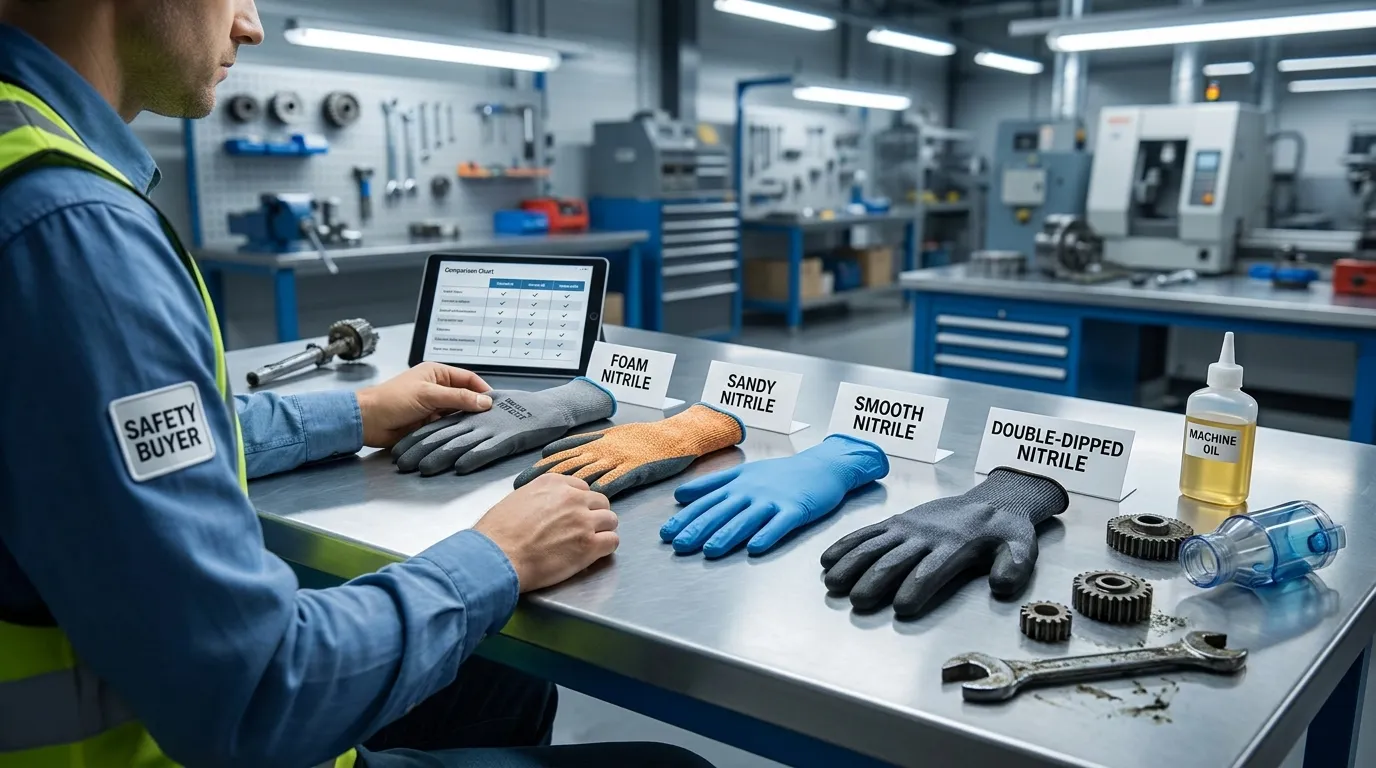
To choose gloves for oil handling, match the glove coating to oil viscosity, handled surface, and contact time. Use foam nitrile for light oil and dexterity, sandy nitrile for slippery oily parts, smooth nitrile for durability and liquid resistance, and double-dipped nitrile for wetter or longer-contact tasks. Always test samples with the real oil and real parts before approving a bulk order.
Oil makes glove buying harder because dry grip can be misleading. A sample may feel comfortable in the office, then slip on a wet steel bracket or fail after one oily shift. Maintenance buyers need a simple way to compare coatings, quotes, and field performance. Start with the job conditions, then ask suppliers for samples that match those conditions.
What makes oil-handling gloves different from normal work gloves?
Oil-handling gloves need grip, oil resistance, and the right contact protection. A glove that feels good dry can fail quickly when oil changes friction, so buyers should compare coating, surface texture, and exposure time together.
Normal work gloves are often judged by comfort, abrasion resistance, and general grip. Oil-handling gloves need a stricter check because oil changes how the glove surface touches the part. A dry glove can feel secure, then lose control once hydraulic oil, grease, or coolant reaches the palm.
This is why a buyer should not approve a glove from a catalog photo alone. OSHA hand protection guidance says glove selection should match the task, glove material, construction, and chemical resistance. For oil work, that means the coating, surface texture, and contact time must all fit the job.
What should you check before choosing gloves for oil handling?
Check oil viscosity, handled surface, and contact time before looking at price. These three factors decide whether a lightweight foam nitrile glove is enough or whether a sandy, smooth full dip, or double-dipped style is safer.
A maintenance buyer should write down the real working conditions before asking for quotes. “Oil resistant glove” is too broad. A thin oil film on plastic caps is not the same job as grease on cast metal housings.
What type of oil is present: light oil, hydraulic oil, grease, coolant mix, or oily water?
What surface is handled: smooth metal, rough metal, plastic, small fasteners, or large parts?
How long does the glove touch oil: splash contact, repeated handling, wet contact, or long exposure?
Does the task also involve sharp edges, heat, chemicals, or heavy abrasion?
Do workers need high dexterity, strong grip, or liquid resistance first?
The HSE glove selection guidance also points buyers toward task, substance, contact duration, fit, and user feedback. That fits oil-handling work well because the best glove is the one that performs in the real process, not the one with the broadest claim.
How should oil viscosity change your coating choice?
Thin oils need coatings that keep grip when a film spreads across the palm. Thicker grease usually needs a more aggressive texture, because the glove must bite through residue instead of only resisting liquid.
Oil viscosity means how thin or thick the oil feels during handling. Thin oil spreads fast and can reduce fine control. Grease stays heavier on the part, so the glove needs more surface texture to hold it.
If workers handle grease on cast metal housings, sandy nitrile is often the better sample to test first. If they handle light oil on plastic parts, foam nitrile may give better touch and less hand fatigue. For wet oil or coolant mixes, check liquid resistance more carefully using guidance such as the Argonne glove selection fact sheet.
Does the handled surface change the grip requirement?
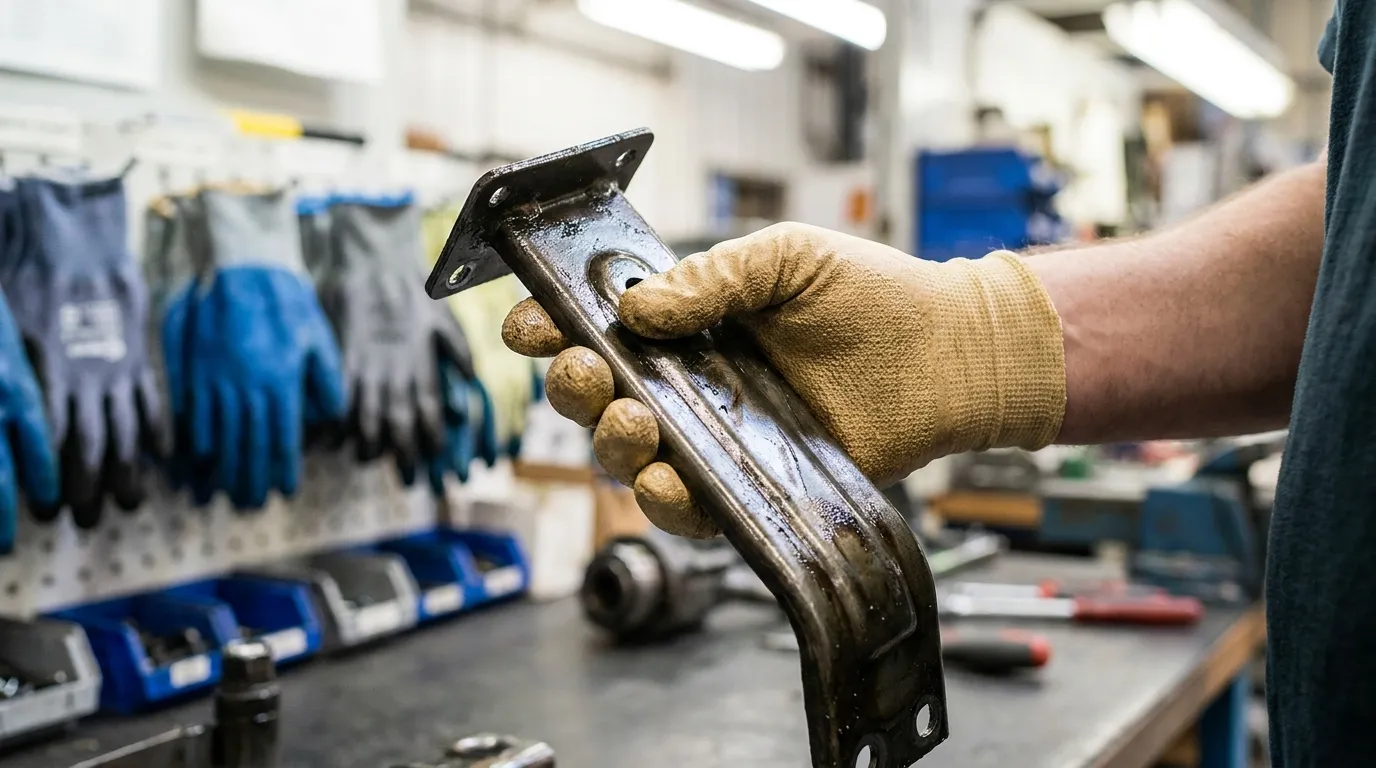
Metal parts usually need more grip and often more cut resistance than plastic parts. Plastic handling may prioritize clean grip and dexterity, while oily stamped, machined, or cast metal often needs sandy or double-dipped nitrile.
The same oil can feel very different on different surfaces. Smooth plastic may need clean, controlled handling. Oily metal can add slip, weight, abrasion, and sharp edges at the same time.
Surface
Typical risk
Better glove direction
Buyer note
Smooth metal
Slip and sudden loss of control
Sandy nitrile or double-dipped nitrile
Test with the actual oil film
Rough cast metal
Grip plus abrasion
Sandy nitrile with durable liner
Watch coating wear during trials
Stamped metal
Slip plus cut risk
Cut-resistant liner with oil-grip coating
Set cut level before final approval
Plastic parts
Clean grip and dexterity
Foam nitrile or smooth nitrile
Avoid over-textured gloves if they mark parts
Small oily fasteners
Fine pinch grip
Foam nitrile or light sandy nitrile
Test fingertip control, not only palm grip
For maintenance teams working with oily metal parts, grip is only part of the decision. The buyer should also check whether the metal has burrs, sharp stamped edges, or worn surfaces. If it does, the glove must solve both slip and cut exposure.
The HSE notes that wet or oily objects often need a roughened or textured glove surface for better grip. Oil and gas glove guidance from HexArmor also treats oil resistance, fit, and added protection as key buying factors for oily work.
How long will the glove touch oil during each task?
Short splash contact can use lighter protection, but repeated contact or wet work needs more substantial gloves. If oil remains on the glove for long periods, buyers should check chemical resistance, degradation, and replacement rules.
Contact time changes the glove choice. A worker who touches an oily part for a few seconds has a different need than a worker who handles wet machined parts all shift. Longer contact increases the need for coating coverage, liquid resistance, and clear replacement rules.
Contact pattern
Example
Glove direction
What to check
Short splash
Quick inspection near oil
Foam or smooth nitrile may be enough
Grip and easy change-out
Repeated oily handling
Moving hydraulic parts
Sandy nitrile or double-dipped nitrile
Grip after repeated contact
Wet contact
Coolant and oil on machined parts
Double-dipped nitrile
Liquid resistance and comfort
Long exposure
Heavy grease or chemical mix
Review chemical glove choice
Degradation and breakthrough guidance
The UC Berkeley EHS glove guide separates incidental contact from extended contact, which is useful for maintenance buyers. If oil is only one part of the hazard, compare PVC vs nitrile before approving the glove. Chemical contact, long wet exposure, or unknown fluids should not be treated as a simple grip problem.
Which coating should you choose: smooth, foam, sandy, or double-dipped?
Foam nitrile suits light oil and dexterity, sandy nitrile suits slippery oily parts, smooth nitrile suits durability and liquid resistance, and double-dipped nitrile suits wetter or longer-contact jobs. The best coating depends on the task, not the catalog photo.
Foam nitrile is not always the safest choice for oily work. It works when the oil film is light and dexterity matters, but sandy nitrile is usually safer when parts are slick, heavy, or hard to control.
Coating matrix for maintenance buyers
Job condition
Surface
Contact time
Best sample to test first
Why it fits
Light machine oil
Plastic parts
Short handling
Foam nitrile
Good dexterity and light oil grip
Hydraulic oil
Stamped steel
Repeated handling
Sandy nitrile
Better bite on slick metal
Grease
Cast metal
Repeated or longer handling
Sandy nitrile with durable liner
Texture helps through heavy residue
Coolant and oil mix
Machined metal
Wet contact
Double-dipped nitrile
More liquid barrier than palm-only coating
Oily water
Mixed maintenance work
Longer wet contact
Smooth full dip or double-dipped nitrile
Better coverage against liquid contact
Small oily fasteners
Metal or plastic
Short handling
Foam nitrile or light sandy nitrile
Keeps fingertip control
For mechanic-style maintenance work, mechanic nitrile gloves are often a useful next comparison. The buyer should still test the exact coating, because mechanic gloves can differ in liner, thickness, coating texture, and liquid coverage.
Industry glove coating guides also point toward nitrile foam or sandy coatings for oily and greasy cut-protection tasks. Use that as a starting point, then confirm with a real sample test.
How can a buyer run a five-minute on-site oil grip test?
A five-minute grip test helps buyers compare samples under real oil conditions before approving a bulk order. Test the same part, same oil amount, same glove size, and score grip, control, comfort, and residue.
Do this before placing a bulk order. Dry handling is not enough, because the buyer needs to know how the glove performs after oil touches the coating.
Step
What to do
What to score
1. Set the baseline
Handle the dry part for 30 seconds
Dry grip and dexterity
2. Add real oil
Apply the same oil or grease used on-site
First contact grip
3. Repeat the motion
Lift, turn, place, and pinch the part
Control and slip
4. Test small control
Pick up a bolt, washer, or small part
Fingertip accuracy
5. Wipe and inspect
Wipe the palm once with a shop cloth
Coating change or residue
6. Ask the worker
Check heat, stiffness, and hand fatigue
Wear acceptance
7. Compare samples
Score each glove from 1 to 5
Best field performer
Run the test with at least two workers if possible. One worker may care more about dexterity, another may notice heat or stiffness faster. The HSE also encourages user fit and feedback when selecting gloves, which matters because a glove that workers avoid will not protect them.
Reject samples that only perform well when dry. A cheaper glove can become expensive if workers change it too often, drop parts, or stop wearing it. Compare cost per usable shift, not only unit price.
What specs should you put into the supplier quote?
A strong supplier quote should name the coating, coverage, liner, size range, and test expectation. Do not ask only for “oil-resistant gloves,” because suppliers may answer with very different products.
Coating coverage: palm, 3/4 dip, full dip, or double dip.
Liner type and gauge, if available.
Cut level, if sharp metal or burrs are present.
Size range and cuff style.
Target use: oil viscosity, surface, and contact time.
Sample quantity for on-site testing.
Any certification or test report needed for the job.
Replacement, washing, or disposal guidance.
This makes quotes easier to compare. One supplier may quote a breathable foam nitrile glove, while another quotes a double-dipped glove with more liquid resistance. Both may say “oil grip,” but they are not the same product.
Supplier checks also matter. The Alibaba B2B sourcing guidance in the brief pointed to samples, documentation, factory checks, and accurate specifications. For a maintenance buyer, the practical move is simple: ask for samples that match your written job conditions, then approve only after the grip test.
When should cut resistance matter more than oil grip?
Oil grip alone is not enough when workers also handle sharp metal. If the task includes sheet metal, burrs, wire, or broken parts, use the pillar cut-resistance guide to set the cut level before finalizing coating.
This is common in maintenance work. Hydraulic oil on stamped steel brackets, coolant on machined parts, or grease on cast housings may involve sharp edges. If the glove only improves grip, the worker may still face a cut hazard.
Set the cut level first when workers handle oily metal with burrs, sheet edges, wire, or damaged parts. Then choose the coating that gives the right oil grip. For the broader cut-level decision, use the cut-resistant glove selection guide instead of trying to solve every cut question here.
Oil grip and cut resistance are separate choices. The safest quote should cover both when the task needs both.
What to Do Next
The best way to choose gloves for oil handling is to turn the job into a short test plan. Write down the oil type, handled surface, and contact time. Ask suppliers for foam, sandy, smooth, or double-dipped samples that match those conditions. Then run the five-minute grip test with the real oil and real parts.
Do not approve the cheapest quote until it passes the worksite test. If the job includes sharp oily metal, confirm the cut level before final coating approval.
Frequently Asked Questions
How do I choose protective gloves?
Choose protective gloves by matching the glove to the task, hazard, material, contact time, and required dexterity. For oil handling, start with oil viscosity, surface type, and contact duration before comparing coating, cut level, and price.
Which material should I choose for my protection gloves?
For oil-handling jobs, nitrile and PVC are common options, but the best choice depends on grip, contact time, and chemical exposure. Foam or sandy nitrile often works for oily handling, while PVC may fit heavier grease or chemical-contact tasks.
Should I choose disposable or reusable gloves?
Choose disposable gloves for short, light, low-risk contact where frequent changes matter. Choose reusable coated gloves for repeated oil handling, abrasive parts, longer wear, or any job where grip and durability affect safety.
What type of gloves should I use for handling oily car parts?
For oily car parts, sandy nitrile or foam nitrile gloves are usually stronger choices than plain fabric gloves. If parts have sharp edges, choose a glove with the right cut-resistance level before choosing the coating.
Are nitrile gloves better than latex for oily work?
Nitrile is usually a better choice for oily work because it resists oil and many chemicals better than latex. Latex can offer comfort and sensitivity, but it is not the first choice for most industrial oil-handling tasks.
Do oil resistant gloves also protect against cuts?
Oil resistance does not automatically mean cut resistance. If workers handle oily sheet metal, stamped parts, wire, or broken components, the glove needs both oil grip and a suitable cut rating.
How do I test oil-handling gloves before a bulk order?
Test each sample with the same oil, part, worker motion, and time limit. Score dry grip, oily grip, part control, comfort, and visible coating change, then reject samples that only perform well when dry.