Home > Uncategorized > Cowhide vs Goatskin Leather Gloves: Wear Test
Cowhide vs Goatskin Leather Gloves: Wear Test
11 May, 2026
By arafatshuvo509
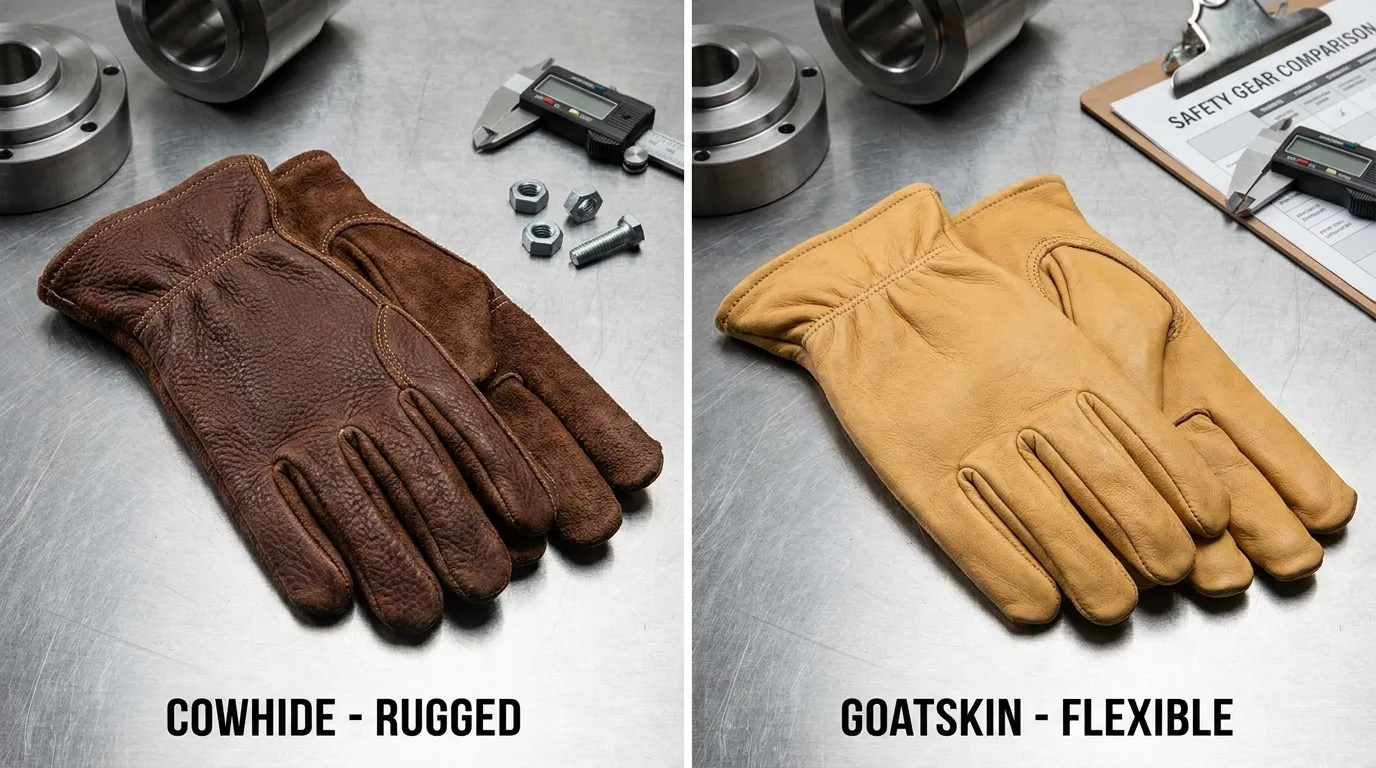
Cowhide vs goatskin leather gloves comes down to work type. Cowhide is the better default for abrasion-heavy handling, rough metal, concrete, and lower-cost replacement. Goatskin is better for finger work, comfort, wet/dry flexibility, and maintenance tasks where workers need feel. Test both for 30 days, then standardize by department.
A worn glove standard creates two problems at once. The palm may fail too fast, but workers may also remove stiff gloves when they need finger control. That is where the cowhide vs goatskin decision gets real. A shop foreman needs a glove that survives the job and still gets worn during the job. The comparison below focuses on wear, dexterity, water behavior, and cost.
Cowhide vs goatskin leather gloves: which one should a foreman choose?
Choose cowhide when palms scrape rough steel, concrete, lumber, or heavy cartons all day. Choose goatskin when workers need fingertip control for bolts, tools, inspection, assembly, or maintenance tasks where bulky gloves get removed.
Cowhide is the safer starting point for rough handling. It usually gives better abrasion life and lower initial cost, so it fits metal yards, receiving areas, construction support, and general labor. If your current glove fails at the palm or thumb crotch first, cowhide should stay on the test list.
Goatskin earns its place when the problem is hand control. It is usually softer and easier to move in, so workers can handle small tools, fasteners, panels, and inspection tasks without taking the glove off. That matters because a glove that stays on the hand often protects better than a thicker glove sitting on the bench.
Fast picker
Work problem
Better first test
Why
Palm wears smooth or thin
Cowhide
Better for daily abrasion
Workers remove gloves for small parts
Goatskin
Better finger control
Rough yard plus maintenance team
Both
Standardize by department
Wet, oily, or chemical work
Neither by default
Review coated or task-specific gloves
What did the 30-day wear test show in a metal yard and a maintenance shop?
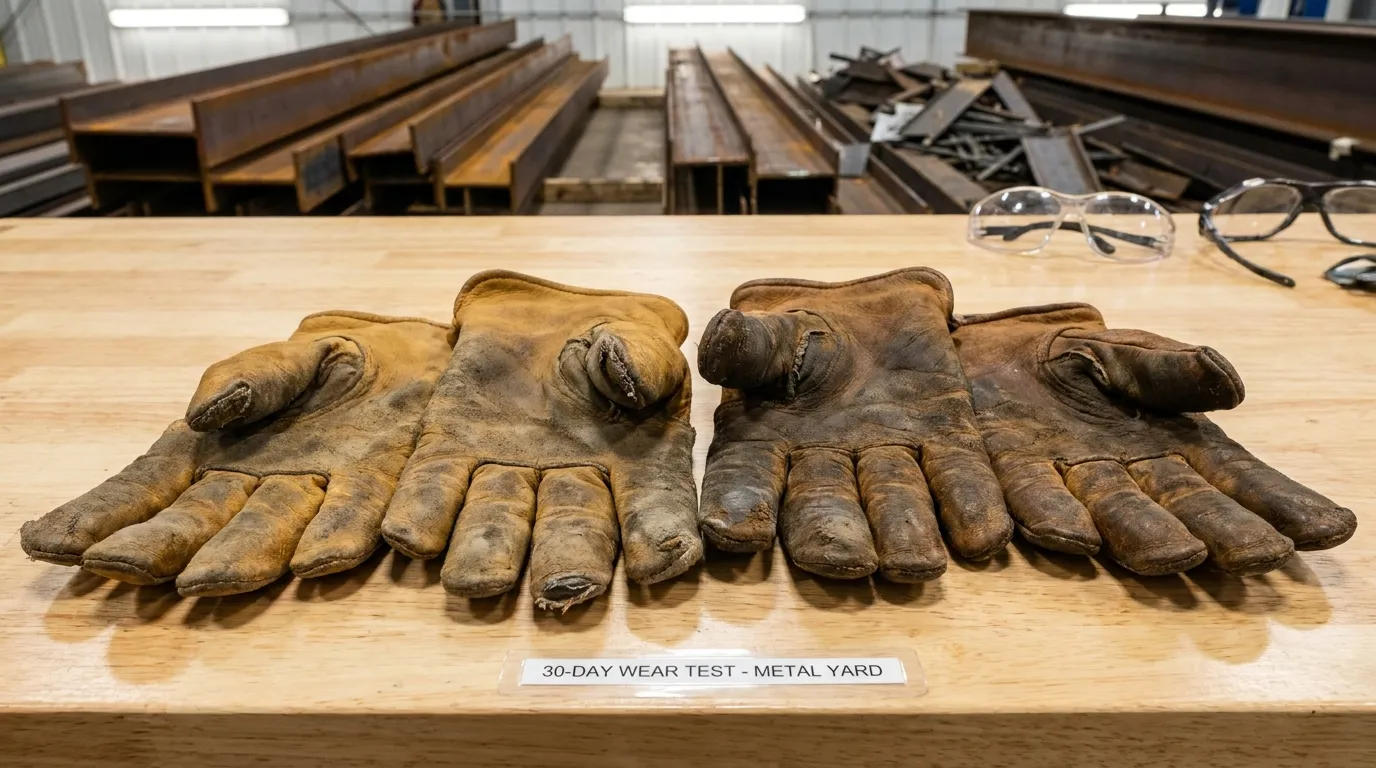
The test should show where each glove fails first, not only how each one feels on day one. For leather gloves, the useful signs are palm polish, fingertip thinning, thumb-crotch stress, seam wear, water marks, and next-day stiffness.
Use the same photo angles for both materials. Take day-one and day-30 photos of the palm, fingertips, thumb crotch, back of hand, and cuff. The OSHA hand protection rule supports choosing hand protection based on the task, conditions, duration, and glove performance, so a short field trial fits the buying decision.
Metal yard wear photo notes
In a metal yard, cowhide should be checked for palm polishing, hard creases, and seam stress around the thumb. Goatskin should be checked closely at the fingertips and high-rub palm zones. The main question is simple: which glove still has usable leather where workers drag, lift, and sort metal?
Maintenance shop wear photo notes
In a maintenance shop, the photo score should focus less on heavy scuffing and more on function. Look at fingertip shape, oil marks, palm flexibility, and worker notes. If goatskin stays flexible and workers keep it on for bolts, tools, and panels, that may outweigh a higher unit price.
Test group
Day 30 palm
Fingertips
Thumb crotch
Wet/dry stiffness
Worker note
Buying signal
Cowhide, metal yard
Heavy polish expected
Moderate wear
Watch for stress
Can stiffen
Good for rough handling
Keep testing for yard work
Goatskin, metal yard
Faster surface wear possible
Watch closely
Moderate stress
Often stays softer
Better feel, less abrasion life
Use only if dexterity matters
Cowhide, maintenance shop
Light to medium polish
Less precise feel
Durable
May feel bulky
Some removal risk
Good if abrasion still matters
Goatskin, maintenance shop
Light wear expected
Better control
Flexible
Better comfort
Better for tools and fasteners
Strong candidate
How do cowhide and goatskin compare on abrasion, tear, dexterity, water, and cost?
Cowhide is usually the safer default for rough abrasion and lower initial cost. Goatskin is usually better when dexterity, comfort, and wet/dry flexibility matter more than maximum palm wear life.
Do not treat leather type as the only spec. Grain or split leather, glove thickness, lining, palm reinforcement, stitching, and thumb design also change performance. A low-grade cowhide glove can lose to a well-built goatskin glove, and a reinforced cowhide glove can outlast both in rough handling.
Buying factor
Cowhide leather gloves
Goatskin leather gloves
Foreman takeaway
Abrasion
Usually stronger for rough contact
Good, but thinner styles may wear faster
Pick cowhide for metal, concrete, pallets, and rough stock
Tear resistance
Depends on grade, thickness, and stitching
Strong for its thickness
Ask for supplier test data before claiming a winner
Dexterity
Can feel stiff or bulky
Usually better finger movement
Pick goatskin for tools, bolts, panels, and inspection
Water absorption
Can stiffen after wet/dry cycles
Often stays more supple
Test next-day stiffness after damp shifts
Unit cost
Often lower initial cost
Often higher initial cost
Compare monthly replacement cost, not only quote price
Worker compliance
Good for rough work
Good for finger work
The glove workers keep on is the safer standard
Cowhide is not automatically the better glove. It works when abrasion is the reason your current standard fails, but goatskin is safer when poor finger control makes workers remove their gloves.
When does cowhide beat goatskin on the shop floor?
Cowhide beats goatskin when the main failure mode is surface abrasion, heat, sparks, or rough material handling. It is the better standard for metal yards, construction handling, fabrication support, and general labor where fine touch is secondary.
Use cowhide when the palm takes the punishment. That includes dragging parts across rough steel, carrying lumber, unloading cartons, handling pallets, moving scrap, or working around concrete. In these jobs, a softer glove may feel better at first but lose value if the palm wears out too quickly.
Cowhide also makes sense when replacement cost matters across a large crew. A lower unit price can be useful when workers burn through gloves in high-abrasion roles. Still, leather abrasion resistance is not the same as certified cut protection. For sharp-edge hazards, use a proper cut-resistant glove guide before choosing by leather type alone.
Choose cowhide first if:
Palms become smooth, thin, or shiny before the rest of the glove fails.
Workers handle steel, concrete, lumber, chains, rough cartons, or pallets.
The job includes sparks, heat, or fabrication support.
Fine fingertip control is less important than wear life.
You need a lower-cost standard for high-turnover glove use.
When does goatskin beat cowhide for finger work?
Goatskin beats cowhide when the job fails from poor hand control, not from palm abrasion. It is the better pick for maintenance, assembly, inspection, TIG-style precision work, and roles where workers remove stiff gloves to feel parts.
A maintenance worker may need to hold small fasteners, adjust panels, grip a wrench, use a handheld tool, or check a part by feel. If cowhide is too stiff for that work, the glove becomes a compliance problem. Workers may take it off for the exact task that still needs hand protection.
Goatskin is not premium just because it costs more. It earns the premium when dexterity improves compliance, speed, or work quality. In a rough metal yard, that premium can disappear through faster palm wear. In a maintenance shop, the same premium can pay back if workers keep gloves on.
For electronics or static-sensitive tasks, do not treat goatskin dexterity as an ESD solution. Start with ESD glove basics, then review semiconductor ESD gloves if the work involves wafers or sensitive electronic parts.
Choose goatskin first if:
Workers handle bolts, screws, small tools, gauges, or panels.
Glove removal is common during detailed work.
Comfort affects all-day wear.
The job needs touch sensitivity more than heavy palm life.
The glove is used in maintenance, inspection, assembly, or precision work.
How should a buyer compare unit cost without getting fooled?
Unit price is only the first number. The better buying number is monthly glove cost per worker, because a cheaper glove can cost more if it fails faster or gets removed during work.
Use a small trial before changing the standard. Give each department a fixed number of cowhide and goatskin pairs, then record replacement rate, worker complaints, and visible wear. Do not mix the results from a metal yard and maintenance shop, because those jobs fail gloves in different ways.
Simple cost-per-month formula
Monthly glove cost per worker = quoted pair price × pairs replaced per worker per month
Example
Quoted pair price
Pairs used per worker per month
Monthly glove cost
Cowhide yard glove
$6
3 pairs
$18
Goatskin yard glove
$9
3 pairs
$27
Cowhide maintenance glove
$6
2 pairs
$12
Goatskin maintenance glove
$9
1 pair
$9
These numbers are only an example. Replace them with your supplier quotes and your own 30-day trial data. Also add a compliance note. If workers remove a stiff glove for small tasks, the cheaper glove may not be the safer or better standard.
If wet grip, oil, or coated palm performance becomes the real issue, compare leather with coated glove alternatives instead of forcing the cowhide vs goatskin decision.
What should importers and OEM buyers document before ordering leather gloves?
For import or OEM orders, document the glove’s outer-shell materials, leather type, palm and back construction, lining, and reinforcement. Customs classification can depend on the outer surface and, for mixed materials, the component giving the glove its essential character.
This section is not a customs guide, but it matters for buyers ordering private-label or OEM gloves. A vague invoice that says “leather gloves” may not give enough detail. Keep the supplier spec sheet, sample, quote, and invoice description aligned before shipment.
State cowhide or goatskin clearly on the spec sheet.
List palm, back, fingers, cuff, lining, and reinforcement materials.
Separate grain leather from split leather where possible.
Match invoice wording with the actual sample.
Keep photos of the approved pre-production sample.
Ask the supplier to confirm the outer-shell material breakdown.
Leather is the wrong category for some jobs. If the issue is cleanroom ESD gloves, chemical splash, or constant oily grip, do not force cowhide or goatskin into a job that needs a different glove design.
What is the final picker for replacing a worn standard glove?
Use cowhide as the standard when abrasion is the daily problem. Use goatskin when finger control is the daily problem. For mixed shops, issue cowhide to rough handling teams and goatskin to maintenance or assembly teams.
The best standard is the one matched to the failure mode. If the glove wears through from rough contact, choose cowhide first. If workers complain that they cannot feel parts, choose goatskin first. If both happen in the same facility, split the standard by department.
Work scenario
Main failure mode
Better first choice
Test before bulk order
Rough steel handling
Palm abrasion
Cowhide
Check palm and thumb-crotch wear after 30 days
Pallet and carton handling
Surface scuffing
Cowhide
Check fingertip and palm polish
Maintenance tools
Poor finger control
Goatskin
Track glove removal and comfort notes
Small fasteners
Low tactile feel
Goatskin
Test bolt, screw, and tool handling
Precision welding support
Dexterity need
Goatskin
Confirm heat and spark exposure first
Wet morning unloading
Stiffness after damp work
Test both
Check next-day flexibility
Mixed shop crew
Different job demands
Both
Standardize by work area
One-line picker: cowhide for abrasion, goatskin for finger work.
For cold crews using scanners or phones, leather may not solve the whole problem. A dedicated touchscreen winter gloves option may fit better than asking one leather glove to handle every condition.
Getting the Next Step Right
Do not replace a worn standard with another guess. Run a 30-day cowhide vs goatskin leather gloves test in the exact departments that use them. Photograph the palm, fingertips, thumb crotch, seams, and cuff on day one and day 30. Then compare wear, worker comments, replacement rate, and task fit.
Pick cowhide if abrasion is the daily failure. Pick goatskin if finger control is the daily complaint. Use both if your yard crew and maintenance crew need different things.
Frequently Asked Questions
Is goatskin more durable than cowhide for work gloves?
Goatskin can be strong for its thickness, but cowhide is usually better for heavy abrasion. Choose goatskin for dexterity and comfort. Choose cowhide when rough surfaces are wearing through palms and fingertips.
Why are goatskin gloves more expensive than cowhide?
Goatskin gloves often cost more because the leather is valued for softness, flexibility, and tactile feel. The higher price can be worth it when workers need finger control, but it may not pay off in rough abrasion-heavy jobs.
What are the best leather work gloves for construction?
Cowhide is usually the better leather for general construction because it handles abrasion, rough material handling, and lower-cost replacement well. Goatskin can still fit light-duty layout, inspection, or tool work where finger movement matters more.
Which leather is best for precision work requiring dexterity?
Goatskin is usually better for precision work because it is thinner, softer, and easier to move in. It fits maintenance, assembly, inspection, small tools, and tasks where workers need to feel parts through the glove.
When should I choose cowhide work gloves instead of goatskin?
Choose cowhide when the glove fails from abrasion, heat, sparks, rough parts, or heavy material handling. It is also the safer buying default when replacement cost matters and the job does not need high fingertip sensitivity.
Are leather gloves good for wet or oily work?
Leather can handle light moisture, but it is not the best answer for constant wet, oily, or chemical exposure. In those cases, compare treated leather, nitrile-coated gloves, or other coated work gloves based on grip and hazard.