Home > Uncategorized > Waterproof Winter Work Gloves: Wet-Cold Picks
Waterproof Winter Work Gloves: Wet-Cold Picks
07 May, 2026
By arafatshuvo509
Waterproof winter work gloves should match the wet-cold job, not just the temperature. Membrane-lined gloves usually offer better dexterity and some breathability, while fully dipped latex, nitrile, or PVC gloves block water longer but trap sweat and can feel bulky.
For coastal construction, docks, and oilfield rain, compare waterproofing style, wet grip, insulation, cut or impact rating, cuff seal, and wear zones before buying in bulk.
What problem should waterproof winter work gloves solve on wet-cold jobs?
Waterproof winter work gloves should keep hands warm, dry, grippy, and usable for the actual task. A dock worker in salt spray needs different waterproofing than a carpenter handling wet lumber or an oilfield worker gripping oily pipe.
The real problem is not only cold air. Wet-cold work adds water exposure, conductive heat loss, slippery materials, and slower hand movement. That is why a glove can be warm in a catalog but still fail on a rainy jobsite.
OSHA cold-weather guidance points to the need for protective clothing and insulated gloves that are water resistant when necessary. That fits the practical buying question: will this glove keep workers dry enough, warm enough, and productive enough through the shift?
Before comparing products, the buyer should define the crew’s exposure. Is the glove facing rain, snow, wet lumber, cold spray, mud, oil, or standing water? That answer should guide winter glove selection more than temperature alone.
Membrane-lined or fully dipped: which waterproofing setup fits the job?
Choose membrane-lined gloves when dexterity and moderate breathability matter. Choose fully dipped latex, nitrile, or PVC gloves when constant water contact is the bigger hazard and the crew can manage sweat with rotation.
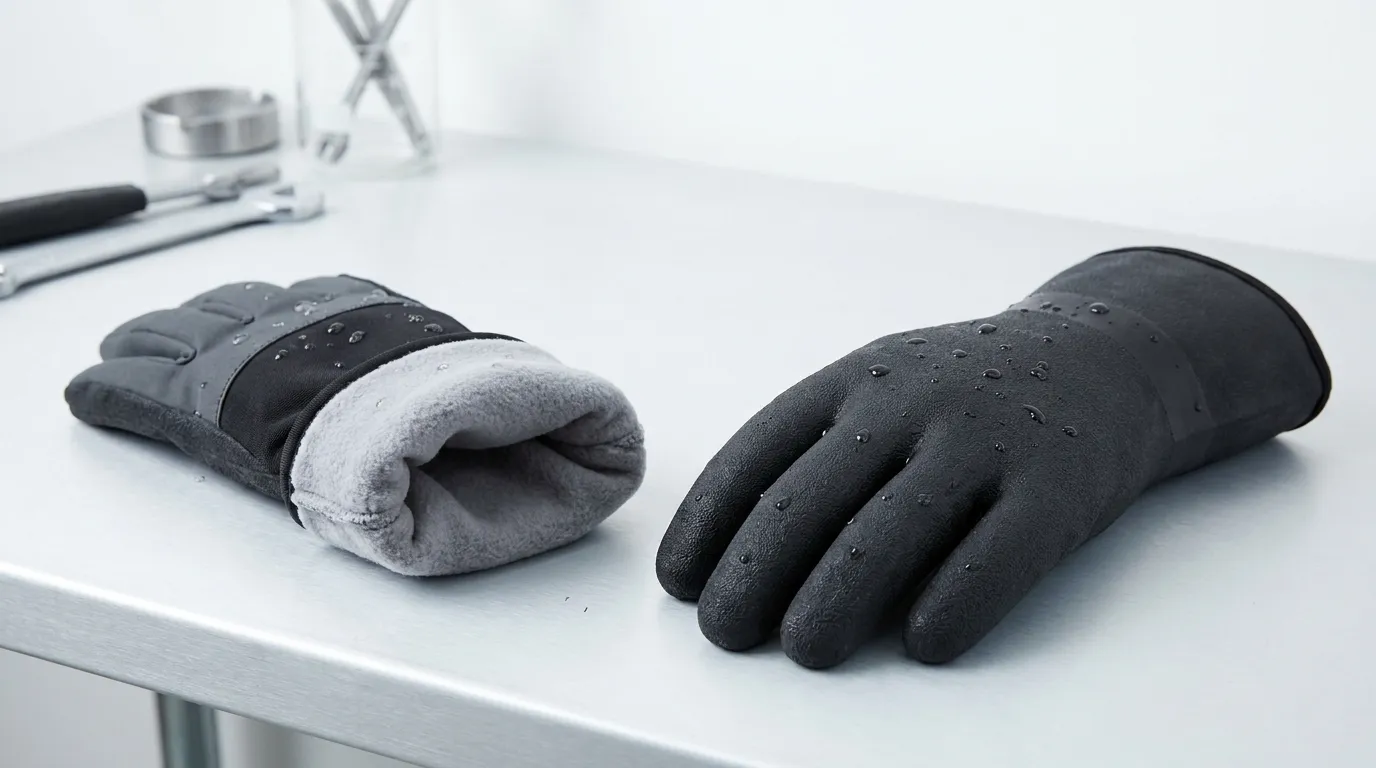
Many waterproof winter work gloves use either a waterproof membrane or a liquid-blocking dipped shell. Membrane-lined gloves can feel more flexible because the outer shell may still move like a normal work glove. Fully dipped gloves create a stronger liquid barrier, but they often feel bulkier and can trap moisture inside.
Waterproofing setup
Best fit
Main advantage
Main tradeoff
Membrane-lined glove
Construction, tool handling, mixed wet and dry work
Better dexterity and moderate breathability
Waterproofing depends on liner, seams, and wear points
Palm-dipped glove
Light wet handling where the back of hand is less exposed
Good grip with less bulk
Not ideal for constant rain or full hand wet exposure
Double-dipped glove
Wet handling with more coating coverage
Stronger water resistance than light palm coating
Can reduce flexibility and breathability
Fully dipped latex glove
Wet general handling where grip matters
Strong water blocking and textured grip options
May feel bulky and less breathable
Fully dipped nitrile glove
Wet, oily, or abrasive industrial work
Useful for wet and oily grip needs
Can trap sweat during active work
PVC-coated glove
Cold wet work with liquid exposure
Good liquid barrier for harsh wet conditions
May reduce fine handling and finger feel
For a deeper handoff on coating construction and coating choices, link the reader to a broader coated work glove types guide instead of trying to explain every coating family here.
What changes near 0°C when “breathable waterproof” gloves get sweaty?
Breathable waterproof gloves can still feel cold near 0°C if sweat cannot escape fast enough. Dampness increases heat loss, so the buyer should judge moisture control, not just the waterproof claim.
This is where many glove descriptions become confusing. A glove may block rainwater but still become damp inside from sweat. OSHA cold stress guidance warns that dampness from sweating increases heat loss, which matters during active outdoor work.
If the crew reports...
Likely issue
Buyer response
Hands feel cold even though rain is not entering
Sweat buildup inside the liner
Test breathability, liner material, and rotation plan
Workers remove gloves for small tasks
Too much bulk or poor dexterity
Try a membrane-lined or less bulky dipped option
Gloves feel dry outside but clammy inside
Waterproof layer blocks vapor escape
Use spare pairs and drying rotation
Warmth drops after several hours
Damp liner or compressed insulation
Review fit, drying time, and insulation thickness
Fit also affects this problem. A glove that is too tight can compress insulation, while a loose glove can reduce grip and make workers remove it. That is why cold-weather glove fit should be part of the trial, not an afterthought.
Where do waterproof winter work gloves usually wear out first?
Most glove failures happen where flex, abrasion, and water meet: fingertips, thumb crotch, palm coating edges, seams, and cuffs. A sample that survives a dunk test can still fail after repeated wet handling.
The first visible damage is often not in the center of the palm. Real wear comes from gripping boards, pipe, rope, tools, pallets, metal parts, and fasteners for hours. That repeated flex can weaken coatings, seams, and liners before the outer glove looks completely worn out.
Fingertips: Check for coating thinning, seam stress, and early leaks after repeated pinch work.
Thumb crotch: Inspect this area because it flexes hard during gripping and tool handling.
Palm coating edges: Look for peeling, cracking, or exposed fabric around the dip line.
Cuff opening: Check whether rainwater runs inside when the worker reaches, lifts, or bends.
Seams: Watch for small leaks after repeated flexing, not only after a quick water test.
Liner bond: Notice whether the liner pulls out, twists, or dries slowly after wet shifts.
A buyer should treat these points as inspection zones during sample trials. A waterproof winter glove is not only judged by whether it blocks water on day one. It also needs to stay usable after real wet-cold work.
Which waterproof winter glove type fits construction, dock, and oilfield rain?
The best waterproof winter glove type changes by jobsite. Outdoor construction may need dexterity and cut protection. Dock work may need stronger water blocking and cuff control. Oilfield rain may require wet or oily grip and impact protection.
This is why one “best waterproof glove” rarely solves every crew need. A PPE buyer should build a short list by job type, then test each glove against the actual work conditions.
Jobsite scenario
Likely exposure
Recommended direction
Key check before buying
Outdoor construction
Wet lumber, fasteners, tools, rebar, cold rain
Membrane-lined or coated insulated glove with good dexterity
Cut rating, grip, fingertip control, and worker compliance
Dock handling
Salt spray, wet rope, pallets, cold wind, constant moisture
More liquid-blocking dipped glove with secure cuff control
Water entry at cuff, wet grip, drying time, and liner dampness
Oilfield rain
Cold rain, oily pipe, chains, tools, impact risk
Nitrile or other wet/oily grip option with impact protection where needed
Grip on oily surfaces, back-of-hand protection, and coating durability
Cold storage transition
Wet loading areas plus refrigerated spaces
Balanced waterproofing with a rotation plan
Sweat buildup, insulation recovery, and drying speed
If the work also involves sharp materials, the waterproof choice should not replace cut protection. In that case, shortlist cut-resistant winter gloves that combine cold protection with the right mechanical rating.
How should a PPE buyer test samples before a bulk order?
A bulk glove decision should use a jobsite trial, not a catalog claim. Test grip, liner dampness, cuff leakage, seam wear, and dexterity over full shifts before approving a winter crew standard.
A short water test can be useful, but it does not show the whole picture. Real work includes flexing, gripping, rubbing, sweating, pulling, lifting, and drying between shifts. The sample trial should copy those conditions as closely as possible.
Choose testers from each crew type. Include construction, dock, oilfield, or cold storage workers if those groups face different exposure.
Run the trial over full wet shifts. Do not judge the glove only after a few minutes of water contact.
Record worker removal. If workers keep removing the glove for small tasks, dexterity or fit may be wrong.
Check liner dampness. Separate rain leakage from sweat buildup where possible.
Inspect wear zones. Look at fingertips, thumb crotch, seams, cuff, and palm coating edges.
Score wet grip. Test wet lumber, rope, pipe, tools, pallets, or other real materials.
Compare drying time. A glove that stays wet inside may need a rotation plan or a different construction.
For a simple bulk trial, test several pairs of each shortlisted glove across multiple wet shifts. Reject any model that causes early liner dampness, cuff leakage, fingertip wear, or repeated worker removal.
Which cut, puncture, and impact ratings should the buyer check?
Waterproofing does not replace safety ratings. If the crew handles metal, glass, wire rope, sheet material, fasteners, sharp packaging, or rough edges, the glove still needs the right cut, puncture, abrasion, or impact performance.
ANSI/ISEA 105 classifies hand protection performance, including cut resistance levels. Buyers should also separate cut hazards from puncture hazards because they are not the same. For puncture-related decisions, use a dedicated reference on ANSI puncture ratings.
Cut resistance: Important for sharp edges, metal, glass, wire, and construction materials.
Puncture resistance: Important where pointed objects or sharp debris may pierce the glove.
Impact protection: Important where hands face crushing, pinch, or back-of-hand strike risks.
Wet grip: Important when waterproofing makes the glove safer only if workers can still hold materials securely.
If cut protection becomes the main selection issue, the article should hand off to the broader cut resistant glove levels guide rather than repeating all cut-resistant glove buying rules here.
How should crews dry, clean, and rotate waterproof winter work gloves?
Waterproof winter gloves need a care plan because wet liners, trapped sweat, and damaged coatings can reduce comfort and service life. Crews should not assume one pair will perform well through repeated wet shifts without drying time.
OSHA cold stress guidance supports avoiding wet clothing and using extra gloves in cold conditions. In practical glove programs, that means buyers should think about spare pairs, drying space, and cleaning instructions before winter work starts.
Dry liners fully before reuse. A damp liner can make hands feel cold even when the shell blocks rain.
Avoid damaging heat. High heat can harm coatings, liners, adhesives, or membranes.
Rotate pairs on wet shifts. Rotation helps reduce the problem of sweat and slow drying.
Follow manufacturer instructions. Washing and drying rules depend on the glove material, membrane, and coating.
Inspect after cleaning. Look for peeling coatings, loose liners, seam stress, and cuff damage.
FAQ
What is a good winter waterproof work glove?
A good winter waterproof work glove keeps outside moisture out while still giving enough grip, insulation, and dexterity for the task. For wet industrial work, the best option also matches cut, puncture, or impact risks instead of only focusing on warmth.
What are the warmest waterproof gloves?
The warmest waterproof gloves usually combine insulation with a waterproof membrane or full liquid-blocking shell. For active crews, the warmest choice is not always best if it traps sweat, reduces grip, or makes finger movement too slow.
How can I test the water resistance of my gloves?
Test water resistance during real wet tasks, not only with a short sink test. Track whether water enters through the cuff, seams, fingertips, thumb crotch, or coating edges after several hours of gripping, flexing, and handling wet materials.
Why is a snug fit important for winter gloves?
A snug fit helps preserve grip, dexterity, and warmth without leaving large air gaps or loose fingertips. The fit should not be so tight that it compresses insulation, restricts movement, or makes workers remove the gloves for small tasks.
Can I machine wash my waterproof winter work gloves?
Machine washing depends on the glove material, coating, membrane, and manufacturer instructions. Harsh washing or high heat can damage waterproof layers, liners, adhesives, or coatings, so buyers should treat washability as a spec to confirm before ordering.
Are leather work gloves warm enough in winter?
Leather work gloves can be warm in winter when they include insulation, but untreated leather is not ideal for constant wet exposure. In cold rain, snow, or dock spray, a waterproof membrane, coating, or separate waterproof construction is usually safer.
Are waterproof winter gloves totally waterproof?
Some gloves block liquid better than others, but “totally waterproof” still depends on cuff design, seams, wear, coating damage, and exposure time. Fully dipped gloves resist water longer, while membrane gloves may depend more on seam and liner integrity.