Home > Uncategorized > Impact Resistant Gloves Factory in China: What Buyers Should Verify in 2026
Impact Resistant Gloves Factory in China: What Buyers Should Verify in 2026
14 Aug, 2026
By hqt
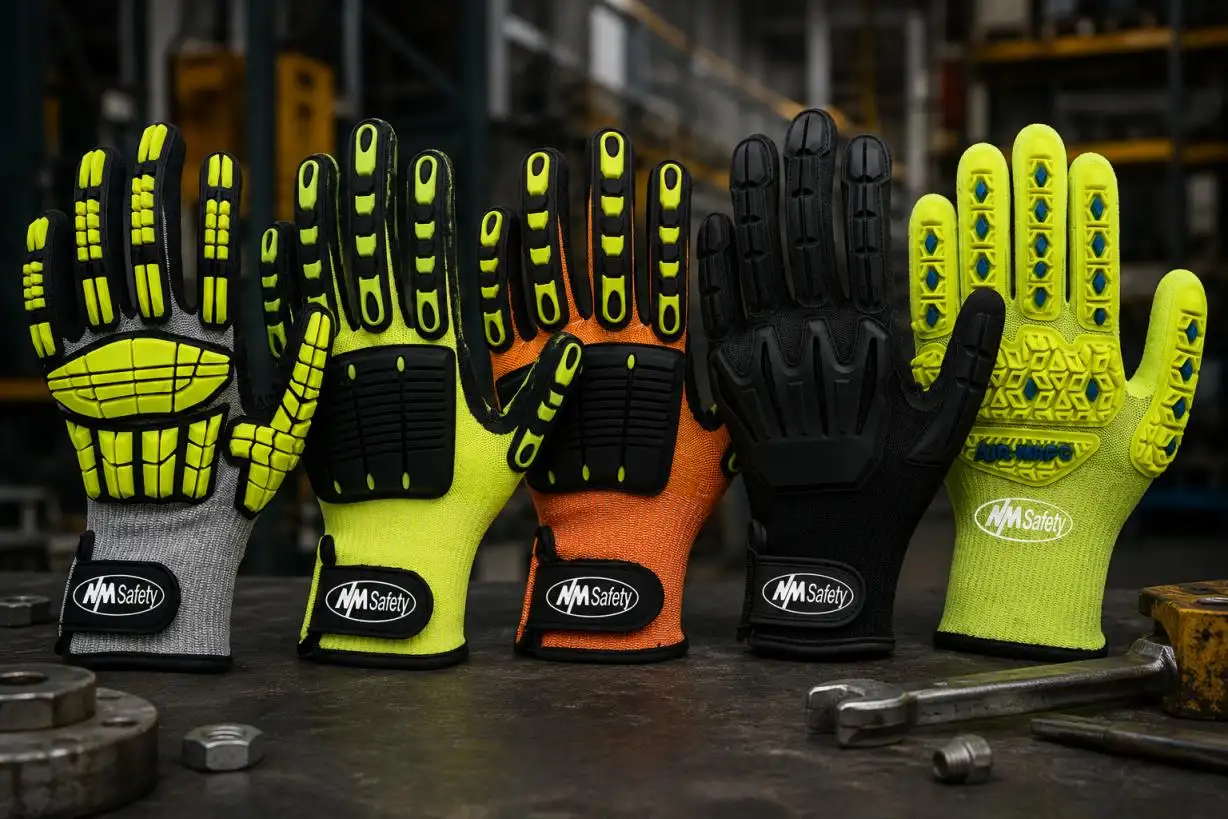
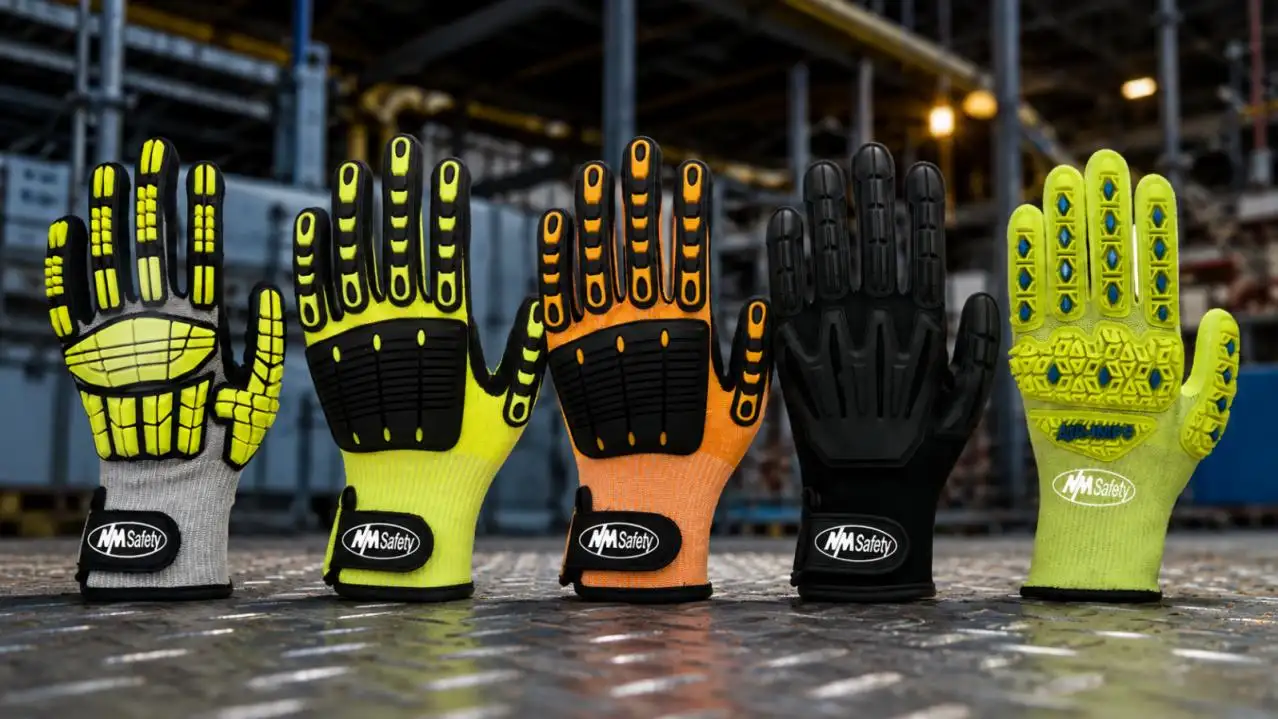
Sourcing from an Impact Resistant Gloves Factory in China in 2026 is less about finding the lowest unit price and more about controlling a multi-material PPE system. A typical impact glove may combine a knitted liner, cut-resistant yarns, TPR back-of-hand protection, nitrile or PVC coating, reinforcement zones and application-specific cuffs. Each element affects protection, dexterity, grip and production consistency.
A glove can look heavily protected and still be poorly matched to the job. Thick TPR may cover the knuckles well but restrict finger flexion; a high cut rating does not prove dorsal impact protection; and palm performance can fall sharply when oil reduces grip.
Separate the specification into four functions:
•Impact: back-of-hand and finger protection
•Cut/puncture: liner and yarn system
•Grip: palm coating texture and formulation
•Wearability: gauge, fit, weight and TPR segmentation
ANSI/ISEA 138-2019 covers testing, classification and labeling for back-of-hand impact protection, while ANSI/ISEA 105-2024 addresses classifications including cut, abrasion and puncture.
TPR Design: More Material Is Not Always Better
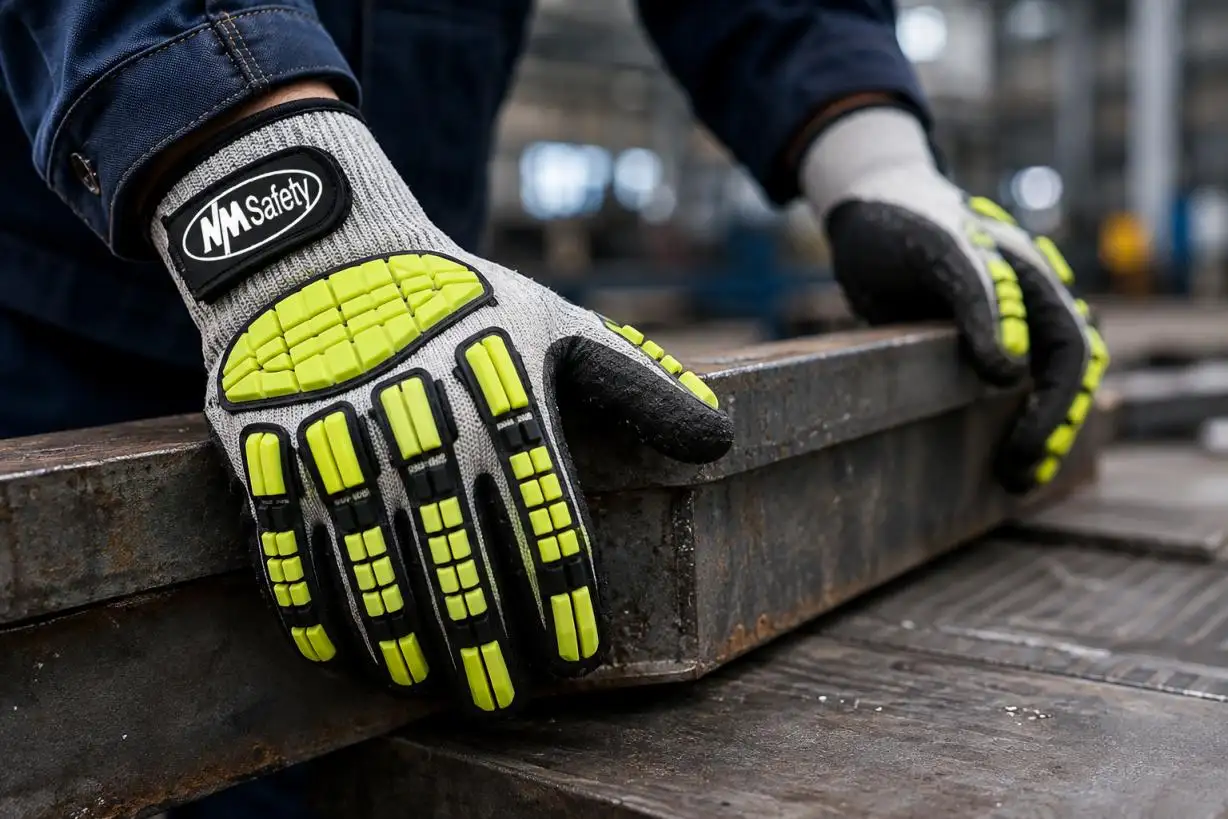
Buyers should compare coverage and articulation, not simply TPR thickness.
Construction
Main Advantage
Main Trade-Off
Continuous/heavy TPR
Broad physical coverage
More bulk and restricted bending
Segmented low-profile TPR
Better articulation
Requires precise placement
Impact + cut liner
Multi-hazard protection
Higher material cost
Impact + vibration padding
Repetitive-tool comfort
Not the same as impact certification
13-Gauge vs. 18-Gauge Impact Glove Construction
NMSafety offers both 13-gauge and 18-gauge TPR glove constructions, giving buyers different options for balancing protection, flexibility and handling precision.
Factor
13-Gauge Construction
18-Gauge Construction
Liner Structure
Thicker knit
Finer, denser knit
Dexterity
Moderate
Higher
Tactile Control
Suitable for general handling
Better for precision tasks
Bulk
Relatively higher
Lower-profile feel
Typical Use
Heavy handling, construction, industrial work
Maintenance, assembly, detailed handling
Protection Design
Can combine TPR with cut-resistant yarns
Can achieve high protection with finer liner engineering
Foam Nitrile, Sandy Nitrile or Full Coating?
An Impact Resistant Gloves Factory in China should match the palm system to surface conditions.
•Foam nitrile: flexibility and breathability
•Sandy nitrile: oily or wet handling
•Full coating/PVC: greater liquid coverage, with possible loss of breathability
The choice should follow the dominant hazard, not which coating sounds more "premium."
Match the Construction to the Application
Application
Specification Priority
Oil & gas
Impact + oily grip + abrasion
Metal fabrication
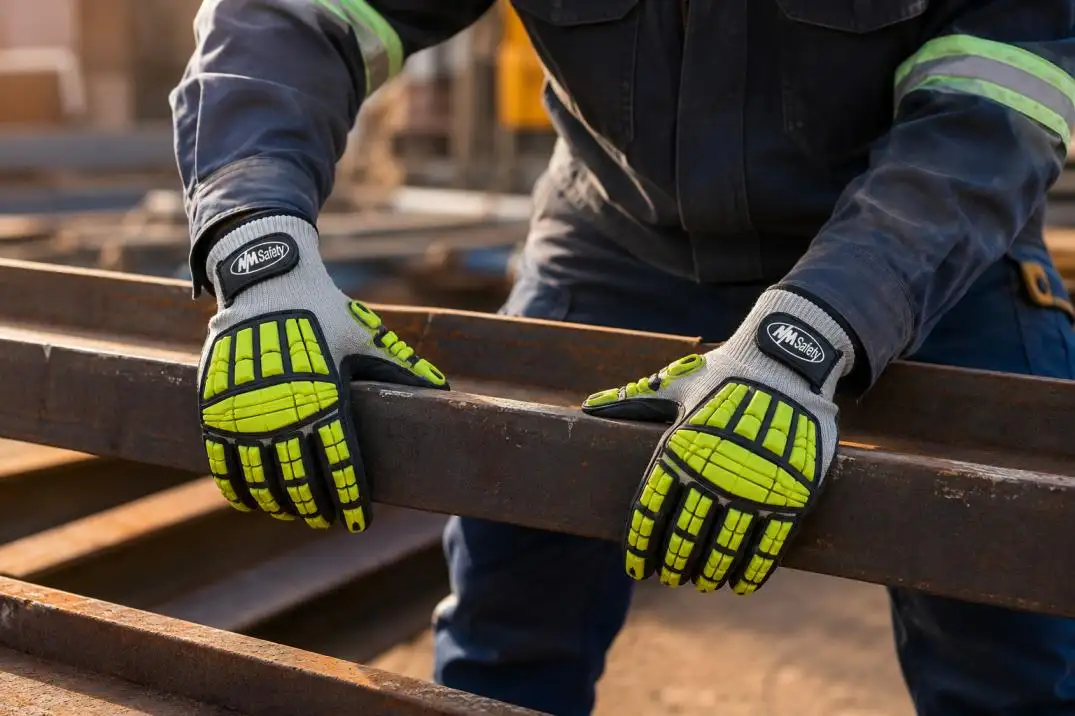
Impact + cut resistance
Rebar/construction
Impact + cut + puncture
Maintenance
Impact + dexterity + grip
Cold outdoor work
Impact + thermal liner + flexibility
China's broad material ecosystem supports such combinations. NMSafety's published impact products use nylon, HPPE, steel fiber, sandy nitrile and TPR in different constructions rather than relying on one universal glove.
Why Sourcing Impact Resistant Gloves from China in 2026
For buyers sourcing impact-resistant gloves, China's competitiveness in 2026 comes from the depth of its manufacturing ecosystem rather than labor cost alone. Knitted liners, technical yarns, nitrile coatings, TPR components, packaging and supporting tooling can often be sourced within an established industrial network, helping manufacturers coordinate multiple processes more efficiently.
This advantage is supported by continued industrial activity. In the first two months of 2026, China's manufacturing value added increased 6.6% year on year, while textile manufacturing grew 5.3% and rubber and plastic products rose 7.8%. Goods trade also reached RMB 7.73 trillion, with exports increasing 19.2%.
NMSafety operates within this supply environment through its Shanghai headquarters and manufacturing facilities in Jiangxi, Jiangsu and Shandong, with 15 production lines, 1,500 knitting machines and monthly capacity exceeding 600,000 dozen gloves.
What 2026 Chinese Policy Actually Supports
There is no evidence of a national subsidy specifically for impact-resistant gloves. However, China's 2026 Government Work Report allocates RMB 200 billion from ultra-long special treasury bonds to large-scale equipment upgrades and calls for stronger support for SME digital transformation, smart factories and intelligent supply chains.
The 2026 trade-policy framework also emphasizes:
•Export credit and credit insurance
•Cross-border e-commerce
•Overseas warehouses
•International-delivery logistics
•Greater trade facilitation
These policies can strengthen the broader manufacturing and export environment surrounding an Impact Resistant Gloves Factory in China, but they are indirect advantages—not proof that a specific glove factory meets a buyer's technical requirements.
For buyers comparing an Impact Resistant Gloves Factory in China, NMSafety combines multi-province manufacturing capacity with multiple liner, coating and TPR configurations. Buyers can provide the intended application, required protection levels, target-market standards, sizes and expected volume to NMSafety for specification review and sampling before committing to bulk production.
FAQs
Q1. What impact-resistant gloves have palm coatings?
NMSafety offers palms foamed with sandy nitrile, among other coatings. For example, several of their impact-resistant durability models with sandy nitrile palms are designed for grip while handling materials in wet or oily conditions.
Q2. What is NMSafety's capacity for production?
With 15 production lines, 1,500 knitting machines, and approximately 600 employees, NMSafety's monthly production capacity is over 600,000 dozen gloves.
Q3. What locations does NMSafety have for production of gloves?
Manufacturing for NMSafety's gloves is in three locations in China, Jiangxi, Jiangsu, Shandong, and NMSafety's headquarters is in Shanghai.
Q4. Does NMSafety produce 13-gauge and 18-gauge impact gloves?
Yes. NMSafety offers both 13-gauge and 18-gauge. Their 13-gauge options are designed with substantial knitted structures, while their 18-gauge options are offered with a finer level of dexterity.
Q5. What levels of impact protection are offered?
NMSafety offers gloves with constructions that meet both ANSI/ISEA 138 Level 1 and Level 2. Customers should not assume the same level of protection for all models in the product line; they should verify the protection level of each individual model.