Home > Uncategorized > How to Choose Winter Work Gloves: Heat & Grip
How to Choose Winter Work Gloves: Heat & Grip
20 May, 2026
By arafatshuvo509
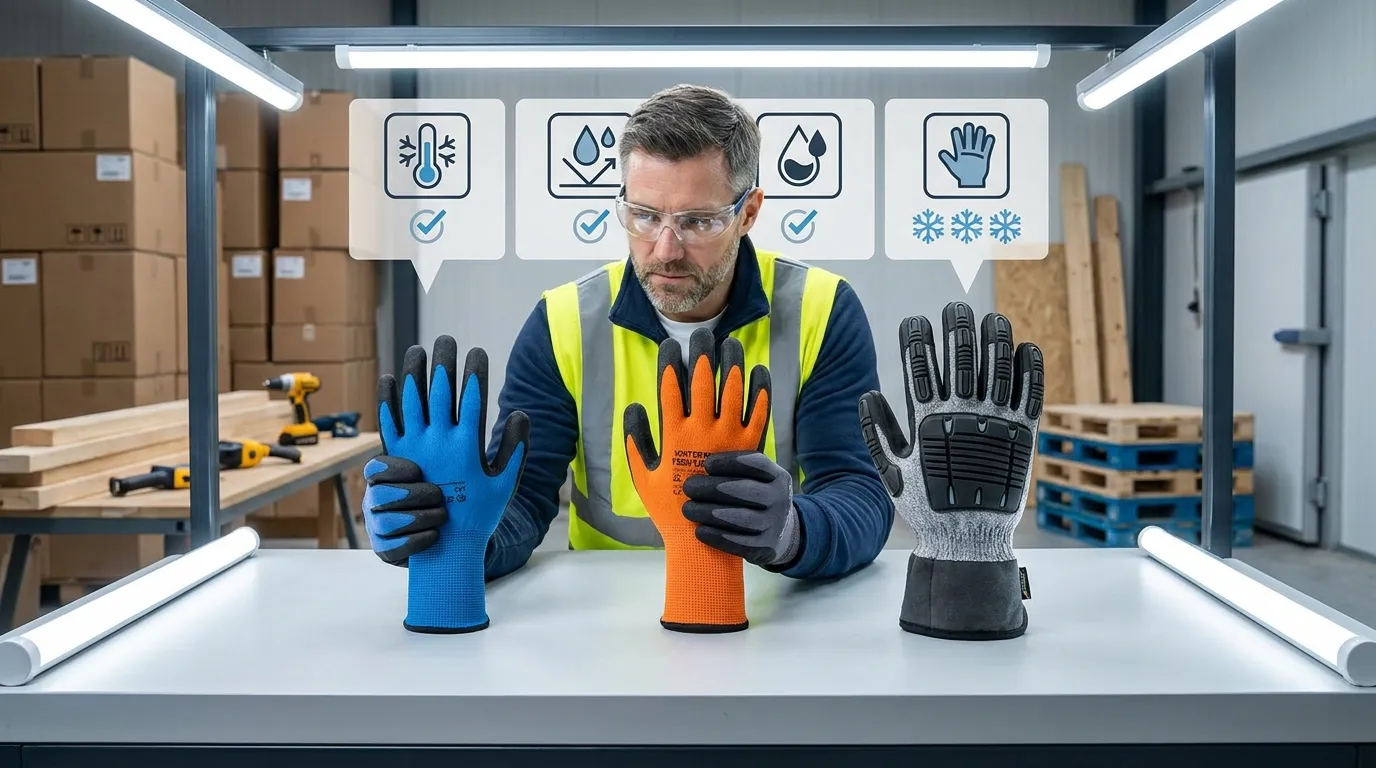
To choose gloves for winter work, match three things: insulation gram weight for the temperature, waterproofing level for wet or dry cold, and grip surface for the material handled. Use lighter insulation for active warehouse work, waterproof textured grip for wet outdoor construction, and heavier oil-grip gloves for exposed oilfield winter jobs.
Winter glove buying gets expensive when one glove is expected to work for every crew. A freezer picker, dock worker, construction laborer, and oilfield technician face different cold risks. The right order starts with the work condition, not the product label. Use this guide as a practical picker before you place a winter PPE order.
What winter work glove should a supervisor choose first?
Choose winter work gloves by matching insulation to temperature, waterproofing to moisture, and grip surface to the material being handled. The best glove is not always the thickest one. It’s the one workers can keep on safely.
Start with the job, then choose the glove. A thick glove may feel safer on paper, but it can slow workers down if they need finger control. If workers remove gloves to handle tools, scan labels, or grip small parts, the glove has failed the real test.
OSHA’s hand protection rule says employers must select hand protection based on the work performed, the conditions, how long workers wear the PPE, and the hazards involved. That means winter warmth should be chosen alongside grip, moisture, cut risk, impact risk, and handling needs, not in isolation.
Use this three-step picker before comparing models:
Step
Decision
Ask this first
1
Insulation gram weight
How cold is the job, and how active is the worker?
2
Waterproofing level
Is the cold dry, damp, snowy, wet, or oily?
3
Grip surface
What does the worker actually hold all shift?
For broader hand hazard selection beyond winter performance, use NMSafety’s coated work glove guide after this winter spec is clear.
Step 1: How much insulation do winter work gloves need?
For most winter work, choose 40-100g insulation for mild cold, 100-200g for freezing outdoor shifts, and 200-400g for sub-zero exposure. Higher gram weight adds warmth but usually reduces dexterity.
Insulation gram weight tells you how much thermal material is built into the glove. More insulation traps more warm air, but it also adds bulk. That matters when workers need to pick parts, scan labels, adjust straps, handle fasteners, or keep a strong grip on tools.
Activity level changes the decision. A warehouse dock worker who moves all shift may need less insulation than a security worker standing outside in the same temperature. Ergodyne’s cold weather glove guidance also warns that too much insulation can make hands sweat, which can make them feel colder later.
Temperature-to-glove chart
Work temperature
Typical work condition
Insulation direction
Buying note
45°F to 32°F
Cool dock, light outdoor work
Light thermal liner or 40-100g
Prioritize dexterity and grip
32°F to 20°F
Freezing outdoor work
40-100g or 100-200g
Choose based on wind, moisture, and activity
20°F to 0°F
Long outdoor shifts, cold storage
100-200g
Add waterproofing if moisture is present
Below 0°F
Freezer, oilfield, exposed winter work
200-400g
Test dexterity before bulk ordering
Cold risk rises fast with wind, wet gloves, and long exposure. CDC/NIOSH notes that cold stress can affect workers outdoors, in unheated areas, or without enough shelter. CCOHS also warns that wind chill, moisture, and exposed skin can increase cold stress risk, so the chart should guide testing, not replace site judgment.
Step 2: Do you need waterproof, water-resistant, or breathable gloves?
Choose waterproof winter gloves for sustained snow, rain, slush, wet materials, or cold storage condensation. Choose water-resistant gloves for dry cold where dexterity and breathability matter more than full liquid protection.
Wet cold needs a different glove than dry cold. A glove that feels warm in a dry warehouse can lose comfort quickly when it touches snow, wet lumber, dripping cartons, or freezer condensation. Moisture also makes workers more likely to remove gloves, which raises the risk during handling.
Waterproof is not automatically better. It works for snow, slush, rain, wet materials, and condensation. In dry cold, a breathable water-resistant glove may feel better because it can reduce sweat buildup and keep the hand more comfortable during active work.
Wet cold vs dry cold picker
Condition
Best direction
Why it fits
Dry cold warehouse
Water-resistant or breathable insulated glove
Keeps dexterity and reduces sweat buildup
Light snow or short outdoor tasks
Water-resistant shell with good grip
Enough protection without too much bulk
Wet lumber, rain, slush
Waterproof glove with textured palm
Keeps insulation drier and improves handling
Cold storage condensation
Waterproof or water-repellent outer layer
Helps when packages and surfaces are damp
Oily winter work
Nitrile-based coating or oil-grip palm
Handles oil, cold tools, and slick surfaces better
CDC/NIOSH cold PPE guidance notes that PPE needs to stay dry in cold conditions. It also warns that tight or poorly chosen PPE can create other problems, including poor comfort or strain. For coating selection in wet and oily work, compare the glove surface with NMSafety’s nitrile coating guide.
Step 3: Which grip surface works best in cold conditions?
Match grip to the surface, not just the weather. Dry warehouse work can use lighter coated gloves, wet construction needs stronger textured grip, and oily winter jobs usually need nitrile-based grip.
The warmest glove can still be the wrong glove if the palm slips. Cold metal, wet lumber, icy handles, shrink wrap, oily tools, and freezer cartons all behave differently. A site supervisor should choose grip by the handled surface first, then confirm the glove still has enough warmth.
A winter glove without the right grip is only half a solution. If workers handle oily tools, icy metal, or wet lumber, the palm surface matters as much as the liner. CDC/NIOSH also advises workers to avoid touching cold metal with bare skin, which makes grip and glove coverage even more important in freezing tasks.
Work surface
Grip direction
Best-fit example
Dry cartons and labels
Light coated palm, high dexterity
Warehouse picking, packing, dock scanning
Wet lumber or snow-covered materials
Textured latex or strong wet-grip surface
Outdoor construction, yard work
Oily tools or pipe
Sandy nitrile or oil-grip nitrile
Oilfield, maintenance, machinery work
Icy metal handles
Insulated palm with strong surface texture
Gates, rails, equipment handles
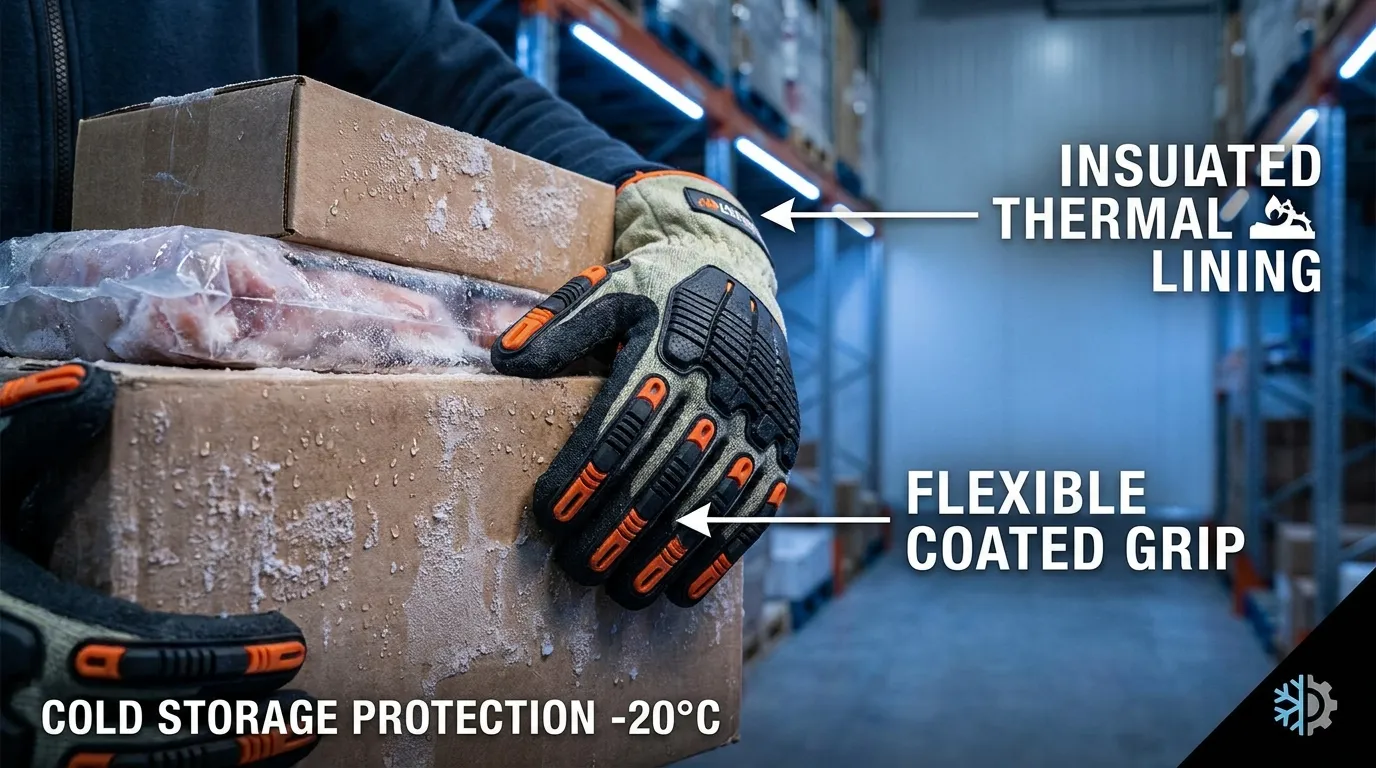
Freezer packages
Insulated glove with flexible grip
Cold storage picking and pallet handling
Leather can work well for some outdoor winter jobs, especially abrasion-heavy handling. Coated gloves are often better when the job needs specific wet grip, oil grip, or flexible palm control.
Which winter glove spec fits each job?
Choose the winter glove spec by job group, not by one company-wide product. Cold storage, outdoor construction, oilfield winter, and warehouse work each need a different balance of warmth, moisture control, grip, and extra protection.
Use this matrix before ordering samples:
Job
Temperature exposure
Moisture risk
Grip need
Good spec direction
Extra hazard check
Cold storage picker
0°F to -10°F freezer
Condensation, damp cartons
Freezer packages, labels, pallet wrap
Heavy insulation, flexible grip, spare dry pair
Fit and dexterity
Outdoor construction crew
15°F to 32°F
Snow, slush, wet lumber
Wet wood, tools, materials
Medium insulation, waterproof or water-resistant shell, textured grip
Cut, abrasion, puncture
Oilfield winter crew
Below 0°F with wind
Oil, water, ice
Oily tools, pipe, metal
Heavy insulation, nitrile-based grip, reinforced palm
Impact and cut protection
Warehouse dock team
32°F to 45°F
Usually dry, open dock doors
Cartons, scanners, shrink wrap
Light insulation, breathable liner, dry-grip palm
Dexterity and fit
Wet recycling or sanitation crew
Freezing wet outdoor work
Water, waste, sharp debris
Bags, bins, wet material
Waterproof glove with strong grip
Puncture and needle risk
If winter work includes recycling, scrap, or wet waste handling, connect the glove choice to NMSafety’s recycling glove selection. If the site includes sanitation routes with needle exposure, use a separate glove decision for sanitation needle protection. Warmth alone doesn’t cover those hazards.
What extra protection should be added after warmth and grip?
Add cut, puncture, or impact protection only after the winter glove meets the cold, moisture, and grip needs. A warm glove that fails the job hazard is still the wrong PPE.
Cold is rarely the only hazard on a winter jobsite. Construction crews may handle sharp metal, lumber, wire, and rough materials. Oilfield crews may need impact protection. Waste and sanitation crews may face puncture risks from hidden objects inside bags or bins.
The order matters. Choose the winter performance first, then add the hazard protection needed for the job. For sharp materials, compare winter-ready options with NMSafety’s cut and puncture gloves. For puncture decisions, review the ANSI puncture rating before placing a bulk order.
Use this checklist:
Add cut protection when workers handle sheet metal, glass, blades, wire, or rough edges.
Add puncture protection when nails, scrap, waste, or hidden sharp objects are present.
Add impact protection for oilfield, construction, mining, utilities, and heavy equipment work.
Check coating type when the work includes oil, wet surfaces, or chemical contact.
Confirm fit, because tight winter gloves can reduce circulation and comfort.
ANSI/ISEA 105-2024 classifies hand and arm protection performance, including cut, puncture, and abrasion resistance. Use those ratings to support the buying decision, then confirm the glove still performs in the cold job condition.
How should a supervisor order winter work gloves for a crew?
Order winter work gloves by crew segment, then test samples during real work. One glove for every worker sounds simple, but it often causes complaints, glove removal, and wasted stock.
Start by grouping workers by temperature, moisture, and handling surface. A dock crew may need light insulation and dexterity. A freezer crew may need heavier insulation and dry-pair rotation. An oilfield crew may need oil grip, insulation, and impact protection in one glove.
Crew ordering checklist
List each winter work zone by temperature range.
Mark each zone as dry cold, wet cold, oily cold, or freezer cold.
Write down the main handled surface for each crew.
Choose 2-3 sample glove specs, not one.
Test samples during a real shift.
Ask workers about cold fingers, sweat, grip, stiffness, and glove removal.
Keep backup dry pairs for freezer, snow, and wet outdoor jobs.
Record when gloves lose grip, waterproofing, or insulation loft.
For example, a supervisor could test three glove specs with 10 workers: one light warehouse glove, one wet construction glove, and one heavy freezer or oilfield glove. After one shift, track which gloves caused grip complaints, cold fingers, sweat buildup, or removal during tasks. That feedback is more useful than a product label alone.
When should winter work gloves be replaced?
Replace winter work gloves when warmth, grip, or waterproofing no longer works during the task. A glove does not need a visible hole to be unsafe for cold work.
Watch for insulation that feels flat, palm coating that has worn smooth, water soaking through the shell, or stiffness that blocks safe handling. Also replace gloves that stay damp between shifts. For cold storage or wet outdoor crews, keeping spare dry pairs can prevent workers from using gloves that have already lost protection.
What to Do Next
The best way to choose gloves for winter work is to treat the order like a job map. Start with the cold exposure, split wet and dry conditions, then match grip to the surface workers handle all day. After that, add cut, puncture, impact, or coating requirements.
Before buying in bulk, order samples for each crew group and test them during real tasks. A short field test can prevent a full box of gloves from sitting unused because they’re too bulky, too slippery, or not warm enough.
Frequently Asked Questions
What are the best work gloves for cold weather?
The best cold-weather work gloves match the job’s temperature, moisture, and grip needs. A warehouse picker may need lighter insulation and dexterity, while outdoor construction or oilfield work may need waterproofing, textured grip, and heavier insulation.
How do I choose between waterproof and water-resistant winter gloves?
Choose waterproof gloves for rain, snow, slush, wet materials, or cold storage condensation. Choose water-resistant gloves for dry cold or occasional light snow when breathability, flexibility, and lower bulk matter more.
Why is insulation important in cold weather gloves?
Insulation traps warm air around the hand and slows heat loss during cold exposure. Too little insulation causes numbness, but too much can reduce dexterity and make hands sweat during active work.
How does activity level affect glove insulation selection?
Active workers usually need less insulation than stationary workers because movement creates body heat. For high-exertion jobs, over-insulated gloves can trap sweat, and that moisture can make hands feel colder later.
What features enhance grip in cold weather gloves?
Textured palm coatings, sandy nitrile, crinkle latex, PVC, or treated leather can improve grip depending on the surface. Match the grip to dry cartons, wet lumber, oily tools, icy metal, or freezer packaging.
How should winter work gloves fit?
Winter work gloves should feel secure without squeezing the hand or blocking circulation. Too-tight gloves can make fingers colder, while loose gloves reduce grip and let cold air enter.