Home > Uncategorized > Needlestick Gloves for Sanitation & Cleanup Jobs
Needlestick Gloves for Sanitation & Cleanup Jobs
19 May, 2026
By arafatshuvo509
Needlestick protection gloves for sanitation should be selected by task risk, not by cut rating alone. For street, park, and curbside cleanup, check ASTM F2878 needle resistance, protected fingertips and finger sides, cuff or forearm coverage for deep reaches, wet-grip coating, and clear reuse or laundering rules. Pair gloves with grabbers, sharps containers, training, and fast incident reporting.
A city cleanup crew can meet glass, metal, wet bags, broken tools, and hidden needles in the same shift. That makes glove choice harder than a normal cut-resistance decision. The glove has to protect the hand, stay usable in wet work, and match the way crews actually pick up trash. For HSE managers, the goal is simple: reduce needlestick exposure without giving workers gloves they avoid wearing.
Do sanitation crews really need needlestick protection gloves?
Sanitation crews need needlestick protection when tasks involve hidden sharps, contaminated trash, or unknown waste. The glove should be treated as last-line PPE, used with tools, sharps containers, training, and reporting procedures.
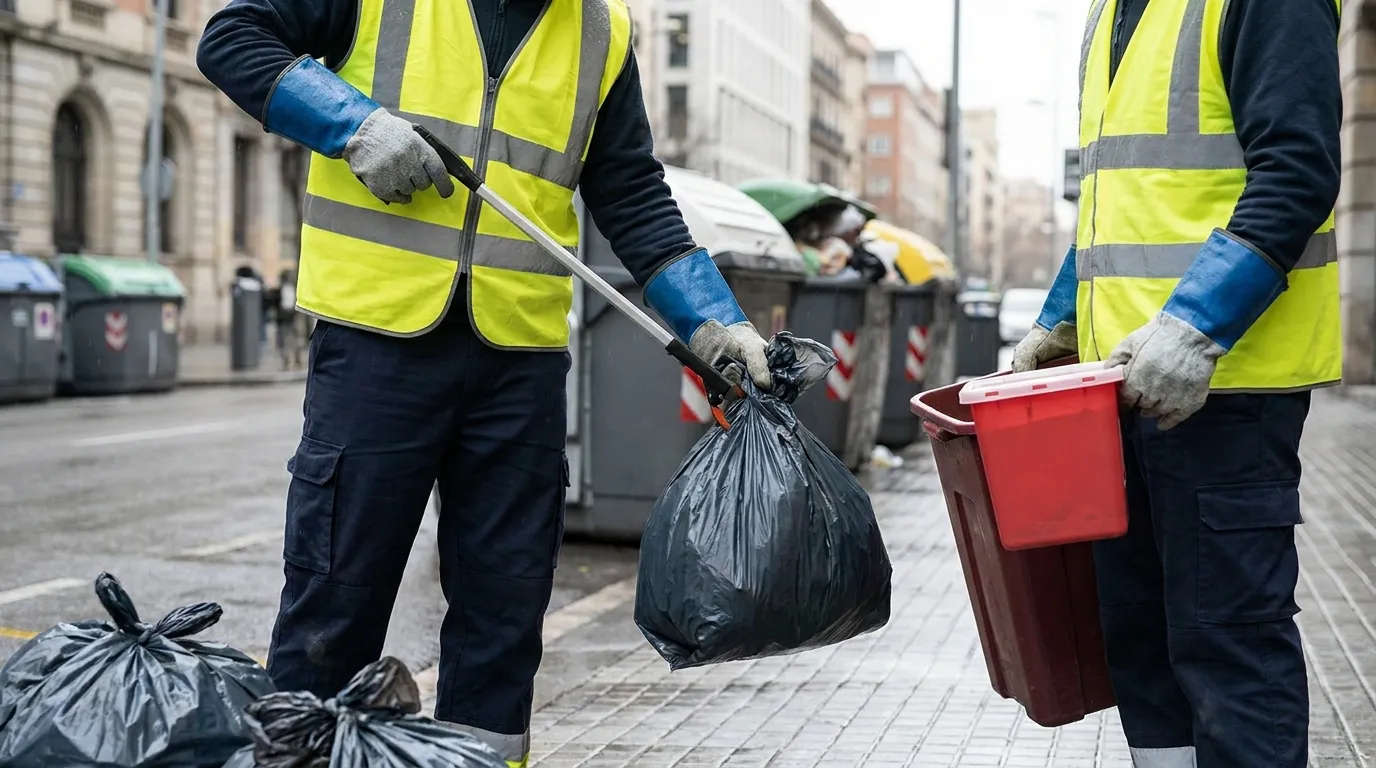
Street, park, and curbside cleanup crews often handle waste before they know what is inside it. A needle may be hidden in a wet bag, under leaves, inside a restroom bin, or near an illegal dumping site. That is why ordinary waste handling gloves may not be enough for every task.
OSHA’s Bloodborne Pathogens Standard requires appropriate PPE when occupational exposure is reasonably expected. For sanitation work, that means the glove choice should reflect the task, not only the job title.
A safe program should still start with tools and work rules. Use grabbers, tongs, sharps containers, visible-area checks, and reporting steps. Needlestick gloves reduce exposure when hand contact is hard to avoid, but they should never become a reason to reach blindly into trash.
Why are cut-resistant gloves not enough for hidden needles?
Cut-resistant gloves are not automatically needlestick-resistant. A thin hypodermic needle can pass through gaps that resist a blade, so sanitation buyers should check for a needle-puncture rating, not only an ANSI cut score.
A high cut rating is not enough for sanitation needle risk. It works for glass and metal edges, but it is the wrong proof point when the hazard is a fine hypodermic needle. A blade, a blunt puncture probe, and a needle do not attack glove material the same way.
Hazard type
What the glove must resist
Why it matters for sanitation
Cut hazard
Slicing from glass, sheet metal, cans, or sharp edges
This is the first place many glove trials fail. A crew may receive a strong cut glove, then still face needle exposure at the fingertips, finger sides, or palm. Ask suppliers to separate cut resistance, puncture resistance, and needlestick resistance in the product data.
What rating should an HSE manager check first?
Check for ASTM F2878 needle puncture resistance first when the hazard is hypodermic needles. Then review cut, abrasion, grip, cuff, and coating specs for the actual sanitation task.
ASTM F2878 is the key test to look for when buying gloves for hypodermic needle exposure. The ASTM F2878 standard evaluates the force needed for a hypodermic needle to penetrate protective material. That makes it more relevant to hidden syringe risk than a general cut rating alone.
ANSI/ISEA 105 and EN 388 can still help. They give useful information about cut, abrasion, tear, and puncture performance. For sanitation teams, the problem is buying based on one number and assuming it covers every hazard.
Rating language to request from suppliers
Ask suppliers for plain proof, not loose claims. “Needle proof” is too broad. “Puncture proof” is also too vague for HSE purchasing.
Ask for this
Why it matters
ASTM F2878 needle-puncture test result
Confirms needle-specific testing
Protected zones
Shows whether palm, fingers, sides, and cuff are covered
ANSI cut level
Helps with glass, metal, and sharp waste
Coating and grip type
Supports wet bag and bin handling
Care and reuse limits
Prevents unsafe reuse after damage
If the buyer also needs a deeper rating explanation, link the glove spec review to an ANSI puncture rating resource. Keep the sanitation article focused on what the field team must verify before rollout.
Which glove coverage zones matter most in street, park, and curbside cleanup?
Palm protection matters, but it is not the whole glove decision. Sanitation crews often touch hazards with fingertips, finger sides, wrists, and forearms before they fully grip an object. A palm-only design can leave weak points during real cleanup tasks.
For this reason, the glove should match the reach pattern. A worker lifting a wet bag uses a different hand position than a worker reaching under a park bench. A crew clearing an illegal dumping pile may need both needle resistance and cut protection across more zones.
Cleanup scenario
Main exposure
Glove zone to check
Decision point
Street litter pickup
Loose sharps, cans, glass
Palm and fingertips
Use tools first, then needle-rated grip gloves
Park cleanup under benches
Hidden needles under surfaces
Fingertips, finger sides, wrist
Add longer cuff if the wrist may touch debris
Curbside bag handling
Wet bags with unknown contents
Palm, fingertips, finger sides
Prioritize wet grip and finger protection
Public restroom cleanup
Visible or hidden syringes
Palm, fingers, wrist
Use tongs and sharps container
Illegal dumping pile
Mixed glass, metal, needles
Palm, back of hand, cuff
Use higher coverage and no hand-search rule
Brush or shrub cleanup
Hidden sharps in vegetation
Finger sides, back of hand, forearm
Consider cuff-to-elbow protection
The buyer should also ask how the glove is built. A page on needle-resistant glove design can help explain protective layers, coverage zones, and why construction matters.
When should crews choose cuff-to-elbow protection?
Choose cuff-to-elbow protection when the forearm may contact unknown waste, brush, bag contents, or hidden sharps during a reach. For tool-only pickup on visible surfaces, a secure wrist closure may be enough.
Longer protection is most useful when the work forces the hand past the visible hazard line. That includes reaching into bins, under benches, near drains, through brush, or around bulky bags. In those tasks, the wrist and forearm can touch waste before the palm does.
Shorter cuffs can still work for controlled pickup on open ground, especially when crews use grabbers and sharps containers. The mistake is treating all cleanup zones the same. A sidewalk sweep and an illegal dumping cleanup do not need the same cuff strategy.
Use cuff-to-elbow protection when:
Workers reach into deep bins or carts.
Debris sits under shrubs, benches, steps, or drains.
Bags are torn, wet, heavy, or hard to control.
Crews handle encampment-adjacent waste or illegal dumping piles.
The forearm may brush against unknown objects during pickup.
The most protective glove is not always the safest glove if workers remove it because it is too stiff. For sanitation crews, protection, wet grip, and wearable dexterity must be tested together before final purchase.
What grip works best on wet bags, bins, and cleanup tools?
For sanitation cleanup, choose a needlestick glove with tested wet-grip performance, not only high needle resistance. A glove that slips on wet bags or tools can push workers into unsafe regripping and hand placement.
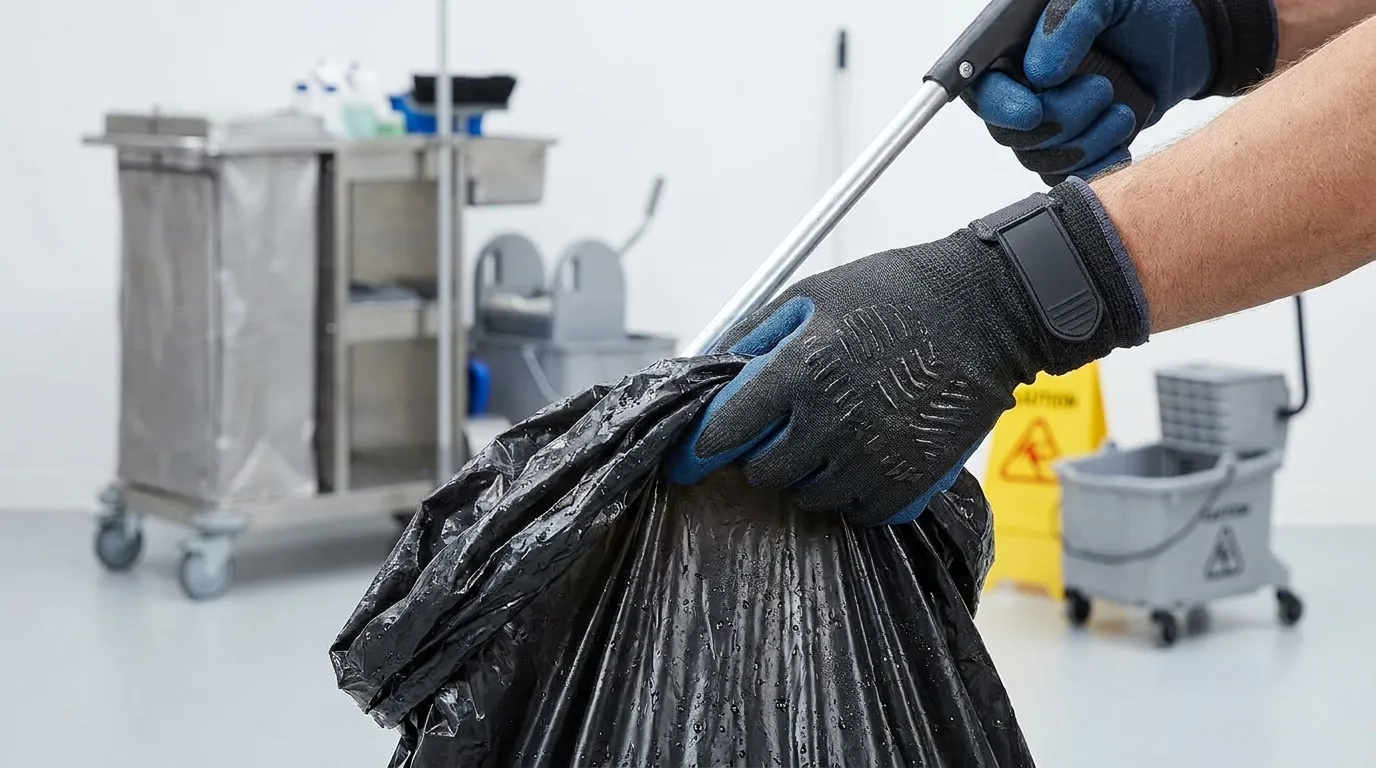
Wet grip matters because sanitation work is rarely dry and clean. Bags leak, bins collect water, tools get slick, and gloves can lose control at the worst moment. When a glove slips, the worker may squeeze harder, shift grip, or catch the bag with the other hand.
Coating choice should be tested with real tasks, not judged from a product photo. Sandy nitrile, textured nitrile, crinkle latex, and other grip finishes can all feel different when used on wet plastic, metal handles, and trash carts.
Grip surface
Where it helps
What to test
Sandy nitrile
Wet or dry bags, bins, tools
Grip when bags are damp or greasy
Textured nitrile
Mixed cleanup and tool handling
Control on grabbers and cart handles
Crinkle latex
Dry handling and general grip
Wet surface performance before rollout
Full or three-quarter coating
Splashy or damp cleanup zones
Breathability, comfort, and drying time
A nitrile coated gloves guide can help buyers compare coating behavior. In this article, the key point is field fit. If the glove protects against needles but loses grip on wet bags, it may create a new handling risk.
What should a sanitation worker incident case study show?
A useful incident review should show what happened, where the glove failed, and what changed after the event. The goal is not blame. It is to identify whether the glove, tool rule, training, or inspection process did not match the real task.
Picture a wet curbside bag lift. A worker grabs the top of a soaked trash bag during morning pickup. The bag shifts, and a hidden syringe presses into the palm side near the base of the fingers. The worker reports the injury, stops work, and the supervisor removes the glove for inspection.
Corrective action after the incident
The review finds that the glove had a strong cut rating, but no clear ASTM F2878 needle rating. The coating also slipped on wet plastic, which made the worker regrip the bag. The corrective action updates the glove spec, adds wet-grip testing, and reinforces tool-first pickup for unknown bags.
Step
Action
Why it matters
Stop work
Remove the worker from the task
Prevents further exposure
Wash and report
Follow site exposure procedures
Starts fast response
Preserve the glove
Keep it for inspection
Shows failure point and damage
Document the task
Record bag type, location, and handling method
Helps fix the process
Review glove spec
Check needle rating, grip, cuff, and coverage zones
Links incident to PPE choice
Update controls
Add tools, training, or glove changes
Reduces repeat incidents
OSHA’s bloodborne pathogen rules also address contaminated sharps, PPE, and exposure control planning. The CDC/NIOSH bulletin on sharps injuries adds another useful point for HSE teams: frontline worker feedback matters when selecting safer controls.
Which reusable or launderable glove features belong on the shortlist?
A launderable shortlist should include only gloves with documented reuse or care instructions, needle-rated protection zones, wet-grip coating, full size range, and clear retirement rules after puncture, tear, peeling, or barrier compromise.
Reusable gloves can lower replacement pressure, but only when the care rules are clear. Do not assume every heavy glove is washable. OSHA says disposable gloves must not be washed or decontaminated for reuse, and utility gloves may be reused only if their integrity is not compromised.
For sanitation teams, the shortlist should screen safety, hygiene, and worker acceptance at the same time. A glove that lasts longer but traps moisture, loses coating, or hides damage can become hard to manage.
Shortlist item
What to check
Pass condition
Needle rating
ASTM F2878 or clear needle test data
Rating is documented
Coverage zones
Palm, fingertips, finger sides, wrist
Matches task exposure
Grip surface
Wet bags, bins, tools
No unsafe slipping during trial
Cuff option
Wrist, gauntlet, or forearm
Fits reach depth
Care instructions
Wash, dry, inspect, store
Written and practical
Retirement rule
Puncture, tear, peeling, seam damage
Remove from service fast
Size range
Worker fit across crew
No loose fingertips or tight cuffs
A reusable glove retirement check should happen after every puncture scare. The supervisor inspects the palm, fingertips, seams, coating, cuff, and liner. If the barrier is damaged or the glove cannot be cleaned safely, it leaves service.
What should go into the municipal glove trial before rollout?
A municipal glove trial should test tasks, not only glove models. The right sample process shows whether workers can keep the glove on, grip wet objects, use tools, inspect damage, and follow incident rules without slowing the job too much.
Run the trial across the work that creates the highest exposure. Include wet curbside bags, park bench reaches, public restroom sharps pickup, illegal dumping piles, and routine litter pickup. Each task should test protection, grip, cuff comfort, dexterity, and worker feedback.
Use this simple process:
Select two or three glove models that meet the needle-rating requirement.
Assign each model to real cleanup tasks, not office handling.
Test wet bag grip, grabber use, cart handling, and tool control.
Check fingertip fit, cuff comfort, heat buildup, and hand fatigue.
Inspect gloves after each shift for cuts, punctures, peeling, or seam damage.
Collect worker feedback before final approval.
Write replacement and reporting rules into the PPE procedure.
A broader coated work gloves guide can support coating comparisons. The final sanitation spec should still be written around field risk, not general glove category language.
What to Do Next
Choose needlestick protection gloves for sanitation by starting with the task map, then the rating sheet, then the field trial. Do not buy from a single claim like “puncture resistant” or “cut level A9” without checking needle testing, coverage zones, wet grip, cuff length, and reuse rules.
For city cleanup crews, the safer next step is a small pilot. Test the glove in wet curbside pickup, park cleanup, restroom sharps response, and illegal dumping work. Then write the approved model, inspection steps, and retirement rules into the PPE program.
Frequently Asked Questions
What kind of gloves are needle proof?
No work glove should be called fully needle proof. For sanitation work, choose needle-resistant gloves tested for hypodermic needle puncture, preferably with protection at the palm, fingertips, and finger sides.
What are the best gloves for sanitation workers?
The best sanitation gloves match the task. Look for ASTM F2878 needle resistance for hidden sharps, cut resistance for glass and metal, wet grip for bags and bins, and longer cuffs where forearms may contact waste.
What is the standard for needlestick gloves?
ASTM F2878 is the key needle-puncture test to check because it uses hypodermic needles to evaluate material resistance. ANSI/ISEA and EN ratings may still matter, but they do not replace needle-specific testing.
How do I know if a glove is needlestick or puncture resistant?
Check the product data sheet for a needle-puncture test rating, not only marketing words like “puncture proof.” Also confirm which glove zones are protected, because palm-only protection may leave fingertips or finger sides exposed.
Are all gloves that provide cut resistance also needlestick and puncture resistant?
No, cut resistance and needle resistance are different hazards. A glove can resist blades but still allow a fine hypodermic needle to penetrate through small gaps in the material.
What gloves does OSHA recommend?
OSHA does not endorse one glove brand. It requires employers to provide appropriate PPE when exposure is reasonably anticipated, and gloves must be replaced or discarded when damaged or when barrier function is compromised.