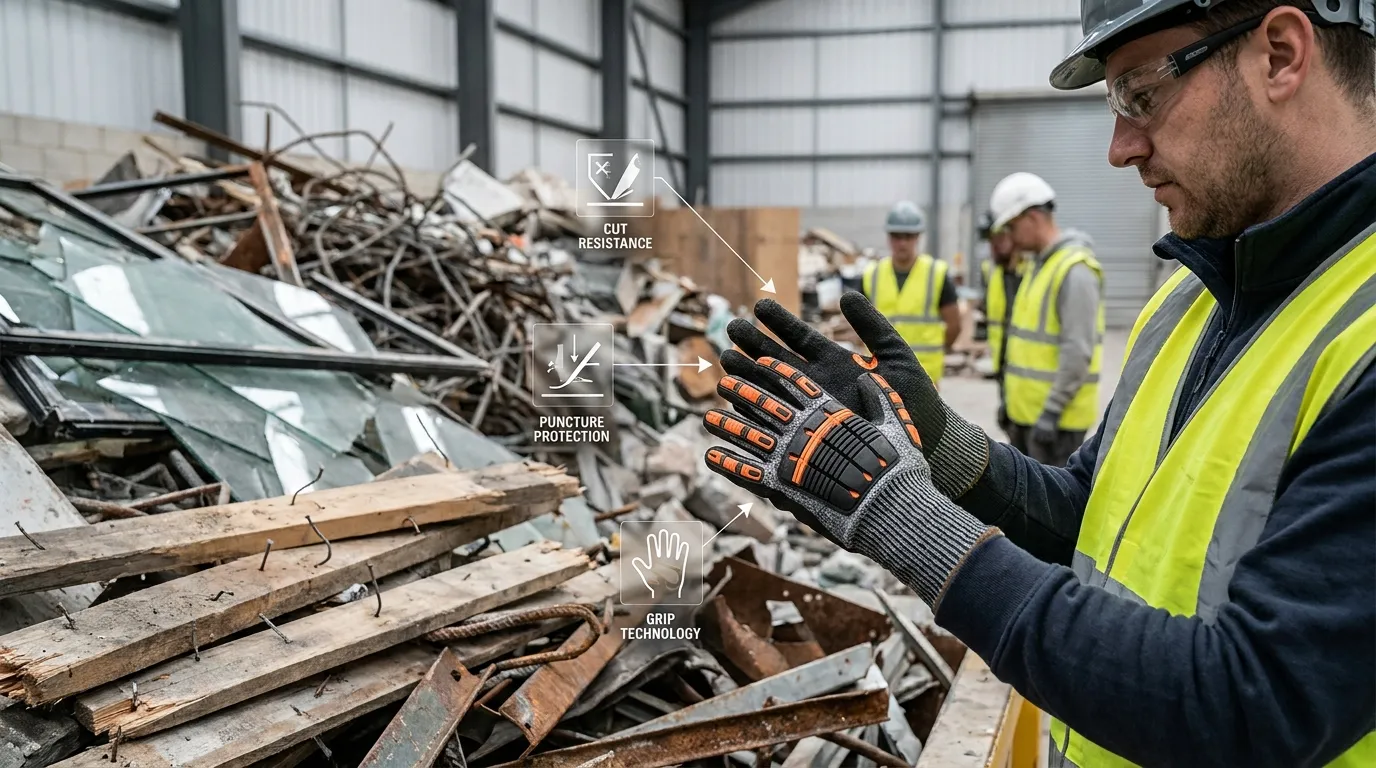
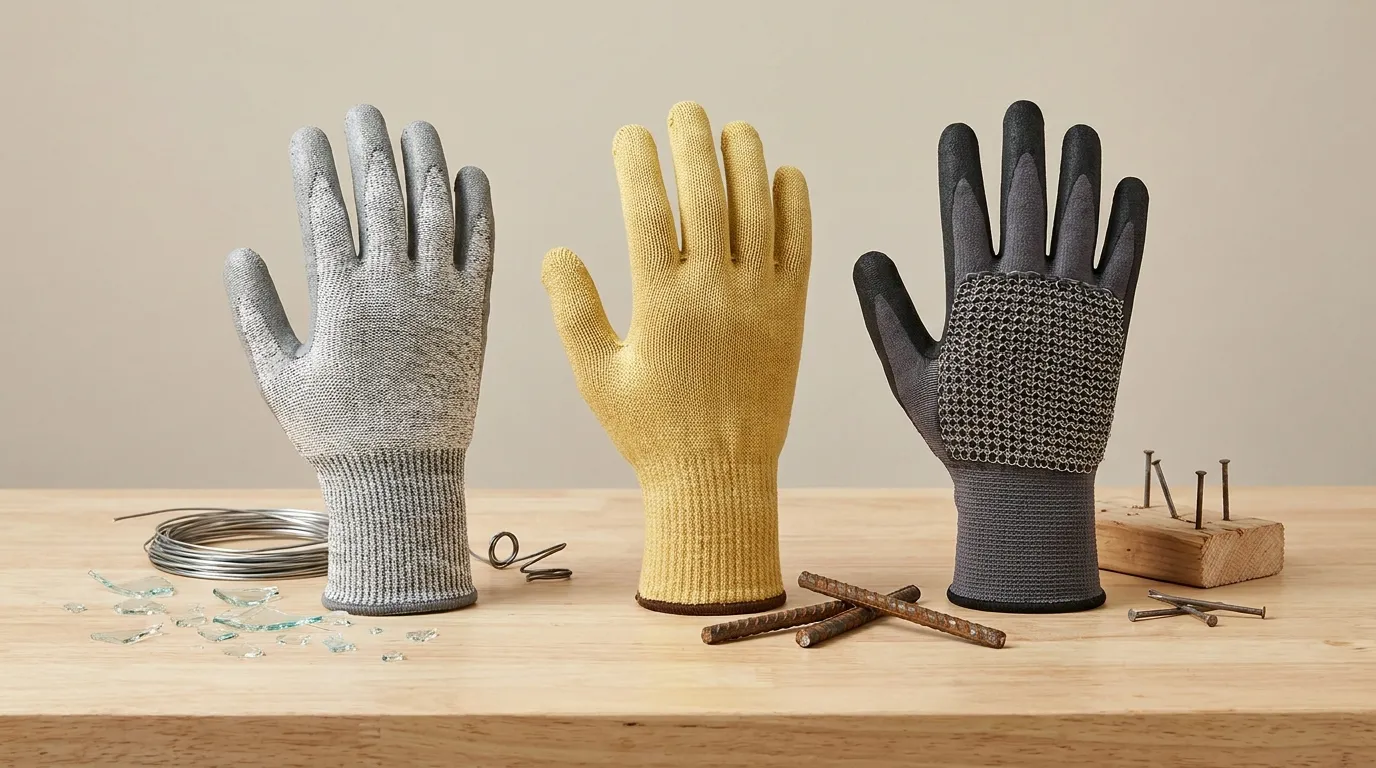
Cut and puncture resistant gloves should be chosen by checking both ANSI cut level and ANSI puncture rating, not by trusting “cut resistant” alone. For recycling or demolition crews, layered HPPE plus steel is usually the balanced pick, para-aramid blends fit heat and abrasion, and steel-mesh palm inserts fit severe palm puncture exposure.
A demolition or recycling crew rarely faces one clean hazard at a time. One worker may grab broken glass, then pull rebar, then sort nail-studded wood in the same shift. That is why glove construction matters as much as the rating label. The right choice has to protect against slicing edges, pointed objects, grip loss, and worker fatigue without becoming too bulky to wear.
Are cut-resistant gloves automatically puncture-resistant?
Cut-resistant gloves are not automatically puncture-resistant. Cut ratings measure blade-slice resistance. Puncture ratings measure how much force a pointed object needs to penetrate the material, so buyers need both numbers before approving a glove.
A cut hazard usually comes from a sharp edge moving across the glove surface. Think sheet metal, broken glass edges, or a blade-like scrap edge. A puncture hazard is different. It comes from a point pushing into the glove, such as a nail, wire end, splinter, or rebar tie.
That difference matters because a glove can resist slicing but still fail against a sharp point. GloveNation explains cut and puncture resistance as separate features, and Superior Glove warns that cut-resistant material may not give enough puncture protection by itself.
Hazard type
Common jobsite example
What to check
Cut
Glass edge, sheet metal, sharp plastic
ANSI cut level
Standard puncture
Nail, wire, rebar end, splinter
ANSI puncture level
Needle-like puncture
Syringe, staple, fine wire, tiny glass point
Hypodermic or needlestick rating
The safer buying rule is simple: do not approve a glove for mixed debris just because the label says cut resistant. If the crew faces points and edges, ask for both ratings and match them to the job.
What ratings should a safety lead check before approving combined gloves?
For combined protection, check the ANSI cut level and the ANSI puncture level separately. For demolition or recycling work, also confirm whether the puncture rating covers standard probe hazards or needle-like hazards.
The first number to check is the ANSI cut level. ANSI cut ratings use levels A1 through A9 to show blade-cut resistance. Higher levels are used for more severe cut exposure, but the right level still depends on the task, material handled, and how long workers stay exposed.
The second number is the ANSI puncture level. ANSI standard puncture ratings are not the same as needle puncture ratings. The ANSI hand protection classification gives buyers a framework for checking glove performance, but the glove still has to match the hazard assessment.
Confirm the ANSI cut level, not just the word “cut resistant.”
Confirm the ANSI standard puncture level.
Ask whether puncture protection covers palm only or more areas.
Ask whether needle-like hazards need separate protection.
Match the glove to the job, not only to a catalog claim.
OSHA’s hand protection rule also supports this task-based approach. Employers must choose hand protection based on the work, conditions, duration, and hazards. For a broader cut-rating explanation, send readers to the cut glove ratings guide instead of repeating the full pillar here.
Which construction works best for both cut and puncture hazards?
The best combined glove construction depends on the hazard mix. HPPE plus steel is often the balanced choice, para-aramid blends fit hotter or abrasive work, and steel-mesh palm inserts fit severe palm puncture exposure.
The liner does most of the protective work. Coatings help with grip, abrasion, and surface control, but they should not replace the core cut and puncture rating. MSC lists HPPE, para-aramids, metal blends, nitrile, and PU as common glove materials and coatings used in cut-protection glove design.
Combined Cut + Puncture Construction Matrix
Construction
Best use
Cut support
Puncture support
Dexterity
Avoid when
Layered HPPE plus steel
Recycling, glass sorting, metal handling
Strong, depending on ANSI level
Good when tested and layered
Usually better than mesh
Extreme palm puncture is constant
Para-aramid blend
Abrasive or hotter material handling
Strong, depending on blend
Moderate to strong when reinforced
Medium
Heat is not a factor and lighter grip is needed
Steel-mesh palm insert
Severe palm puncture exposure
Strong in reinforced areas
Very strong at the palm
Lower
Workers need high finger feel all shift
Light coated cut glove without puncture liner
Light cut tasks with grip needs
Varies by liner
Often weak unless rated
High
Nails, wire, rebar, or unknown waste are common
HPPE plus steel is often the best starting point for mixed debris because it can balance cut resistance and wearability. Para-aramid blends make sense when abrasion or heat is part of the job. Steel-mesh palm inserts are more specialized because they can protect the palm well, but they may feel stiff.
Coating still matters. A nitrile or PU palm can help workers hold dusty, dry, wet, or oily material. For broader coating selection, use the coated glove selection guide after the protective liner is chosen.
How should you choose for a glass-and-rebar demolition site?
For a glass-and-rebar demolition site, start with a high ANSI cut level, then confirm a tested puncture rating for palm-side point hazards. Add grip coating if workers handle dusty, oily, or wet debris.
Picture a crew clearing a mixed demolition pile. Workers lift broken glass panels, pull rebar from concrete pieces, sort nail-studded lumber, and move scrap metal into bins. A cut-only glove is too narrow for that job because the hazards change from edge contact to point pressure within minutes.
The best first sample is usually a layered HPPE plus steel glove with a verified puncture rating. If rebar ends, nails, and wire hit the palm all day, test a steel-mesh palm insert. If workers also face hot or abrasive debris, a para-aramid blend may be a better trial sample.
Glass-and-Rebar Site If-Then Table
Worksite condition
Rating to check
Construction to consider
Warning
Broken glass sorting
ANSI cut level
HPPE plus steel
Fine glass points may need more than cut resistance
Rebar pulling
ANSI cut and puncture
HPPE plus steel or mesh palm
Check palm and finger coverage
Nail-studded wood
ANSI puncture level
Reinforced palm design
Cut-only gloves are not enough
Oily scrap handling
Grip plus rating
Nitrile-coated protective liner
Grip coating is not a puncture rating
Unknown recycling waste
Standard and needle puncture
Needlestick-rated option
Normal puncture may not cover syringe risks
Workers remove bulky gloves
Fit and trial feedback
Lighter rated construction
Protection fails if workers stop wearing it
Grip choice should follow the surface. A crinkle latex palm may help on dry rough material, and PU can feel thinner for handling tasks. Use the palm coating choice comparison when the liner is already decided.
When is each material the wrong choice?
The wrong glove is the one that solves one hazard and ignores the work pattern. Steel mesh, aramid blends, and HPPE plus steel all have a place, but none should be treated as the default answer for every demolition or recycling job.
Material choice
When it works
When it is the wrong choice
HPPE plus steel
Mixed cut and puncture work with regular handling
Severe palm puncture is constant and needs heavier reinforcement
Para-aramid blend
Abrasion, heat exposure, and rough handling
The job is cool, light, and dexterity-first
Steel-mesh palm insert
Strong palm puncture exposure from nails, wire, or sharp scrap
Workers need high finger feel, speed, and comfort all shift
Thin coated cut glove
Light cut exposure with strong dexterity needs
Rebar, nails, or hidden sharps are common
A high cut rating is not enough. It works for slicing hazards, but it is unsafe to treat it as puncture approval unless the glove also shows a tested puncture rating.
Steel-mesh palm inserts are not always the best choice. They make sense for severe palm puncture exposure, but HPPE plus steel is usually easier to wear for crews that sort, lift, grip, and move all day. A lightweight coated glove can also be the wrong purchase when comfort hides weak puncture protection.
If the job leans more toward dexterity than heavy debris, a PU coated gloves guide can help buyers understand thinner palm feel. For demolition debris, though, comfort should come after verified protection.
What about needles, fine glass, and unknown recycling waste?
Standard puncture gloves are not enough for needle-like hazards. If the crew may contact needles, fine glass, thin wire, or staples, specify needlestick or hypodermic puncture protection instead of relying on a normal puncture rating.
This is the line safety leads should not blur. Standard puncture protection is tested for a different type of point than a needle-like object. Superior Glove separates standard puncture from hypodermic puncture, and it lists hazards such as needles, fine splinters, tiny glass, thin wire, and staples as fine-object risks.
Recycling and cleanup crews can face unknown waste. One bin may contain plastic, wood, and glass, then the next may hide syringes or fine wire. In that case, a normal puncture rating may not be enough for the real risk.
Nails, rebar ends, and wood splinters: check standard puncture rating.
Syringes, staples, fine wire, and tiny glass points: check hypodermic or needlestick protection.
Mixed unknown waste: ask for both hazard coverage before trial.
For deeper detail, send the reader to needle puncture protection. Security or search teams can also compare police search gloves, but this demolition article should stay focused on worksite buying.
What should be on the final purchase checklist?
The final purchase checklist should confirm hazard match, ratings, coverage area, grip, comfort, and worker acceptance. Do this before a bulk order because one glove sample may look right on paper and still fail during a full shift.
List the top three hazards: glass edges, rebar, nails, wire, unknown waste, or fine sharps.
Confirm ANSI cut level.
Confirm ANSI standard puncture level.
Confirm whether needle-like puncture is needed.
Check palm, finger, thumb crotch, and back-of-hand coverage.
Match coating to dry, wet, oily, or dusty handling.
Run a one-shift trial with real crew feedback.
Set replacement rules for worn coating, torn liners, or damaged palms.
Reject “cut-proof” or “puncture-proof” claims.
If workers also face back-of-hand crush or impact hazards, use an impact glove guide as the next step. Do not turn this glove into an all-purpose answer unless each hazard has been checked.
Getting the Next Step Right
The best cut and puncture resistant gloves are the ones that match the actual debris stream. For a recycling or demolition crew, start with the hazard list, then check cut rating, puncture rating, coverage area, and grip. After that, run a jobsite trial.
Do not buy only from the highest-looking number or the thickest-looking glove. A glove that protects well but gets removed by workers is not solving the safety problem. Choose the construction that your crew can wear, grip with, and trust for the full shift.
Frequently Asked Questions
Are cut-resistant gloves also puncture-resistant?
Not always. Cut resistance and puncture resistance are tested against different hazards, so a glove can resist slicing but still perform poorly against pointed objects. Check both ratings before buying.
Are any gloves truly cut-proof or puncture-proof?
No glove is truly cut-proof or puncture-proof. The correct term is resistant because enough force, a sharp enough point, or the wrong use can still defeat the glove.
What ANSI ratings matter for combined protection?
Check ANSI cut level and ANSI puncture level separately. ANSI cut levels show blade resistance, and puncture levels show resistance against point penetration under test conditions.
Which glove material is best for demolition work?
For demolition work, layered HPPE plus steel is often the balanced starting point because it can combine cut resistance, puncture support, and usable dexterity. Severe palm puncture exposure may justify steel-mesh inserts.
Do puncture ratings protect the whole hand?
Not necessarily. Puncture testing often focuses on the palm side, so buyers should confirm whether fingers, thumb crotch, and back-of-hand areas have rated or added protection.
Do I need needle-resistant gloves for recycling work?
You may need needle-resistant gloves if workers handle unknown waste, syringes, fine wire, staples, or tiny glass points. Standard puncture protection is not the same as hypodermic puncture protection.