Home > BLOG > Industry Blog > Heavy Duty Gloves Wholesale in China for Southeast Asia: Heat, Humidity, and Grip
Heavy Duty Gloves Wholesale in China for Southeast Asia: Heat, Humidity, and Grip
19 Oct, 2026
By hqt
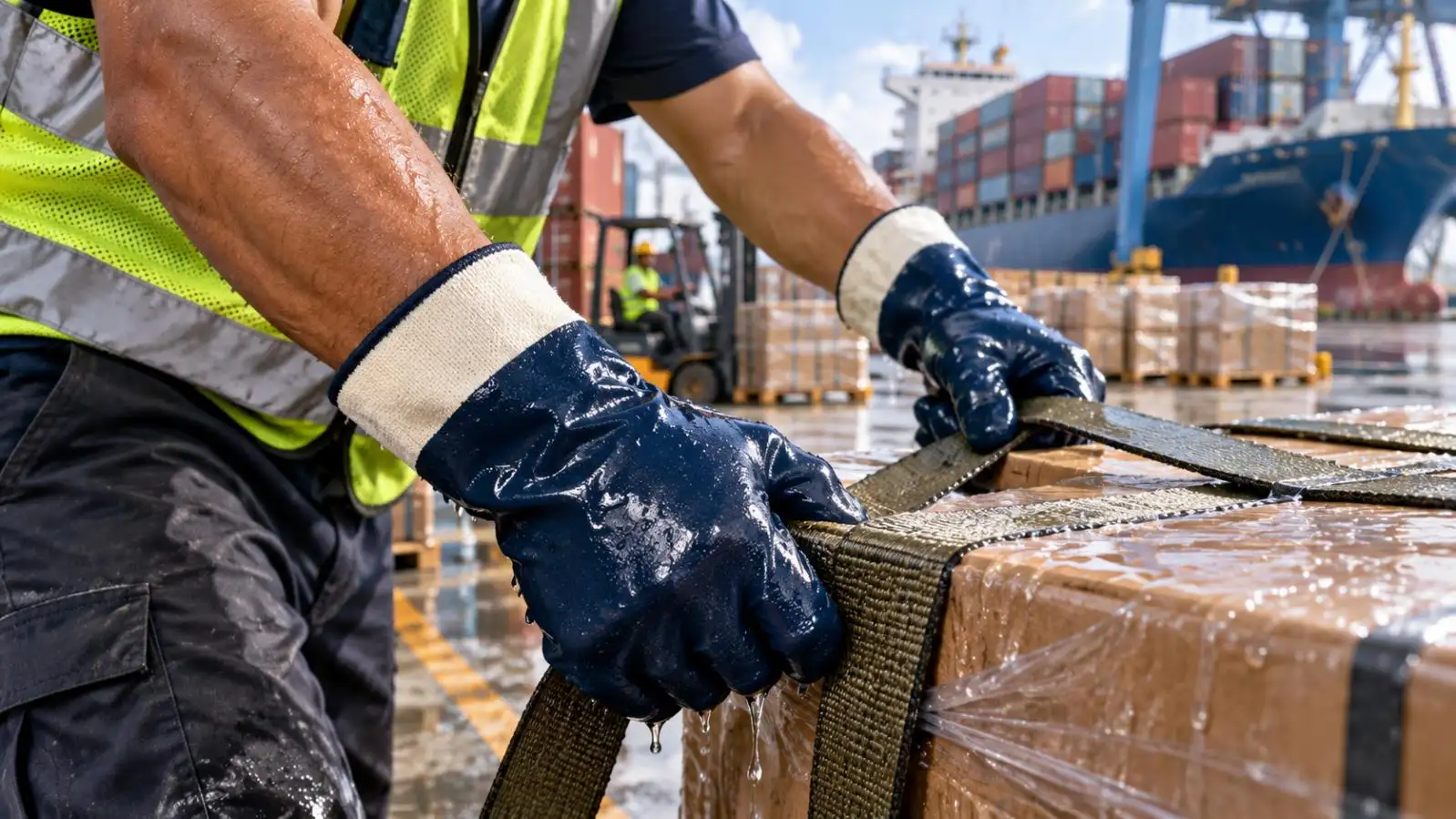
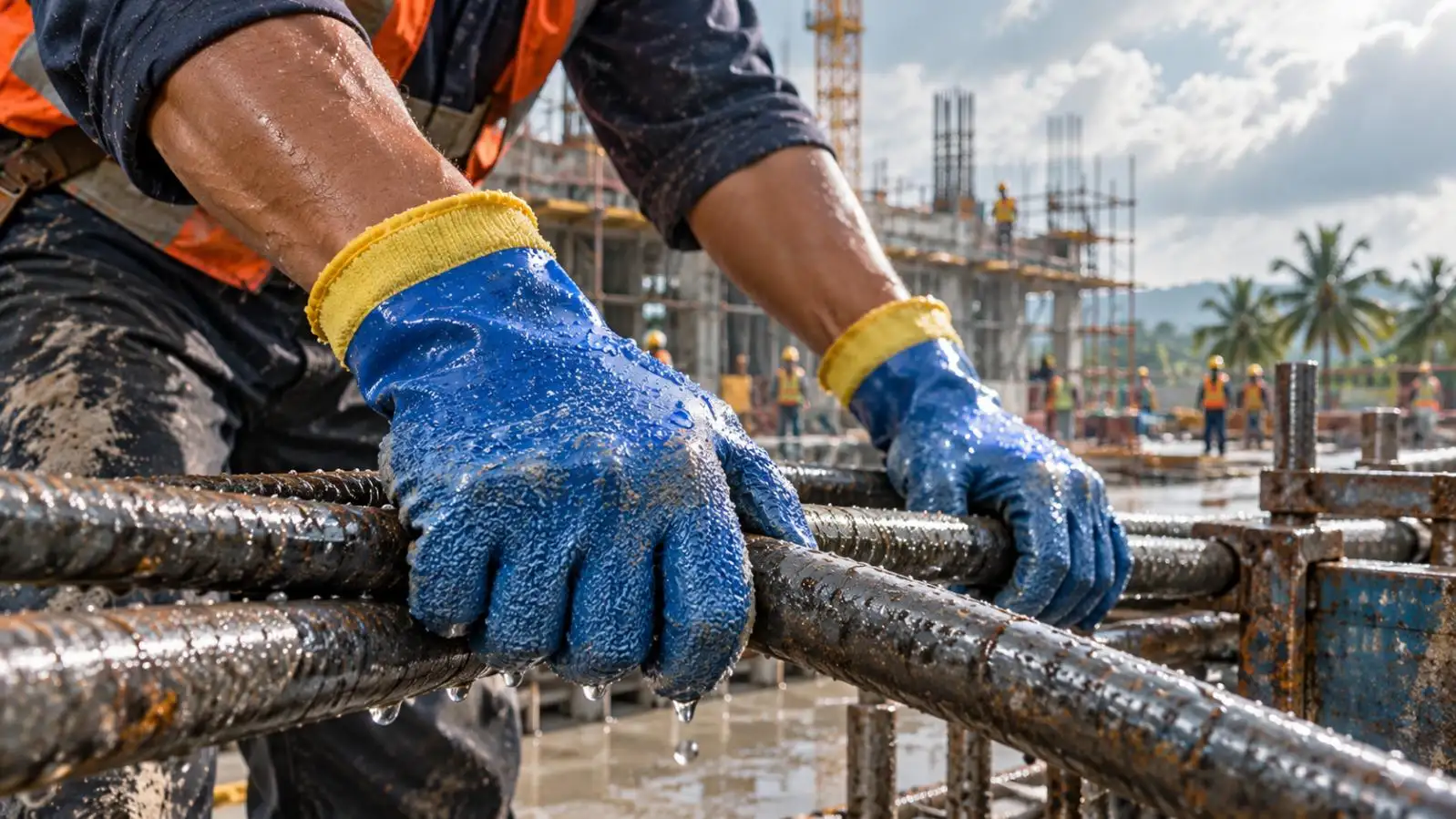
Industrial customers purchasing Heavy Duty Gloves Wholesale from China, face challenges with the hot and humid conditions of South East Asia. Aside from perspiration and the discomfort of wearing wet gloves, materials in a variety of industries can be contaminated with oils and other chemical residues, and gloves can lose their grip.
It is a mistake to assume that a mechanical protection glove will perform to customer expectations based on the Liners and coatings. The liner and coating, if used at all, must be assessed in combination with the level of cut and impact protection and the expected service duration of the glove.
Heating and Humidity on the Performance of Heavy Duty Gloves
Prolonged glove wear in a hot and humid environment can cause discomfort from the buildup of perspiration in the liners. The rate of evaporation of moisture in the liners is dependent on the construction of the liners as well as the thickness and the weave of the coating, if any.
•Grip Stability: Thin water and oil films between the glove and workpiece alter the nature of friction. This may lead to the need for greater force when gripping.
•Dexterity: Stiff protective yarns in the palm reinforcements and thick coatings restrict finger movements.
•Palm Coated constructions maintain more of the back of the hand exposed, and promote air flow. Construction that fully coat the palm of the hand provide a barrier against liquids and may reduce the buildup of perspiration.
For Heavy Duty Gloves Wholesale in China, a fully coated construction may retain more heat and moisture. This may be particularly relevant if workers are primarily exposed to perspiration.
Coating Technologies: Balancing Wet Grip, Durability, and Breathability
Sandy Nitrile Compared to PVC and Foam Nitrile
Among the products mentioned, sandy nitrile may show the best performance with slippery surfaces, especially with rigid workpieces. The performance may be workpiece and oil depot surface material.
Coating coverage matters as much as coating material.
Palm-coated gloves can retain some flexibility and ventilation. However, the exposed knitted areas offer no liquid barrier properties. Fully coated gloves may provide a more effective barrier to water and/or oil.
Neither an oil-resistant coating nor nitrile coating helps prevent chemical permeation.
Importance of Liner Materials and Knitting Gauge
•Cuts to the hand can be prevented with the use of cut-resistant gloves, which can also be made with HPPE.
•Nylon and polyester give a greater level of flexibility and support to the structure of the glove.
•Cut resistance and comfort can also be increased with the use of glass and/or steel fibers.
•The thickness of the glove and how comfortable it is to wear can also be affected by the gauge.
At NMSafety, gloves made with 13-gauge HPPE-blend yarns have a sandy nitrile palm coating. Some of the designs also have a reinforced crotch to prevent wear at that site.
Cut-resistant gloves should only be worn when working with a sharp edge that can penetrate the skin.
Matching Heavy-Duty Gloves to Southeast Asian Industries
Application conditions differ between construction, manufacturing, mining, and logistics operations.
Market / Industry
Primary Exposure
Recommended Design Focus
Singapore – Construction/Logistics
Rain, abrasion, repetitive gripping
Textured palm, flexible liner
Malaysia – Industrial Maintenance
Oil contamination, mechanical wear
Sandy nitrile, abrasion resistance
Thailand – Automotive
Sharp metal, lubricated components
Cut-resistant liner, oily grip
Vietnam – Manufacturing
Perspiration, repetitive handling
Flexible coating, suitable ventilation
Indonesia – Mining
Impact, rough materials
TPR backhand protection, reinforced palm
Philippines – Construction
Wet handling, prolonged outdoor work
Grip, fit, moisture management
These represent application-based selection examples rather than universal requirements for each country.
When Is Impact Protection Necessary?
For mining, heavy equipment handling, and operations involving tools or moving components, back-of-hand impact hazards may require additional protection.
Our impact-resistant glove range offers the following constructions:
•13-gauge nylon/HPPE/glass-fiber knitted liners.
•Sandy nitrile palms.
•Thermoplastic rubber (TPR) backhands.
•Index/thumb reinforcement and adjustable cuffs.
TPR provides impact protection and may provide partial edge protection from cutting, however, it should be assessed for the purpose. Impact protection does not remove the potential for a crushing hazard.
Things to Look for When Sourcing Heavy Duty Gloves from China
Mechanical Protection
A coating description cannot verify standards.
Standard/Test
What it Evaluates
Purchasing Consideration
EN 388:2016+A1:2018
Abrasion, cut, tear and puncture and (if relevant) impact
Verify mechanical protection levels
ANSI/ISEA 105-2024
Cut and puncture abrasion protection
Compare protection levels
ANSI/ISEA 138-2019
Back of hand impact protection
Assess impact protection
ISO 21420:2020
General requirements for protective gloves
Review construction and sizing
Workplace Grip Trial
Assess suitability to handle work items under oily/wet conditions
—
It is important to note that AN and EN cut classifications and their respective tests and ratings are not mutually equivalent.
NMSafety's DY1350F-H6 sandy nitrile gloves are constructed with a 13-gauge nylon/HPPE/steel-fiber knitted liner and thumb reinforcement, and are listed ANSI A6 and EN ISO 13997 F cut levels. Impact protection does not remove the potential for a crushing hazard and should be assessed for the purpose.
Practical Testing Before Wholesale Gloves are Approved.
It is recommended that the following tests are performed as a minimum:
Define the hazards: impact, cuts, abrasions, liquids, and punctures.
Grip Trial: Assess suitability to handle work items as they would in service.
Wear test: assess comfort, mobility and security of the fit during the course of normal use.
Wear points: Fingertips, palm coating, thumb crotch, and reinforcement attachment.
Bulk consistency: Productions samples may vary from approved materials and coating, and can be dimensionally incorrect. Test documentation may be incomplete.
Tropical gloves may lose their initial "grip" over time due to accumulation of environmental moisture, especially with repeated use. Aging may go unnoticed if gloves are not tested for dry-grip performance after repeated use.
When evaluating suppliers for heavy duty gloves, in addition to unit prices, consideration should be given to Cost per Working Hour.
Working hours are typically defined as the time a given pair of gloves is used for the given task; replacement may be required due to glove deterioration (coating wear) or for subjective reasons.
Wholesale Cost, OEM Customization, and Supplier Evaluation
When establishing a purchase specification for gloves, the minimum requirements should be:
•ANSI/EN ratings, glove lining and coatings, and size and model variability.
•Additional considerations may include branding, color and packaging requirements.
•Outline our standard approval processes and inclusion criteria for batches.
•Minimum Order Quantity (MOQ) and lead time for specified product configurations.
NMSafety offers a range of impact-resistant, cut-resistant and nitrile-coated glove constructions. In addition, we have capabilities to manufacture part of our product offering according to OEM specifications. This enables our customers to compare their designs against their market requirements against specified product standards.
Heavy Duty Gloves Wholesale in China: NMSafety
From the perspective of an end user in Southeast Asia, when selecting heavy duty gloves, mechanical protection is of prime consideration and has to be integrated with a good grip and moisture management in a comfortable-fitting glove.
At NMSafty, we help our customers evaluate their requirements for different applications and compare different constructions of gloves.
Take a look at our Heavy Duty Gloves catalog and contact us to provide your particular working conditions. Based on your requirements and ratings, we will assess what is available to us for your consideration and provide input on what can be adjusted to fulfill your requirements for your market.
FAQs
Q1. What types of heavy-duty gloves does NMSafety offer?
NMSafety offers cut-resistant, nitrile-coated, PVC-coated, and impact-resistant gloves for various industrial applications.
Q2. Which NMSafety gloves are suitable for wet and oily handling?
Our sandy nitrile-coated gloves are designed for grip in wet and oily conditions. Actual performance depends on the application and selected model.
Q3. Does NMSafety offer breathable heavy-duty gloves for hot climates?
Yes. Our palm-coated knitted gloves provide options with exposed fabric backs for ventilation. Comfort depends on liner construction, fit, and working conditions.
Q4. Can NMSafety supply impact-resistant gloves for mining and construction?
Yes. Selected NMSafety gloves incorporate TPR backhand protection. Buyers should verify the applicable impact rating for each model.
Q5. What liner materials are used in NMSafety heavy-duty gloves?
Depending on the model, we use HPPE, nylon, polyester, glass fiber, and steel-fiber blends to achieve different protection and flexibility requirements.