Home > BLOG > Industry Blog > Garden Gloves Factory in China: Urban Gardening Trends and Lightweight Glove Design
Garden Gloves Factory in China: Urban Gardening Trends and Lightweight Glove Design
19 Oct, 2026
By hqt
A Garden Gloves Factory in China recently recognized a problem in urban gardening. Hand protection is essential for gardening, but traditional hand protection reduces the ability to perform the intricate tasks necessary for gardening like planting and pruning. Other types of gardening such as heavy landscaping don't require as much hand protection because the user is not interacting with the plants as much. Urban gardening has been on the rise, and it is especially helpful for communities that live in urban areas.
At NMSafety we consider three aspects when choosing a lightweight garden glove. These aspects are construction, coating, and hand protection, and how they pertain to the tasks being performed.
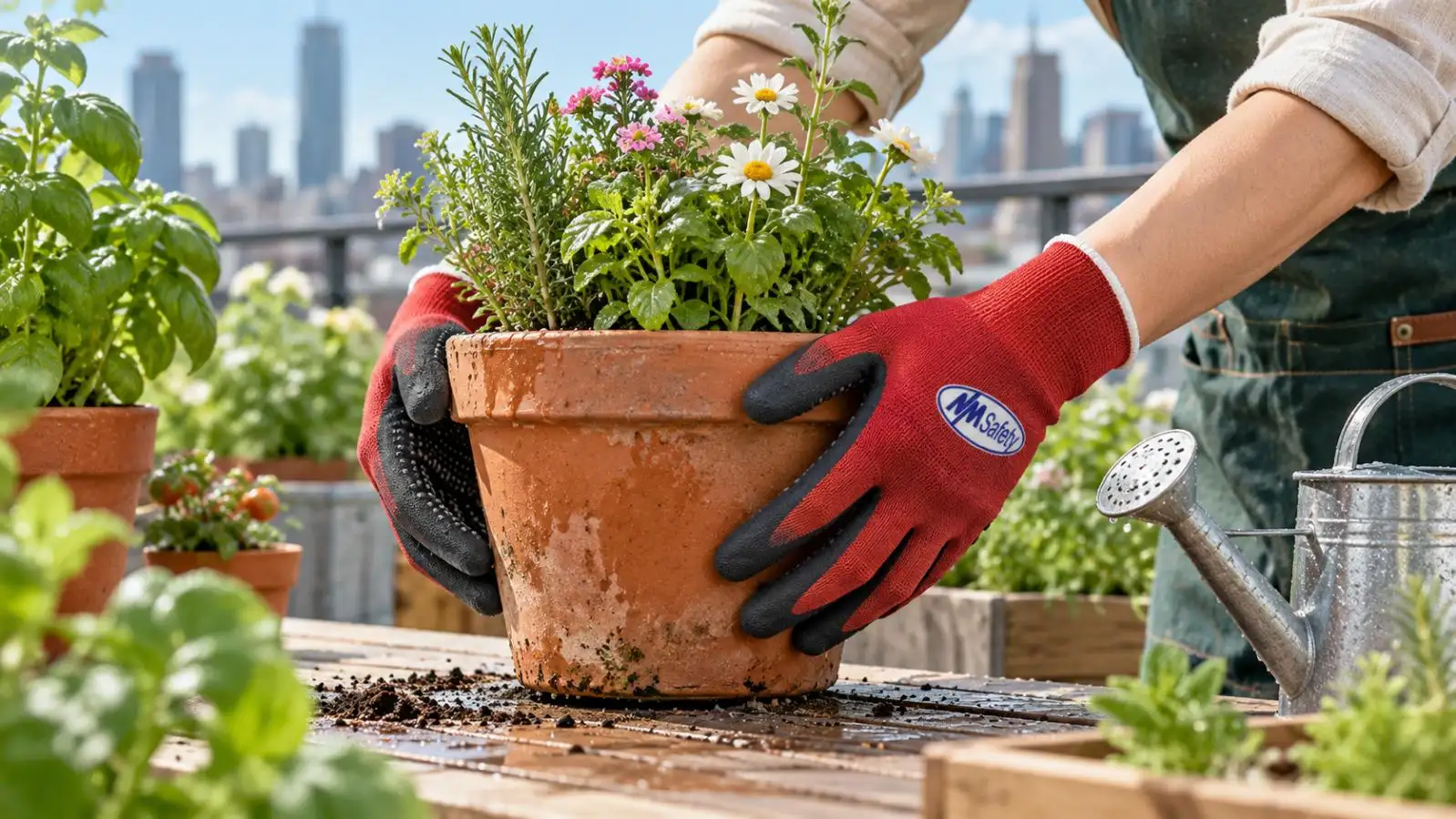
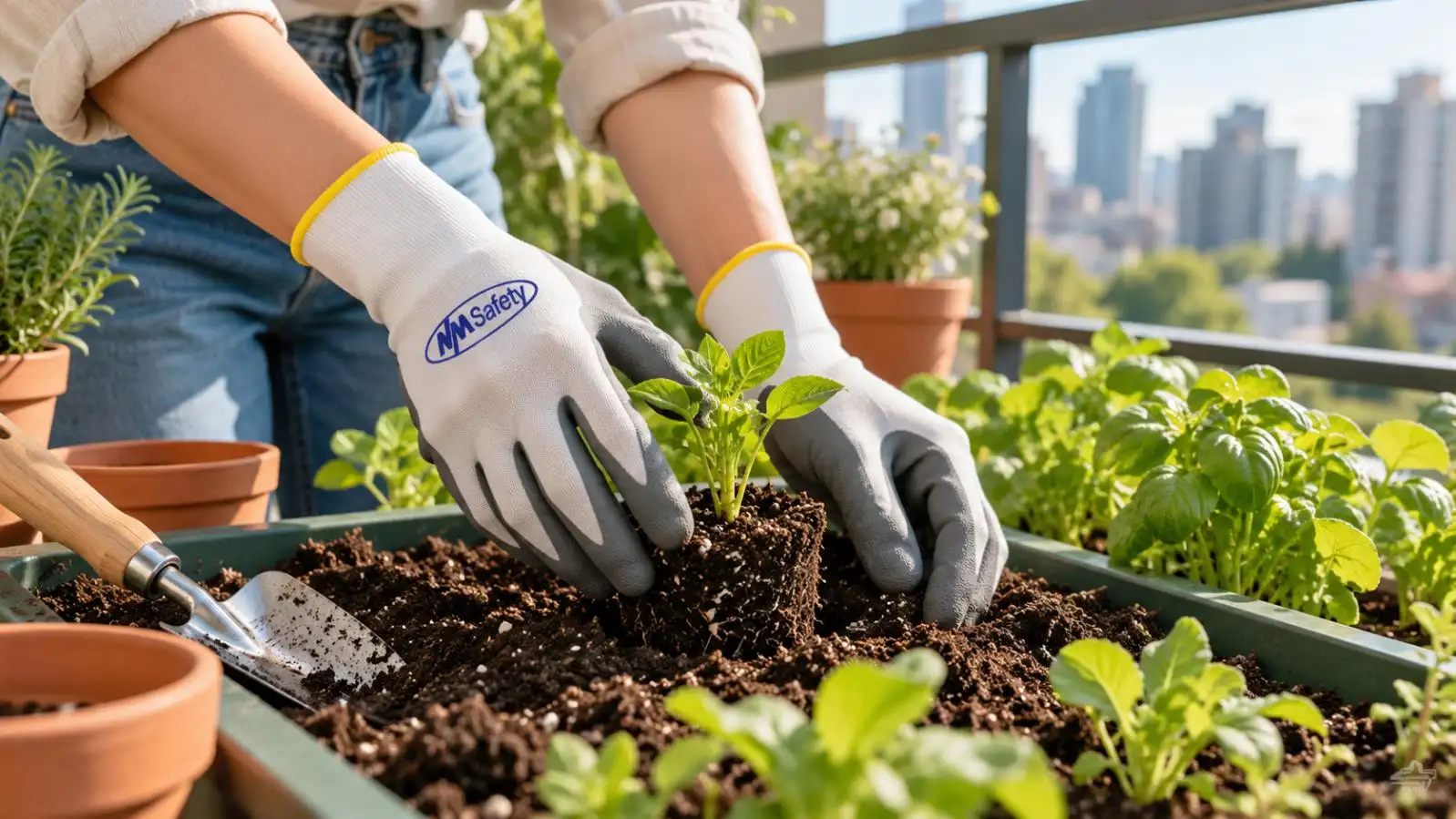
The nature of most urban gardening tasks requires a lightweight garden glove. These tasks could include transplanting and, therefore, require fingertip control. Other tasks could include moving wet, heavy pots, and require edging and abrasion protection.
The appropriate glove construction therefore varies by application.
Gardening Application
Main Challenge
Glove Design Priority
Seedling transplantation
Fine finger movements
Thin, flexible liner
Balcony container gardening
Frequent pot handling
Palm grip and abrasion resistance
Rooftop vegetable growing
Extended outdoor use
Breathability and fit
Watering and soil handling
Moist surfaces
Tested wet grip
Rose pruning
Thorn puncture hazards
Reinforced protection
For buyers working with a Garden Gloves Factory in China, the objective should be application-specific product selection rather than choosing the thinnest available glove.
Lightweight palm-coated gloves are practical candidates for everyday planting, but they are not substitutes for specialized thorn-resistant or chemical-protective gloves.
How Knitted Liner Construction Influences Glove Performance
13-Gauge vs. 15-Gauge vs. 18-Gauge
Different gauges of wire result in differences in fabric weight and thickness, as well as in the types of coatings that can be used.
Higher gauges can allow the use of thinner and more tensive yarns; however, other factors can affect the weight and mechanical properties of the final product.
Liner Gauge
General Construction
Selection Consideration
13 Gauge
Rougher, more open knits
Great for durability and ease of use
15 Gauge
Slightly less open knits
Provides a good balance of flex, protection, and comfort
18 Gauge
Fine knits
Allows for improved fingertip protection and sensitivity while decreasing bulk
Other factors can also affect final product properties and characteristics.
Fiber Selection and Hand Comfort
Each type of fiber has unique characteristics that can impact design. The most common fibers used in liners are:
• Nylon: Can provide a smooth and flexible surface and have good resistant to abrasion
• Polyester: Has good chemical stability, is economical, and has good tensile strength
• Spandex: Allows a closer fit and has a greater range of motion
• RPET: Provides similar characteristics to polyester and is also economical
• Bio-based fibers: Depending on the formulation, can also provide good tensile strength and chemical stability
Excess fingertip material or a snug fit can adversely impact the function of gardening gloves.
What's the Difference? Nitrile and Latex Coatings
Different coatings create different interfaces between hands and environment.
It is important for the design of a garden gloves manufacturer in China to consider how each aspect of the coating fabrication integrates with the others.
Coating Technology
Primary Characteristics
Design Trade-offs
Microfoam Nitrile
Very thin coating, high flexibility, textured surface
Textured surface grips, immediate return to original shape
Breathability varies, provides no barrier, slightly covers the palm
Fully Coated Construction
Surface covered in material
Potential for heat and moisture build up
In garden gloves, Crinkle latex and sandy nitrile coatings may improve wet grip and allow for better cover of palm and fingers for microfoam nitrile.
Wet-grip coating performance can not be extrapolated with textured surfaces. Representative samples should be provided to assess coatings under given environmental conditions.
Air can circulate through air pockets in knitted areas. This doesn't mean the glove is waterproof, and allows for the possibility of pesticide transmission.
Relating Lightweight Glove Designs to Gardening
The best design is a balance between adequate protection and enough mobility to perform the task.
For seedling and balcony gardening, the following protections are preferred:
• Flexible fingertips, and a balance of sizing (i.e. not too large) to avoid impeding the thumb.
• A knitted backing for comfort.
• A layer of textured protection on the palm for grip.
For more protection, users of community gardens may benefit from additional abrasion protection.
Standard lightweight gloves may offer little protection for rose pruning and the removal of thorny shrubs. For these activities, the protection and a cuff may help negate some of the risks of puncture. Retailers may benefit from offering a range of gloves for specific activities, from simple gardening to pruning.
Verifying Garden Gloves Performance Prior To Bulk Purchase
Chinese garden gloves manufacturers typically make broad claims about their products (e.g. "high durability" or "super protection"). As a professional manufacturer, we should provide test data and specific information about the product, not relying on vague advertising.
Mechanical Testing and Compliance
Two standards applicable to the testing of gardening gloves are:
1. EN ISO 21420:2020. It sets requirements on design, comfort, and manufacturer's information, along with other attributes and limitations of gloves.
2. EN 388:2016+A1: It sets out requirements for the testing of abrasion, blade cutting, tearing, and puncture resistance, and impact protection.
Test for the EN 388:2016 puncture resistance will not indicate protection from plant thorns.
Practical Sample Evaluation
It would be beneficial for an importer to have the following samples tested:
• Physical Evaluation: Comparison of finger length, palm width and consistency of sample set.
• Comparison of pair weights.
• Grip evaluation: dry and wet.
• Flexibility evaluation: bending of fingers, repeated gripping.
• Wear evaluation of coating, and abrasion.
• Test reports and material certificates.
In lieu of relying on a single laboratory test and rating, garden gloves importers should evaluate whether the garden gloves meet the requirement for the intended use (based on the tests performed by the gloves manufacturer).
NMSafety: Product Selection and Manufacturer Purchase
At NMSafety, our garden gloves have bio-based fibers, recycled polyester, and Nitrile coatings.
These examples demonstrate different construction approaches:
The first digit of these EN 388 ratings represents abrasion resistance. The results illustrate why knitting gauge alone is insufficient to predict performance. Buyers should obtain current supporting test reports for their selected models.
What Should OEM Buyers Confirm?
While assessing a Garden Gloves Factory in China, buying teams will look at the following.
• Materials: Type of fiber and coating and if coating is bio-based or recycled.
• Customization: Color and/or logos. Customization may include changes to the packaging and design.
• Order details: Approval of samples, and the minimum order quantity (MOQ).
• Quality: First article inspection. Dimensional limits and coating uniformity and consistency.
• Legal and regulatory: Customer-specific test reports.
NMSafety offer the MOQs of 12,000 pairs for bio-based models and 6,000 pairs for NY1350S-ECO. Lead time is 60 to 120 days. Prospective customers should validate these terms prior to ordering.
Selecting a Garden Gloves Factory in China for Urban Gardening
Gloves designed for urban gardening account for the type of movements and the conditions of the grip and exposures and aren't just thinly made.
We ensure a variety of knitted liners, coatings, and OEM modifications to provide coverage for various gardening activities. Our Garden Gloves line features a variety of construction methods to assist you in analyzing the options as well as offering alternatives for your clientele.
FAQs
Q1: Does NMSafety manufacture lightweight gardening gloves?
Yes. NMSafety offers lightweight knitted gloves with nitrile coatings suitable for evaluation in planting, container handling, and general gardening applications.
Q2: What knitting gauges are available in NMSafety's garden gloves?
NMSafety offers 13-gauge, 15-gauge, and 18-gauge constructions, providing different options for fabric structure, fit, and dexterity.
Q3: Which NMSafety gloves are suitable for precision gardening tasks?
The NY1850FRB-BIO features an 18-gauge bio-based nylon/spandex liner with microfoam nitrile coating. Buyers should evaluate its fit and grip through samples.
Q4: Does NMSafety offer recycled-material gardening gloves?
Yes. The NY1350S-ECO uses a 13-gauge recycled PET polyester liner with sandy nitrile palm coating.
Q5: What bio-based materials does NMSafety use in its gloves?
NMSafety offers models including NY1850FRB-BIO and NY1350FRB-BIO, which incorporate bio-based nylon fibers derived partly from agricultural residues.