Home > BLOG > Industry Blog > Nitrile Coated Gloves in China: Microfoam vs. Sandy Nitrile for Industrial Applications in 2026
Nitrile Coated Gloves in China: Microfoam vs. Sandy Nitrile for Industrial Applications in 2026
20 Oct, 2026
By hqt
Examining surface textures is an inadequate method of analysis when comparing Nitrile Coated Gloves. Gloves that are used for gripping small automotive fasteners may not work as well for gripping oil covered steel components.
There are several characteristics that influence a glove's performance, including the porosity of the coating, the roughness of the coating, the lining, and the type of fluids being handled.
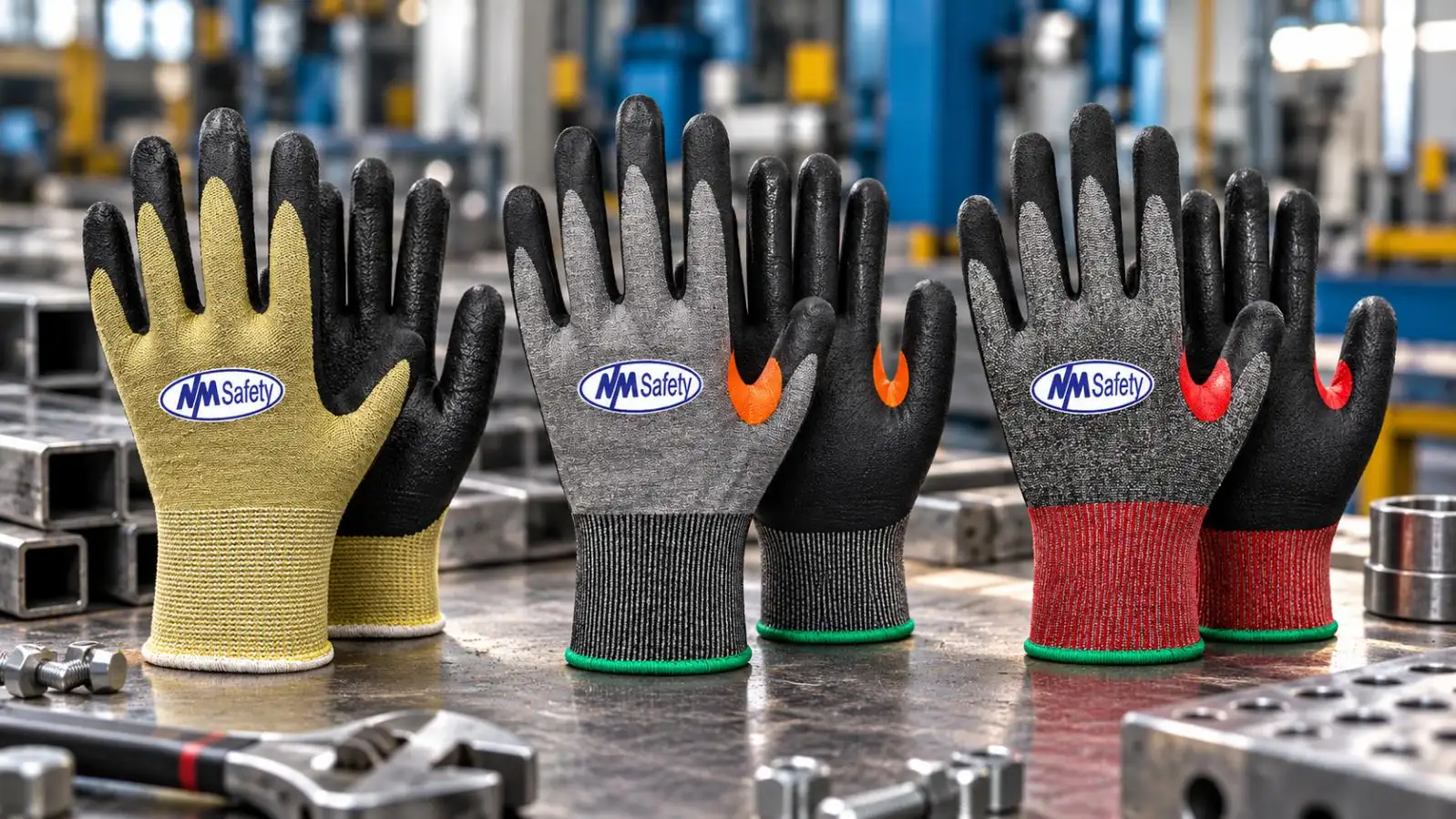
At NMSafety, we offer both microfoam and sandy nitrile gloves. Each of these types of gloves offer unique properties that provide the consumer opportunities to evaluate glove performance beyond generalizations of "grip" and "durability."
1. Microfoam vs. Sandy Nitrile: Structure of the Coating and Grip
Although both types of coatings utilize nitrile, the surface characteristics of each, and how they interact with other materials, differ.
Microfoam Nitrile: Thin, Structured Coating for Controlled Handling
Microfoam Nitrile is constructed of a very thin, fine, microcellular structure.
Flexibility to bend while assembling (coating flexibility):
•Ability to function with various levels of contamination (light oil handling):
•Designed for wearer comfort with thin coatings (or no coatings) and a knitted back:
•However, excessive oil may saturate the surface structure and reduce friction.
Sandy Nitrile: Rough Texture For Contaminated Surfaces
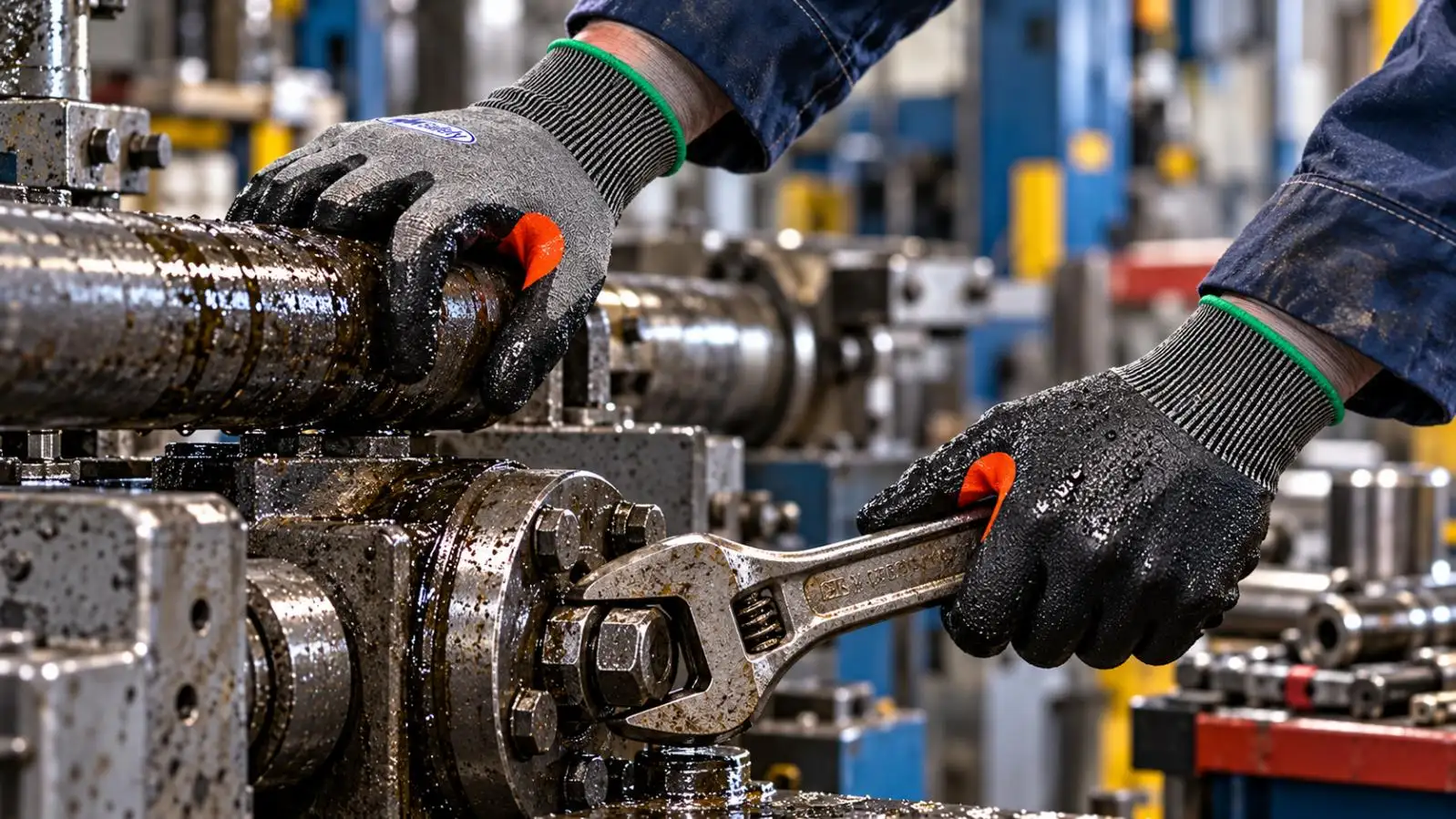
Coatings with a granular finish like "sandy" nitrile can provide textured contact points to disrupt thinner films between the glove and the component being handled.
This is relevant to:
•Oily machine parts and steel components
•Wet tools and maintenance equipment
•Rough industrial components
•Repeated contaminated handling
Increased abrasion resistance of Sandy nitrile coatings relies on the formulation and quality of cure. In addition, the surface being handled can influence abrasion resistance.
Often preferred for more demanding oily conditions
Dexterity
Frequently favors fine movements
Depends on thickness and flexibility
Breathability
Influenced by liner and coverage
Influenced by liner and coverage
Abrasion Resistance
Requires standardized testing
Requires standardized testing
Typical Applications
Assembly, inspection, logistics
Metal handling, maintenance
Why are Liner Gauges and Coating Thicknesses Important?
There are a number of differences between designs like liner gauges, coatings and thickeners.
•Liner Gauges: Designs with gauges of 13G, 15G and 18G show variation in knitting fineness. Lower gauges result in a thicker liner. Flexibility is affected by factors such as yarn diameter and fiber composition.
•Coating Thickness: Additional coating can improve stiffness, decrease fingertip sensitivity and increase coverage. A thicker coating does not mean increased abrasion resistance.
•Fiber Composition: Increased flexibility can be achieved by the addition of nylon and spandex fibers. In designs incorporating a cut-hazard liner, HPPE fibers can also be used.
•Coating Coverage: Designs fully coated in a thicker materials yield greater coverage and stiffness, and less ventilation.
All these factors must be considered during procurement.t.
3. Industrial Applications: What Coating Should Buyers Choose?
For components requiring greater dexterity and assembly work with a high degree of freedom, a thinner initial coating may be selected.
Assembled Electronics
Microfoam
Fingertip control and ESD assessment
Oily metal handling
Sandy
Grip under oil contamination
Machinery maintenance
Either; test both
Grip, wear, and mobility
Warehouse operations
Microfoam
Comfortable for repeated handling
Steel fabrication
Sandy, with protective liner
Abrasion and cut protection
Automotive assembly
Microfoam
Fingertip control
Metal fabrication and equipment maintenance have different conditions. Friction and repeated contact with oily films require surface traction and mechanical protection.
Neither coating replaces a hazard assessment. Sharp edges require cut protection, and exposure to chemicals require independent verification of chemical protection.
4. What Do EN 388 and ANSI/ISEA 105 Ratings Actually Verify?
For the purchaser sourcing nitrile coated gloves in China, test reports based on standards provide a base for comparison stronger than product claims.
Standard
Assessment Focus
Purchasing Relevance
EN 388:2016+A1:2018
Abrasion, cut, tear, puncture, applicable impact
Mechanical protection
EN ISO 21420
General glove requirements
Fit, sizing, general requirements
ANSI/ISEA 105-2024
Mechanical and other protection classifications
US market specifications
EN ISO 374-1
Chemical protection requirements
Specified chemical hazards
Three limitations deserve attention:
• EN 388 does not provide a standardized oily-grip rating. Application-based testing remains necessary.
• Cut resistance depends on the entire glove. Nitrile texture alone cannot establish a cut-protection level.
• Nitrile coating does not guarantee chemical protection. Palm-coated work gloves should not be treated as liquid-tight chemical gloves without appropriate evidence.
Buyers supplying the EU should also verify the relevant conformity declaration and documentation for the same model.
5. How to Evaluate Nitrile Coated Gloves in China Before Bulk Purchasing
We advise that our customers match the specified coating to the actual handling condition before the finalization of the OEM order.
Step 1: Define Technical Specifications
Prior to sampling check the following:
• The composition and thickness of the liner, size range and fit
• Coverage and thickness of the coating
• The EN/ANSI performance classifications and the test reports related to the classification
• The required conformity of the documentation
• Logo and color
• Packaging and labeling requirements
Step 2: Conduct Controlled Application Trials
Conduct a grip test using a smooth and a rough metal surface (a plain and a threaded surface) lubricated with different fluids
• Test the dexterity of the gloves and determine how accurately users can grip a target and how rapidly users can perform the task of fastening, for instance.
• Wear tests can help assess how quickly the gloves break down as well as how quickly the coating can wear off.
• Comfort and fitness can also be assessed using glove samples.
For measured friction values, state the surface material, lubricant, pressure and how the test was performed.
Step 3: Evaluate Service Life and Batch Consistency
The price of gloves does not always reflect true operating costs.
True operating cost = Total cost of purchasing gloves / Total number of shifts the gloves can be used
A field trial can help determine the average service life of the gloves.
For an OEM purchase, also verify approved reference samples, lot-to-lot consistency, MOQs, lead time, and packaging requirements.
6. NMSafety Microfoam and Sandy Nitrile Glove Options
NMSafety offers both coating constructions with documented product specifications.
NMSafety Model
Liner / Coating
Published EN 388 Rating
NY1350FRB
15G nylon/spandex, microfoam nitrile palm
4121X
NY1350S Pro
15G nylon/spandex, sandy nitrile palm
4121X
Both gloves share the same published mechanical protection classification. However, their surface texture cater to different handing preferences. The X designation does not reflect a confirmed ISO 13997 cut-resistance level.
While sourcing Nitrile Coated Gloves in China, buyers can also look at NMSafety's range of nitrile coated gloves or contact our team for coating selection, sample evaluation, and OEM specifications for their industrial applications.
FAQs
Q1: What types of nitrile coated gloves does NMSafety offer?
NMSafety offers microfoam, sandy, smooth, and double-coated nitrile gloves for industrial assembly, maintenance, manufacturing, and material handling.
Q2: What is the difference between NMSafety microfoam and sandy nitrile gloves?
Microfoam nitrile supports flexible, precise handling, while sandy nitrile offers a textured grip suitable for many wet and oily applications.
Q3: What liner materials does NMSafety use for nitrile coated gloves?
Our NY1350FRB and NY1350S Pro models use 15-gauge nylon/spandex knitted liners, providing flexibility and a comfortable fit.
Q4: Do NMSafety nitrile coated gloves meet EN 388 standards?
Yes. Our NY1350FRB and NY1350S Pro product pages both display EN 388:2016 rating 4121X. Ratings vary by model and should be verified individually.
Q5: What sizes are available for NMSafety nitrile coated gloves?
Both NY1350FRB and NY1350S Pro are listed in sizes 7/S through 12/3XL, covering six size options.