Home > Uncategorized > Best Gloves for Sheet Metal: Cut Level & Grip
Best Gloves for Sheet Metal: Cut Level & Grip
02 May, 2026
By arafatshuvo509
For cut resistant gloves for sheet metal, start with ANSI A4 to A5 for general handling, then upgrade to A6 when edges are sharper, pressure is higher, or gloves tear repeatedly. Use nitrile coating for oily stamped parts, PU for dry precision handling, and field-test gloves against real edge types before bulk ordering.
Sheet metal looks simple until a raw edge slides across a palm, thumb crotch, or fingertip. The wrong glove can feel safe at first, then fail fast on burrs, stamped flanges, oily parts, or repeated handling. This guide keeps the choice practical: match the cut level to the edge, match the coating to the surface, then confirm the glove with real worksite testing.
For sheet metal work, start with ANSI A4 to A5 cut-resistant gloves and choose nitrile coating if parts are oily. Upgrade to A6 when edges are sharp, pressure is high, or gloves tear before a normal replacement cycle.
A4 to A5 is the practical starting range for many sheet metal teams. A4 can work for lighter, deburred sheets where dexterity matters. A5 is a stronger first test for fabrication, stamping, and repeated handling. A6 is better when sharp edges, burrs, or return data show that lower levels are not lasting.
The glove should match the task, not only the label. OSHA’s hand protection rule says employers must choose hand protection based on the hazards, task conditions, duration, and type of work being done. That is why a general cut glove buyer guide helps, but sheet metal needs a tighter decision.
Sheet metal task
Starting cut level
Better coating choice
Why
Dry deburred sheet handling
A4 or A5
PU or light nitrile
Good feel and controlled edges
General fabrication
A5
Foam nitrile
Balanced cut protection and grip
Oily stamped parts
A5 or A6
Foam or sandy nitrile
Better grip on slick surfaces
Sharp burrs or repeated tears
A6
Reinforced nitrile
Higher cut resistance for rough edges
Why does sheet metal cut through ordinary work gloves?
Sheet metal cuts gloves because sharp edges slide across the liner under pressure. The risk is higher with burrs, stamped flanges, oily surfaces, and repeated handling, so glove choice must match both edge type and handling conditions.
Ordinary work gloves often fail because sheet metal creates a slicing motion, not only a scrape. A sheared edge, corner, or burr can move across the glove while the worker is gripping, stacking, or turning the part. OSHA also warns that cut-resistant gloves are not cut-proof, so damaged gloves need attention before they create false confidence.
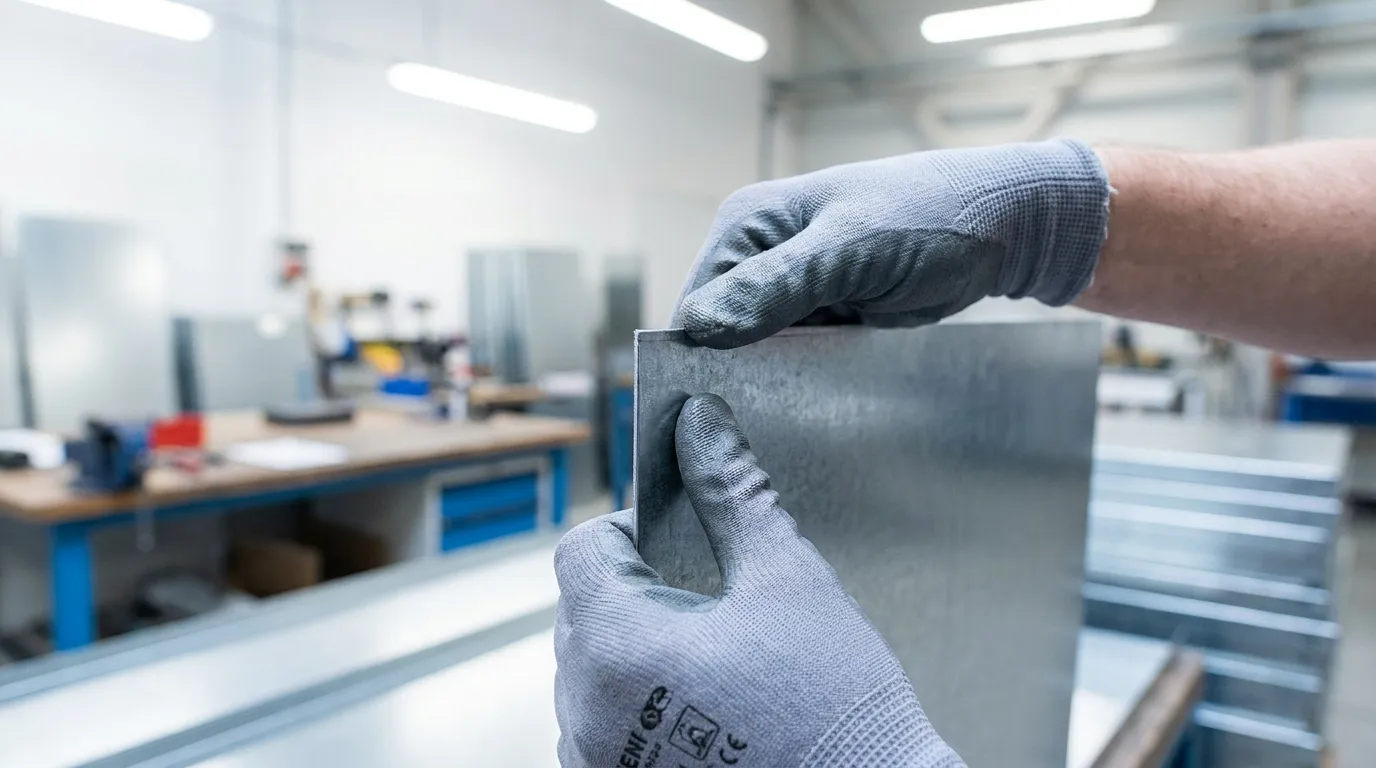
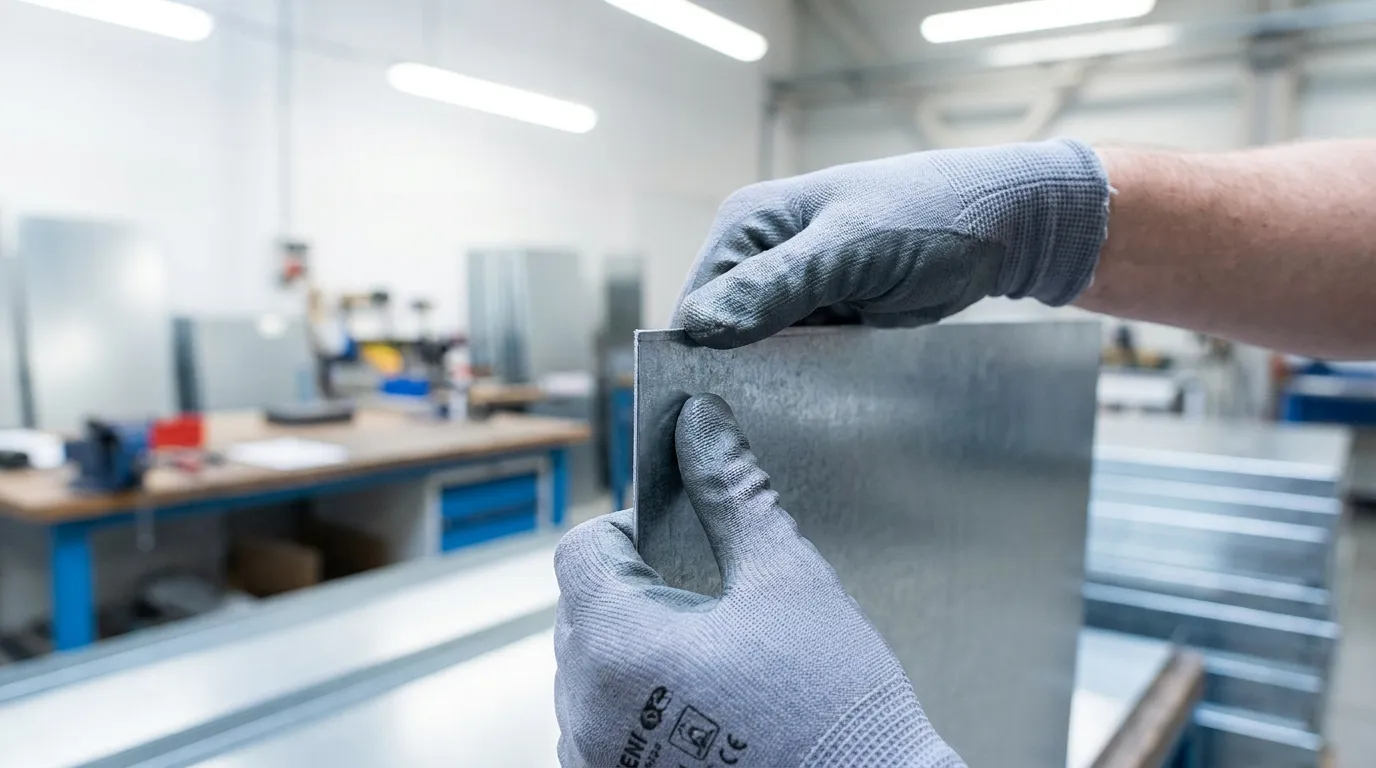
Use real edge photos in the article or product page to make selection easier. A buyer should not choose the same glove for a smooth deburred HVAC panel and an oily stamped part with raised burrs. The edge type changes the cut level, coating, and replacement schedule.
Real worksite photo 1: freshly sheared edge
Show a worker holding a straight sheet edge after cutting or shearing. The photo should focus on the clean but sharp edge, the glove palm, and how the sheet contacts the hand during lifting.
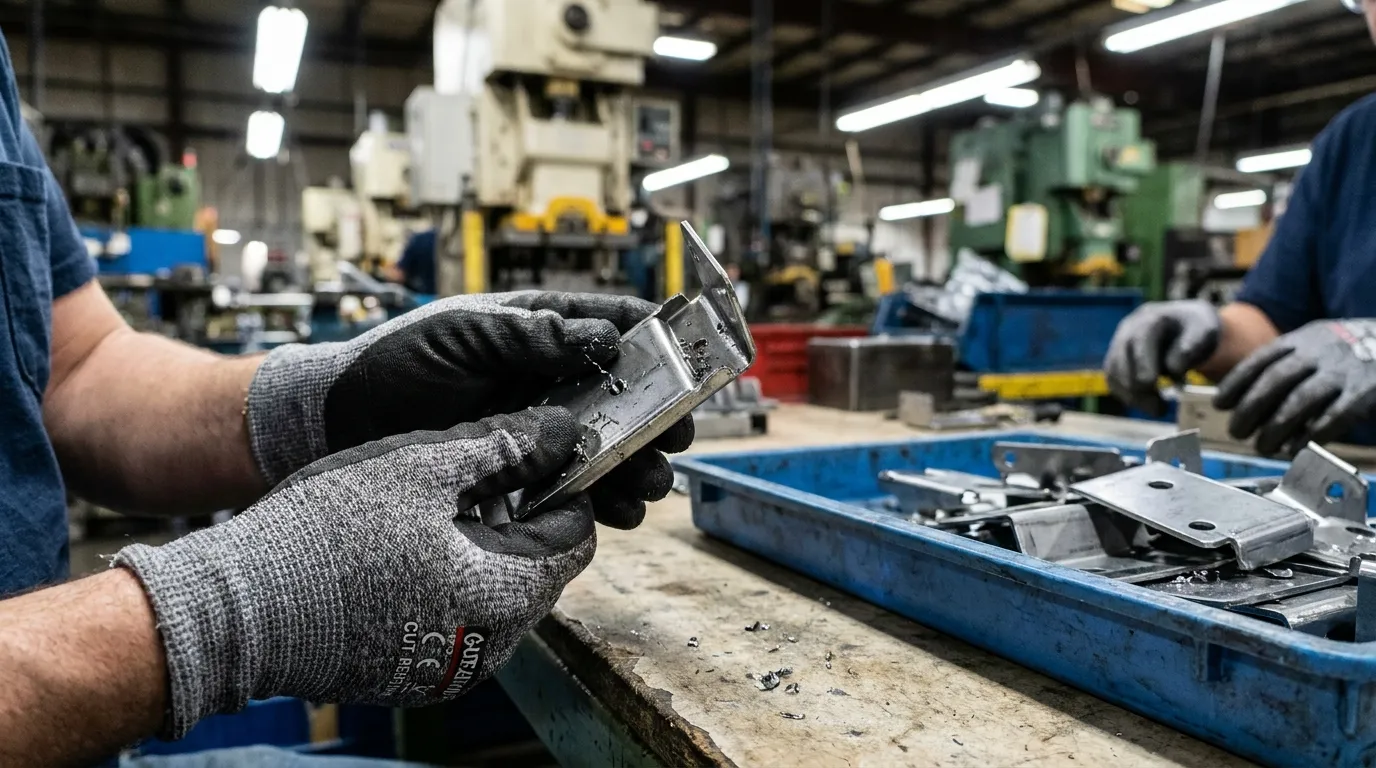
Real worksite photo 2: stamped flange with burr
Show a stamped part with a raised flange or corner burr. This photo should make the risk clear: repeated palm contact, thumb crotch pressure, and edge sliding during sorting or assembly.
Real worksite photo 3: oily laser-cut or punched part
Show a gloved hand gripping a dark, slightly oily metal part near a punched hole or cutout. This helps explain why coating choice matters as much as cut level.
What cut level is right for sheet metal work?
Use A4 for light sheet handling with controlled edges, A5 for most fabrication and stamped parts, and A6 for sharper edges, higher force, or repeated glove failures. Higher levels improve cut resistance but may reduce dexterity.
ANSI cut ratings run from A1 to A9. The ANSI blog explains that ANSI/ISEA 105 uses a 9-level cut scale, and the higher number means higher cut resistance. For sheet metal, the useful working range is often A4 to A6, not the full scale.
Use this table as a starting point before sample testing. For a deeper level-by-level comparison, read the A4 vs A5 gloves guide.
Can feel thicker, so worker acceptance must be tested
A7 to A9
Extreme cut hazards or special high-risk tasks
Often too much for routine sheet handling
The International Safety Equipment Association groups A4 to A6 around cuts that may require stitches, while A7 to A9 fits more extreme hazards. That makes A5 a practical first trial for many metal shops, with A6 ready when real use shows higher risk.
Which coating gives the best grip on sheet metal?
Choose nitrile coating for oily sheet metal, foam or sandy nitrile for grip, and PU coating for dry precision work. The liner provides cut resistance, while the coating controls grip, abrasion, and surface handling.
Nitrile is usually the first coating to test when stamped parts carry oil, cutting fluid, or shop residue. Foam nitrile gives better contact on lightly oily parts, while sandy nitrile can add more bite. It also tends to handle abrasion better than very thin coatings in rough metal work.
PU is not the default coating for every sheet metal job. It works well for dry precision tasks because it gives good fingertip feel. It is not the safest first pick when the part surface is slick, oily, or likely to slide during lifting.
Coating
Best use
Avoid when
PU
Dry precision handling, small parts, assembly
Parts are oily or slippery
Foam nitrile
Light oil, general fabrication, better grip
Heavy oil or sharp burrs need more testing
Sandy nitrile
Oily stamped parts, stronger surface grip
Very fine fingertip work is the top need
Full dip nitrile
More coverage against oil and grime
Heat buildup or stiffness becomes a problem
If the coating wears smooth before the liner is cut, the problem may be grip and abrasion. If the liner is sliced, the issue is more likely cut level, edge type, or handling pressure. For a broader selection process, use this choose cut gloves guide.
When should you upgrade from A4 to A6?
Upgrade from A4 to A6 when sheet edges are sharper, parts are handled under pressure, or returns show repeated cuts in the same glove zone. Stay lower only when edges are deburred and dexterity is critical.
A6 is not always the best sheet metal glove. It works when edges are sharp or gloves keep failing, but A5 may be safer for daily use when operators need grip, feel, and comfort. If workers remove thick gloves to finish the job, the higher cut level has failed in practice.
Use this decision flow before moving a whole team to A6. It keeps the choice tied to real hazards, not guesswork. For more detail on the tradeoff, see this cut level comparison.
A4 to A6 sheet metal decision flowchart
Question
If yes
If no
Are the sheet edges deburred and dry?
Test A4 or A5
Move to the next question
Are parts oily, slick, or coated in cutting fluid?
Test A5 or A6 with foam or sandy nitrile
PU may still be suitable
Are gloves tearing in the palm or thumb crotch?
Upgrade cut level and check edge type
Check coating wear and fit
Does the worker apply high grip pressure?
Test A6 or reinforced zones
A5 may be enough
Does a thicker glove reduce control?
Compare A5 and A6 with operators
Use the safer higher level if accepted
Do returns show repeat damage in one zone?
Treat it as a task mismatch
Keep monitoring during trial
A dry HVAC duct shop may start with A4 or A5 because edges are controlled and dexterity matters. An oily stamping line should usually test A5 foam or sandy nitrile first, then move to A6 if palm cuts repeat.
What glove materials work best for sheet metal?
The best material depends on the cut level, comfort target, and work condition. HPPE, aramid, fiberglass blends, and steel fiber can all appear in sheet metal gloves, but the final glove performance comes from the full liner and coating together.
HPPE is common because it feels light and flexible. Aramid can help when heat is part of the task. Fiberglass and steel blends can help reach higher cut levels, but some workers may feel more stiffness. If the article needs a deeper material breakdown, hand that topic off to cut-resistant glove materials.
Material or blend
Why it is used
Buyer note
HPPE
Light feel and dexterity
Good for daily handling when comfort matters
Aramid fiber
Heat resistance and cut support
Useful near warm parts, but check the full glove rating
Fiberglass blend
Helps raise cut level
Can feel different from HPPE-only liners
Steel fiber blend
Higher cut resistance potential
Test comfort and flexibility with operators
Nitrile coating
Grip and abrasion support
Strong choice for oily or rough metal handling
PU coating
Thin feel and precision
Best for clean, dry parts
Do not buy by fiber name alone. A glove marked A5 with the wrong coating may perform worse on your line than an A5 glove with better grip and fit.
How should a stamping plant read torn-glove returns?
Torn-glove returns should be sorted by tear location, task, edge type, coating condition, and shift duration. Repeated palm cuts often point to sharp sliding contact, while worn fingertips may show abrasion, fit issues, or handling technique.
A torn glove is not always a product defect. If the same stamping cell returns gloves with the same palm cut pattern, the task may need a higher cut level, better coating, edge control, or a different handling method. OSHA’s cut and laceration guidance also supports removing damaged gloves from service, because protection can no longer be trusted.
Use return data as a simple diagnosis tool. Do not invent return rates, and do not blame the glove before checking where and how it failed. Pair this table with a wider glove selection checklist when reviewing future orders.
Returns-data sidebar template for stamping plants
Plant or line
Task
Edge type
Tear location
Coating condition
Shift duration before failure
Likely cause
Next glove test
Stamping line A
Sorting brackets
Burr on flange
Palm near index finger
Coating partly slick
Same shift
Sliding cut under pressure
A6 sandy nitrile
Press cell 2
Handling punched parts
Sharp hole edge
Fingertips
Coating worn smooth
Two shifts
Abrasion plus edge contact
A5 or A6 reinforced fingertips
Assembly bench
Small metal tabs
Deburred edge
Thumb crotch
Coating intact
One week
Fit or pinch point
Better fit, then A5 trial
HVAC panel area
Carrying sheets
Straight sheared edge
Palm center
Light wear
Several shifts
Normal wear or handling pressure
Keep A5, monitor damage
Oily parts bin
Removing stamped parts
Oily burrs
Palm and fingertips
Slick surface
Same shift
Grip failure plus cut exposure
Foam or sandy nitrile A6
A simple return sheet can show patterns fast. If five gloves from one cell show palm-side cuts near the index finger, test A6, reinforced thumb crotch design, or improved deburring before making a large reorder.
How do you test gloves before buying in bulk?
Test sheet metal gloves on the actual parts, edge types, oil levels, and handling motions your workers face. Lab ratings matter, but they cannot replace a short field trial with real operators and real production surfaces.
Start with two or three sample options, such as A5 foam nitrile, A6 sandy nitrile, and A4 or A5 PU for dry precision work. Give each option to the workers who handle the sharpest parts, the oiliest parts, and the smallest parts. Ask them to report grip, heat, stiffness, and any early damage.
Inspect palms, fingertips, and thumb crotch after each shift.
Remove torn gloves from use.
Compare wear patterns before choosing a bulk order.
Keep one backup option for higher-risk tasks.
Mixed tasks need extra care. A glove that works for sheet handling may not be right for welding. If sparks, hot parts, or weld zones are involved, use a heat-rated glove with the needed cut protection.
What is the final recommendation for most sheet metal teams?
Most sheet metal teams should test A5 nitrile-coated gloves first, then move down to A4 for dry, deburred precision work or up to A6 for sharp stamped parts, oily handling, and repeated torn-glove returns.
The safest buying path is not “highest cut level for everyone.” Start with the task that causes the most damage, then work backward to comfort and grip. If workers need fingertip feel, a thinner A5 glove may be better than an A6 glove they do not want to wear.
Worksite situation
Best first test
Upgrade path
Dry HVAC duct shop
A4 or A5 PU or light nitrile
A5 if cuts appear
General fabrication
A5 foam nitrile
A6 if palm cuts repeat
Oily stamping line
A5 sandy or foam nitrile
A6 sandy nitrile
Sharp burr return case
A6 with stronger coating
Add reinforced zones or improve deburring
Precision assembly
A5 PU or light nitrile
Avoid bulky A6 unless damage proves need
Welding plus sheet handling
Heat-rated cut glove
Do not use standard handling gloves for hot work
This gives safety managers a clean starting point. It also gives purchasing teams a way to test gloves without turning every order into a guess.
Getting the Next Step Right
The best cut resistant gloves for sheet metal are the ones that match the edge, surface condition, and worker behavior on your line. Start with A5 nitrile-coated gloves for most mixed sheet metal work. Move to A4 only when edges are controlled and feel matters more. Move to A6 when sharp edges, oil, pressure, or return data show that the current glove is failing.
Before buying in bulk, collect three edge photos, run a short sample test, and review torn-glove patterns by task. That small step can prevent the wrong glove from becoming a repeat safety problem.
Frequently Asked Questions
What are the levels of cut resistant gloves?
ANSI cut levels run from A1 to A9, with higher numbers showing higher cut resistance. For sheet metal, the useful range is usually A4 to A6, depending on edge sharpness, pressure, and grip needs.
What cut level is good for sheet metal?
A4 to A5 is a practical starting range for many sheet metal tasks. Move toward A6 when handling sharper stamped parts, burrs, heavier sheets, or jobs where gloves tear early.
What are cut level D gloves?
Cut level D is an EN388 TDM cut rating, not the same label system as ANSI A4 or A5. Use ANSI A-levels for the main sheet metal decision if your supplier lists ANSI/ISEA ratings.
How do I know if my gloves meet industry safety requirements?
Check the glove marking, packaging, or datasheet for ANSI/ISEA or EN388 performance ratings. For sheet metal, the label should clearly show the cut rating, and the supplier should provide a test-backed specification.
What’s the difference between cut-resistant and puncture-resistant gloves?
Cut-resistant gloves help against slicing contact from edges or blades, while puncture-resistant gloves help against pointed objects. Sheet metal buyers should prioritize cut resistance, then add puncture protection when sharp points, wire, or scrap are present.
Can I use the same gloves for welding and handling sharp metals?
Not always. Sheet metal handling gloves may not have the heat, spark, or welding protection needed for hot work, so welding tasks should use gloves rated for both heat and the required cut hazard.
Are cut-resistant gloves reusable after a minor tear?
A torn cut-resistant glove should be removed from service because the liner or coating may no longer protect correctly. Record where it tore, then use that pattern to decide whether the issue is cut level, coating, fit, or task mismatch.