Home > Uncategorized > Are Cut-Resistant Gloves Washable? Care & Lifespan
Are Cut-Resistant Gloves Washable? Care & Lifespan
03 May, 2026
By arafatshuvo509
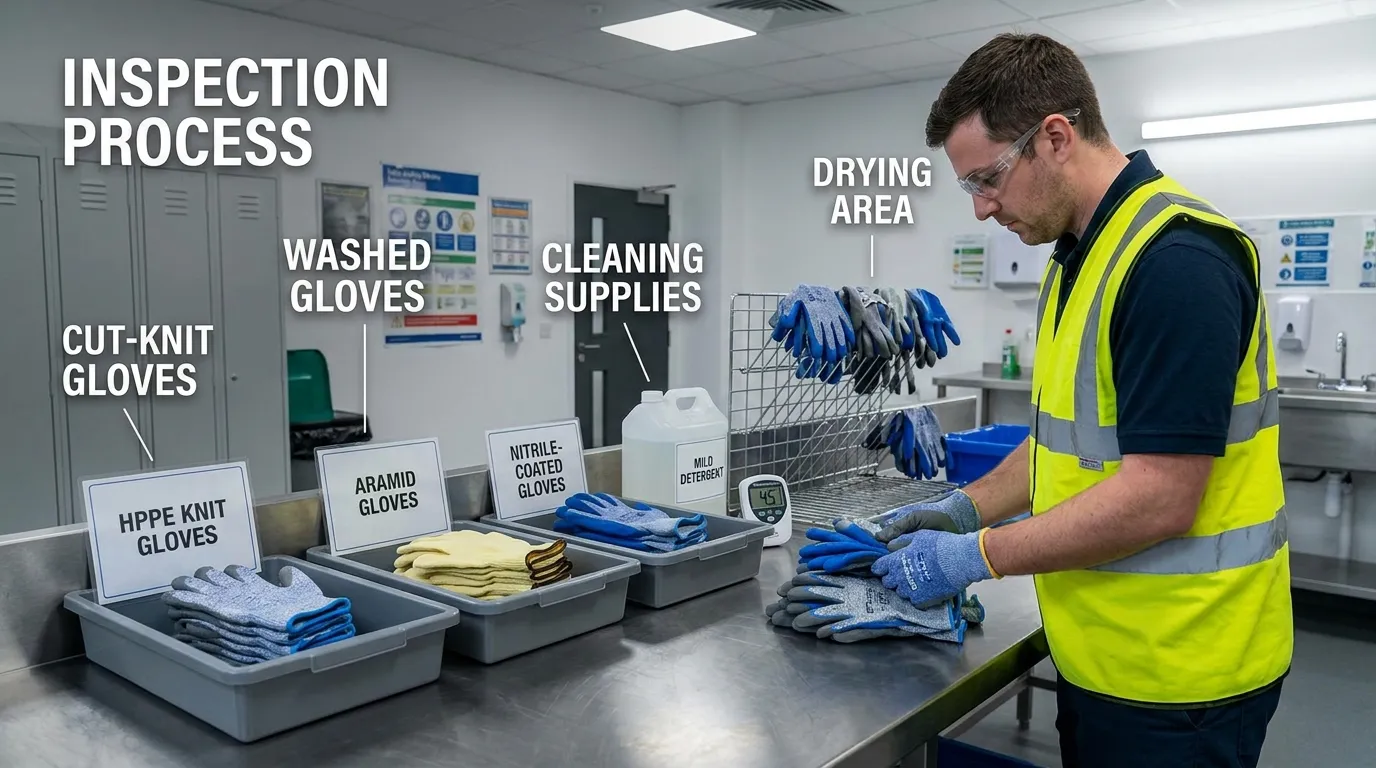
Are cut resistant gloves washable? Yes, many are washable, but the safe method depends on fiber, coating, contamination, and the care label. Use mild detergent, low to warm water, and low heat unless the manufacturer says otherwise. Washing can extend service life, but it cannot fix worn palms, peeling coatings, exposed fibers, or protection drift. Inspect every pair before reuse.
A clean glove can still be a risky glove. Facility managers have to balance laundry cost, worker comfort, grip, and cut protection over time. The right washing process can reduce waste and keep gloves usable longer, but the wrong one can shrink liners, weaken coatings, or hide wear. Start with the glove label, then use the material, coating, and damage level to decide whether to wash, recheck, or retire the pair.
Most cut resistant gloves are washable, but only when the care label allows it and the glove has no structural damage. Wash gently, avoid harsh chemicals and high heat, then inspect the palm, coating, seams, and liner before reuse.
Many knitted cut gloves made with HPPE, aramid, nylon, polyester, or blended yarns can be washed. That does not mean every glove should go into the same laundry process. Coatings, liners, steel reinforcement, and contamination can change the safe care method.
The safest rule is simple: the manufacturer’s care label comes first. Ansell’s glove washing guidance, for example, gives different instructions by material type and warns users to follow glove-specific care directions. If your team is still choosing models, send broader selection questions to a cut-resistant glove guide instead of solving everything through washing.
Washing is not automatically a cost-saving move. It works when the glove is dirty but still sound. Replacement is safer when the palm is thinning, the coating is peeling, or the liner is exposed.
What wash temperature and detergent should you use by glove material?
Use mild detergent, low to warm water, and low heat unless the manufacturer gives a stricter rule. HPPE, aramid, and steel-core gloves may all be washable, but coatings, exposed filaments, and chemical contamination change the safe method.
Do not treat all cut gloves like cotton work gloves. ANSI cut ratings help describe cut resistance, but washing care depends more on fiber, coating, construction, and contamination. If you need to compare protection classes, review ANSI cut levels before setting a reuse policy.
Wash matrix by HPPE, aramid, steel core, and coating
Glove material or coating
Wash temperature
Detergent
Drying method
Avoid
Inspection focus
HPPE or UHMWPE knit
Cool to warm water, follow label
Mild detergent
Air dry or low heat
High heat, bleach, aggressive solvents
Shrinkage, slick palm, stretched liner
Aramid or Kevlar
Warm water if label allows
Mild, non-bleach detergent
Air dry or low heat
Chlorine bleach, harsh oxidizers, high heat
Fiber fuzzing, stiffness, weak seams
Steel-core or glass-reinforced knit
Cool to warm water
Mild detergent
Fully dry before storage
High heat, crushing, rough tumbling
Exposed wires, glass fibers, broken yarns
Nitrile coated palm
Cool to warm water
Mild detergent, extra rinse
Air dry preferred
Strong solvents, high heat
Grip loss, cracks, delamination
PU coated palm
Cool water or label setting
Mild detergent
Air dry preferred
Hot wash, harsh chemicals
Peeling, tacky surface, worn fingertips
Latex coated palm
Cool to warm water
Mild detergent
Air dry away from heat
High heat, oils, solvents
Cracking, hard spots, grip change
For many nylon, para-aramid, and HPPE gloves, Ansell’s guidance points to warm water limits and controlled drying. Treat that as a model for care discipline, not a universal rule for every glove in your plant.
Should you machine wash or hand wash cut-resistant gloves?
Machine washing is acceptable only when the glove label allows it. Hand washing is safer for delicate coatings, unknown blends, heavily soiled palms, or gloves used in higher-risk work where coating grip matters.
Machine washing saves time when a facility handles large glove volumes. It also adds tumbling, friction, and sorting risk. Hand washing takes longer, but it gives better control when gloves have coated palms, mixed fibers, or unknown soil.
Machine washing is not always the best method. It works for many labeled textile gloves, but hand washing is safer for delicate coatings, unknown blends, or gloves where grip failure creates immediate risk. If washing problems keep showing up, reassess the choose cut gloves process.
Basic hand-wash steps
Shake or brush off loose metal chips, dust, or dry debris.
Soak briefly in cool or warm water with mild detergent.
Rub the palm and fingertips gently.
Rinse until detergent residue is gone.
Air dry fully before storage or reuse.
Inspect before the glove goes back to the worker.
Basic machine-wash steps
Situation
Best action
Care label allows machine wash
Use gentle cycle and mild detergent
Coating is thin or already worn
Hand wash or retire after inspection
Gloves are oily from metalworking fluid
Pre-treat lightly, rinse well, then inspect grip
Gloves have unknown chemical exposure
Isolate and follow the facility’s safety process
Gloves smell clean but feel slick
Do not return them to sharp-edge work
A sheet metal line gives a practical example. If workers wash nitrile-coated HPPE gloves weekly, the manager should check the thumb crotch, palm coating, and fingertips before assigning them back to sharp-edge handling.
How do wash cycles affect glove lifespan and cut protection?
Washing can extend glove life, but repeated laundering can also change grip, fit, coating integrity, and fiber condition. Treat each wash as a checkpoint, not a reset. Retest, inspect, or retire gloves when performance is uncertain.
Wash cycles remove sweat, oils, and dirt. They can also add friction, heat exposure, detergent residue, and drying stress. That matters because a cut rating describes a glove classification, not a promise that every washed glove will perform like a new pair.
A clean glove can still be unsafe. Facility managers should treat washing as one checkpoint in a lifecycle program, not proof that the glove still delivers the original performance. OSHA also requires PPE to be kept in sanitary and reliable condition, and damaged PPE should not be used under 29 CFR 1910.132.
Lifespan vs wash-cycle chart
Wash stage
What usually changes
Manager action
Reuse decision
New glove
Full fit, grip, and coating condition
Record model, size, and task
Use for approved task
After first wash
Possible shrinkage, stiffness, or residue
Check fit and palm feel
Reuse if fit and grip pass
Repeated washes
Coating wear, fiber fuzzing, weaker grip
Track batch and inspect more closely
Reuse only for suitable tasks
Visible wear stage
Thin palm, frayed yarn, peeling coating
Remove from high-cut tasks
Downgrade only if safe and allowed
Damage stage
Holes, exposed filaments, poor fit
Remove from service
Retire
Use a simple cost formula for planning: monthly glove cost = pairs retired × unit cost. Compare that with your real wash process, inspection time, and injury-risk policy. Do not use a fake “safe wash count” if the glove maker does not give one.
When should a washed glove be retired instead of reused?
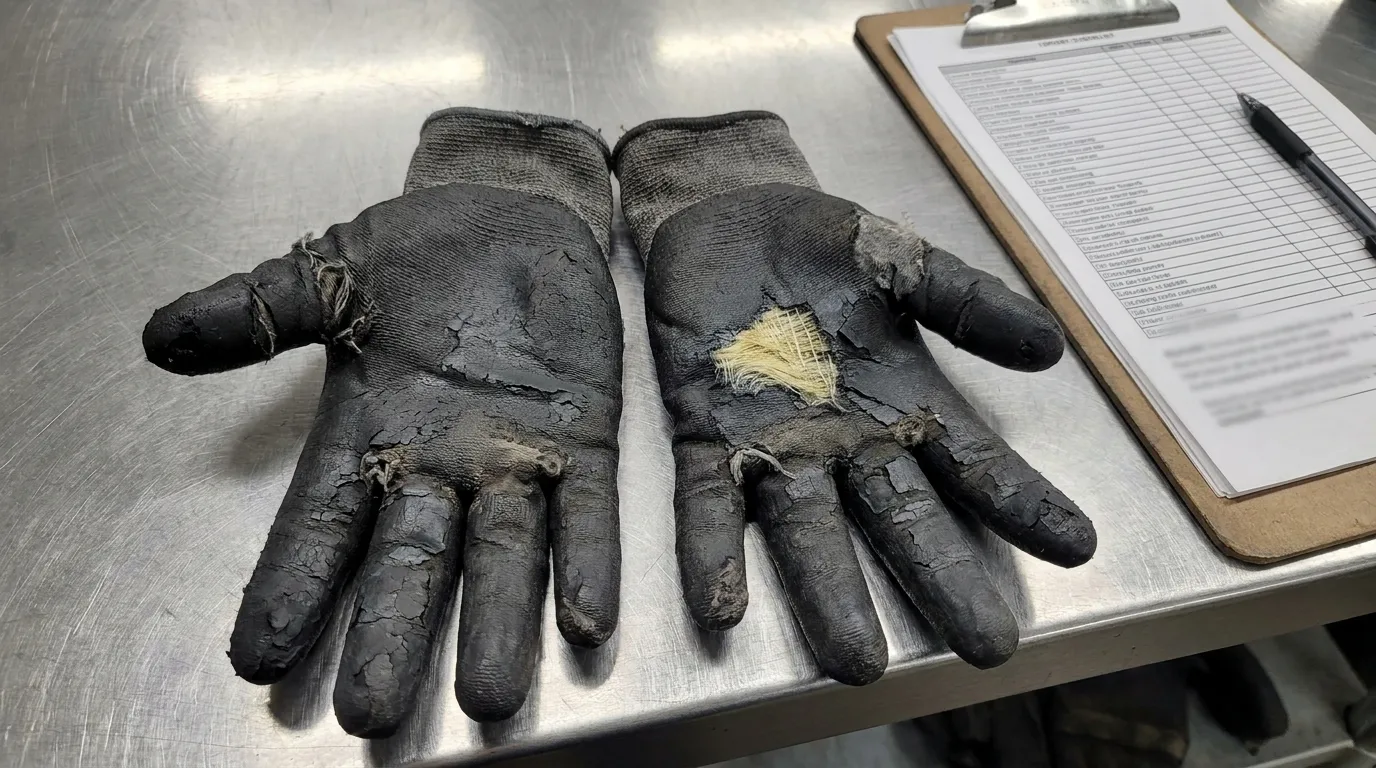
Retire a cut resistant glove when washing cannot restore safe structure, grip, fit, or cleanliness. Holes, coating peel, exposed filaments, thinning palms, hard chemical spots, and stretched or shrunken fit are replacement triggers.
The easiest mistake is returning a glove to service because it looks cleaner. In sharp-edge work, visible wear on the palm or fingertips matters more than surface cleanliness. This is especially true for sheet metal gloves, where edges can find weak points fast.
OSHA’s PPE rules require damaged or defective PPE to be removed from use. For glove programs, that means inspection should happen after washing and before assignment. A worker should not be the first person to find a hole during a live task.
Worn-palm photo checklist
Use this checklist beside real photos of worn palms in the article or training sheet.
Photo example
What to look for
Decision
Worn palm coating
Smooth, shiny, cracked, or missing coating
Retire from sharp-edge work
Thin knit liner
Palm looks flat, fuzzy, or transparent
Retire or downgrade only if approved
Exposed steel filament
Wire-like strands visible or poking out
Retire immediately
Exposed glass fiber
White or brittle strands showing
Retire immediately
Frayed thumb crotch
Yarn opens near thumb base
Retire from handling sharp parts
Hole at fingertip
Any opening through the glove
Retire immediately
Coating delamination
Palm layer lifts from liner
Retire if grip or structure is affected
Hard chemical spot
Stiff, cracked, or discolored area
Isolate and review contamination risk
Poor fit after wash
Shrunken, stretched, or twisted shape
Retire if dexterity or coverage suffers
For steel-core gloves, be strict. If a washed pair shows protruding metallic filaments, do not reuse it. Exposed reinforcement can signal structural damage and create new handling problems.
What if the gloves are oily, food-soiled, chemically exposed, or contaminated?
Normal washing is for normal soil. It is not the same as decontamination, sanitation, or hazardous-material handling. If gloves are exposed to unknown chemicals, biohazards, heavy oils, or regulated contamination, isolate them and follow the facility’s safety process.
For food work, washing has to fit the sanitation plan. Cut gloves used around knives, wet product, or food contact areas may need controls beyond ordinary laundry. If glove choice is part of that issue, review food processing gloves before setting the wash routine.
Exposure type
Cleaning approach
Reuse rule
Sweat and light dirt
Mild detergent wash
Reuse after inspection
Food soil
Follow sanitation SOP and glove label
Reuse only if sanitary and intact
Metalworking fluid
Mild pre-treatment and extra rinse
Reuse only if grip returns
Heavy oil
Controlled wash process
Retire if palm stays slick
Unknown chemical
Isolate and review safety data
Do not casually wash
Biohazard concern
Follow site contamination procedure
Do not reuse unless cleared
A metalworking example is simple. If gloves come back with oily palms, pre-treat with mild detergent, rinse twice, and test grip by feel and visual inspection. If the coating remains slick, retire the glove from parts handling.
Food facilities also need sanitary operations that prevent insanitary conditions, which is why cleaning rules must match the task and risk. USDA sanitation rules in 9 CFR Part 416 are a useful reference for food safety expectations.
How should facility managers build a repeatable glove-care program?
A glove-care program should standardize washing rules by model, separate damaged or contaminated gloves, log wash cycles, and require inspection before reuse. The goal is cleaner gloves and predictable protection across shifts and locations.
A good program removes guesswork. Workers should not decide laundry settings by memory, and supervisors should not approve reuse based only on appearance. Build the process around glove model, task, hazard, wash method, inspection result, and retirement trigger.
OSHA’s hand protection rule requires employers to select gloves based on hazards, task conditions, duration of use, and protective performance. That makes care part of the glove selection process, not a separate housekeeping task.
Program step
What to standardize
Why it matters
Model list
Glove SKU, fiber, coating, task
Prevents mixed laundry rules
Bin system
Clean, dirty, damaged, contaminated
Stops unsafe pairs returning to use
Wash SOP
Temperature, detergent, cycle, drying
Reduces care mistakes
Inspection point
After drying, before reassignment
Catches hidden wash damage
Batch log
Date washed, cycle count, defects
Shows patterns by glove model
Retirement rule
Damage triggers and disposal path
Keeps weak gloves out of service
Worker training
Care, fit, useful life, disposal
Supports OSHA PPE training duties
For planning, use your real purchase price. If 40 pairs are retired in a month at $6 each, monthly replacement cost is 40 × $6 = $240. If washing reduces waste but adds inspection failures, the log will show whether the program is saving money without hiding risk.
What to Do Next
Do not answer “are cut resistant gloves washable” with a simple yes and send every pair to the laundry. Start with the care label, sort by material and coating, wash gently, then inspect the glove like a safety item, not a uniform item. If the glove fails the palm, coating, fit, or contamination check, replace it. For new purchases, choose glove models that match both the hazard and the cleaning process your facility can actually control.
Frequently Asked Questions
Can Kevlar gloves be washed?
Yes, Kevlar or aramid cut resistant gloves can often be washed with mild, non-bleach detergent and warm water, if the care label allows it. Avoid chlorine bleach, harsh oxidizers, and high heat because they can damage aramid fibers or coatings.
Are cut-resistant gloves machine washable?
Many textile cut resistant gloves are machine washable on a gentle cycle, but not all are. Machine washing should be avoided when the label forbids it, the coating is delicate, or the glove has unknown contamination.
How do I wash the cut-resistant gloves?
Brush off loose debris, wash with mild detergent in cool or warm water, rinse thoroughly, and dry with low heat or air drying. After drying, inspect the palm, liner, coating, seams, and fit before returning the gloves to service.
Are cut resistant gloves waterproof?
Not always. Some cut resistant gloves have waterproof or liquid-resistant coatings, but many knitted HPPE, aramid, or steel-core gloves are cut resistant without being fully waterproof.
Can you still get cut wearing a cut resistant glove?
Yes, cut resistant gloves reduce cut risk and injury severity, but they are not cut-proof. Wrong cut level, worn palms, holes, exposed fibers, or using the glove beyond its rating can still lead to injury.
How do I know when it’s time to replace a pair of gloves?
Replace cut resistant gloves when you see holes, tears, fraying, thinning palms, peeling coating, exposed steel or glass fibers, poor fit, or contamination that cannot be safely removed. A clean glove is not safe if its structure or grip is compromised.