Home > Uncategorized > ANSI A4 vs A5 Cut Gloves: Which Level Is Enough?
ANSI A4 vs A5 Cut Gloves: Which Level Is Enough?
01 May, 2026
By arafatshuvo509
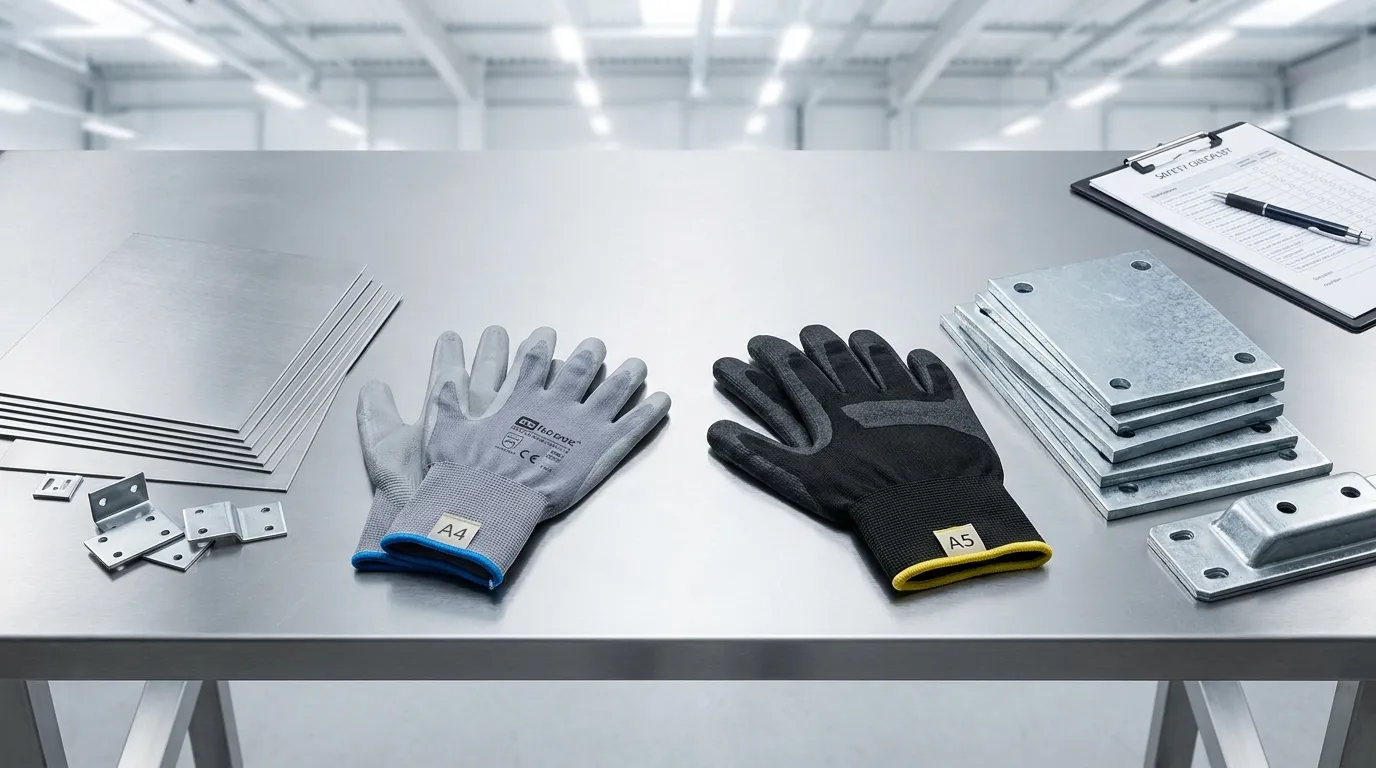
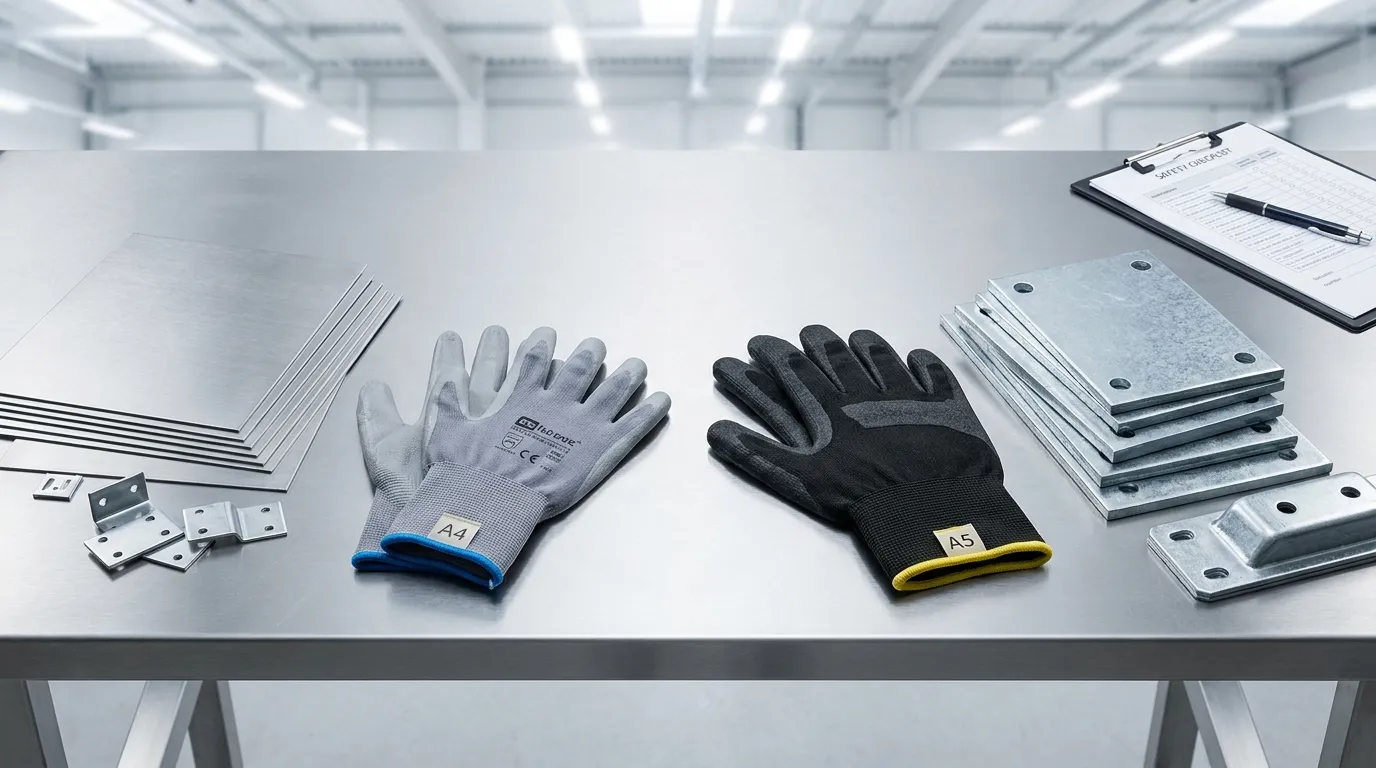
ANSI A4 vs A5 cut resistant gloves comes down to edge sharpness and exposure frequency. Choose A4 for general metal handling, light fabrication, and moderate sharp-edge contact. Choose A5 when workers handle thin sharp stock, stamped edges, glass edges, or repeated cut hazards. A4 is rated 1,500 to 2,199 grams; A5 is rated 2,200 to 2,999 grams.
Picking between A4 and A5 is not about buying the highest number you can find. It is about matching the glove to the job your workers actually do. A glove that protects well but slows the hand, slips in oil, or feels too bulky may not solve the safety problem. Start with the task, then check the cut rating, grip, fit, and wear points before you standardize the glove.
Should you choose ANSI A4 or A5 cut resistant gloves?
Choose ANSI A4 for general metal handling, light fabrication, and moderate sharp-edge exposure. Choose ANSI A5 when workers handle thin sharp stock, stamped parts, glass edges, or repeated cut hazards where A4 leaves too little margin.
A4 is usually enough when the edge contact is controlled and the material is not razor sharp. Think finished metal parts, light assembly, packaging with occasional sharp contact, or general handling where workers still need good finger movement.
A5 is the better starting point when the edge is thinner, sharper, or more likely to slide across the palm or fingers. For the full glove selection process beyond this A4 vs A5 choice, use the cut glove buying guide.
OSHA’s hand protection rule says employers must select gloves based on the task, conditions, duration of use, and identified hazards. That means the correct answer is not only “A4” or “A5.” It is the level that fits the material, pressure, grip, and real work pattern.
What is the gram-force difference between ANSI A4 and A5?
ANSI A4 is rated from 1,500 to 2,199 grams of cut resistance, while ANSI A5 is rated from 2,200 to 2,999 grams. A5 gives a higher tested cut threshold, but task fit still matters.
In ANSI/ISEA 105, cut resistance is measured in grams. A higher number means the glove material resisted a higher cut load during testing. The current ANSI A1 to A9 system makes the middle and higher levels easier to compare than older broad ratings.
ANSI cut level
Cut resistance range
Simple meaning for buyers
A4
1,500 to 2,199 grams
Moderate cut risk, common in general metal and light industrial work
A5
2,200 to 2,999 grams
Higher cut risk, common with sharper edges and repeated contact
The 2024 ANSI/ISEA hand protection classification keeps A4 and A5 in these gram ranges, as shown in the ANSI/ISEA 105-2024 cut level table. MCR Safety’s standards guide also lists A4 at 1,500 to 2,199 grams and A5 at 2,200 to 2,999 grams.
Which worksite tasks usually fit A4, and which need A5?
A4 usually fits moderate sharp-edge tasks where contact is occasional or controlled. A5 fits jobs with sharper, thinner, or more repeated cut exposure, especially stamped metal, HVAC parts, glass edges, and fabrication work.
Use this table as a first-pass decision tool. It does not replace a field trial, but it helps you avoid guessing from the label alone.
Worksite task
Edge type
Contact frequency
Suggested level
Why
Finished metal rack handling
Smooth to mildly sharp
Occasional
A4
The risk is real, but contact is usually controlled
Light fabrication
Moderate metal edges
Regular
A4
Workers need cut protection without losing too much dexterity
Packaging with sharp tools nearby
Mixed contact
Occasional
A4
A4 can cover moderate incidental cut exposure
General construction material handling
Rough edges
Regular
A4
Good fit when edges are not thin or freshly sheared
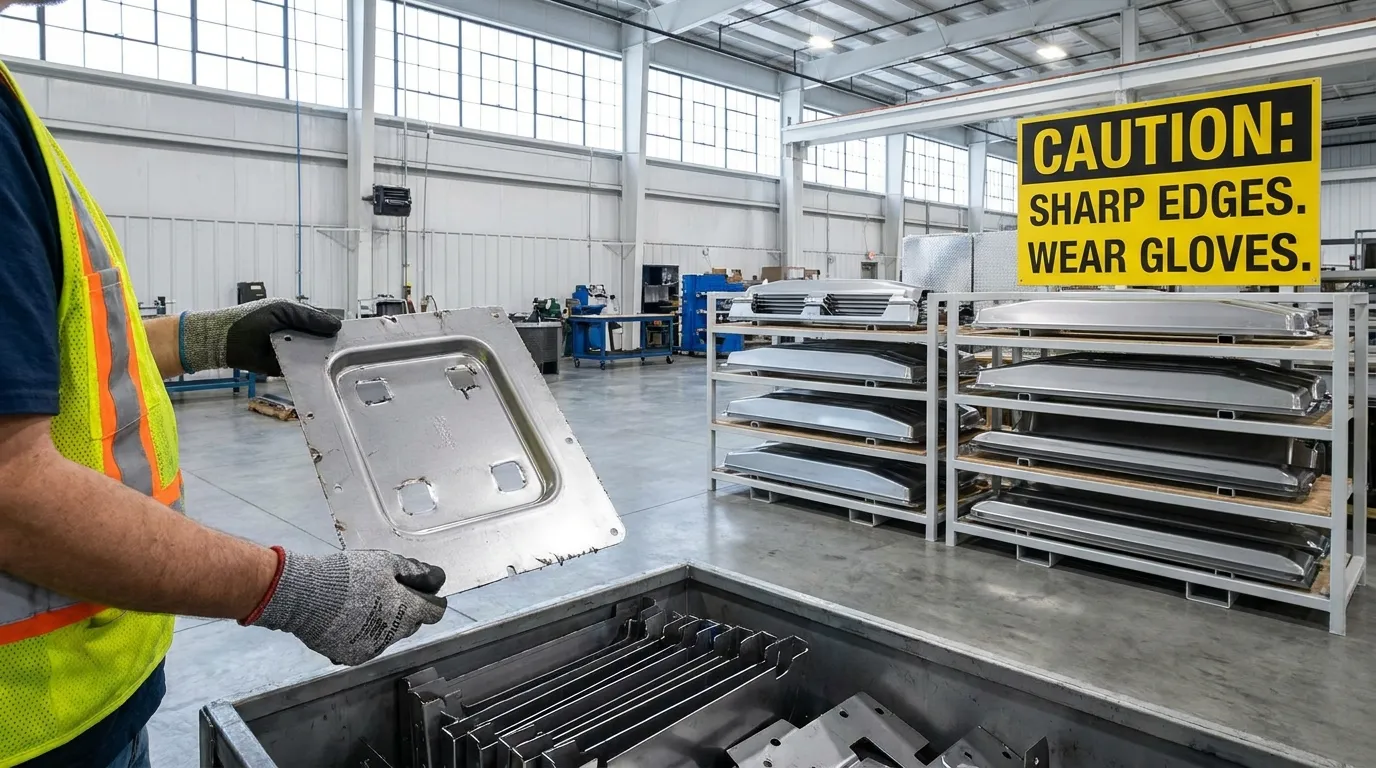
Stamped bracket bin picking
Burrs and stamped edges
Repeated
A5
Hands contact sharp parts often and from different angles
HVAC duct handling
Thin sheet metal
Repeated
A5
Thin edges can slice under hand pressure
Glass panel handling
Finished or sharp glass edges
Task-dependent
A4 or A5
Controlled finished edges may fit A4, but sharp or rough edges call for A5
Recycling sort work
Unknown sharp materials
Repeated
A5 or higher
Workers face mixed, unpredictable cut hazards
For example, a team moving finished metal frames from a rack may start with A4. A team picking stamped brackets from bins should start with A5 because the hand enters the hazard zone many times per shift.
When is ANSI A4 enough?
ANSI A4 is enough when workers handle moderately sharp materials, need dexterity, and have controlled contact with edges. It is not the safer choice when thin metal, stamped burrs, or frequent edge pressure are part of the task.
A4 works well for many general metal handling jobs because it gives meaningful cut protection without making the glove feel too heavy. That matters in real work. If workers remove bulky gloves to handle parts, inspect labels, or use small tools, the higher rating may fail in practice.
A4 is a strong candidate when these points are true:
Edges are rough or moderately sharp, not thin and razor-like
Contact with sharp edges is occasional or controlled
Workers need finger movement for gripping, sorting, or assembly
The glove coating grips the actual surface, such as dry metal or light oil
Trial gloves do not show cuts, early coating damage, or thumb-index wear
A4 is not the best choice when the edge can slice under pressure. If a worker pushes, pulls, or twists against stamped metal or freshly cut sheet, move the trial toward A5.
When should you upgrade from A4 to A5?
Upgrade to ANSI A5 when the hazard is sharper, thinner, more repetitive, or harder to control. The decision is strongest when workers handle stamped metal, glass edges, sharp HVAC parts, or materials that cut under hand pressure.
A5 is the practical upgrade when the job leaves too little room for error. The glove does not just need to pass a lab rating. It needs to survive the shift, keep grip, and reduce hesitation when workers touch the material.
If this is true on the job
Upgrade choice
Reason
Workers handle thin sheet metal
A5
Thin edges can slice faster than thicker finished parts
Parts have stamped or sheared edges
A5
Burrs and sharp corners create repeated cut points
Workers reach into bins of metal parts
A5
Contact is frequent and less controlled
HVAC installers handle cut duct edges
A5
Hand pressure and sharp edges happen together
A4 gloves show cuts during trial
A5
The task is exceeding the lower protection margin
Workers report fear of edge contact
A5 trial
Confidence affects safe handling and compliance
A5 is not always the smarter buy. It works when the edge hazard is sharper or more repeated, but A4 may be the better work glove when dexterity and comfort keep workers compliant.
What else matters besides the A4 or A5 cut level?
Cut level is only one part of glove selection. You still need to check grip, coating, fit, abrasion, puncture, and whether the cut protection covers the areas that face the hazard.
A glove can have the right ANSI cut level and still fail the task. If the coating slips on oily sheet metal, workers will squeeze harder. If the glove is too thick, they may remove it for detailed work. If wear starts at the thumb-index web, the glove may fail before the cut rating becomes the real issue.
Check grip, fit, and wear points before final approval
Use this checklist before you approve either A4 or A5:
Grip coating: Match the coating to dry, wet, oily, or dusty surfaces.
Dexterity: Check whether workers can pick, sort, fasten, and inspect parts without removing the glove.
Fit: Poor fit can reduce grip and increase hand fatigue.
Abrasion resistance: Rough parts may wear the coating before cuts appear.
Puncture risk: Cut level does not replace puncture protection.
Coverage: Check whether the glove protects only the palm or gives 360-degree cut resistance.
Documentation: Ask for manufacturer test data tied to the stated standard.
OSHA’s PPE guidance tells employers to consider glove performance characteristics for the expected hazard and to request manufacturer documentation when needed. The 2024 ANSI/ISEA update also places more attention on clearer glove labeling for abrasion, cut, and puncture ratings.
For broader coating, material, and sizing choices, hand off the wider decision to a full cut resistant glove selection process.
How should a safety manager validate the final choice?
Test both the rating and the work behavior before you buy in bulk. A short field trial gives better evidence than choosing A4 or A5 from a catalog table alone.
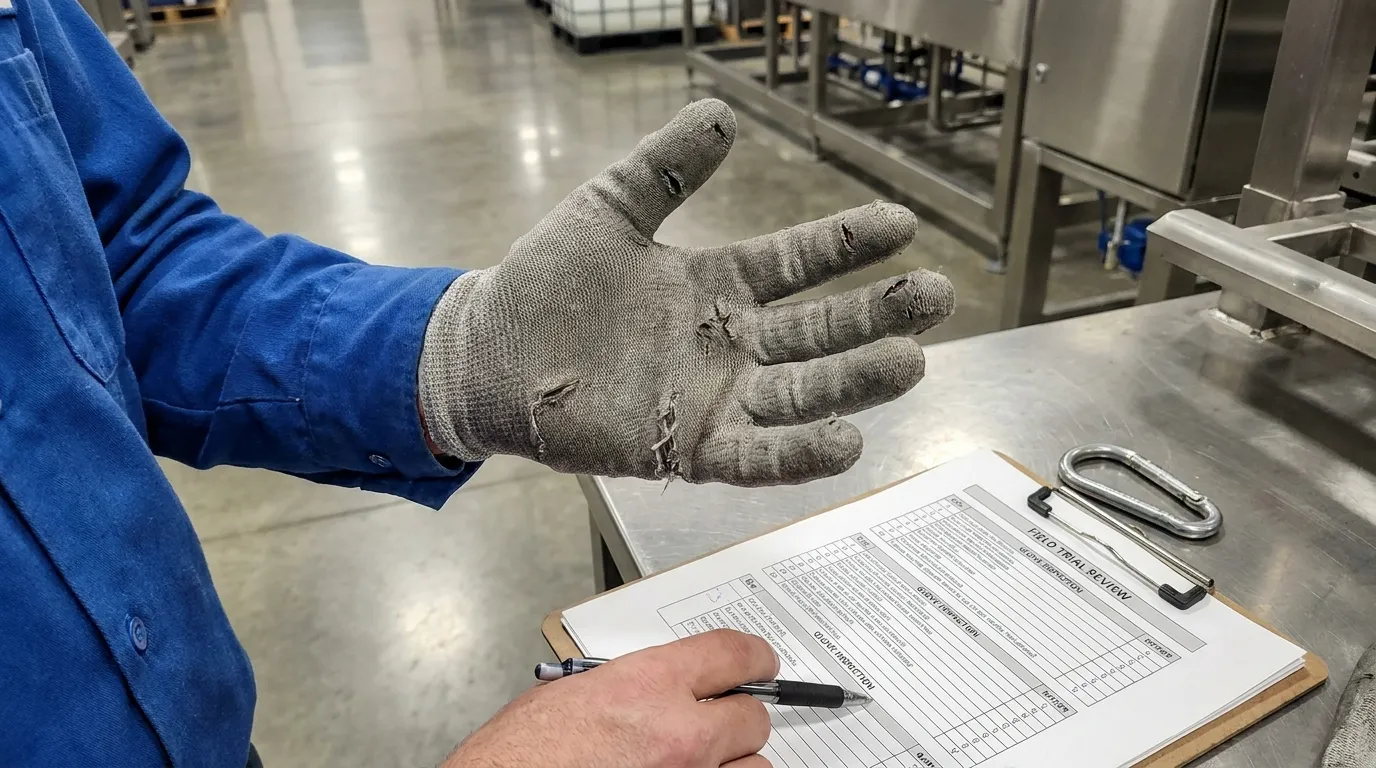
Run the trial on the exact task, not a clean demo area. Give workers the same parts, speed, oil level, bins, tools, and shift length they normally face. Track what happens to grip, comfort, heat, coating wear, and confidence during real handling.
Use this pilot checklist:
Test A4 and A5 on the same task when the decision is close
Inspect palm, fingertips, and thumb-index web after the shift
Ask workers whether the glove feels too bulky or too light
Watch for glove removal during detailed work
Record cuts, near misses, snags, and coating damage
Check whether grip stays stable on the actual material
Standardize only after the glove passes both safety and usability
Example: if A4 gloves show palm cuts after one shift of stamped bracket handling, move to A5 and compare comfort. If A5 stops the damage but workers remove it for small parts, test a thinner A5 style before approving the glove.
What to Do Next
For ANSI A4 vs A5 cut resistant gloves, start with the edge and the task. Choose A4 when the work involves general handling, moderate sharpness, and a clear need for dexterity. Choose A5 when the material is thin, stamped, sharp, or handled again and again under pressure.
Then test the glove on the actual job. Check wear points, grip, comfort, and worker behavior before placing a larger order. The best glove is the one that protects the hand and still gets worn for the whole task.
Frequently Asked Questions
What is the difference between ANSI A4 and A5 cut resistant gloves?
ANSI A4 gloves are rated for 1,500 to 2,199 grams of cut resistance. ANSI A5 gloves are rated for 2,200 to 2,999 grams, so A5 gives a higher tested cut threshold for sharper or more frequent hazards.
Is ANSI A5 always better than A4?
ANSI A5 is not always better. It gives more cut resistance, but A4 may be enough when the task needs more dexterity, lower fatigue, and only moderate sharp-edge protection.
What ANSI cut level is best for sheet metal?
A4 can work for controlled handling of moderate sheet metal edges. A5 is safer when the sheet metal is thin, freshly cut, stamped, burred, or handled repeatedly under pressure.
Are ANSI/ISEA 105 and EN 388 cut standards the same?
They are not the same standard, although both help rate cut protection. ANSI/ISEA uses A1 to A9 cut levels, while EN 388 uses its own markings and cut test references.
What protection level should my selected gloves provide?
Your glove should match the sharpness, contact pressure, exposure frequency, and task duration. OSHA also expects hand protection selection to be based on task conditions and identified hazards, not only a product label.
Does ANSI cut level cover puncture, abrasion, or chemicals?
No, the ANSI cut level only answers cut resistance. For puncture, abrasion, oil grip, heat, or chemical exposure, check the glove’s other ratings and manufacturer documentation before approval.