Home > Uncategorized > Best Gloves for Cold Storage & Freezer Warehouses
Best Gloves for Cold Storage & Freezer Warehouses
08 May, 2026
By arafatshuvo509
The best gloves for cold storage should match the freezer task, not just the temperature. For -20°C operations, active pickers usually need insulated, grippy, dexterous gloves, while meat racking needs cut resistance and ice-cream lines need moisture control. Prioritize EN511 cold data, task-matched cut level, waterproofing where condensation is common, and a drying process for shared gloves.
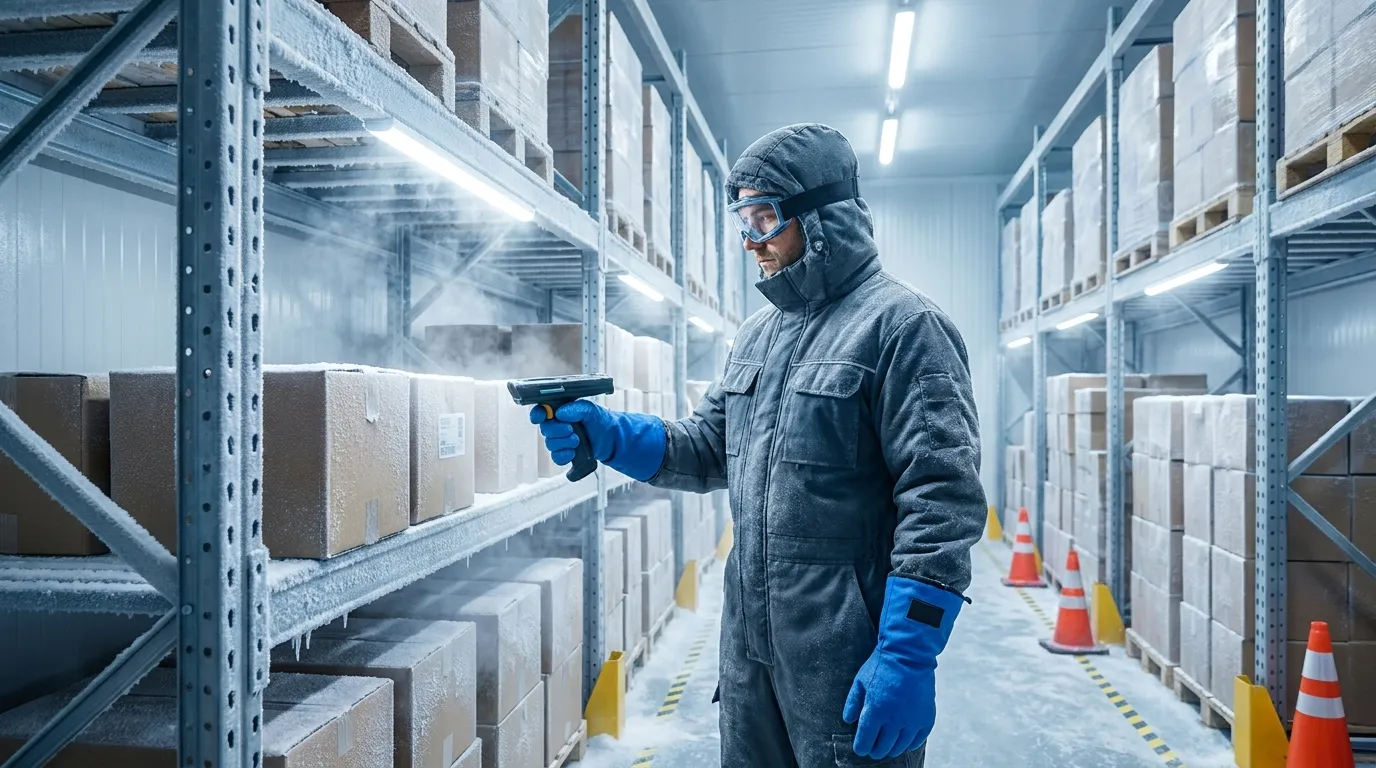
Cold-chain teams don’t fail glove programs because they buy “cold gloves.” They fail when one glove is expected to handle scanning, wet cartons, frozen racking, food packaging, sharp edges, and three shared shifts. A freezer glove has to stay warm enough, flexible enough, and safe enough for the actual job. That starts with separating picker work, meat racking, line work, and maintenance into different glove needs.
What makes the best gloves for cold storage different from normal winter gloves?
The best gloves for cold storage combine thermal insulation, freezer-flexible grip, moisture control, and task-matched cut protection. Normal winter gloves can fail when workers handle wet cartons, frozen metal, racking, or sharp packaging through a full shift.
A normal winter glove may feel fine outside for short exposure. Freezer warehouse work is different because the worker keeps touching cold surfaces, cartons, tools, racks, and packaging. The glove must protect against cold air and cold contact, but it also needs industrial grip and wear resistance.
OSHA recommends protecting workers from cold stress with insulated gloves and water-resistant protection when needed. The same cold risk can appear in refrigerated warehouses, blast chillers, food processing areas, and deep freezer work, which are mentioned in cold stress guidance from OSHA and ASSP.
For cold storage teams, the glove question is practical:
Can workers grip frozen cartons without squeezing harder?
Can they scan labels or pick small items without removing gloves?
Can the glove handle moisture, ice, and condensation?
Can it resist cuts from packaging, blades, bands, or racking?
Can shared gloves dry before the next shift?
If the glove fails one of those checks, workers may remove it. That is usually the real safety problem.
How much insulation do freezer gloves need around -20°C?
For -20°C freezer work, start with 100 to 150g insulation for active picking and consider heavier insulation for low-movement tasks or long cold-contact exposure. More insulation is not always safer if it makes workers remove the glove.
Insulation grams show how much thermal material is used in the glove, but they don’t tell the whole story. A glove with more insulation can feel warmer, but it can also reduce grip, scanner control, and finger movement. For active freezer pickers, warmth and dexterity must stay balanced.
Insulation grams vs dexterity tradeoff
Freezer task
Practical insulation direction
Why it fits
Active carton picking
100 to 150g
Keeps warmth without making the glove too bulky
Meat racking
100 to 200g, depending on cut liner and exposure
Needs warmth plus stronger mechanical protection
Ice-cream line work
100 to 150g with moisture control
Wet packaging can make hands feel colder fast
Low-movement freezer checks
150 to 200g
Less hand movement means less body heat generation
Maintenance near metal racks
150g or more, with reinforced areas
Cold-contact exposure can be harsher than air temperature
Some cold-resistant glove guides discuss 100 GSM and 200 GSM insulation, and some freezer glove examples use 150g Thinsulate. Ergodyne also discusses dual-zone insulation, with more insulation on the back of the hand and less in the palm for better movement.
The warmest glove is not always the safest glove. It works for low-movement freezer exposure, but a less bulky insulated glove is safer for pickers if it prevents glove removal during scanning and carton handling. For broader cold-weather selection logic, see this guide to winter glove selection.
Which glove specs fit freezer pickers, meat racking, and ice-cream lines?
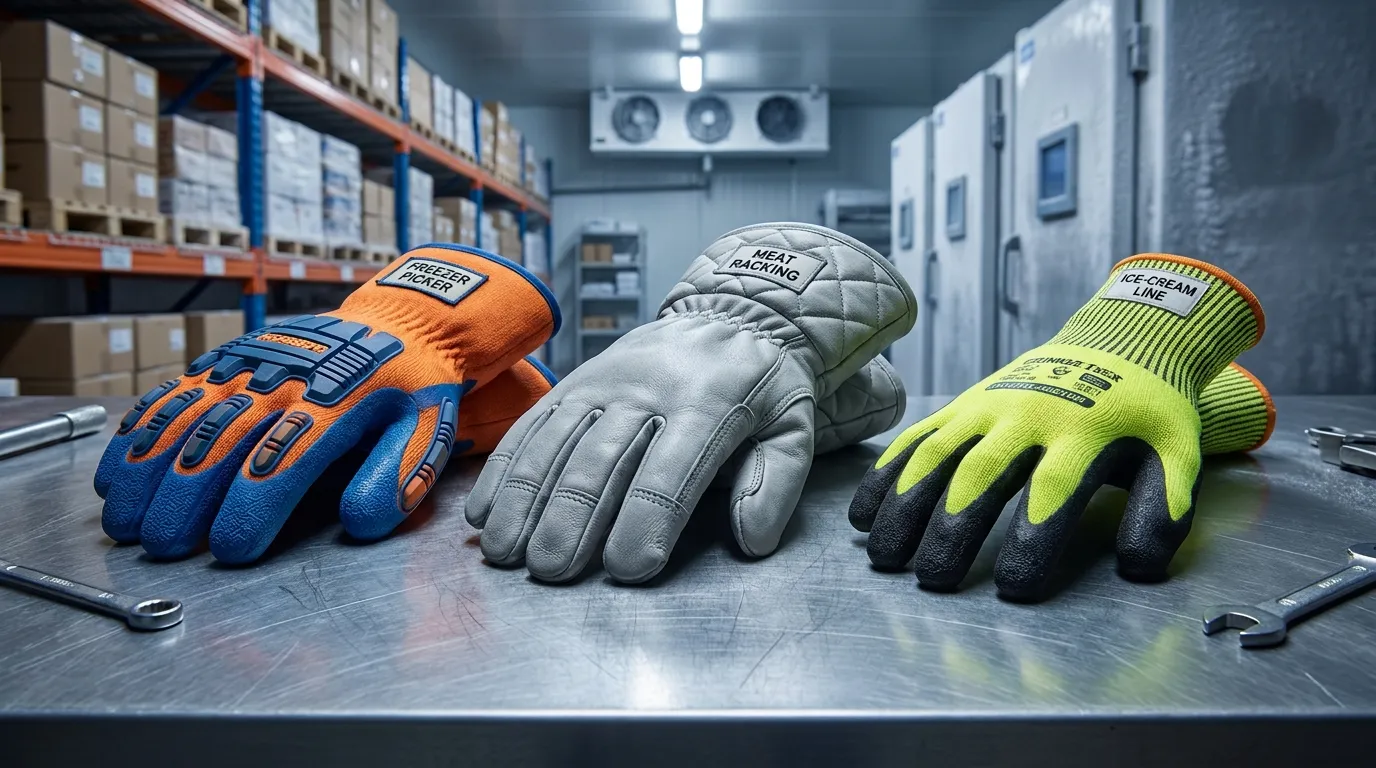
Match freezer gloves to the job, not only the temperature. Pickers need dexterity and grip, meat racking needs cut resistance, ice-cream lines need water resistance and odor control, and freezer maintenance may need reinforced or impact-protective gloves.
A cold-storage glove program should not use one universal glove for every worker. A freezer picker, meat racking crew, ice-cream line worker, and maintenance technician face different hand hazards. A review hosted by CDC/NIOSH describes cold storage work across low-temperature ranges and notes problems such as grip, dexterity, and fatigue in cold work settings.
Role or zone
Main hand hazard
Suggested insulation
Palm or coating
Cut level direction
Dexterity need
Care note
Freezer picker at -20°C
Cold cartons, scanning, repetitive grip
100 to 150g
Flexible sandy nitrile or textured palm
Low to moderate, based on packaging
High
Dry between shifts to reduce odor
Meat racking crew
Rack edges, packaging, frozen meat boxes
100 to 200g
Durable coated palm or reinforced grip
Moderate to higher
Medium
Inspect for liner exposure and coating damage
Ice-cream line worker
Wet packaging, sticky residue, condensation
100 to 150g
Water-resistant or waterproof grip
Low to moderate
High
Rotate pairs so gloves fully dry
Freezer maintenance
Metal contact, fasteners, tools, rack repair
150g or more
Reinforced palm and fingertips
Based on tool and metal hazard
Medium
Check thumb crotch and fingertips often
Pallet staging
Cartons, pallet edges, brief cold exposure
100g or lined coated glove
Abrasion-resistant coated palm
Low to moderate
Medium
Replace when grip becomes smooth
One universal freezer glove usually creates compliance problems. Standardize by role instead. Pickers, racking crews, line workers, and maintenance teams don’t face the same hand hazards.
For meat racking or frozen packaging with sharper edges, a dedicated cut-resistant winter gloves option may be safer than a basic insulated coated glove.
Do cold storage gloves need waterproofing or just a coated palm?
Use waterproof or liquid-resistant gloves when condensation, washdown, wet cartons, or ice buildup is common. For dry carton picking, a coated palm may be enough, but the glove still needs grip that stays flexible in cold conditions.
Cold storage gloves don’t always need a full waterproof membrane. They do need moisture control. Wet hands lose comfort fast, and trapped sweat can also make hands feel colder. OSHA’s cold stress guidance points to water-resistant insulated protection when conditions require it.
Condition
Better glove choice
Reason
Dry frozen cartons
Insulated glove with coated palm
Grip matters more than full waterproofing
Wet cartons or condensation
Water-resistant or waterproof glove
Moisture can reduce warmth and comfort
Ice-cream packaging line
Liquid-resistant palm with good grip
Sticky and damp surfaces need control
Washdown nearby
Waterproof membrane or liquid-proof construction
Water exposure is repeated
High-sweat active picking
Breathable insulated glove if moisture is light
Trapped sweat can chill hands later
Palm coatings for wet frozen cartons
For dry freezer picking, sandy nitrile or textured coatings can help workers grip cartons without over-squeezing. Latex coatings can also offer strong grip, though the final choice depends on product design, cold flexibility, and workplace material policies.
Waterproof gloves are not automatically better. They are safer for wet cartons and condensation, but breathable water-resistant or coated gloves may be more comfortable for dry freezer picking. For teams comparing wet-area choices, this guide to waterproof winter gloves is the natural next step.
What cut level is right for freezer warehouse hazards?
The right cut level depends on packaging, blades, rack contact, product type, and how much dexterity the worker needs. Meat racking, banding, sharp carton edges, and frozen packaging can raise the cut risk beyond what a basic thermal glove can handle.
A cold-storage safety coordinator should not choose cut protection by temperature alone. Start with the task. If workers handle meat boxes, metal racks, film cutters, pallet bands, or damaged cartons, cut resistance becomes part of the freezer glove spec.
Use this quick check before buying:
Are workers using knives or safety cutters?
Do they touch metal rack edges or hooks?
Are cartons frozen, damaged, or sharp at the seams?
Do workers handle bands, staples, or exposed packaging edges?
Can they still grip safely with a cut-resistant liner?
OSHA’s hand protection interpretation says glove selection should consider the work task, conditions, duration, hazards, manufacturer data, and worker feedback. For the deeper standard and material breakdown, use NMSafety’s cut-resistant glove guide instead of trying to cover every cut level here.
What standards should a safety coordinator check before buying?
Check EN511 for cold performance, EN388 or ANSI/ISEA cut data for mechanical hazards, and supplier documentation for the exact glove model. OSHA’s hand-protection guidance emphasizes matching gloves to task conditions, duration, and hazards.
Standards help compare gloves, but they don’t replace a task trial. A glove can score well in a test and still feel wrong for scanning, line work, or wet freezer cartons. Use standards to screen options first, then test shortlisted gloves with real workers.
EN511 numbers in plain English
EN511 is the key cold-protection standard to check. It covers glove protection against convective cold, contact cold, and water penetration in defined test conditions. The standard documentation describes gloves for cold protection down to very low temperatures, including conductive and convective cold exposure.
Use this standards checklist:
Ask for EN511 data for cold performance.
Ask for EN388 or ANSI/ISEA 105 data if cut, abrasion, tear, or puncture risk exists.
Check whether water penetration or waterproof claims are documented.
Review the exact model, not only the glove family.
Trial the glove in the actual freezer zone before bulk ordering.
A rating is a starting point. The final decision should include worker feedback on grip, warmth, dexterity, wet-through, and fatigue.
How should shared freezer gloves be cleaned, dried, and controlled for odor?
For shift-shared freezer gloves, assign pairs when possible, dry gloves fully between shifts, clean only according to the manufacturer’s instructions, and replace gloves that stay wet, smell strongly after drying, or lose insulation and grip.
Shared freezer gloves need a simple control process. Odor usually gets worse when moisture stays inside the liner. Deep washing may not be safe for every glove, because heat, chemicals, or rough cleaning can damage insulation, coatings, or waterproof membranes.
Use this process for shared glove stations:
Assign pairs where possible. Even a simple name or shift label can reduce hygiene complaints.
Inspect at shift start. Check odor, wetness, coating cracks, liner exposure, and grip.
Wipe surface dirt. Remove food residue or carton dust before drying.
Dry gloves fully. Store them open so air can reach the liner.
Rotate spare pairs. Don’t issue damp gloves to the next shift.
Follow cleaning limits. Use the glove maker’s cleaning and laundering instructions.
Reject failed gloves. Remove gloves that stay wet, smell bad after drying, or lose warmth.
For cleaning crews or waste-handling overlap, review related sanitation glove hazards. That topic is different from freezer picking, but it matters when cold storage and sanitation tasks share workers or PPE storage areas.
When should a freezer warehouse replace gloves?
Replace freezer gloves when they stop protecting against cold, moisture, grip loss, or the task hazard they were bought for. Waiting until a glove fully tears is too late for shared cold-storage PPE.
Inspect shared gloves more often than individually assigned gloves. They get more wear, more moisture, and more odor complaints. Worker feedback also matters because cold performance changes by task, hand size, sweat level, and exposure time.
Use these replacement triggers:
The palm coating is smooth, cracked, or peeling.
The glove wets through during normal work.
The insulation feels flat or compressed.
The liner is exposed or bunched up.
Cut-resistant yarn is damaged.
Fingers or thumb crotch show holes.
Odor remains after full drying.
Workers remove the glove to complete normal tasks.
For coated palm wear, grip style, and coating selection, the broader coated glove buying guide can support the next purchase review.
What is the safest buying process for cold-chain teams?
The safest buying process is to select gloves by role, trial them in the real freezer zone, and measure worker feedback before bulk ordering. A glove that looks right on a spec sheet may fail when it meets scanners, wet cartons, and frozen metal.
Use this step-by-step process:
List each cold zone. Include freezer aisles, meat racks, line areas, staging, and maintenance.
Map hand hazards. Cold air, cold contact, moisture, cuts, abrasion, impact, and grip loss.
Choose 2 to 3 glove options. Don’t test too many at once.
Run a short worker trial. Include pickers, line workers, rack teams, and maintenance.
Standardize by task. Buy by role instead of forcing one glove across the site.
A freezer picker at -20°C may need a flexible 100 to 150g glove with scanner control. A meat racking crew may need higher cut protection. An ice-cream line worker may need stronger moisture resistance. A maintenance worker may need reinforced fingers and cold-contact protection near metal racks.
Getting the Next Step Right
The best gloves for cold storage are the ones workers keep on during the task. Start with the freezer zone, then match insulation, coating, cut level, waterproofing, and dexterity to the real hazard. Don’t let one glove cover jobs that need different protection.
For a practical next step, build a small trial around freezer pickers, meat racking, ice-cream line work, and maintenance. Track warmth, grip, wet-through, odor, and glove removal. Then standardize the winning options by role.
Frequently Asked Questions
What are freezer work gloves?
Freezer work gloves are insulated work gloves made for cold storage, freezer rooms, and frozen product handling. They usually combine thermal lining, grip coating, and sometimes waterproof or cut-resistant materials.
How much insulation do my freezer gloves need?
Active freezer pickers often need enough insulation to stay warm without losing dexterity, often around 100 to 150g depending on task and glove design. Low-movement or cold-contact work may need heavier insulation.
Do my freezer gloves need to be waterproof?
Freezer gloves should be waterproof or water-resistant when workers handle wet cartons, condensation, ice buildup, washdown areas, or damp food packaging. For dry carton picking, a coated palm may be enough.
What types of freezer work gloves are available?
Common types include thermal coated gloves, waterproof freezer gloves, leather freezer gloves, cut-resistant insulated gloves, and touchscreen-compatible freezer gloves. The right type depends on temperature, moisture, cut risk, and dexterity needs.
How do you maintain freezer work gloves?
Maintain freezer work gloves by drying them fully between shifts, removing surface dirt, and cleaning only according to the manufacturer’s instructions. Harsh chemicals or deep cleaning can damage insulation, coatings, or waterproof membranes.
When should you replace your freezer work gloves?
Replace freezer gloves when the coating cracks, insulation feels flat, the liner is exposed, waterproofing fails, or grip becomes unreliable. Strong odor after drying is also a warning sign for shift-shared gloves.
Can I wear ski gloves in a freezer warehouse?
Ski gloves may feel warm, but they are usually not designed for industrial abrasion, carton handling, cut hazards, or repeated warehouse use. Use freezer work gloves when durability, grip, and safety ratings matter.