Home > Uncategorized > Best Gloves for Oily Metal Parts in Workshops
Best Gloves for Oily Metal Parts in Workshops
08 May, 2026
By arafatshuvo509
The best gloves for oily metal parts are usually sandy nitrile or micro-foam nitrile palm gloves on a 13G or 15G shell. Use sandy nitrile when hydraulic oil makes parts slick, micro-foam nitrile when operators need fingertip control, and a 3/4 or full-dip nitrile glove when oil contact is constant. Trial three glove styles before changing the full workshop.
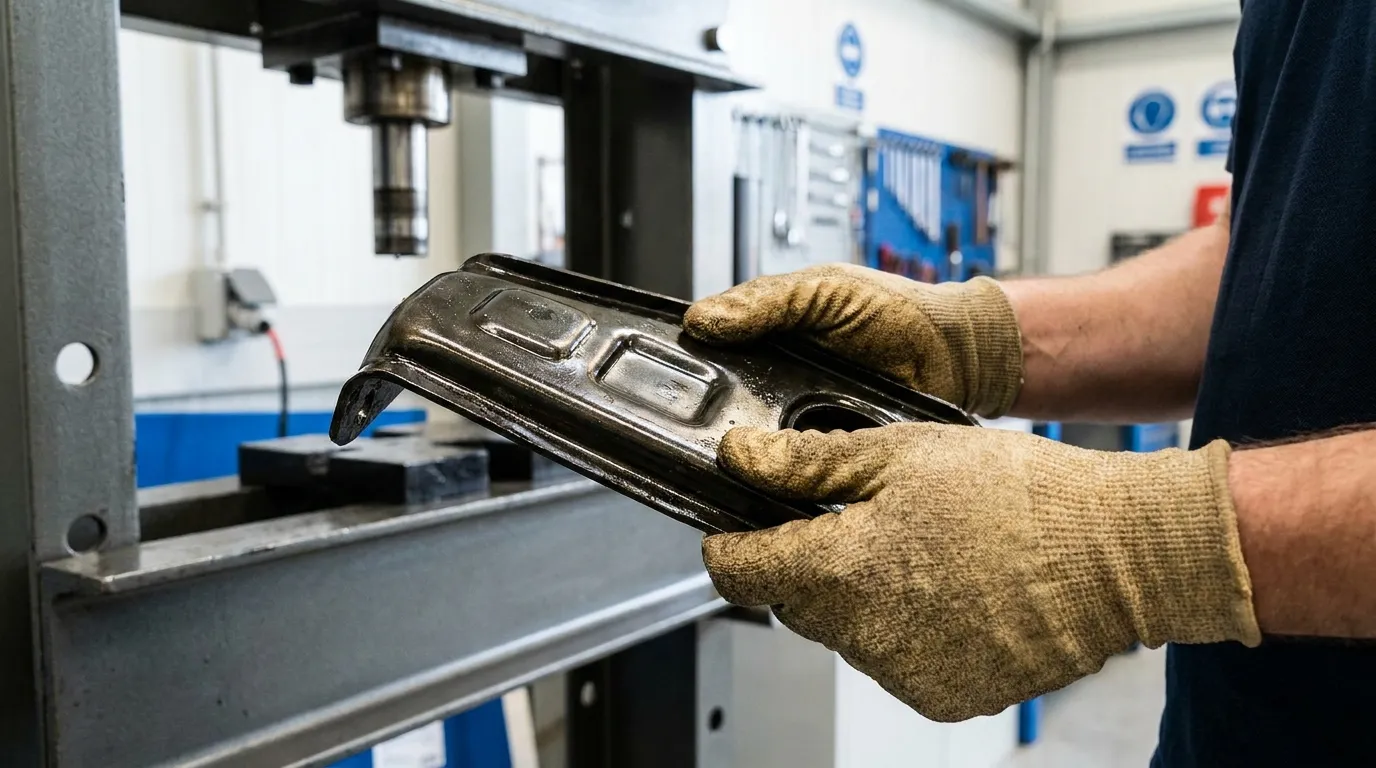
Oily metal parts create a different glove problem than dry sheet metal or general assembly. A glove can be oil resistant on paper and still slip during stamping, machining, lathe work, or gearbox assembly. The goal is not to buy the thickest glove. The goal is to match grip texture, shell gauge, cut protection, and worker comfort to the real task.
For oily metal parts, start with sandy nitrile or micro-foam nitrile palm gloves on a 13G or 15G shell. Use sandy nitrile for stronger wet-oil grip and micro-foam nitrile where dexterity and breathability matter more.
A line foreman should not choose by coating name alone. Nitrile helps with oil exposure, but the palm texture decides how well the worker can hold a slick part. OSHA’s hand protection rule says glove selection should match the task, hazard, use conditions, duration, and glove performance characteristics, not a single material label.
Workshop task
First glove to trial
Why it fits
Stamped oily brackets
Sandy nitrile palm, 13G cut liner
Better grip on slick edges and heavier parts
CNC machined parts
Micro-foam nitrile palm, 15G shell
Better fingertip control for smaller parts
Lathe workpieces
Micro-foam or sandy nitrile palm
Depends on oil level and part size
Gearbox assembly
Sandy nitrile or 3/4 dip nitrile
More grip or more oil barrier, based on exposure
For most workshops, the first test should include one sandy nitrile glove, one micro-foam nitrile glove, and one 3/4 or full-dip nitrile glove. That gives the team a fair comparison across grip, dexterity, oil saturation, and comfort.
Why do smooth nitrile gloves slip on hydraulic oil?
Smooth nitrile can resist oil but still feel slippery because the palm has limited texture to break the oil film. Sandy and micro-foam nitrile give more surface structure, so the hand can hold oily metal more securely.
Oil resistance and grip are not the same thing. A smooth nitrile palm may hold up better around oils than latex or some other materials, but it can still slide on a thin film of hydraulic oil. The issue is contact. Smooth surfaces can ride on the oil layer instead of biting into the part.
Textured coatings work differently. Sandy nitrile creates a rougher surface that helps the glove contact the part through light oil. Micro-foam nitrile gives a finer texture, which can feel better for small parts and tools. For a deeper coating comparison, review foam vs sandy nitrile.
Coating type
Where it works well
Where it can fail
Smooth nitrile
Light oil, basic barrier needs
Slick hydraulic oil on metal parts
Micro-foam nitrile
Small parts, tools, light to moderate oil
Heavy oil saturation
Sandy nitrile
Oily stamped parts, heavier metal handling
May feel rougher than foam
Full-dip nitrile
Constant oil contact or splash
Can feel hotter and less flexible
Glove charts from UC Berkeley EH&S and NCSU EH&S both treat nitrile as a useful material around oils and greases. That supports nitrile as a material choice, but workshop grip still depends on palm texture, fit, and the actual oil load.
Sandy nitrile, micro-foam nitrile, or full-dip nitrile: which should a workshop trial first?
Trial sandy nitrile first when parts are visibly oily, micro-foam nitrile when workers need fingertip control, and full-dip nitrile when oil contact is constant or splash-heavy. Do not choose smooth nitrile as the only test glove.
This is where many glove changes go wrong. A buyer orders one “oil-resistant” glove, gives it to every station, then gets complaints from half the line. Stamping, machining, lathe operation, and gearbox assembly do not use the hand in the same way.
Use this if-then table before ordering samples:
If the job looks like this
Trial this coating first
Shell direction
Avoid
Light oil on small machined parts
Micro-foam nitrile
15G for dexterity
Thick full dip as the only option
Hydraulic oil film on metal parts
Sandy nitrile
13G or 15G
Smooth nitrile only
Constant oil contact
3/4 or full-dip nitrile
13G if parts are heavier
Breathability as the only priority
Sharp stamped parts
Sandy nitrile with cut liner
13G cut-resistant liner
Grip-only gloves
Gearbox assembly
Sandy nitrile or 3/4 dip
Match to oil volume
One glove for every station
Smooth nitrile is not always wrong. It can work for light contamination or short contact. But it should not be the only test glove when hydraulic oil is the main problem. For most oily metal parts, nitrile coating comparison should happen before a full rollout.
Should oily metal workshops choose 13G or 15G shells?
Choose 15G when operators need more fingertip control. Choose 13G when parts are heavier, rougher, or more abrasive. The glove shell gauge affects comfort and control, so it should be tested with real parts before the buyer locks in one style.
A 15G shell usually feels thinner and more flexible. That can help CNC operators pick up small parts, handle gauges, or work around tight assembly areas. A 13G shell often feels more substantial, which can suit stamping, rough metal handling, or heavier gearbox parts.
Worker complaint
Better trial choice
Reason
“I can’t feel the part”
15G micro-foam nitrile
Better fingertip control
“The part still slips”
Sandy nitrile palm
More grip texture
“The glove wears too fast”
13G coated cut liner
More body for rough handling
“My hands get too hot”
Palm-dipped micro-foam
Better airflow than full dip
“The oil soaks through”
3/4 or full-dip nitrile
More liquid barrier
The UK HSE’s glove guidance says selection should account for the work, wearer, environment, task, contact time, comfort, and other hazards. That is why gauge should not be chosen from a catalog image alone. Put the glove on the station and test it during the shift.
Do oily metal parts also require cut-resistant gloves?
Oil grip does not automatically mean cut protection. If workers handle stamped parts, sheet metal, sharp machined edges, or burrs, choose a nitrile-coated cut-resistant glove and confirm the cut rating before rollout.
A grip glove solves one problem. It helps workers hold slick parts. It does not automatically protect against cuts from stamped edges, sheet metal, trimmed parts, or machined burrs. If both hazards are present, the trial glove needs textured nitrile and a cut-resistant liner.
When oil grip is enough
Grip may be the main concern when parts are smooth, edges are finished, and operators handle tools or components without burrs. In that case, a micro-foam or sandy nitrile palm may be enough for the first trial. The foreman should still watch for snags, tears, and worker complaints.
When cut resistance must be added
Cut resistance should be added when workers handle stamped brackets, unfinished sheet metal, deburred parts with sharp spots, or machined components with rough edges. For broader cut-level selection, use the cut-resistant glove guide instead of turning this page into a full cut guide.
The ISEA hand protection page points to ANSI/ISEA 105-2024 for hand protection classification, including cut, puncture, abrasion, and impact categories. Use that broader rating system when oil grip and edge risk overlap.
Three-glove test kit for stamping, machining, lathe, and gearbox assembly
A practical oily-metal test kit should include one sandy nitrile grip glove, one micro-foam nitrile dexterity glove, and one 3/4 or full-dip nitrile barrier glove. Test all three on the same parts, oil level, and shift length.
Do not test one glove on one worker and call it finished. Use the same parts, similar oil exposure, and the same shift length. The eCFR version of 29 CFR 1910.138 also frames selection around matching glove performance to the hazards and tasks.
Trial glove
Best station to test
What to score
Sandy nitrile palm, 13G cut liner
Stamping line or gearbox parts
Wet-oil grip, edge protection, wear
Micro-foam nitrile palm, 15G shell
CNC machining or lathe work
Dexterity, comfort, light oil grip
3/4 or full-dip nitrile, 13G shell
Constant oil contact
Oil barrier, heat, stiffness
For the stamping line, test the sandy nitrile cut liner on oily brackets with sharp edges. For the CNC cell, test 15G micro-foam nitrile on small machined parts with cutting fluid. For gearbox assembly, compare sandy nitrile against 3/4 dip nitrile when workers handle oily housings and gears.
Score item
Pass signal
Fail signal
Grip
Worker holds the part without squeezing hard
Part rotates or slides
Dexterity
Worker keeps normal speed
Worker removes glove for small tasks
Oil saturation
Palm still feels usable mid-shift
Glove feels soaked or heavy
Coating wear
No early cracking or peeling
Palm breaks down quickly
Acceptance
Most workers keep glove on
Workers reject it within hours
If the job also has pinch points or back-of-hand risks, the trial may need impact options too. In that case, compare the glove against basic impact glove ratings before buying for the whole line.
How should a foreman run the glove trial before replacing every pair?
Run the trial like a small shop-floor test, not a sample giveaway. Pick three tasks, three glove styles, and a short scoring sheet. The goal is to see which glove workers keep wearing when the parts are oily, sharp, awkward, or repetitive.
Start with one stamping worker, one machining or lathe operator, and one gearbox assembly worker. Give each station the same three-glove set if the tasks are similar enough. If the hazards are very different, keep the same scoring categories but adjust the glove style to the station.
Use this process:
Pick three common oily-metal tasks.
Record the current glove complaint.
Test all three gloves during real oil exposure.
Include different hand sizes.
Ask workers to score grip, comfort, heat, and control.
Check glove wear at break time and shift end.
Replace only after one glove clearly wins.
Do not rely on one worker’s opinion. A glove that feels great for gearbox assembly may feel bulky on a lathe. A glove that grips stamped parts may feel too rough for small fasteners. The best trial result is a station-by-station choice, not a single glove forced across the shop.
When should you move beyond oily-metal gloves to impact or heavy-duty protection?
Move beyond standard oily-metal gloves when the job also includes pinch points, dropped tools, heavy castings, hammers, or back-of-hand impact. In those cases, trial oil-grip gloves with cut and impact protection instead of grip-only styles.
Grip-only gloves fit many workshop tasks, but they are not enough for every metal job. Heavy gearbox housings, rig-style maintenance, and mining-related repairs may need back-of-hand protection. That is a different risk profile than holding small oily machined parts.
Use cut-impact gloves when oil, edges, and impact risks happen together. Use mining rig gloves only when the job looks closer to heavy field work than controlled workshop assembly.
Full-dip nitrile is also not always the safest answer. It can help with constant oil exposure, but it may feel hot and stiff. For lathe operators and gearbox assembly teams, micro-foam or sandy palm-dipped gloves may get better worker acceptance.
What to Do Next
The best gloves for oily metal parts should be chosen by station, not by a single catalog claim. Build a three-glove test kit with sandy nitrile, micro-foam nitrile, and 3/4 or full-dip nitrile options. Then test them on the actual oily parts your team handles every shift.
If stamped edges, burrs, or impact risks are present, add the right cut or impact protection before rollout. A good glove change should reduce slips without making workers slower, hotter, or more likely to remove the glove.
Frequently Asked Questions
What type of gloves should I use for handling oily car parts?
Use nitrile-coated gloves with a textured palm, preferably sandy nitrile or micro-foam nitrile. Smooth nitrile may resist oil, but it can still slip on oily metal surfaces when the palm has too little texture.
Are nitrile-coated gloves better than synthetic leather for oily mechanical work?
Nitrile-coated gloves are usually better when oily grip is the main problem. Synthetic leather can feel comfortable for tools, but textured nitrile usually performs better on slick metal parts.
Do oil resistant gloves also protect against cuts?
Not always. Oil resistance and cut resistance are separate features, so stamped parts, burrs, and sharp machined edges need a glove with both textured nitrile grip and a verified cut rating.
How do I know which cut level I need in a work glove?
Match the cut level to the sharpness, edge type, and frequency of contact. For oily metal workshops, test cut-resistant nitrile gloves when workers handle stamped parts, sheet metal, machined burrs, or sharp gearbox components.
How often should mechanics gloves be replaced?
Replace gloves when grip drops, the coating cracks, the liner tears, or oil saturation makes the glove uncomfortable. In workshops, replacement timing should be tracked during the glove trial.
Can I use the same gloves for welding and handling sharp metals?
Not usually. Oily metal handling needs grip and dexterity, while welding needs heat protection, so only use one glove if it is tested and rated for both hazards.