Home > Uncategorized > Cut-Resistant Sleeves vs Gloves: When You Need Both
Cut-Resistant Sleeves vs Gloves: When You Need Both
18 May, 2026
By arafatshuvo509
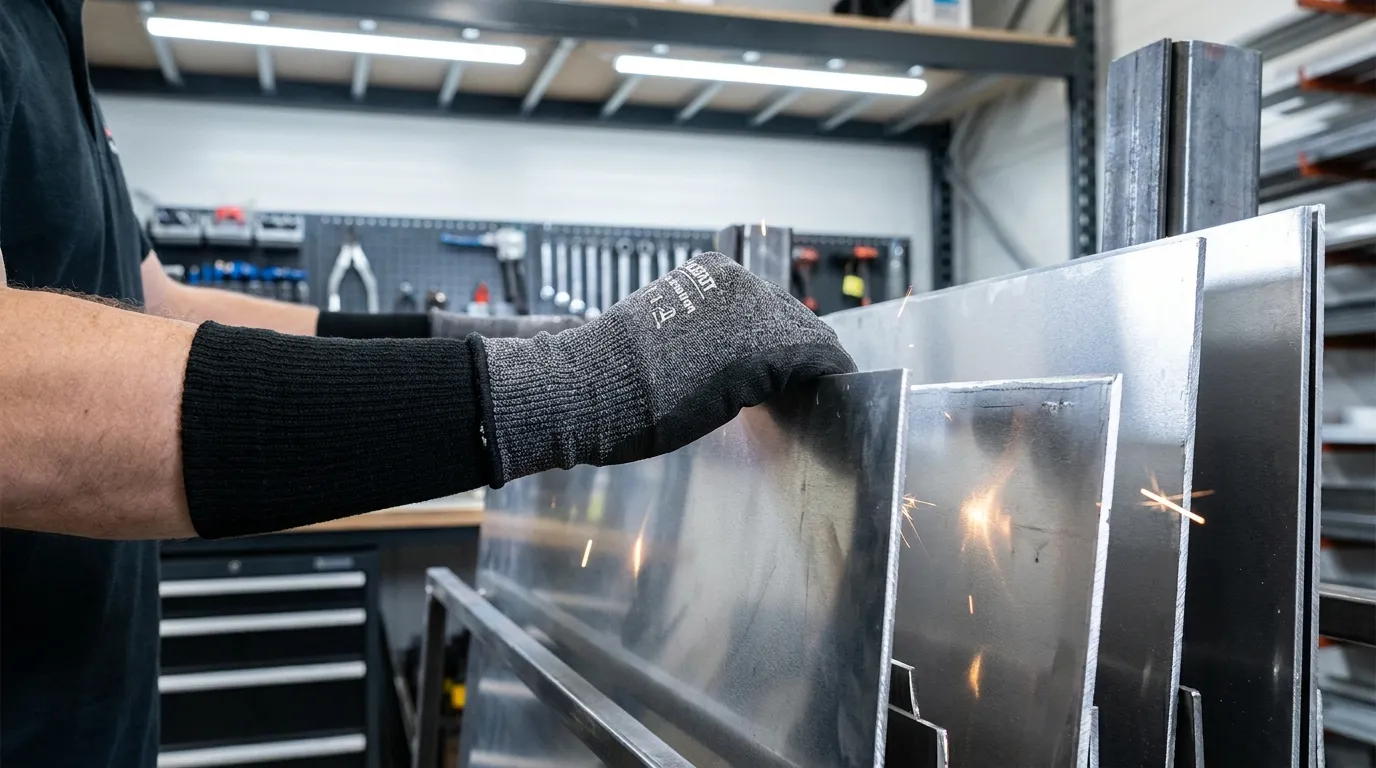
Cut resistant sleeves vs gloves is not an either-or choice. Gloves protect hands, fingers, grip, and palm contact, while sleeves protect the wrist and forearm gap. Safety managers should add sleeves when workers handle glass, stamped metal, sheet metal, bins, racks, or large parts that contact the arm above the glove cuff.
Forearm cuts often show up after the glove has already done its job. The worker grips the part safely, then the wrist or forearm scrapes an edge during lifting, reaching, stacking, or racking. That gap matters. A good PPE decision should look at the full movement, not just the hand position.
Are cut-resistant gloves enough, or do you need sleeves too?
Cut-resistant gloves are enough only when the cut hazard stays at the hand. Add sleeves when workers reach, carry, rack, or slide sharp materials against the wrist or forearm.
Gloves protect the hand, palm, fingers, and grip zone. Sleeves protect the wrist, lower arm, and sometimes the upper arm. OSHA requires suitable hand protection when hands face cut, abrasion, puncture, burn, or temperature hazards, but the same safety logic should extend to exposed arm contact during the task.
A simple way to decide is to check injury location. If cuts happen on fingers or palms, start with cut-resistant glove selection. If cuts happen above the glove cuff, the glove is not failing. The PPE system is incomplete.
Use sleeves when the worker’s arm enters the hazard zone. That includes pulling glass from a rack, sliding sheet metal into storage, reaching into scrap bins, or handling stamped parts with burrs. The sleeve closes the coverage gap that a glove cuff cannot fully cover.
Which jobs expose the forearm after the glove already did its job?
Sleeves make sense when the worker’s forearm contacts sharp edges during the movement, not only when the hand grips the part. Glass, sheet metal, stamping, recycling, and bin-picking jobs often create that exposure.
The best question is not “Do we use sharp materials?” It is “Where does the arm go during the full task?” A worker may grip safely, then lean, reach, or slide the forearm across an edge. That is when sleeves become useful.
Job or task
Exposure movement
Hand risk
Forearm risk
Recommended PPE
Caution
Glass rack unloading
Pulling panes from tight slots
High
High
Coated cut glove plus sleeve
Check sleeve length and cuff overlap
Sheet-metal racking
Sliding panels into storage
High
High
Cut glove plus thumb-hole sleeve
Wrist gap often opens during reach
Metal stamping
Handling parts with burrs
High
Medium to high
Higher cut glove plus secure sleeve
Watch repeated reach into bins
Scrap bin picking
Reaching into uneven offcuts
Medium to high
High
Cut glove plus longer sleeve
Do not use loose sleeves near moving parts
Large panel carrying
Edge rests near wrist or arm
Medium
Medium
Cut glove plus forearm sleeve
Fit matters for long carries
Recycling work
Mixed sharp materials shift
High
High
Cut glove plus sleeve
Inspect PPE often
Rotating machinery
Fabric near rollers or shafts
Varies
Snag risk
Reassess before using sleeves
Guarding comes first
For construction and mixed material handling, workers may also need broader glove options beyond cut resistance. A related guide to heavy-duty site gloves can help when abrasion, grip, and rough surface contact are part of the same job.
What does a glove protect that a sleeve cannot?
A sleeve does not replace a glove because it cannot protect the palm, fingers, grip zone, or fingertip dexterity. It only extends protection beyond the glove cuff.
A glove is still the main PPE for hand contact. It handles grip, palm pressure, finger movement, and coating performance. A sleeve has no palm coating and cannot control slippery parts, oily surfaces, or fingertip contact.
Protection need
Glove
Sleeve
Palm cut protection
Yes
No
Finger protection
Yes
No
Grip on oily or dry parts
Yes, with right coating
No
Wrist gap coverage
Sometimes limited
Yes
Forearm protection
No
Yes
Dexterity
Depends on glove fit
Limited role
Full arm reach exposure
No
Yes, if long enough
If workers handle oily sheet metal or coated parts, glove coating still matters. Review nitrile coating choices when grip, oil resistance, and palm feel affect safe handling. The sleeve protects the arm, but the glove still controls the part.
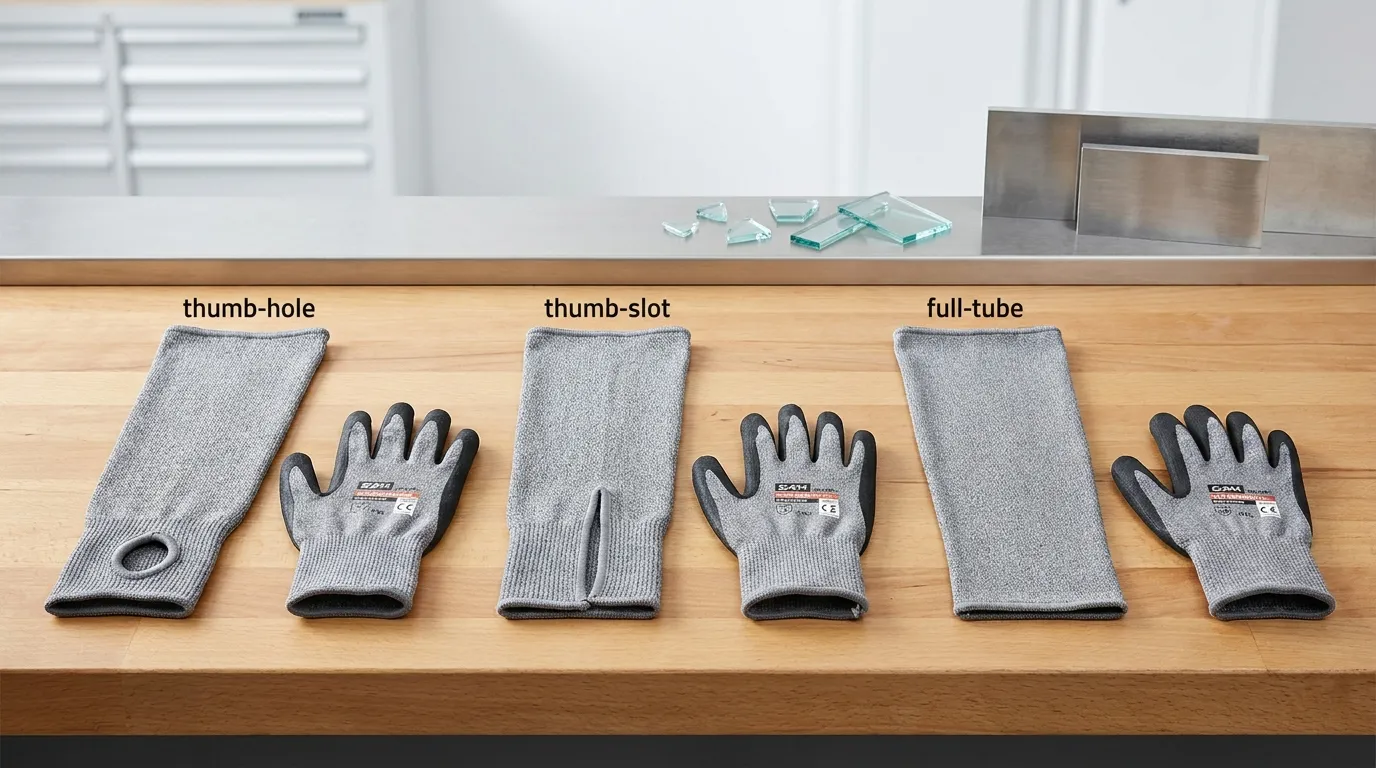
What sleeve design should you choose: thumb-hole, thumb-slot, or full tube?
Choose thumb-hole or thumb-slot sleeves when the wrist gap keeps opening during reach work. Choose full-tube sleeves when palm bulk is a bigger complaint and the sleeve still stays in place.
Thumb-hole sleeves help keep the sleeve anchored over the wrist. They work well when workers reach forward, lift panels, or pull parts from racks. The tradeoff is bulk under the glove, especially if the sleeve fabric bunches near the palm.
Full-tube sleeves are simpler. They can feel cooler and less bulky, but they may slide if the fit is loose or the arm moves a lot. Elastic cuffs and bicep closures help, but they need to stay comfortable over a full shift.
Sleeve design
Best use
Main benefit
Watch for
Thumb-hole sleeve
Reaching, racking, glass handling
Helps close wrist gap
Bulk under glove
Thumb-slot sleeve
Repetitive reach tasks
Better sleeve position
Worker comfort
Full-tube sleeve
Lower-bulk setups
Less palm interference
Sliding down
Bicep-length sleeve
Deep reach into bins or racks
More arm coverage
Heat and fit complaints
Elastic cuff sleeve
Shorter forearm exposure
Easy to issue
May shift during work
Thumb-hole sleeves are not always the best choice. They work when the wrist gap keeps opening, but a full-tube design may be safer when workers reject the setup because it bunches under the glove.
What HPPE sleeve cut level do you need?
Match the sleeve cut level to the sharpness, force, and control of the task. Medium to high hazards usually need more than light cut protection, but the best sleeve is still one workers can wear correctly all shift.
HPPE stands for high-performance polyethylene. It is often used in cut-resistant gloves and sleeves because it can offer cut protection with a lighter feel. Some sleeves blend HPPE with glass fiber, steel fiber, or other yarns to raise cut resistance.
ANSI/ISEA 105-2024 covers hand and arm protection classifications, including gloves and sleeves. The ISEA also describes cut protection in rising groups, from lower A1-A3 levels to higher A7-A9 levels. Use the rating as a starting point, then test it against the real job.
Exposure level
Example task
Sleeve direction
Light scrape exposure
Packaging edges, light parts
Lower cut level may work
Moderate sharp-edge contact
General metal handling
Medium cut level
High contact with sharp edges
Glass, sheet metal, stamping
Medium to high cut level
Severe cut hazard
Heavy sharp metal, unpredictable scrap
Higher cut level and close review
Heat plus cut
Welding-adjacent metal
Check heat-rated material, not HPPE alone
A higher cut level is not automatically the best sleeve. It works when the forearm faces sharp-edge contact, but a cooler and better-fitting sleeve is safer when compliance is the main problem. Use the pillar’s ANSI cut level guide for the broader glove rating framework.
Should the sleeve cut level match the glove cut level?
The sleeve cut level should match the glove when the forearm touches the same sharp edge with similar force. If the forearm only faces light scrape contact, the sleeve may not need the same rating as the glove.
Use a hazard assessment before setting one standard across every job. OSHA’s PPE rules require employers to assess workplace hazards, choose suitable PPE, explain the decision to workers, and make sure the PPE fits. That matters because hand pressure and arm contact are often different risks.
A glove may need a higher rating when the palm applies force to sharp sheet metal. A sleeve may need a higher rating when workers reach deep into bins or racks where the arm rubs against unknown edges.
Same sharp edge touches hand and forearm: consider matching glove and sleeve cut levels.
Hand has pressure, arm has light scrape exposure: glove may need the higher level.
Arm enters unpredictable scrap or glass racks: sleeve may need equal or higher protection.
Workers stop wearing the sleeve: reassess fit, heat, and bulk before raising the rating.
What glove+sleeve combo works best for glass, stamping, and sheet-metal racking?
For most glass, stamping, and sheet-metal racking jobs, specify a cut-resistant coated glove for grip and palm protection plus a forearm sleeve that closes the cuff gap during reach, lift, and rack movements.
The right combo depends on the material, edge condition, surface oil, and arm movement. Do not choose the sleeve first. Start with the task, then match the glove and sleeve as one PPE system.
Recommended baseline combo
Scenario
Glove type
Coating
Sleeve design
Sleeve material
Upgrade trigger
Glass rack unloading
Cut-resistant glove
Good dry grip coating
Thumb-hole or thumb-slot
HPPE blend
Wrist cuts or sleeve sliding
Oily sheet metal
Cut-resistant glove
Sandy nitrile or oil-grip coating
Secure forearm sleeve
HPPE blend
Slips, oily cuffs, sharp burrs
Dry stamping work
Higher cut glove
PU or nitrile, based on part feel
Thumb-slot sleeve
HPPE or reinforced blend
Burrs and repeated reach
Scrap sorting
Cut-resistant glove
Durable grip coating
Longer sleeve
Higher cut blend
Unknown sharp edges
Welding-adjacent metal
Cut and heat-rated glove
Heat-suitable material
Heat-rated sleeve
Aramid or heat-rated blend
Heat exposure is confirmed
For oily sheet-metal work, start with coated work gloves that support grip and palm control. The sleeve should add forearm coverage without trapping oil or sliding into the glove.
When to upgrade the combo
Upgrade when injury logs show wrist or forearm cuts, when workers reach into racks or bins, or when the glove cuff separates from the sleeve during normal movement. Glass rack unloading is a clear case. The hand may stay protected, but the forearm can brush the next pane during removal.
For stamping, look at burr contact and bin reach. If workers pick stamped parts from deep containers, a glove-only setup often leaves the forearm exposed. Sheet-metal racking is similar because the wrist gap opens when the worker reaches forward to guide the panel.
When should you avoid sleeves or rethink the PPE setup?
Sleeves are not automatically safer in every task. Avoid loose or poorly secured sleeves around rotating equipment, pinch points, or machinery where fabric can snag, and solve machine guarding problems before adding wearable PPE.
Sleeves should not be used to cover up a guarding problem. OSHA machine-guarding rules address hazards such as point-of-operation contact, rotating parts, ingoing nip points, flying chips, and sparks. If a sleeve can catch, pull, or wrap, stop and reassess the task.
Is the worker near rollers, shafts, gears, or rotating parts?
Can the sleeve snag on moving equipment or sharp fixtures?
Does the sleeve stay close to the arm during the full task?
Does heat, welding, or hot metal exposure change the material choice?
Does the job need impact protection as well as cut protection?
Is the worker using sleeves because guarding is missing or inconvenient?
How should a safety manager roll out sleeves without hurting compliance?
Start with the injury pattern, then test fit and comfort before standardizing. A sleeve that workers remove during the task is not real protection, even if the cut level looks strong on paper.
Review injury reports by body location: fingers, palm, wrist, forearm, elbow, and upper arm. Then observe the task movement. Watch where the arm touches racks, bins, glass edges, stamped parts, or sheet metal. This shows whether the issue is glove selection, sleeve coverage, or both.
Identify jobs with wrist or forearm lacerations.
Observe the full movement, not just the grip.
Trial thumb-hole, thumb-slot, and full-tube designs.
Check overlap between glove cuff and sleeve.
Ask workers about heat, bulk, slipping, and bunching.
Train workers on donning, doffing, care, and limits.
Recheck after layout, tool, or material changes.
Also check if another glove type fits the hazard better. In some jobs, leather glove materials matter because abrasion, heat, or durability is the bigger issue. In cold work areas, touchscreen winter gloves can help reduce glove removal for device use.
What to Do Next
Choosing between cut resistant sleeves vs gloves should start with injury location and task movement. If the hazard stays at the palm and fingers, focus on glove fit, coating, and cut level. If the wrist or forearm enters the hazard zone, test a glove+sleeve setup.
For glass handling, stamping, sheet-metal racking, and bin work, treat the glove and sleeve as one system. Check the cuff gap, sleeve design, cut level, heat exposure, and worker comfort before making it standard. The safest option is the one that protects the real contact point and gets worn correctly.
Frequently Asked Questions
Do cut-resistant sleeves work?
Yes, cut-resistant sleeves work when they are matched to the task, cut hazard, and fit requirement. They reduce wrist and forearm exposure that gloves cannot cover, especially during reach, lift, and racking tasks.
What ANSI cut level sleeve do I need?
Choose the sleeve cut level based on sharpness, contact force, and control of the task. Light scrape exposure may need lower protection, but glass, metal stamping, and sharp sheet metal usually need medium to high cut resistance.
Does OSHA require cut-resistant sleeves?
OSHA does not name one universal sleeve cut level, but it requires employers to assess hazards and select PPE that protects workers from identified risks. If the forearm is exposed to cuts, sleeves may be the right PPE.
Can cut-resistant sleeves be washed?
Many cut-resistant sleeves can be washed, but the correct method depends on the fiber, coating, and manufacturer instructions. Replace sleeves that show holes, thinning, loose elastic, or damaged thumb holes.
Are cut-resistant sleeves heat resistant?
Some cut-resistant sleeves are heat resistant, but not all HPPE sleeves are made for heat or flame exposure. For welding, foundry, or hot metal work, check whether the sleeve material is aramid, Kevlar-style, or otherwise rated for heat.
Can you wash cut resistant gloves?
Some cut-resistant gloves can be washed, but cleaning depends on the liner, coating, and manufacturer’s care instructions. Replace gloves if washing leaves the coating cracked, stiff, slippery, or visibly damaged.