Home > Uncategorized > Abrasion-Resistant Work Gloves: EN 388 & Lifespan
Abrasion-Resistant Work Gloves: EN 388 & Lifespan
19 May, 2026
By arafatshuvo509
Abrasion resistant work gloves should be chosen by EN 388 abrasion level, real wear-through pattern, and cost per shift. EN 388 level 1 starts at 100 cycles, level 2 at 500, level 3 at 2,000, and level 4 at 8,000 cycles, but lab cycles are not shift-hours. Buyers should trial gloves on the actual task, record safe shifts used, and compare replacement cost.
A maintenance buyer does not buy gloves for a lab score alone. The real question is whether the glove survives the job, keeps workers protected, and makes sense on the replacement budget. A lower-priced glove can become expensive if it fails before lunch. A higher-rated glove can also be wasteful if it slows workers down. That is why abrasion rating, coating choice, and cost per safe shift need to be looked at together.
What does abrasion resistance mean in work gloves?
Abrasion resistance means how well a glove resists wearing through when it rubs against rough surfaces. For maintenance teams, it affects replacement frequency, grip life, and whether cut, puncture, or coating protection survives the full shift.
Abrasion happens when the glove surface scrapes against metal edges, concrete, wood, cartons, tools, pallets, or machine parts. It is not always a dramatic failure. Many gloves fail slowly through thinning palms, worn fingertips, broken coating, or a weak thumb crotch.
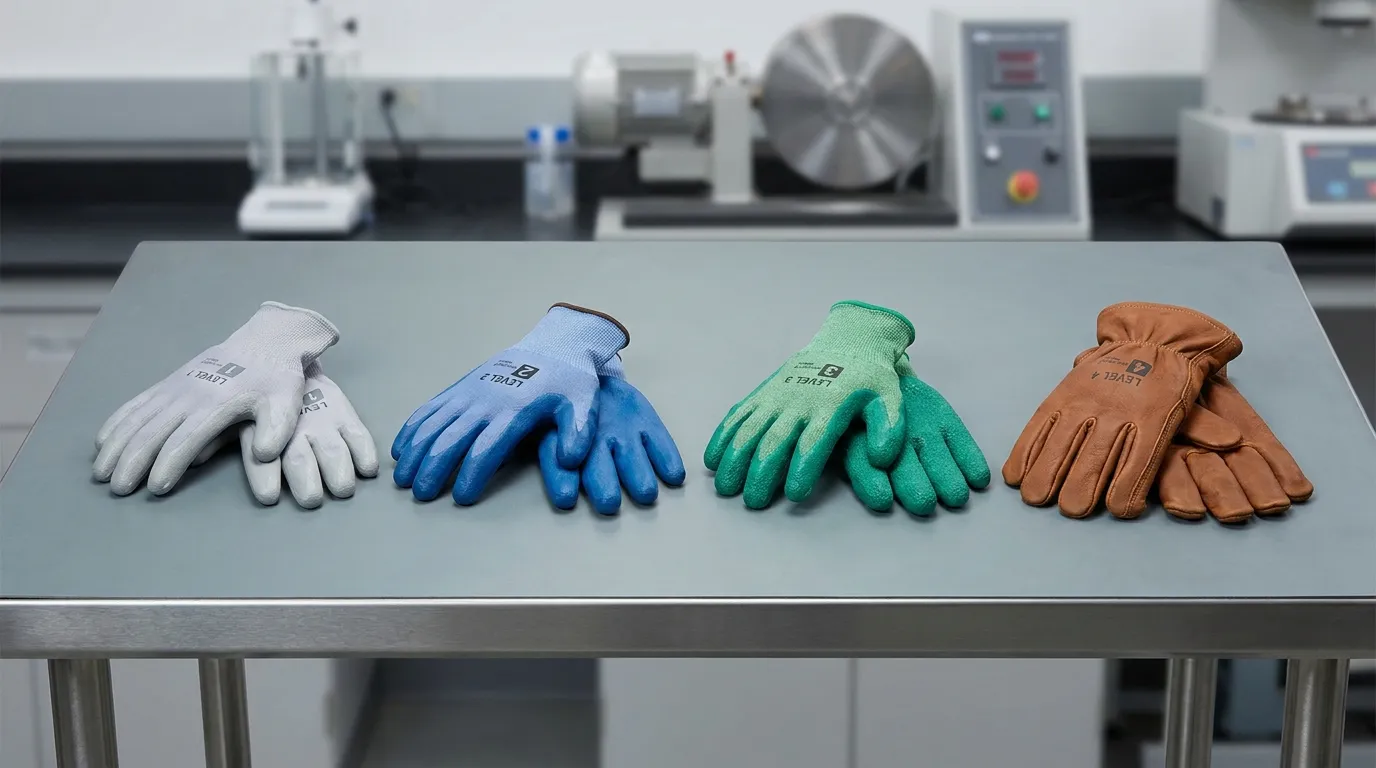
In EN 388, the abrasion score is the first digit and runs from level 1 to 4. Level 1 starts at 100 cycles, level 2 at 500, level 3 at 2,000, and level 4 at 8,000 cycles before wear-through.
EN 388 is a European mechanical protection standard for gloves. The marking covers several risks, and abrasion is shown as the first number. If a glove marking starts with 4, that means it reached the highest EN 388 abrasion level.
A useful EN 388 glove guide can help buyers understand the wider mechanical protection picture, including cut, tear, and puncture. This article stays focused on abrasion because that is the cost driver when gloves wear out from rough handling.
EN 388 abrasion level
Lab cycle threshold
Plain-English meaning
Likely use case
Buyer caution
Level 1
100+ cycles
Basic abrasion resistance
Light handling, low-friction tasks
May fail fast on rough parts
Level 2
500+ cycles
Moderate abrasion resistance
General handling, cartons, light maintenance
Not ideal for daily rough metal contact
Level 3
2,000+ cycles
Strong abrasion resistance
Maintenance, tools, mixed handling
Check dexterity and coating grip
Level 4
8,000+ cycles
Highest EN 388 abrasion level
Rough surfaces, repeated contact, heavy handling
Can be overkill for light precision work
EN 388 testing uses controlled abrasion against glove material, and the result is based on cycles before visible failure. The cycle table is useful for comparison, but it should not be treated as a promise of exact field life. Sources such as uvex and NITRAS describe abrasion testing as a controlled lab method, not a shift clock.
Can EN 388 cycles be converted into shift-hours?
EN 388 cycles should not be converted directly into shift-hours. Use them as a lab comparison, then verify real lifespan by tracking how many shifts each glove survives before coating loss, holes, grip failure, or worker rejection.
A lab cycle is not the same as one minute of maintenance work. The real job adds oil, moisture, sharp particles, awkward grip angles, heat, dirt, and repeated flexing. These conditions change how fast the glove surface breaks down.
A practical shift-hour interpretation table
Use EN 388 as a starting point, then turn it into a site-specific shift record. The table below is not a guarantee. It is a buyer’s planning tool for deciding which gloves deserve a field trial.
EN 388 abrasion level
Lab meaning
Practical shift view
Best buyer action
Level 1
Basic cycle score
Use only for light, low-friction work
Avoid for rough daily maintenance
Level 2
Moderate cycle score
May handle short rough-contact tasks
Trial against current low-cost glove
Level 3
Strong cycle score
Good candidate for mixed maintenance work
Track fingertip and palm wear
Level 4
Highest EN cycle score
Best candidate for constant rough handling
Check comfort, grip, and cost per shift
A facilities team handling concrete blocks and rough pallets may find that level 2 gloves fail every day. A level 4 glove may cost more per pair, but it can still lower the budget if it gives several safe shifts. The only way to know is to count safe shifts, not just purchase price.
Which glove materials usually resist wear-through best?
The best material depends on the surface, grip need, and failure point. Leather, nitrile, PU, latex, PVC, HPPE, and reinforced knit gloves can all work, but they do not fail the same way.
Leather often performs well against rough, dry handling. Cowhide and goatskin options can differ in comfort, toughness, and dexterity, so a leather glove comparison helps when buyers are deciding between durability and hand feel.
Material or coating
Wear-through behavior
Where it fits
Watch point
Leather shell
Strong dry abrasion resistance
Construction, repair, rough handling
Can feel bulky for fine work
Nitrile coating
Good oil grip and abrasion support
Maintenance, metal parts, oily tools
Coating thickness affects dexterity
PU coating
Good touch and flexibility
Assembly, light maintenance
May wear faster on rough surfaces
Latex coating
Strong dry grip
Outdoor and general handling
Less ideal for oily work
PVC coating
Chemical and liquid handling support
Wet or coated surfaces
Can reduce breathability
HPPE or engineered yarn
Often used with cut-resistant gloves
Mixed cut and abrasion tasks
Needs the right coating
A maintenance cart repair task shows the trade-off well. If technicians wear through PU-coated fingertips after one shift while handling rough steel brackets, switching to a nitrile-coated glove with a reinforced thumb crotch may reduce replacement frequency without moving to a bulky leather glove.
Heat is a separate hazard. If the task involves hot metal, sparks, or welding, review heat-resistant welding gloves instead of choosing by abrasion score alone.
Why do some abrasion-resistant gloves still fail before the shift ends?
Gloves can fail early when the abrasion type does not match the glove design. A high lab rating will not fix poor fit, wet material breakdown, sharp particle wear, weak coating adhesion, or unreinforced high-wear zones.
Abrasion is not one single condition. Sliding abrasion from dragging parts is different from particle abrasion caused by sand, dust, or concrete grit. Wet abrasion can also change the way coatings and liners break down during the shift.
A glove may also fail early because workers reject it. If the glove is too stiff, too hot, or too thick for the task, workers may remove it for small repairs. That creates a safety problem and makes the purchase look better on paper than it performs on the floor.
Check these early-failure causes before changing suppliers:
Fingertip holes from picking up sharp-edged parts
Thumb crotch wear from carrying tools or handles
Palm coating loss from dragging rough parts
Grip failure in oil or moisture
Liner wear from poor fit or repeated flexing
Wrong hazard match, such as using abrasion gloves where cut or heat protection is needed
For rough construction or repair work, compare the current model against heavy-duty work gloves built for repeated surface contact. A higher lab score helps only when the glove design fits the real wear pattern.
How do you calculate cost per shift for work gloves?
Cost per shift is calculated by dividing glove cost by the number of safe shifts the glove actually lasts. A $6 glove lasting six shifts costs $1 per shift, while a $3 glove lasting one shift costs $3 per shift.
The cheapest pair is only cheaper if it survives the task. A low-cost glove that fails halfway through a shift can cost more than a premium pair that safely lasts several shifts. Stop counting lifespan when the glove becomes unsafe, not when it completely falls apart.
Use this formula:
Cost per shift = glove cost per pair ÷ average safe shifts used
Glove option
Cost per pair
Average safe shifts
Cost per shift
Failure reason
Buying decision
Option A: low-cost coated glove
$2.50
1
$2.50
Fingertip coating worn through
Looks cheap, costs more over time
Option B: reinforced nitrile glove
$6.00
5
$1.20
Replaced after grip loss
Better cost per safe shift
Option C: heavy leather glove
$8.00
6
$1.33
Rejected for fine repairs
Durable, but may hurt compliance
Worked example for a 25-person maintenance team
A 25-person maintenance team uses one pair per worker per shift. Option A costs $2.50 and lasts one safe shift. That is $62.50 per shift for the team.
Option B costs $6.00 and lasts five safe shifts. The cost is $1.20 per worker per shift, or $30 per shift for the team. Even with a higher unit price, Option B cuts the daily glove cost because it lasts longer under the same work pattern.
Do not stretch use after coating wear-through to improve the spreadsheet. Once the coating fails, grip and other protective features can drop. The safe shift count should stop when wear-through, grip loss, holes, or worker rejection begins.
When is EN 388 level 4 worth paying for?
EN 388 level 4 is worth paying for when gloves face continuous contact with rough surfaces and lower-level gloves fail before their expected replacement point. It is not automatically the best choice for light handling or precision maintenance.
Level 4 is useful when the task is hard on palms and fingertips all day. It makes sense for repeated handling of rough steel, concrete, pallets, castings, tools, and abrasive parts. It may not be the best choice for short inspections or fine maintenance work where dexterity matters more.
If the job looks like this
Better buying move
Gloves fail daily from rough contact
Trial EN 388 level 3 or 4 gloves
Workers handle oily metal parts
Test nitrile coating first
Workers need small-part control
Avoid bulky gloves that reduce dexterity
Gloves fail at thumb crotch
Choose reinforcement, not only a higher rating
Heat or welding is present
Select for heat first, then abrasion
Forearms are exposed
Review sleeves or extended protection
Level 4 is not always the smartest buy. It works when workers face continuous rough handling, but level 2 or 3 may be better when dexterity, heat, or fine assembly matters more than maximum abrasion.
In a wet or oily pump-room task, a dry-grip latex glove may wear or slip sooner than expected. A nitrile-coated option may give better oil grip and longer safe use. For coating decisions, the nitrile coated glove guide is the better next step.
How should a maintenance buyer run a glove lifespan trial?
A good glove trial compares safe shifts, failure reason, worker acceptance, and cost per shift. Do not approve a new glove only because the spec sheet looks better.
Start with two or three glove models. Give them to workers doing the same task, on the same shift pattern, for the same type of work. Ask supervisors to record when each pair is removed from use and why.
Use this simple trial checklist:
Choose the current glove and one or two replacement options.
Assign each option to the same job type.
Record pair cost and issue date.
Count safe shifts used.
Inspect palm, fingertips, thumb crotch, seams, and coating edge.
Note the exact replacement reason.
Ask workers about grip, heat, fit, and dexterity.
Calculate cost per safe shift.
Choose the glove that protects well and controls replacement spend.
For coated gloves, do not test abrasion alone. Track grip, oil handling, breathability, and comfort too. The coated work glove guide is useful when coating type becomes the main decision.
What should you inspect before reordering the same glove?
Before reordering, inspect the failure pattern. If gloves fail in the same place every week, the current model may be the wrong match for the task.
Check the palm, fingertips, thumb crotch, seams, coating edge, and liner. Ask whether the failure came from abrasion, cut risk, puncture, oil, heat, poor fit, or worker rejection. These causes lead to different glove choices.
A glove can pass the abrasion question and still fail the job. If workers also have forearm exposure from sheet metal, sharp edges, or overhead work, compare cut sleeves vs gloves before changing only the hand protection.
Use this reorder checklist:
Did the glove last the expected number of safe shifts?
Did coating wear-through happen before the liner failed?
Did workers remove the glove for small tasks?
Did grip fail in oil, water, or dust?
Did the task change since the glove was approved?
Did the same wear zone fail across several workers?
What to Do Next
The right abrasion resistant work gloves are not always the highest-rated or lowest-priced option. Choose a glove that matches the task surface, coating need, worker comfort, and safe replacement point.
For a maintenance team, the best next step is simple: run a short glove trial, track safe shifts used, inspect the wear zones, and calculate cost per shift. If the current glove fails early, compare level 3 and level 4 options against the same task. If workers reject the glove, adjust for fit and dexterity before making a bulk purchase.
Frequently Asked Questions
What is abrasion resistance?
Abrasion resistance is a glove material’s ability to resist wearing away from rubbing, scraping, or friction. It matters when workers handle rough metal, concrete, wood, tools, cartons, or parts that slowly break down the glove surface.
What are the abrasion resistance levels of gloves?
Under EN 388, abrasion resistance is rated from level 1 to level 4. Level 1 starts at 100 cycles, level 2 at 500, level 3 at 2,000, and level 4 at 8,000 cycles before wear-through.
What is the abrasion rating on gloves?
The abrasion rating shows how long the glove material resists rubbing before a hole or failure appears in a lab test. In EN 388, it is the first number in the glove marking.
What is abrasion resistance testing?
Abrasion resistance testing rubs a glove sample against an abrasive surface under controlled conditions until visible wear-through occurs. The result becomes a performance level that helps buyers compare materials in a consistent way.
Does EN 388 level 4 always mean the glove will last longer?
EN 388 level 4 usually shows stronger lab abrasion resistance, but it does not guarantee longer life in every job. Wet conditions, sharp particles, poor fit, coating type, and worker behavior can still shorten glove life.
How do I calculate glove cost per shift?
Divide the glove price by the number of safe shifts it lasts before replacement. A $5 pair lasting five shifts costs $1 per shift, and a $2 pair lasting one shift costs $2 per shift.
What is ANSI abrasion level 6?
ANSI abrasion level 6 is the highest ANSI abrasion category and is separate from EN 388 level 4. Buyers should not directly convert ANSI and EN scores because the standards use different scales and test methods.