Home > BLOG > Industry Blog > Winter Work Gloves OEM in China: How Coating Technology Affects Cold-Weather Grip
Winter Work Gloves OEM in China: How Coating Technology Affects Cold-Weather Grip
20 Oct, 2026
By hqt
For potential customers of Winter Work Gloves OEM in China, the performance of the coatings used is as important as the level of thermal insulation. Coatings on gloves can become stiff and inflexible in very cold conditions. The coatings can also become rigid and stiff in the presence of moisture or oil. Insulating materials can restrict the movement of the fingers and reduce the grip of the gloves.
When reviewing winter hand protection, our specialists consider a balance of the coating, the materials used in the lining of the gloves, the condition of the surface the gloves come in contact with and the type of work the gloves will be used for.
Why Does Coating Performance Change with Temperature?
Friction of a coating conforms to an object and determines the grip of the coated surface. Cold temperatures reduce both conformability and surface friction.
Some of the phenomenon that impact this are:
• Stiffening of the polymer: At lower temperatures, a coating can become stiffer and less flexible and be unable to make full contact with an irregular surface.
• Interfacial Lubrication: At the interface of a coating and an object, a thin film of oil or water can reduce surface friction. Surface texture of the object and the coating can not displace the film.
• Cold Fingers: Bulky gloves and very cold temperatures can reduce the grip of the fingers. More effort may be required to hold a tool.
During a cold temperature condition, the surface geometry of the coating can impact the performance more than the thickness of the coating.
Coating flexibility can also impact the bending movement of the glove.
Latex vs. Nitrile vs. PU vs. PVC: Coating Performance Compared
Latex and Nitrile gloves can be rigid, but polyurethane (PU) coating materials, or Phthalate (PVC) coating materials can provide greater flexibility.
While evaluating Winter Work Gloves OEM in China, it is important for customers to analyze the coating chemistry for flexibility and oil and flexibility and determine how it will impact the performance and usage of the gloves.
Performance Characteristics
Best-Fit Applications
Limitations
Latex
Wet construction, forestry
Limited oil resistance; latex allergies
Nitrile
Oily metal, machinery
Low-temperature flexibility varies
PU
Warehousing
Standard thin coatings may lack grip
PVC/Nitrile
Outdoor wet maintenance
Cold flexibility varies
In the case of patterned textures, LATEX performs better for capturing wet surfaces. For the wet timber industry, Nitrile offers better resistance to oils and fats.
Importance of Surface Texture in Grip
Different materials have different surface textures:
• Sandpaper Coating: A coating resembling sandpaper improves traction on oily surfaces.
• Foam Coating: A foam coating aids surface condensation and liquid water drainage.
• Crinkled Coating: Irregular coatings, like crinkled coatings, may help surface drainage.
• Smooth Coating: Smooth surfaces allow even contact with the whole area.
Some special coatings, for example, maybe able to help surface grip for ice, but generally speaking, a coating won't help a surface grip for ice.
What Does Coating Coverage and Thermal Liners Mean for a Winter Glove?
A winter glove provides protection against cold and wet conditions. The protection against these conditions is determined by the liners and coatings.
One of the design trade-offs is to increase insulation against the cold; however, there is a limit to how well a structure can provide grip. Bulk can obstruct the user from performing the glove's intended function.
For example, a 7 gauge terry acrylic inner liner provides better insulation against the cold compared to a 13 gauge outer liner; however, a 13 gauge outer liner can provide a structure that better facilitates dexterity.
Choosing Coating Technology for Different Cold-Weather Applications
The most suitable construction depends on whether the main hazard is moisture, oil, abrasion, sharp edges, or repeated contact with cold materials.
Application
Primary Risk
Coating Selection
Cold storage
Repetitive handling, reduced dexterity
Flexible PU or nitrile
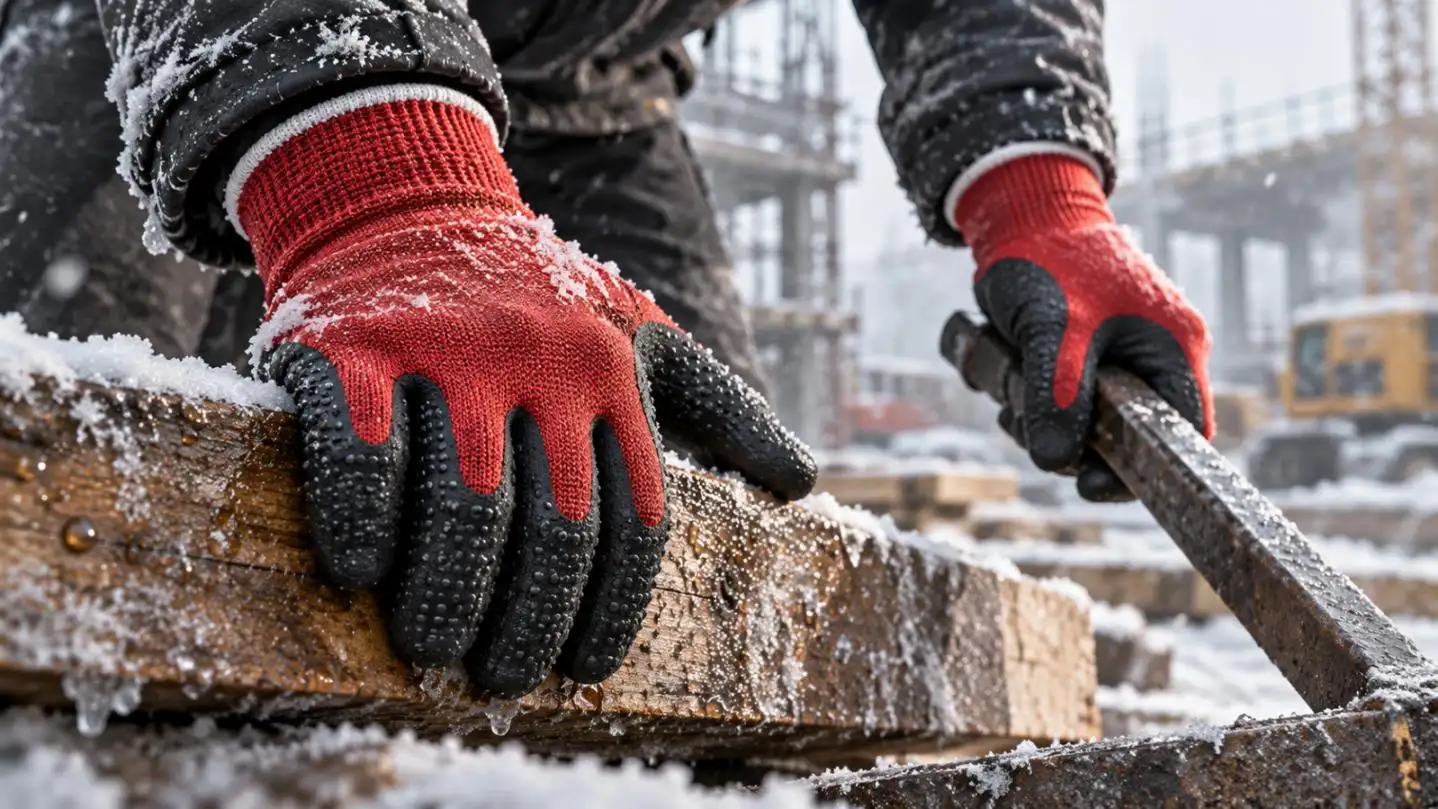
Winter construction
Wet timber, rough surfaces
Textured latex or sandy nitrile
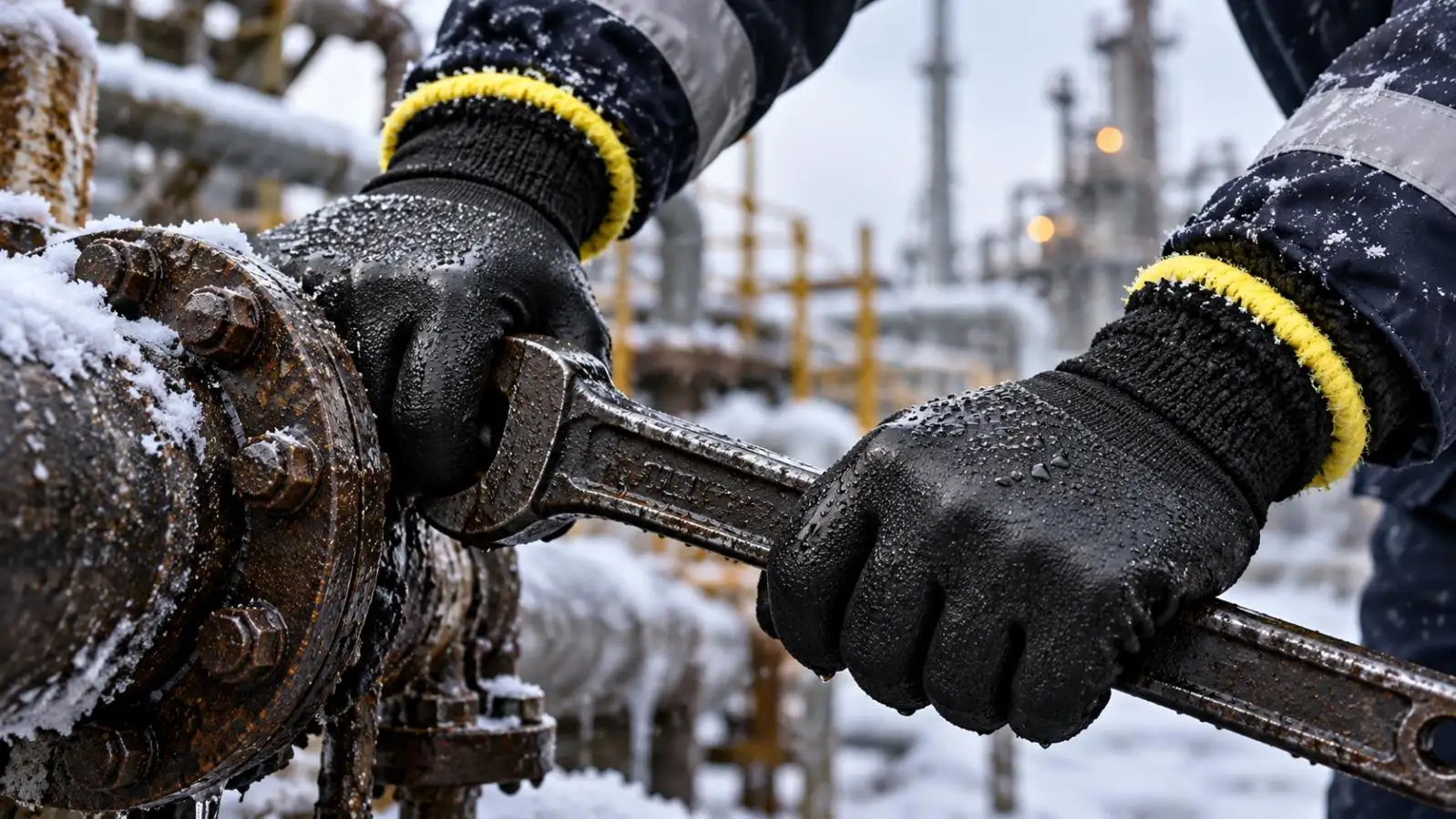
Oilfield maintenance
Oily tools, cold metal
Sandy nitrile
Forestry
Wet wood, abrasion
Crinkle latex or nitrile
Outdoor utilities
Rain, snow, prolonged wet exposure
Fully coated PU or PVC/nitrile
Heavier coatings may not be necessary for some uses if dexterity and cold protection sufficient for contact are provided. Oilfield and steel handling may also require cut resistance.
These assertions require on-site proof.
How Can Cold Weather Grip and Protection be verified?
When sourcing Winter Work Gloves from China, it is important to be aware that certified protection features may be different from application specific features, e.g. Winter Work Glove applicability.
Understanding EN Standards
The focus of each standard is as follows:
• EN 511: Protection from cold, wet work
• EN 388: Cut, tear, puncture and abrasion protection
• EN ISO 21420: General requirements, sizing and ergonomics of gloves
• EN 511 and EN 388 do not stipulate testing for low temperature flex or grip.
Grip and Durability Evaluation
We suggest the following tests for evaluation of glove samples:
• Flexibility: Test sample to determine if the coating or lining of the glove has cracked or lost flexibility.
• Grip: Sample should be tested to determine if it has friction on dry, wet and oily surfaces.
• Waterproof/Water Repellant: Barrier Test Sample should be tested to determine if the coating and/or lining is continuous. Test sample to determine if the lining of the glove has absorbed moisture.
Production samples should be tested to ensure they conform to the approved samples.
Test requirements should be defined by the buyer to include accepted test temperature, the surface to be used in the test (the substrate), and the force to be applied.
NMSafety Model
Coating and Construction
Product Focus
NBR1350DS-ECO
13G recycled PET and 7G terry acrylic liner
Insulated grip with recycled materials
NM1355DF-ECO
RPET/acrylic liner
Half-coated foam latex; elastic handling and insulation
Winter glove selection is illustrated by these examples, where the whole construction warrants consideration as opposed to coatings alone.
OEM Customization, Pricing, and Purchasing Requirements
In order to receive quotations, the following information should be provided to suppliers:
• Pairs handled, thermal exposure, and materials handled.
• Coating requirements, texture, coverage and thermal linings.
• Required EN/ANSI classifications and supporting test reports.
• Sample acceptance, Branding, and Packaging.
• Batch size and quantity, delivery schedule.
Molding cycles affect the OEM's price. Complex or atypical designs should be justified by workplace risks.
Selecting winter work gloves from Chinese OEMs is usually based on thickness or cost, and not the actual working conditions. We at NMSafety offer PVC/Nitrile, PU, Latex and Nitrile coated Work Gloves. Additionally, we offer OEM customization. Visit our Winter Work Gloves page to learn more.
FAQs
Q1: What coating technologies does NMSafety offer for winter work gloves?
NMSafety offers nitrile, latex, PU, and PVC/nitrile-coated winter gloves, with different surface textures and coating coverage options.
Q2: Which NMSafety winter gloves are suitable for oily handling conditions?
NMSafety's NY1350FDL features a microfoam nitrile palm coating with nitrile grip dots for handling in dry and lightly oily conditions.
Q3: Does NMSafety manufacture water-resistant winter work gloves?
Yes. Models such as DY1850DSW-H4 feature water-resistant constructions. Liquid protection depends on the specific coating design and tested conditions.
Q4: Does NMSafety offer cut-resistant winter work gloves?
Yes. DY1850DSW-H4 combines thermal insulation, sandy nitrile coating, and ANSI A4 / EN ISO 13997 Level D cut resistance.
Q5: What thermal lining materials does NMSafety use?
NMSafety offers winter gloves with acrylic, terry acrylic, and 3M Thinsulate insulation, depending on the product model.