Home > BLOG > Industry Blog > Touch Screen Gloves in China: Material Innovations for Industrial Applications
Touch Screen Gloves in China: Material Innovations for Industrial Applications
14 Sep, 2026
By hqt
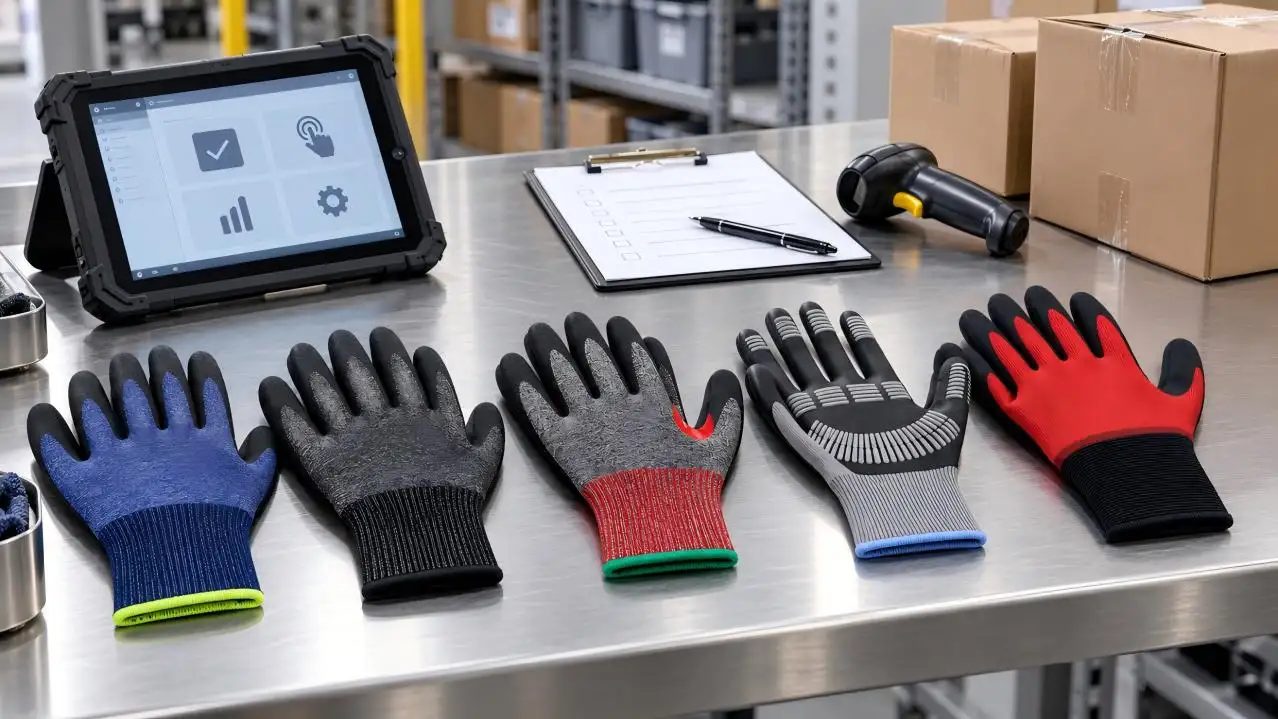
Selecting Touch Screen Gloves in China requires more than confirming that a sample can activate a smartphone. Industrial users must grip components, handle packaging and operate terminals throughout a shift. A glove that responds during a brief demonstration may become difficult to use when its fingertips stretch, its coating wears or its surface becomes contaminated.
At NMSafety, we approach selection through the relationship between liner construction, coating, fingertip fit and working conditions. Material innovation matters when these elements improve task performance while maintaining the protection required for the application.
Capacitive screens detect changes in capacitance. Glove materials, thickness and fit influence the electrical coupling between the finger and sensor. Conductive elements can support this interaction, but performance also depends on the screen's controller and configuration. Resistive screens respond to pressure and require a different evaluation.
When purchasing Touch Screen Gloves in China, there are three construction aspects that the buyer should be aware of:
First, examine the glove for conductive placement. This refers to which fingertips or other areas of the glove surface that serve the function of a touchscreen.
Next, examine contact consistency. This refers to whether movement of the entire finger alters the effective area of contact.
Finally, examine the finished glove structure. This refers to whether the material and construction of the liner and the coating are suitable for the function of the glove.
Design
Engineering
Limitations
Sample Check
Conductive yarns
Conductive elements are woven into the knit
Contact with the outer layers may reduce screen response
Contact areas should be tested coated, liners should not be removed
Conductive surface treatment
Functional material is placed on the contact surface
Response may be altered due to wear or contamination
Carry out the task representative of wear
Selected-fingertip coverage
Conductive areas are confined to specific finger movements
Users may be able to operate a terminal with unintended parts
Test if the covered areas are used for tapping and swiping
Wider coverage
Allows for a greater variety of contact positions
Response may be affected by the finger and angle of contact
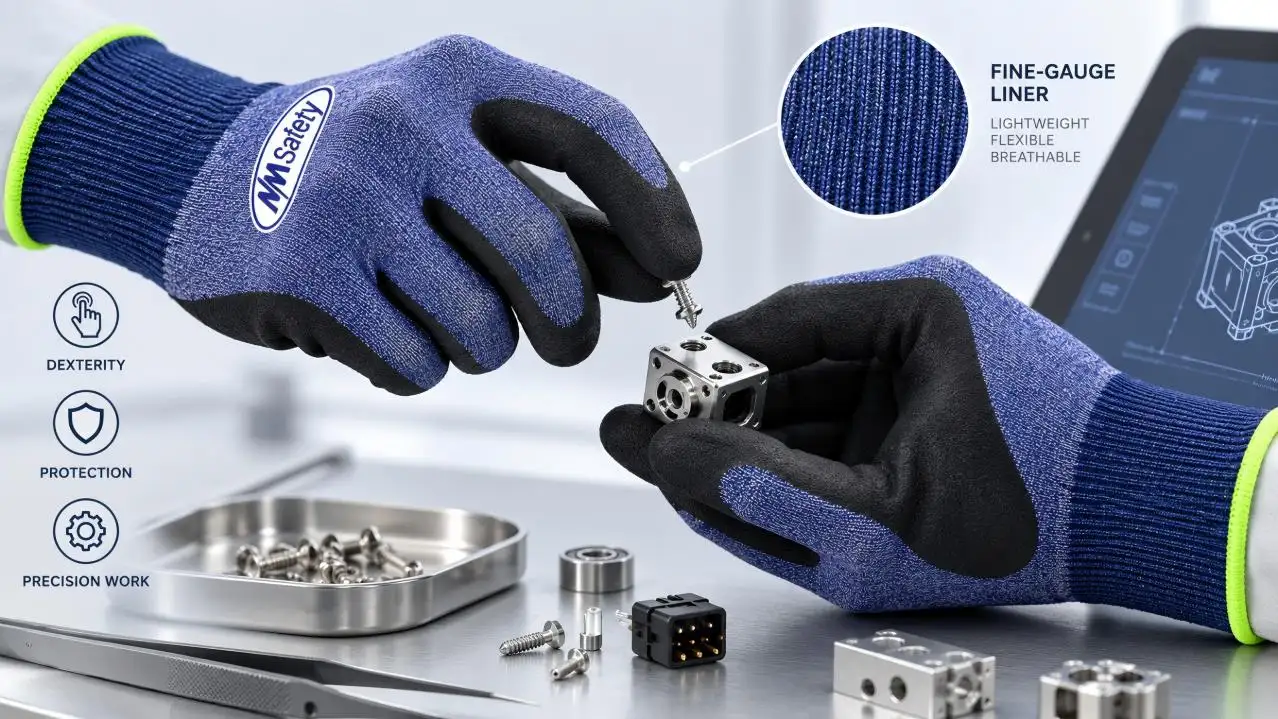
Fine-Gauge Liners Balance Dexterity and Protection
Our touch screen gloves, available in China, have 18-gauge and 21-gauge constructions with options of PU and nitrile coatings.
Gauge refers to the fineness of knitting. It does not guarantee the thickness of the finished product, nor does it guarantee accuracy when used with touchscreens nor does it guarantee cut resistance.
Evaluate the Complete Liner
The diameter of yarn, the type of fibers used, the structure of the stitch, and the size of the glove all impact how well a glove can bend with finger movement. Having extra material at a finger tip can lead to issues when trying to select small buttons, even if the glove has sufficient conductive material.
When thinking about composite cut-resistant liners, pay attention to the following points:
• Required Protection: Determine whether the liner provides the required level of protection for the potential workplace injury/illness for which it is needed.
• Bending Resistance: Take the assembly task into account, as well as how much the finger is bent when bending to insert a screw, clip, etc.
• Fingertip Control: Evaluate the control of a finger tip when inserting small parts.
• Fit Retention: Check the glove for slack at the fingertip, and assess whether it has dropped a small object that was being held, after repeated gripping.
A thin glove only helps if it maintains the required level of protection and durability.
Coating Selection Changes Grip and Contact Behavior
When purchasing Touch Screen Gloves from China, remember to choose a coating specific to the task. Within each family, PU and nitrile are not guaranteed to be conductive or perform the same.
Coating
Application Focus
Main Trade-Off
Validation Priority
PU
Dry precision handling
Tactile control versus wear life
Small-part manipulation and repeated tapping
Microfoam nitrile
Repetitive handling
Grip and flexibility versus coating wear and contamination
Representative parts, extended gripping and screen input
Sandy nitrile
Textured grip requirements
Surface texture versus consistent contact geometry
Actual contamination, contact angle and input accuracy
Coating thickness and coverage also matter. Palm coverage, fingertip build-up and local stiffness can change how the finger meets the screen.
Oil grip and chemical resistance require separate evaluation. Neither a textured finish nor touchscreen functionality establishes suitability for chemical exposure.
Match Material Design to the Industrial Task
The selection criteria for Touch Screen Gloves in China should reflect both the hazard and the digital workflow.
Application
Handling Requirement
Touchscreen Task
Critical Decision
Precision assembly
Small-component control
Selecting small icons
Fingertip fit and dexterity
Warehousing
Carton abrasion and repeated gripping
Scanning and order confirmation
Wear life and repeatable input
Automotive maintenance
Component handling under contamination
Diagnostic-tablet operation
Grip and response in working conditions
Metal and glass handling
Suitable cut protection
Production-data entry
Protection versus finger mobility
Electronics manufacturing
Fine handling and static control
Terminal operation
Verify ESD suitability separately
Touchscreen compatibility does not establish ESD protection or electrical insulation.
Insist on a Test Run Before Every Bulk Purchase
In purchasing Touch Screen Gloves from China, it is important to think about practicality in real-world situations rather than focus on number of taps.
The device configuration is fixed: Document the terminal, protector, and glove settings.
Task flow: This is concerned with tapping, scrolling, selecting small targets, and fast input.
Compare fit: This is done using multiple sizes on multiple people.
Test again after wearing: Be sure to test after a good amount of use and after cleaning.
Record the results: Record typing errors, missed taps, and how long it takes to complete the task.
Maintain the device settings the same for all samples used for comparison. Set the acceptance criteria based on the operation and protection settings of the product provided.
NMSafety's Manufacturing and Design Contribution
NMSafety lists manufacturing facilities in Jiangxi, Jiangsu and Shandong, providing a documented production background for international sourcing. Factory information
Our 21-gauge product construction combines nylon, HPPE and steel fiber with microfoam nitrile palm coating and thumb-crotch reinforcement. This illustrates how liner composition, working-surface design and local reinforcement can address different performance requirements within one glove.
When evaluating Touch Screen Gloves in China, begin with your handling risks and device workflow. Explore NMSafety's touch screen glove range and share your application requirements with our team to identify constructions for practical sample evaluation.
FAQs
Q1. What types of touch screen gloves does NMSafety offer?
NMSafety's touchscreen glove range includes fine-gauge knitted designs, PU-coated gloves, nitrile-coated options and cut-resistant constructions. Select the specific product according to handling hazards, coating requirements and device compatibility.
Q2. Does NMSafety offer both 18-gauge and 21-gauge gloves?
Yes. NMSafety offers 18-gauge and 21-gauge constructions in its touchscreen range. Gauge indicates knitting fineness; buyers should also compare yarn composition, finished thickness, fit and documented protection performance.
Q3. How should I choose between NMSafety's PU and nitrile coatings?
For dry precision handling, evaluate PU options for fingertip control. For repetitive gripping or contaminated conditions, compare the available nitrile structures. Test the finished gloves with actual parts and devices before selection.
Q4. Can NMSafety's cut-resistant gloves support touchscreen operation?
NMSafety includes cut-resistant designs in its touchscreen category. Confirm the exact product's cut-protection documentation and test its touchscreen response; neither capability should be inferred from liner material or appearance alone.
Q5. Will NMSafety touch screen gloves work with every industrial terminal?
Compatibility should be verified on your equipment. Screen technology, protective films, sensitivity settings, glove fit and operating conditions can affect response. Test tapping, scrolling and small-button selection on the intended terminal.