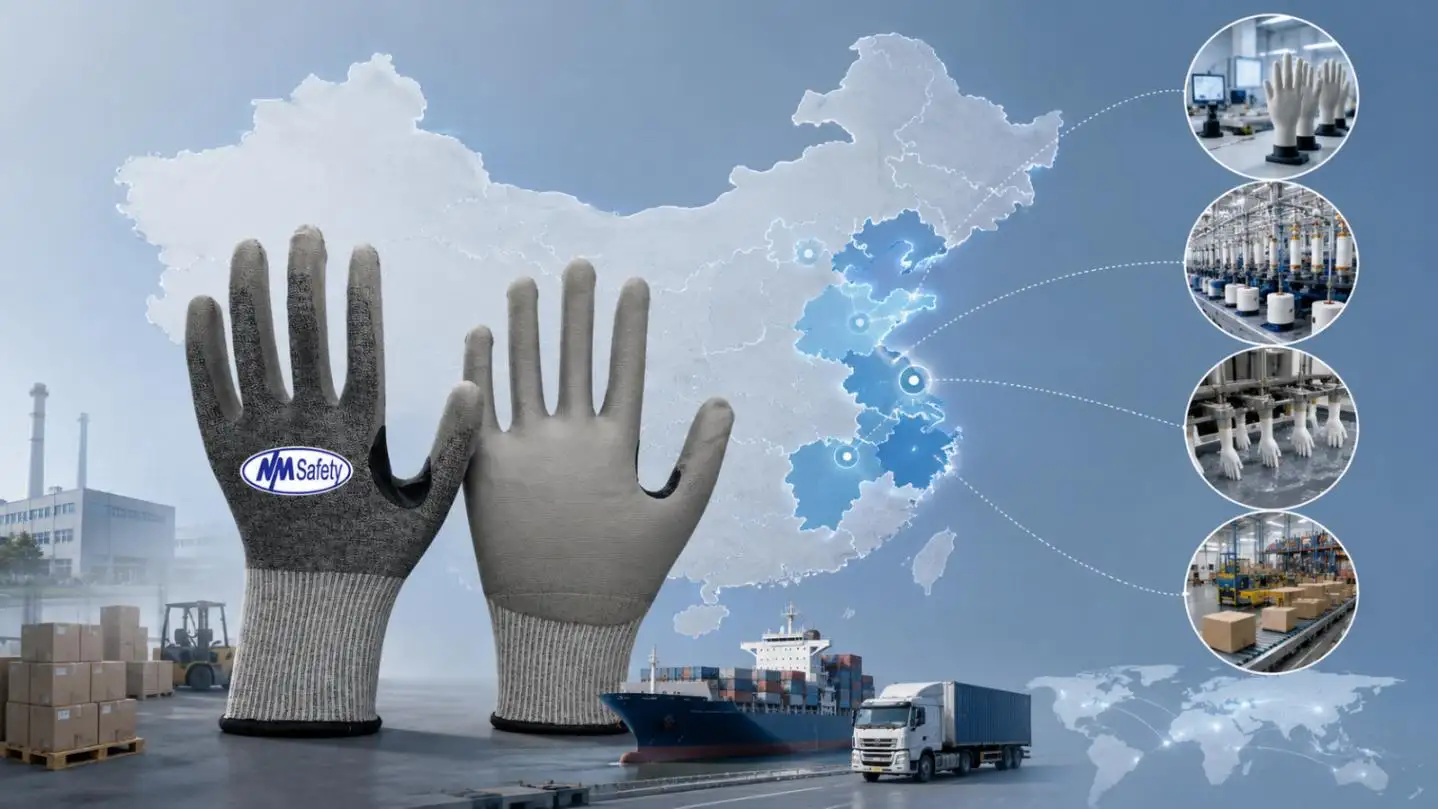
China is a major sourcing base for PU-coated work gloves, supported by established supply chains for technical yarns, seamless knitting, polyurethane coating, testing, packaging and export logistics.
However, the top PU-coated glove manufacturers in China do not all provide the same capabilities. Some focus on high-volume standard gloves, while others specialise in high-gauge precision gloves, cut-resistant liners, antistatic constructions or private-label programmes.
This guide compares top PU-coated glove manufacturers in China in different aspects. The order is not an absolute quality ranking. Each manufacturer may be suitable for different specifications, volumes and target markets.
Industry estimates place China's broader personal protective equipment market at approximately USD 6.76 billion in 2025. Based on the reported growth rate, the market could reach around USD 7.36 billion in 2026, with hand protection remaining an important product category. Chinese manufacturers can combine different liner materials, knitting gauges and coating structures within one sourcing programme.
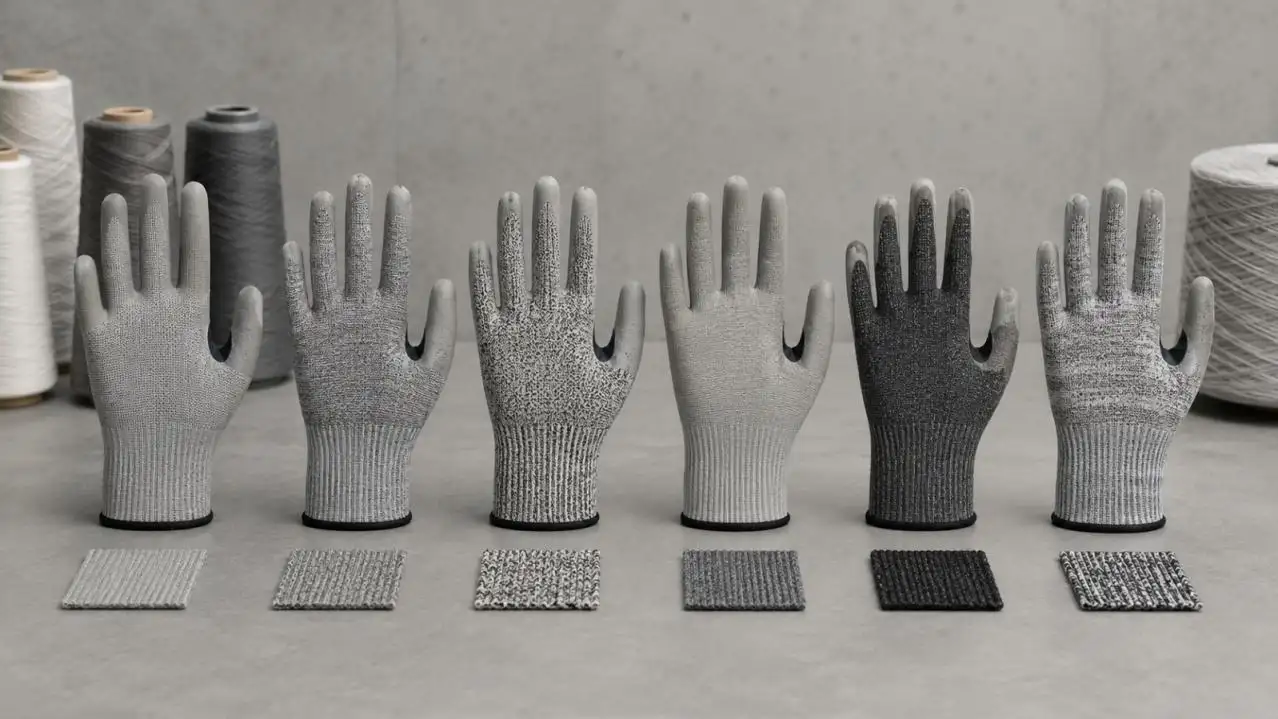
Available Liner Materials
Common options include:
• Polyester: Cost-controlled construction for general handling
• Nylon: Smooth fit and improved handling sensitivity
• HPPE composites: Higher cut protection for sharp components
• Glass or steel fibre blends: Reinforcement for demanding cut hazards
• Carbon fibre: Static-control applications in electronics
• Special functional yarns: Low-lint, touchscreen or application-specific designs
Manufacturing Flexibility
The Top PU Coated Gloves Manufacturers In China commonly support:
• 13-, 15- and 18-gauge seamless knitting
• Palm, fingertip and three-quarter PU coating
• Different coating colours and thicknesses
• Custom cuffs, logos, labels and retail packaging
• EN 388 or ANSI/ISEA testing for applicable products
• OEM and private-label production
Main Manufacturing Regions
Region
Typical supply-chain capability
Suitable purchasing profile
Jiangsu and Shanghai
Product development, knitting and export coordination
Technical and customised projects
Shandong
Large-scale knitting and coating
High-volume standard gloves
Jiangxi
Knitting and OEM manufacturing
Repeat bulk orders
Zhejiang
Manufacturing, packaging and multi-category supply
Mixed-product procurement
Factory location alone does not determine quality. Buyers should still verify product reports, approved samples and batch-control procedures.
What Are PU Coated Gloves?
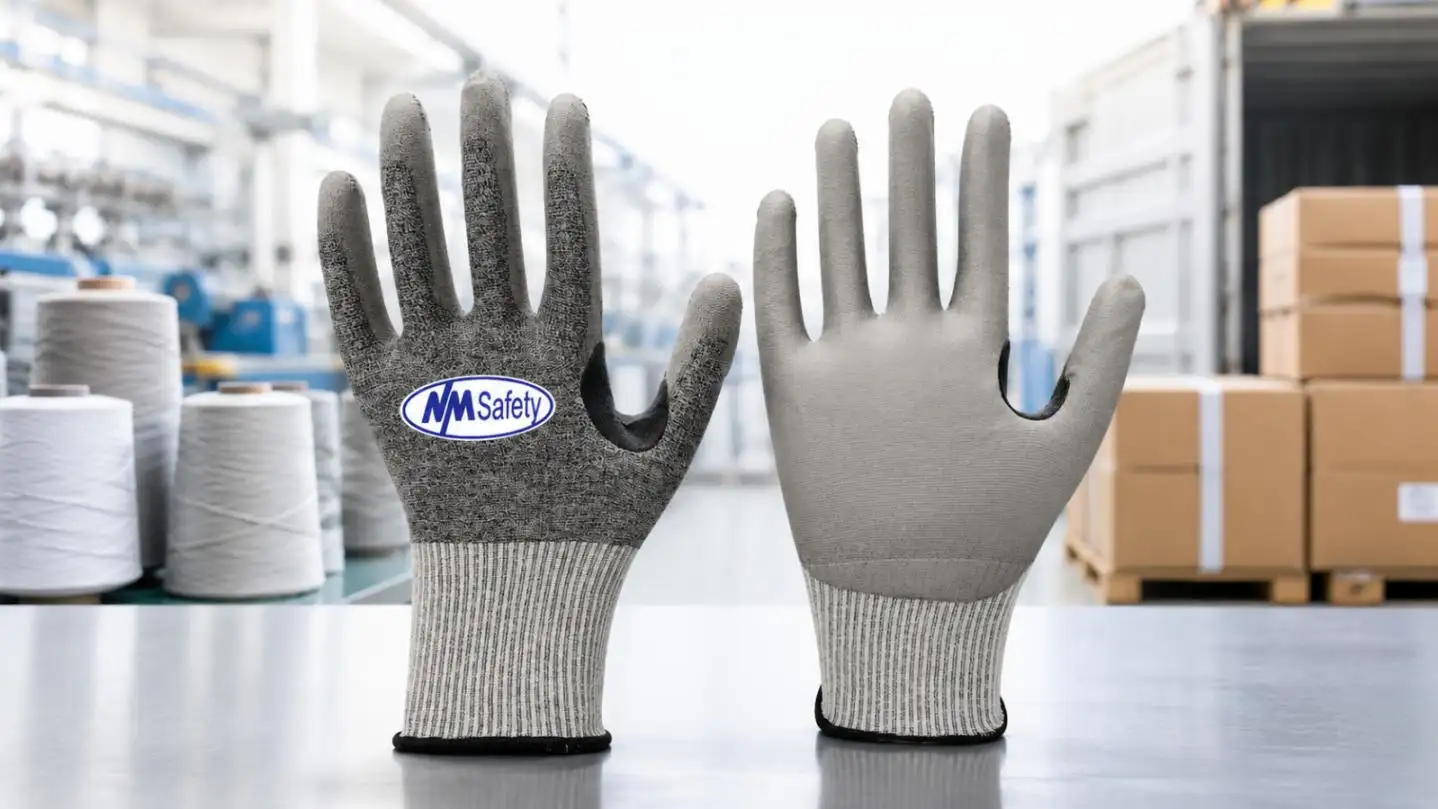
PU coated gloves use a thin polyurethane layer on the palm or fingertips. Compared with thicker latex or nitrile coatings, PU generally supports lightweight handling and close contact with small components.
Typical performance characteristics:
✔ Good dry grip
✔ Lightweight construction
✔ Moderate abrasion resistance
✔ High fingertip sensitivity
✔ Breathable glove backs
✔ Relatively low particle shedding
PU coating alone does not make a glove chemical-resistant, oil-resistant or cut-resistant. These properties depend on the complete liner, coating formulation and tested product construction.
Top PU-Coated Glove Manufacturers in China
1. NMSafety
NMSafety was established in 1998 and is headquartered in Shanghai. The company reports manufacturing facilities in Jiangxi, Jiangsu and Shandong, together with an overseas branch in Canada.
NMSafety covers standard PU, high-dexterity, cut-resistant and antistatic glove categories. Its multi-site structure and broad knitting capacity are particularly relevant to importers purchasing several glove constructions under one programme.
�� Suitable for: High-volume importers, PPE distributors and brands requiring standard and technical PU gloves.
2. Shandong Xingyu Gloves
Shandong Xingyu operates a broad coated-glove manufacturing system covering spinning, knitting, coating and finished-product production.
Main capabilities:
• PU, nitrile, latex and PVC coatings
• Standard and technical work gloves
• Cut-, heat-, impact- and vibration-resistant options
• Large-scale production for distributors
�� Suitable for: Buyers requiring high volumes and a wide coated-glove portfolio.
3. Hanvo Safety
Hanvo Safety is a Jiangsu-based manufacturer supplying precision, mechanical, thermal and chemical protection gloves.
Main capabilities:
• Polyester and nylon PU gloves
• Fine-gauge precision constructions
• Cut-resistant glove development
• Colour, material and packaging customisation
�� Suitable for: Technical PPE brands and precision-handling programmes.
4. JDL Safety
JDL Safety manufactures PU, nitrile and other industrial work gloves for export markets.
Main capabilities:
• Standard palm-coated PU gloves
• Repeat OEM production
• Private-label packaging
• Multi-line coated-glove manufacturing
�� Suitable for: Standardised OEM orders and recurring distributor programmes.
5. DDSafety
DDSafety manufactures fully diverse construction options of PU gloves from sites in Zhejiang and Jiangsu.
Core capabilities:
• PU gloves with nylon and polyester lamination
• Cut resistant PU gloves
• Gloves with water based PU
• Carbon fibre antistatic gloves
�� Suitable for: an opportunity for customers who prefer a single-source supplier for a diverse range of constructions of PU gloves.
6. Qingdao Meiji Safety
Qingdao Meiji provides standard and functional PU-coated gloves for industrial and electronics applications.
Main capabilities:
• 13-gauge polyester PU gloves
• Palm- and fingertip-coated designs
• Carbon-fibre liners
• HPPE cut-resistant options
�� Suitable for: Focused standard PU, ESD and cut-resistant product ranges.
7. Everpro Safety
Everpro Safety supplies PU-coated gloves together with protective clothing and other PPE categories.
Main capabilities:
• General-purpose PU coated gloves
• Cut-resistant work gloves
• Multi-category PPE sourcing
• Export and packaging support
�� Suitable for: Buyers consolidating gloves and other PPE in one order.
PU Coated Glove Type Comparison
Glove type
Dexterity
Cut protection
Breathability
Typical application
Polyester PU palm
Medium
Low
Good
Warehousing and packaging
Nylon PU palm
High
Low
Good
Assembly and inspection
18-gauge nylon PU
Very high
Low unless reinforced
Very good
Electronics and small components
HPPE PU coated
Medium to high
Medium to high
Construction-dependent
Metal, glass and automotive
Carbon-fibre PU
High
Usually low
Good
Electronics and ESD areas
PU fingertip coated
Very high
Low
Very good
Precision inspection
Nylon generally provides a closer fit than polyester, while HPPE composites introduce cut resistance. Carbon fibre supports static-control requirements but cannot replace a certified cut-resistant liner.
Performance Level Comparison
Performance level
Typical construction
Main purchasing value
Limitation
Entry level
13-gauge polyester with PU palm
Cost control
Limited fine handling
Standard precision
13- or 15-gauge nylon with PU
Balanced touch and wear
Not for sharp edges
High dexterity
18-gauge liner with thin PU
Fine component control
Application-dependent durability
Cut-resistant
HPPE composite with PU
Grip and cut protection
Higher cost and weight
Functional specialist
Carbon fibre or special yarn
ESD or controlled-environment use
Requires function-specific testing
A higher knitting gauge indicates a finer liner, not automatically higher protection. Cut, abrasion, tear and puncture performance should be evaluated separately.
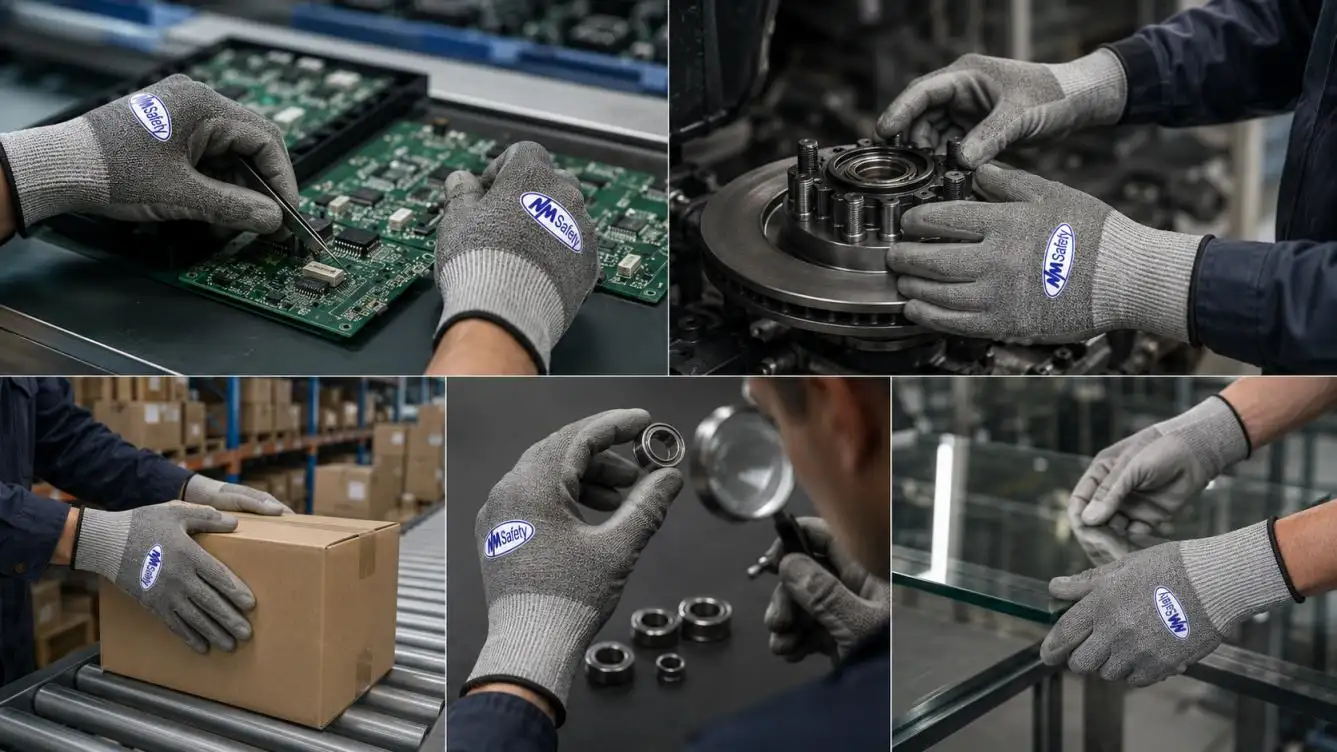
PU-Coated Gloves: Which Type Fits Your Industry?
Industry
Primary risk
Recommended construction
Parameter to verify
Electronics
Static, lint and fine handling
Carbon-fibre or 18-gauge PU
Surface resistance and cleanliness
Automotive
Abrasion and sharp components
Nylon PU or HPPE PU
Grip, abrasion and cut rating
Warehousing
Repetitive carton handling
Polyester PU palm
Wear life and cost
Metal handling
Sharp edges
HPPE composite PU
EN 388 or ANSI cut level
Inspection
Touch sensitivity
15- or 18-gauge PU
Fit and coating consistency
Glass handling
Cut and grip hazards
Cut-resistant PU
Cut rating and coating friction
How to Verify a PU Coated Glove Supplier
Before placing a bulk order, buyers should request:
• Factory and production-line information
• Product-specific EN 388 or ANSI/ISEA reports
• Liner material and gauge confirmation
• Coating coverage and weight tolerances
• Pre-production and shipment samples
• MOQ and confirmed production lead time
• AQL or inspection requirements
• OEM packaging specifications
• Procedures for handling non-conforming batches
Final Words
Selecting from the top PU-coated glove manufacturers in China requires more than comparing unit prices. Standard gloves should be evaluated for weight, coating and batch consistency. Precision gloves require careful review of gauge, fit and linting, while cut-resistant gloves must be supported by product-specific yarn information and test reports.
Based on its published factory network, knitting capacity, product range and OEM support, NMSafety is a practical candidate for high-volume and multi-category PU glove programmes. Final supplier approval should still depend on matched test reports, approved samples, factory verification and shipment inspection.
FAQs
Q1. What applications are suited for PU coated gloves?
Construction PU coated gloves are ideal for use in assembly work, electronics, inspection, warehousing, light automotive production, and handling of light materials.
Q2. What factors should price buyers consider when comparing PU coated glove manufacturers in China?
Buyers should consider the capacity of manufacturers, the types and the range of knitting and coating equipment, product variety, quality control, testing reports, and support for OEM, along with minimum order quantities and lead time.
Q3. Do all PU coated gloves exhibit cut resistance?
No. Standard polyester or nylon PU gloves provide almost no cut protection. To protect from cuts, gloves should be made of HPPE or another cutting-resistant, reinforced composite and should carry a cut protection test rating.
Q4. What are the differences between PU gloves of 13 and 18 gauge?
PU gloves of the 13-gauge category are more thick and robust while those of the 18-gauge category are more thin and allow for better finger sensitivity.
Q5. What type of liner is best suited for precision handling?
For precision handling, liners made from nylon and fine, blended composites are preferred for their close fit and high sensitivity.