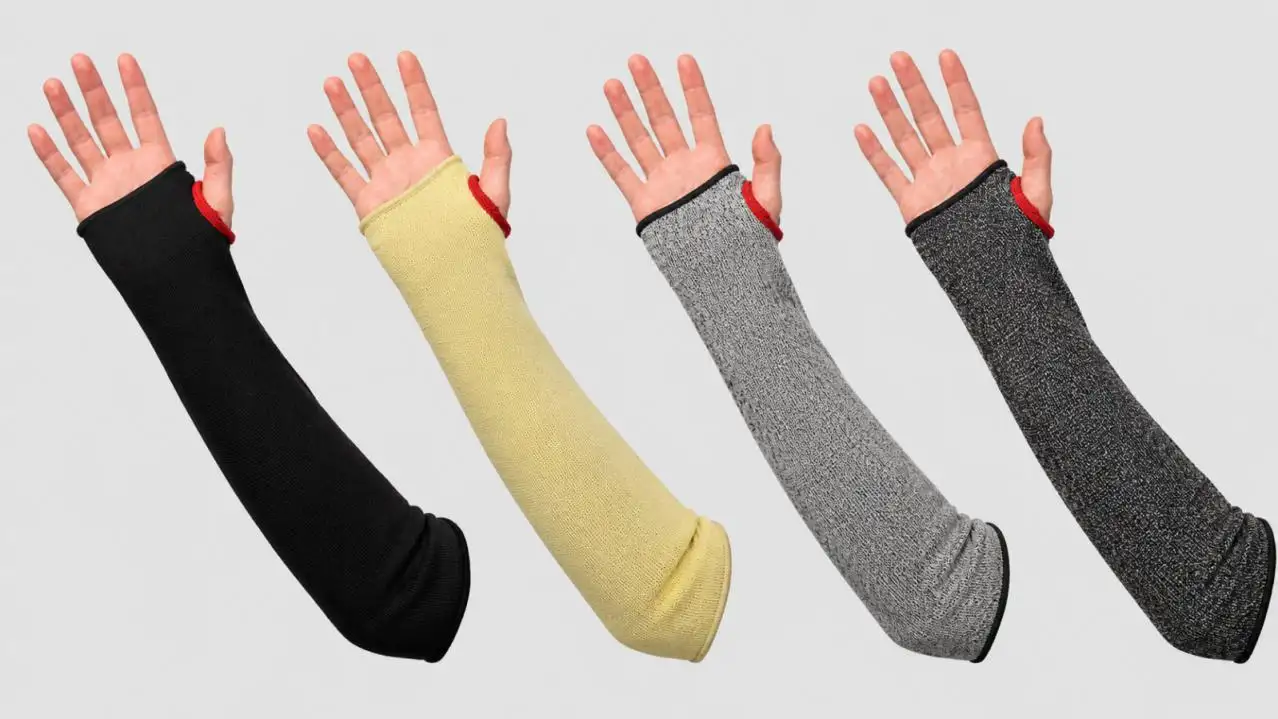
China remains a major sourcing hub for industrial arm protection, supported by mature supply chains for technical yarns, seamless knitting, sewing, product testing and export packaging. This manufacturing foundation has helped many of the Top Cut Resistant Sleeves Manufacturers In China serve global PPE distributors, industrial brands and OEM buyers. China's PPE market generated approximately USD 6.76 billion in 2025, with hand protection accounting for the largest product segment. Based on the reported CAGR of 8.9% from 2026 to 2033, the market is estimated to reach about USD 7.36 billion in 2026.
This expansion is supported by demand from advanced manufacturing, automotive production, metal processing, construction and new-energy industries.
The cut resistant sleeves manufacturers in China reviewed below produce HPPE, aramid, glass-fibre and steel-fibre composite sleeves with different lengths, cuff structures and OEM packaging options.
Established in 1998, NMSafety is headquartered in Shanghai and reports three factories in Jiangxi, Jiangsu and Shandong, plus an overseas branch in Canada. Its manufacturing base includes 15 production lines, 1,500 knitting machines, approximately 600 employees and a monthly glove capacity exceeding 600,000 dozen.
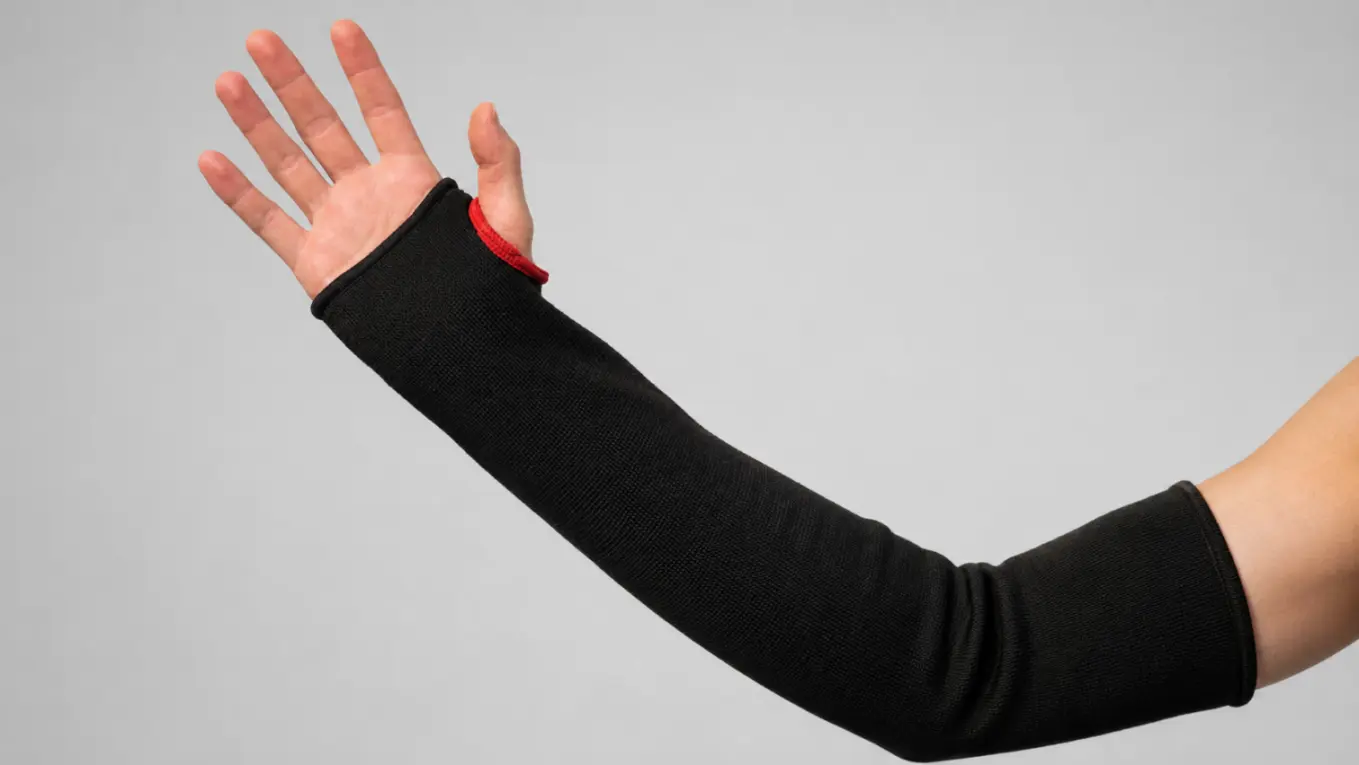
NMSafety supplies HPPE, aramid and composite-yarn sleeves covering multiple ANSI and EN cut levels. Its range includes different sleeve lengths, thumb holes, elastic or adjustable cuffs, and customized colours and packaging.
NMSafety's main advantage is its ability to combine cut-resistant sleeves, cut-resistant gloves and coated work gloves in multi-SKU orders. This manufacturing scale may suit PPE distributors, industrial safety brands and buyers managing long-term OEM programs.
2. JDL Safety
Nantong Jiadeli Safety Products, also known as JDL Safety, publishes HPPE and aramid sleeves ranging from ANSI A3/EN C to ANSI A6/EN F. Its 18-inch products include thumb holes, elastic upper cuffs and hook-and-loop adjustment. This makes JDL suitable for buyers developing a standardized range with several cut-protection levels.
3. Seeway Safety
Seeway Safety is based in Zhejiang and specializes in cut-resistant, heat-resistant and knitted protective products. Its arm protection range includes single-layer, double-layer and thumb-hole sleeves for automotive manufacturing, glass, paper and food-processing applications.
Seeway may be considered by buyers searching for both industrial sleeves and food grade cut resistant sleeves. Nevertheless, food-contact declarations and fibre-shedding test information should be verified for the selected product.
4. Nexprotec
Nexprotec offers HPPE, stainless-steel, nylon and composite-yarn cut-resistant sleeves. It also promotes OEM, private-label and lower-MOQ product development and reports operating more than 200 automatic knitting machines.
This supplier may suit brands that need customized samples, packaging or product specifications rather than only large standardized orders.
5. Uneed Safety
Founded in 2010, Qingdao Uneed Safety supplies cut-resistant work gloves, coated gloves and cut-resistant sleeves. Its wider PPE assortment may benefit distributors that want to combine several hand-protection categories under one supplier.
Because its public sleeve specifications are limited, buyers should request product-specific EN or ANSI reports, material details and factory-process information before placing an order.
6. Lita Safety
Lita Safety publishes 13-gauge HPPE and glass-fibre knitted sleeves, including products with leather reinforcement. These structures may be relevant for handling wire, sharp glass edges and unfinished metal components.
Cut resistance, puncture resistance and needle protection are different properties. Each claim should therefore be supported by a separate applicable test.
7. Taicang Shunfu Knitwear
Taicang Shunfu lists HPPE, aramid, steel-wire, cowhide-reinforced and high-temperature arm guards. Its product range is relevant when comparing an aramid cut resistant sleeves supplier or sourcing combined cut-and-heat protection.
Aramid has useful inherent heat-resistant properties, but thermal protection should not be assumed from the fibre name alone. Buyers should request relevant heat and flame test results.
Comparison of Cut Resistant Sleeves Manufacturers in China
The following table summarizes the published product positioning of these cut resistant sleeves manufacturers in China.
Manufacturer
Published Focus
Best-Fit Buyer
NMSafety
Multi-factory scale; HPPE, aramid and composite sleeves
Large orders, OEM and multi-SKU sourcing
JDL Safety
A3/C–A6/F HPPE and aramid sleeves
Standardized multi-level product ranges
Seeway
Single-layer, double-layer and food-focused options
Food, glass and automotive buyers
Nexprotec
OEM and lower-MOQ development
Private labels and customized projects
Uneed Safety
Broad glove and PPE assortment
General PPE distributors
Lita Safety
HPPE/glass-fibre reinforced structures
Wire, glass and metal handling
Shunfu
Aramid, HPPE, steel wire and leather structures
Heat-exposed and heavy-duty work
How Cut Resistant Sleeve Materials Compare
Material
Main Advantage
Trade-Off
Typical Application
HPPE
Lightweight and flexible
Limited inherent heat resistance
Automotive, assembly and sheet metal
Aramid
Cut protection with better heat tolerance
Warmer and requires controlled washing
Glass and hot-part handling
HPPE with glass fibre
Higher cut performance with moderate bulk
May feel stiffer
Stamping and metal fabrication
Steel-fibre composite
High cut and abrasion resistance
Heavier and less flexible
Knife and sharp-metal handling
Nylon blend
Comfortable and abrasion-resistant
Lower cut resistance when used alone
Light assembly
A higher cut rating is not automatically better. High-level sleeves can be heavier, warmer or less flexible, reducing worker comfort and compliance.
ANSI/ISEA 105 uses cut levels from A1 to A9. EN 388:2016+A1:2018 evaluates mechanical risks and includes an A-to-F ISO cut result. These systems should not be treated as direct equivalents. ISO 13997:2024 defines a tomodynamometer method for testing resistance to cutting by sharp edges.
Cut resistance also does not prove needle, chemical, puncture or heat protection. These risks require separate test evidence.
Sleeve Design Options and Trade-Offs
Design
Benefit
Limitation
Thumb hole
Reduces movement and closes the wrist gap
May create tension around the thumb
Straight wrist
Quick to put on and remove
Sleeve may ride up
Double layer
Greater durability potential
Heavier and warmer
Seamless knit
Reduces seam irritation
Less structural flexibility
Elastic cuff
Holds the sleeve during movement
May feel tight
Hook-and-loop cuff
Adjustable fit
Can collect debris or snag
Choosing the Right Cut-Resistant Sleeve
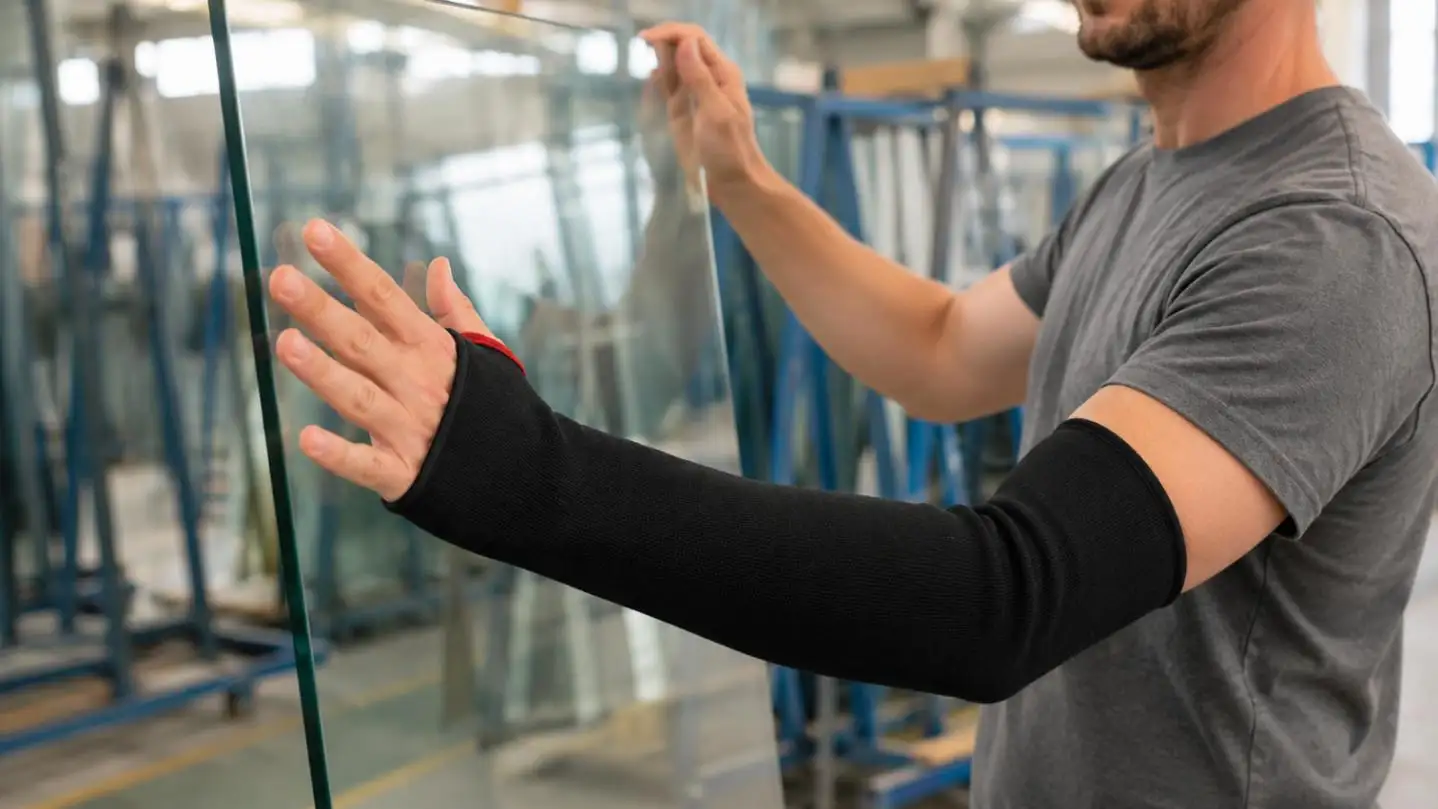
Automotive and appliance assembly usually require lightweight ANSI cut resistant sleeves that preserve arm movement. Glass and sheet-metal handling often need higher cut levels, longer coverage and secure cuffs.
Food processors should compare washability, fibre shedding and food-contact documentation rather than relying only on the term "food grade." Welding and hot-metal operations may favour aramid structures, but EN 388 cut resistant sleeves do not automatically meet thermal-risk requirements.
How to Verify a Cut Protection Sleeve Supplier
Before selecting from the Top Cut Resistant Sleeves Manufacturers in China, request:
• A product-specific ANSI or EN test report
• Complete yarn and material composition
• Sleeve length and cuff-size tolerances
• Washing and drying instructions
• Pre-production samples
• MOQ and confirmed lead time
• Batch-traceability information
Buyers should also confirm which knitting, sewing, finishing and inspection processes are completed internally. The test report must match the construction, colour and size being ordered.
Closing Words
The right cut resistant arm sleeves manufacturer depends on the workplace hazard and purchasing model.
NMSafety is particularly suitable for distributors, industrial brands and buyers requiring large-volume OEM cut resistant sleeves China programs, multiple protection levels and coordinated glove-and-sleeve sourcing.
Send NMSafety your required ANSI or EN level, sleeve length, cuff design, application and expected order volume to obtain suitable samples and product-specific test documents.
FAQs
Q1. Who are the top manufacturers of cut-resistant sleeves in China?
Some of the manufacturers are NMSafety, JDL Safety, Seeway Safety, Nexprotec, Uneed Safety, Lita Safety, and Taicang Shunfu Knitwear.
Q2. What are the commonly used materials for cut-resistant sleeves?
Some of the commonly used materials are HPPE, aramid, nylon, glass fiber, steel fiber, and some composite blended yarns.
Q3. How do ANSI and EN cut ratings differ?
While ANSI/ISEA 105 uses levels A1 through A9, cut ratings in EN 388 are defined as levels A through F in the ISO 13997 standard. A direct conversion of the rating systems should not be done.
Q4. Is it always better to have a higher cut level?
No. Higher rated sleeves are also cut level sleeves. Higher rated sleeves may be less flexible and thicker. As such, higher rated sleeves may be warmer. The cut level should be related to the hazard of the workplace.
Q5. What sleeves should be used for glass handling?
Long sleeves made from either HPPE, aramid, or reinforced composites, and which have secure cuffs, are used for handling glass with sharp edges.