Home > BLOG > Industry Blog > Oil Resistant Gloves Factory in China: Balancing Oil Resistance, Grip and Dexterity
Oil Resistant Gloves Factory in China: Balancing Oil Resistance, Grip and Dexterity
07 Aug, 2026
By hqt
While oil resistance is important for gloves, more coating thickness is a question of balancing resistance with control and dexterity. Oil resistance prevents gloves from transferring oil to tools and machine components. Control helps to manage slippery tools, and dexterity is the ease of movement and reduction of fatigue for repetitive work.
For a buyer importing from the Oil Resistant Gloves Factory, China has an advanced ecosystem for manufacturing PPE (Personal Protective Equipment) and specializes in value-adding integrated supply chains for yarn and coating, as well as knitting, dipping and OEM (Original Equipment Manufacturer) production. Manufacturers are able to combine and modify the liner, gap, coating, grip, finish and degree of protection in order to cater to specific industrial requirements.
Therefore, gloves should be chosen based on the actual work environment, the exposure to oil, how much control is needed to handle the objects, and the precision of the handling rather than just on the thickness of the coating.
Why Oil Makes Industrial Hand Protection More Difficult
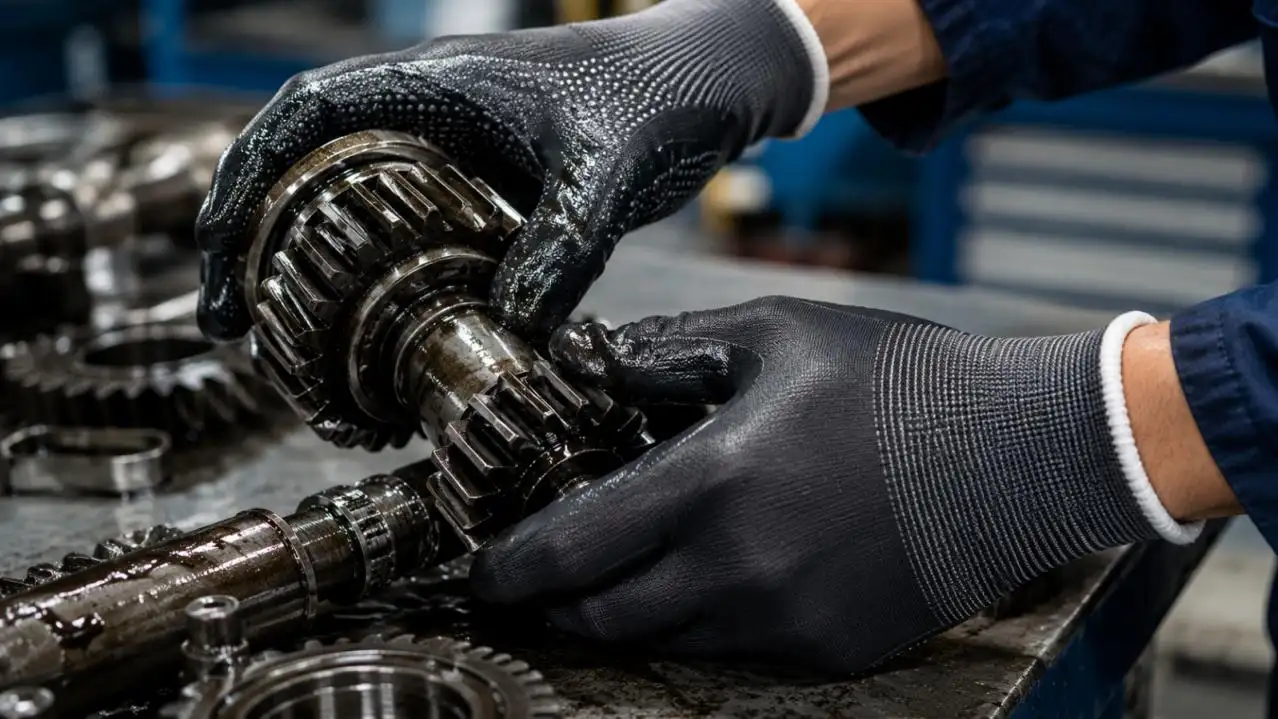
Oil adds a thin lubricating layer between the surface of the glove and the object being handled. On machined steel or on automotive or tool parts, pipes, and sheet metal, this layer can greatly change the way the glove performs.
A worker handling an oily component may need to apply greater grip force to prevent slipping. Repeated over an entire shift, excessive grip force can contribute to hand fatigue and reduce handling efficiency.
Oil exposure also varies considerably between workplaces.
Oil Condition
Typical Task
Main Requirement
Light oil film
Precision assembly
Dexterity + grip
Intermittent oil
Maintenance
Grip + abrasion resistance
Heavy contamination
Machinery handling
Coverage + grip
Oil + sharp metal
Metal fabrication
Grip + cut resistance
Oil + impact hazard
Oil & gas work
Grip + impact protection
This is why an Oil Resistant Gloves Factory in China may use several coating and liner constructions instead of relying on one universal glove design.
The Three-Way Trade-Off: Oil Resistance, Grip and Dexterity
Oil resistance depends largely on coating material, thickness, coverage, and coating integrity. Oily grip depends more heavily on surface texture and how the coating manages oil at the contact interface. Dexterity is influenced by liner gauge, coating flexibility, total glove thickness, fit, and finger construction.
Oil Resistance Is More Than Choosing Nitrile
Nitrile is widely used for industrial oil resistant gloves, but coating design matters just as much as coating chemistry.
Important variables include:
• Coating thickness
• Palm, 3/4, or full coating
• Single or double dipping
• Surface finish
• Coating adhesion
• Liner construction
Increasing coating coverage can improve liquid protection and durability, but excessive thickness may increase stiffness and reduce tactile sensitivity.
More coating is not automatically better.
How Coating Technology Changes Oily Grip
Different nitrile finishes behave differently in oily handling conditions.
Coating
Oily Handling
Dexterity
Breathability
Typical Application
Smooth nitrile
Moderate
Good
Moderate
General handling
Foam nitrile
Good
High
High
Precision work
Microfoam nitrile
Good–High
Very high
High
Assembly
Sandy nitrile
High
Moderate
Moderate
Oily components
Full nitrile
High coverage
Moderate
Lower
Heavy contamination
Sandy nitrile is not automatically the correct choice for every oily workplace. The appropriate coating depends on oil volume, component geometry, handling pressure, and required finger control.
This is an important consideration when evaluating an Oil Resistant Gloves Factory in China for different industrial applications.
Oil Resistance Is Not the Same as Oil Grip
A glove can resist oil penetration but still feel slippery.
The reason is that oil resistance and friction are different performance characteristics. A relatively smooth coating may provide good oil contact resistance but fail to generate sufficient friction when a lubricating film remains between the glove and the component.
Foam, microfoam, and textured surfaces can help manage the oil layer and improve contact with the workpiece.
Grip performance also depends on:
• Surface texture
• Oil viscosity
• Component geometry
• Grip pressure
• Coating flexibility
• Contact area
For this reason, buyers should evaluate actual oily handling rather than relying only on coating descriptions.
How Liner Gauge Influences Dexterity
The knitted liner is another major design variable.
Liner Gauge
General Characteristic
13 gauge
More structure and protection
15 gauge
Balance of protection and flexibility
18 gauge
Higher finger sensitivity
21 gauge
Thin construction for precision handling
A higher gauge generally allows a finer and thinner liner, but gauge alone does not determine dexterity. Fiber composition, coating thickness, glove fit, and knitting tension also affect hand movement.
This becomes particularly important when industrial oil resistant gloves are used for small fasteners, automotive assembly, maintenance, or precision component handling.
Palm Coated vs. 3/4 Coated vs. Fully Coated
Coating coverage should be designed to match the amount of oil that actually comes in contact with the hand.
Coverage
Primary Benefit
Compromise
Best Application
Palm coated
Breathability + dexterity
Limited liquid coverage
Light oil
3/4 coated
All around protection
Decreased breathability
Regular maintenance
Fully coated
All around hand coverage
Added heat retention
Heavy oil
Double coated
Barrier + durability
Added weight and stiffness
Very aggressive environments
Therefore an professional Oil Resistant Gloves Factory in China should guide buyers to tailor coating coverage to specific exposure levels, rather than just recommending full coating.
Adding Cut Protection to Oil Resistant Gloves
Many oily applications also involve sharp edges.
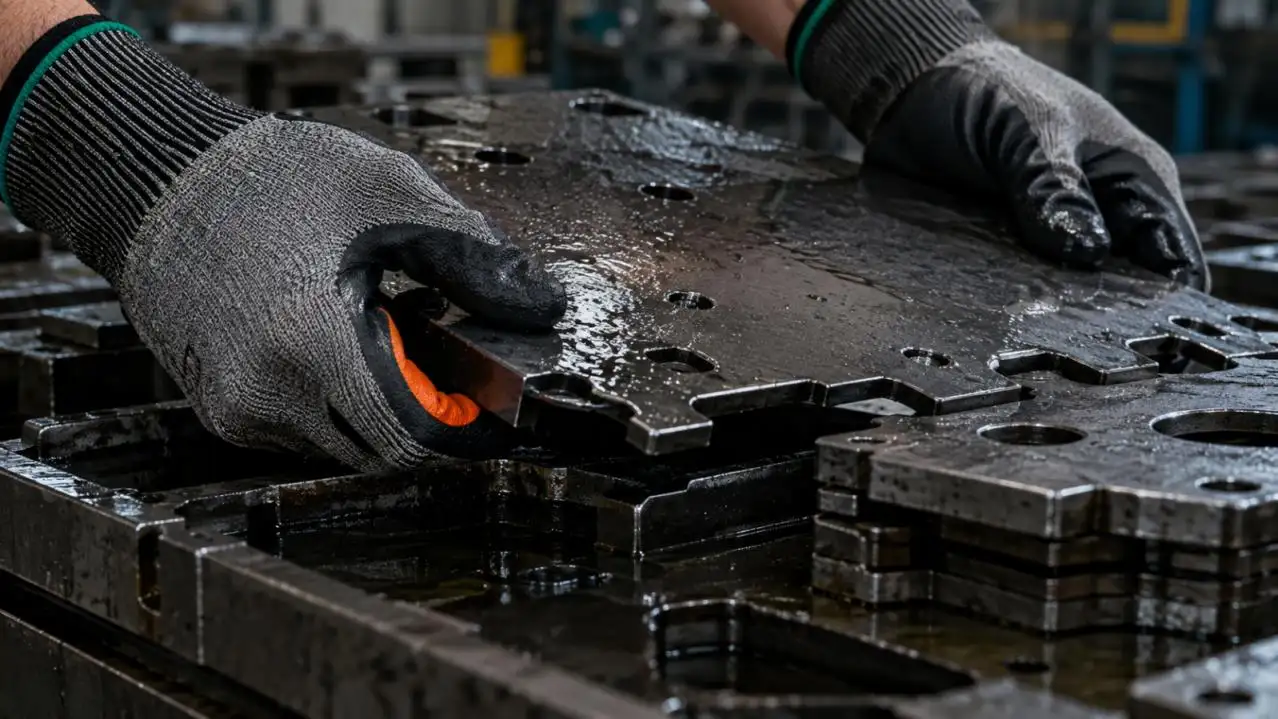
Sheet metal, machined components, stamping parts, and automotive assemblies may require both oil grip and cut protection.
Common protective liners can combine materials such as:
• HPPE
• Glass fiber
• Steel fiber
• Engineered yarns
These liners can then be combined with nitrile coatings to provide grip and oil handling performance.
However, increasing cut protection can also change glove thickness, flexibility, and weight. The challenge is to provide sufficient mechanical protection without sacrificing more dexterity than the application requires.
How NMSafety Designs Application-Based Oil Resistant Gloves
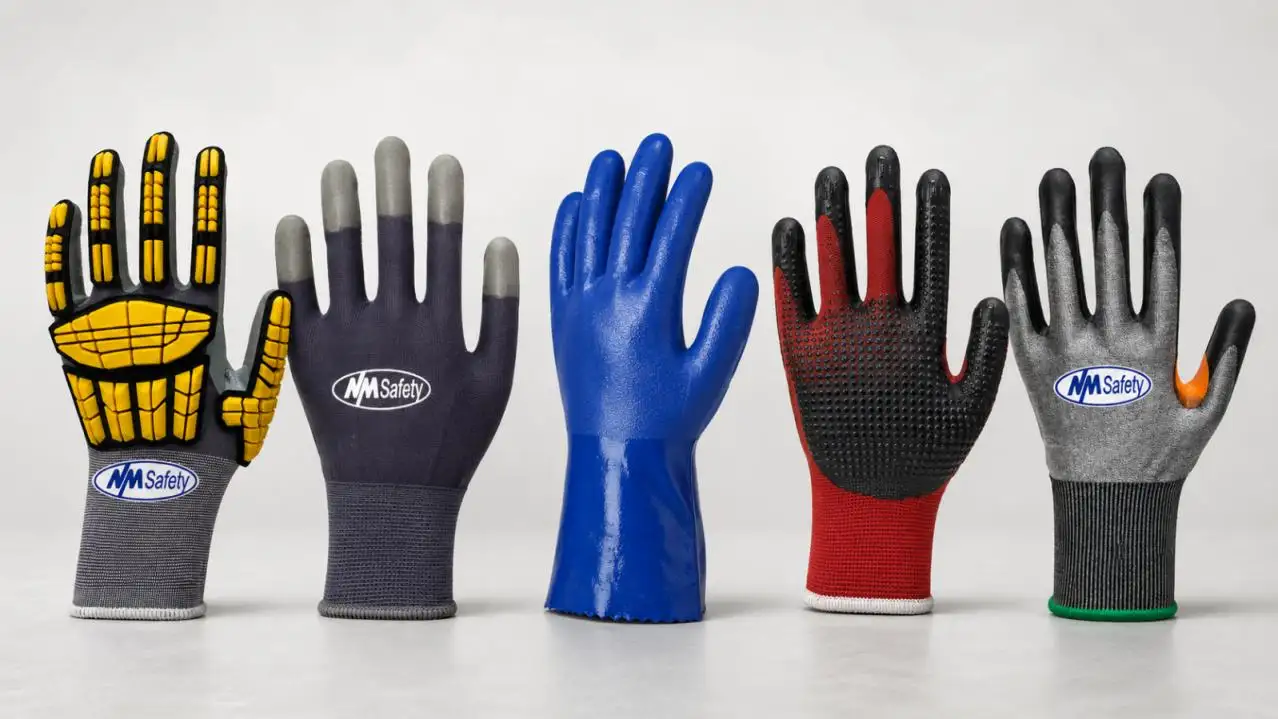
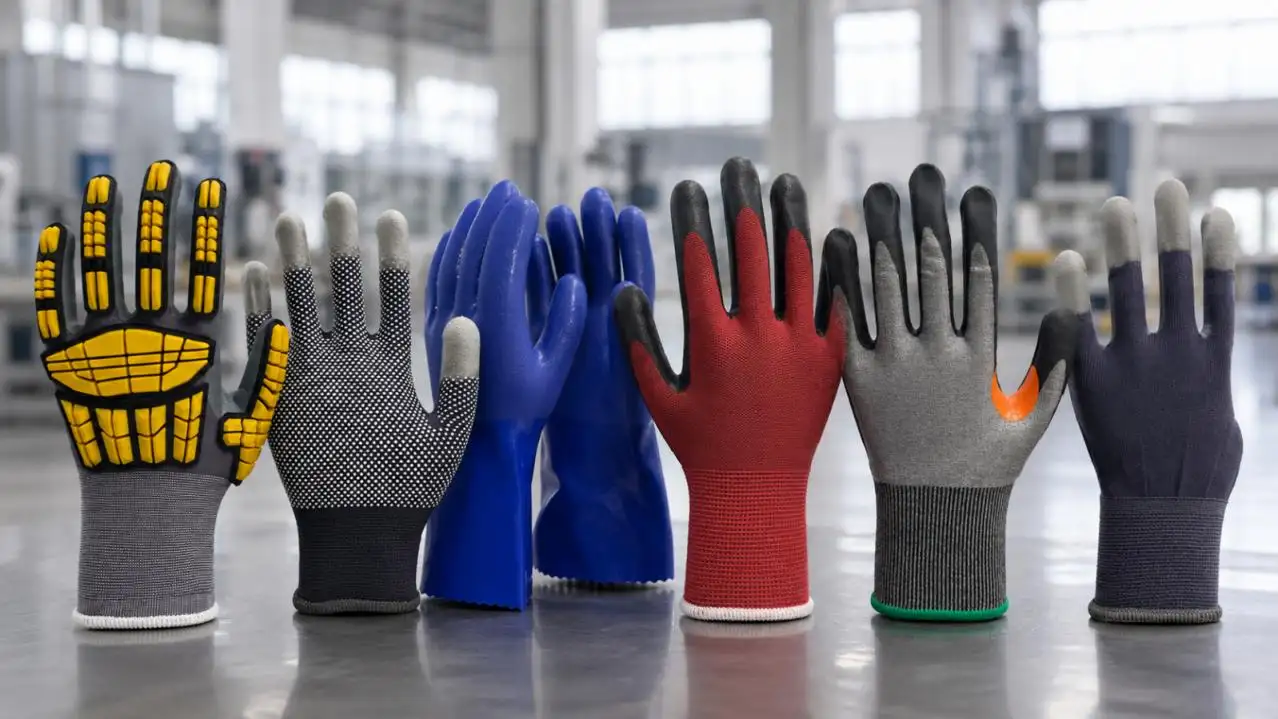
NMSafety's product platform depicts the flexibility Oil Resistant Gloves Factory in China has in design with regards to the choice of liner, coating, gauge, and coverage, as opposed to the limitations imposed by a construction-based platform.
This allows glove construction to be adjusted according to oil exposure, grip requirements, abrasion conditions, and handling precision.
Fine-Gauge and Protective Liners
Its range of oil resistant gloves offers a variety of nylon, polyester, HPPE, glass fiber, and steel fiber construction, along with fine gauge designs of 18G and 21G.
These gloves allow the user to better balance the tactile sensitivity and the required level of cut and mechanical protection.
Manufacturing Support for OEM Programs
With 15 production lines and about 1,500 knitting machines, NMSafety has three manufacturing sites in China and a monthly glove production capacity exceeding 600,000 dozen.
For OEM clients, the manufacturing system provides versatility for different combination of liners, coatings, and levels of protection, applicable to both sampling and mass production.
Practical Selection Matrix
Working Condition
Recommended Design Direction
Precision oily assembly
Fine-gauge liner + microfoam nitrile
Automotive maintenance
Foam/sandy nitrile + abrasion resistance
Oily sheet metal
Cut-resistant liner + nitrile grip
Heavy machinery
Higher coating coverage + durable nitrile
Oil & gas handling
Oil grip + cut/impact protection
Final Takeaway: Balance the Glove Around the Job
When selecting a factory in China for the manufacturing of Oil Resistant Gloves, the real-world working conditions should come first—not simply the thickness of the coating, or one among several protection ratings.
For the project of oil resistant work gloves, NMSafety will address oil exposure in combination with coating coverage, liner gauge, grip, cut protection, and the necessary level of dexterity. Buyers are able to compare applicable nitrile coating and liner structures and may request samples for evaluation prior to placing an order for the bulk specification.
FAQs
Q1. Does NMSafety provide palm, 3/4, or fully coated gloves?
Coatings can be provided based on the specific application. For example, coatings on the palm provide dexterity and breathability, while coatings that are full or near full provide protection in heavily contaminated environments.
Q2. What types of nitrile coatings, if any, does NMSafety have for oil resistant gloves?
NMSafety offers constructions with smooth nitrile, foam nitrile, sandy nitrile, and some other textured nitrile coatings. The choice of coating is dependent on the oil exposure, the level of required grip, abrasion, and dexterity.
Q3. Are gloves for oily and slippery conditions in NMSafety's capability?
Yes. NMSafety can use appropriate liner constructions and combine them with nitrile grip coatings for oily tools, metal parts, and other oily machinery parts, as well as for automotive assembly and maintenance activities.
Q4. Are different liner gauges available in NMSafety's gloves?
Yes. NMSafety offers gloves with a range of constructed knitted liners including fine gauge constructions with 18G and 21G. Higher gauge liners are helpful for high sensitivity finger tasks.
Q5. Can a glove provide both oil resistance and cut protection?
Yes. NMSafety can offer nitrile coatings with liners that are cut protective and provide protection against oil and sharp edge exposure, using HPPE, glass or steel fiber, and other cutting edge protective materials combined with oily task protective coatings.