Home > Uncategorized > Cut Resistant Gloves Bulk in China: ANSI Ratings, Coatings and Bulk Sourcing
Cut Resistant Gloves Bulk in China: ANSI Ratings, Coatings and Bulk Sourcing
06 Aug, 2026
By hqt
Sourcing Cut Resistant Gloves Bulk in China is not simply a matter of choosing ANSI A5, comparing prices, and requesting samples. A reliable bulk specification must connect the actual cutting hazard with liner construction, yarn composition, knitting gauge, coating, grip conditions, abrasion life, fit, test standards, and production consistency.
For importers, PPE distributors, and industrial safety buyers, the key question is not "Which glove has the highest cut level?" but which glove construction provides sufficient protection without sacrificing the dexterity, grip, and wearability required at the workstation.
Why China Remains a Strong Base for Cut Resistant Glove Manufacturing
China's Supply chains for cut resistant safety gloves include advanced yarn sourcing, automated knitting, coating, and finishing technologies, and rapid testing and export logistics. All these activities are concentrated in industrial regions. As a result, the complexity of sourcing and supplying Cut Resistant Gloves Bulk is significantly reduced for Chinese customers.
Glove knitting, coating and general PPE manufacturing
Shandong
High capacity manufacturing of labor protection gloves
Zhejiang
Textiles, knitting and industrial supply chains
Shanghai
Export, sourcing and international trading
Jiangxi
Large scale and cost effective glove manufacturing
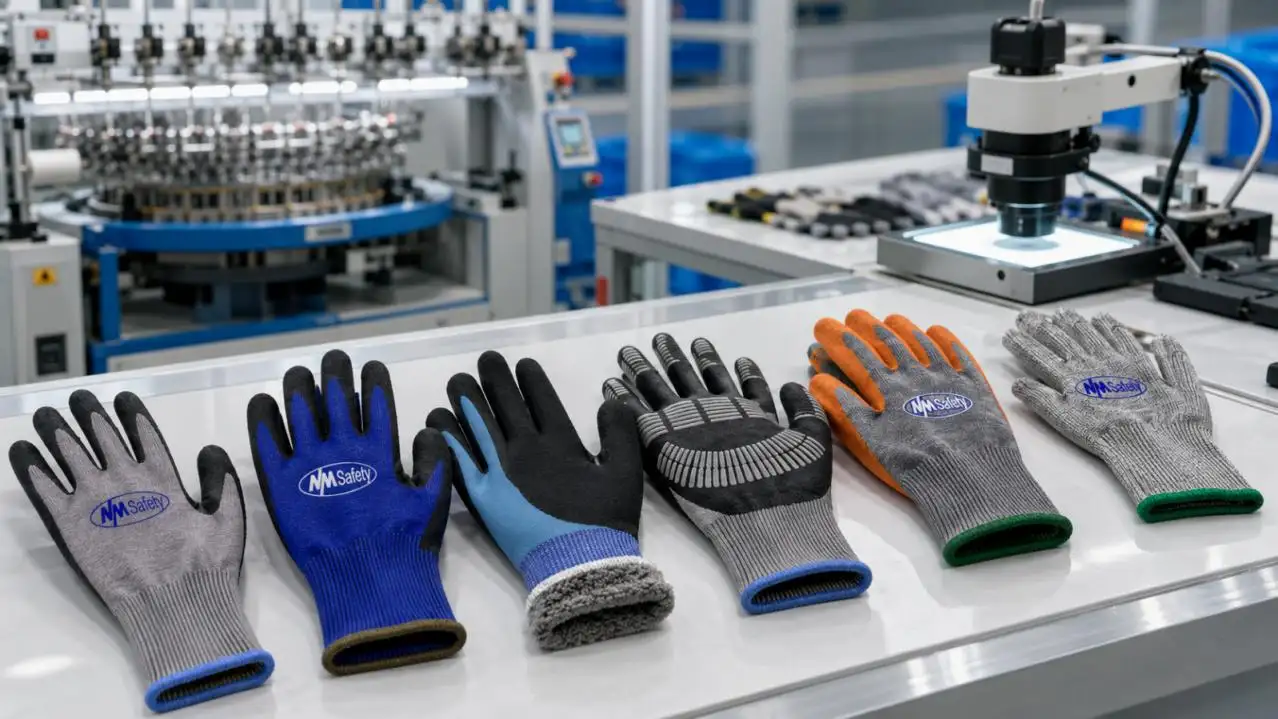
An example of this distributed manufacturing is NMSafety. NMSafety has its international headquarters in Shanghai and production facilities in Jiangji, Jiangsu, and Shandong. This multi-regional manufacturing supports various liner, coating, and cut level configurations and also gives bulk customers greater flexibility in production and supply.
Assess the Cutting Hazard Before Considering the Glove Rating
Sheet metal, finished glass components, sharp machined components, stamped components and blade components present different hazards. Before considering purchasing Cut Resistant Gloves Bulk in China, define the exposure conditions:
•Edge geometry and sharpness
•Frequency of contact
•Force of contact
•Dry, oily and wet conditions
•Finger sensitivity
•Exposure to abrasion and puncture
•Time of wear
•Change interval
A high cut rating on it's own does not mean greater safety. Protection that is over-speced cuts can increase glove thickness, stiffness, and cost leading to reduced compliance of workers.
The majority of cut resistance is not achieved by the coating on the palm. Most of cut resistance is achieved in the liner and engineered yarn systems.
Traditional liner technologies offer the following examples:
•HPPE: Exceptional strength to weight ratio with high flexibility.
•Aramid: Superb thermal behavior with cut resistance.
•Glass fiber: When used with composite yarn, cut resistance of the blade is improved.
•Steel fiber: Cut resistance of composite constructions is improved.
•Composite yarn: Merges cut resistance and thickness with durability and comfort.
The yarn construction offers the best balance of cut resistance and thickness for glove construction.
NMSafety offers a variety of cut resistant gloves with different combinations of HPPE, glass fiber, steel fiber, aramid, and engineered composite liners. NMSafety also manufactures fine gauge constructions (18 gauge and 21 gauge) so that the user may choose the best balance of protection and dexterity for the job to be done.
13G, 15G, 18G or 21G: Gauge Is Not a Cut Level
A common mistake when sourcing Cut Resistant Gloves Bulk in China is assuming that a higher knitting gauge means higher cut protection.
It does not.
Gauge primarily indicates the fineness of the knitted liner.
Knitting Gauge
General Construction
Typical Design Priority
13G
Relatively robust
Durability and protection
15G
Medium-fine
Protection/dexterity balance
18G
Fine
Precision handling
21G
Very fine
Maximum tactile sensitivity
An 18G or 21G liner can still achieve high cut resistance when engineered with suitable high-performance fibers and reinforcement.
Therefore, cut level and knitting gauge should be specified separately.
A4, A5 or A6+: Avoid Over-Specifying Protection
ANSI cut ratings indicate increasing resistance to cutting force, but purchasing decisions should consider the complete glove.
Selection
Typical Requirement
Main Trade-Off
Moderate cut
General component handling
Maximum flexibility
A4–A5
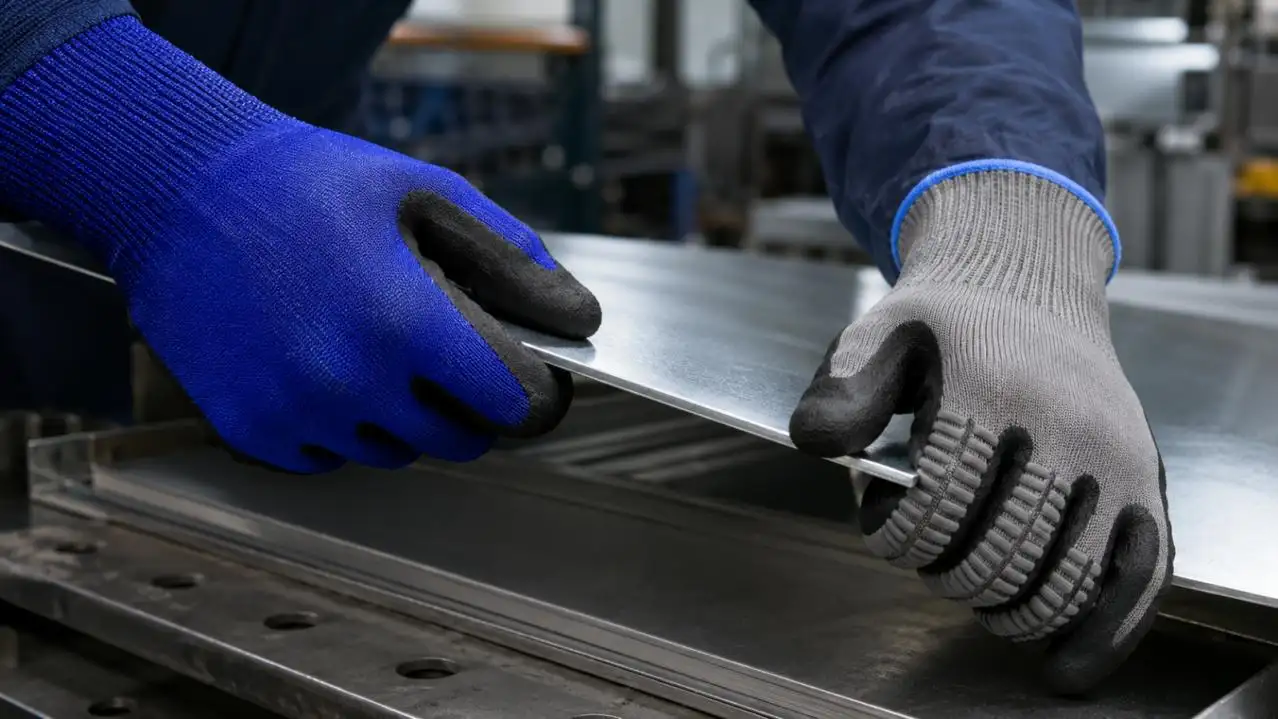
Sheet metal, fabrication, assembly
Protection vs dexterity
A6+
More severe sharp-edge exposure
Higher protection vs glove weight
Very high cut
Severe industrial hazards
Protection becomes the priority
Two gloves with the same A5 rating may perform very differently in production because of differences in:
•Yarn formulation
•Glove thickness
•Knitting gauge
•Coating thickness
•Thumb reinforcement
•Abrasion resistance
•Fit and hand ergonomics
NMSafety's cut-resistant portfolio covers multiple ANSI protection levels rather than relying on one construction for every workplace. This is more practical for distributors building a tiered PPE range or factories managing several risk zones.
Match the Coating to the Working Environment
Cut protection prevents blade penetration, while the coating determines much of the glove's grip, abrasion behavior, liquid handling, and tactile response.
PU Coating
PU is commonly selected for:
•Dry assembly
•Small-component handling
•Precision work
•Applications requiring high tactile sensitivity
Foam Nitrile
Foam nitrile provides a practical balance for:
•General industrial handling
•Light oil exposure
•Metal parts
•Repetitive assembly work
Sandy Nitrile
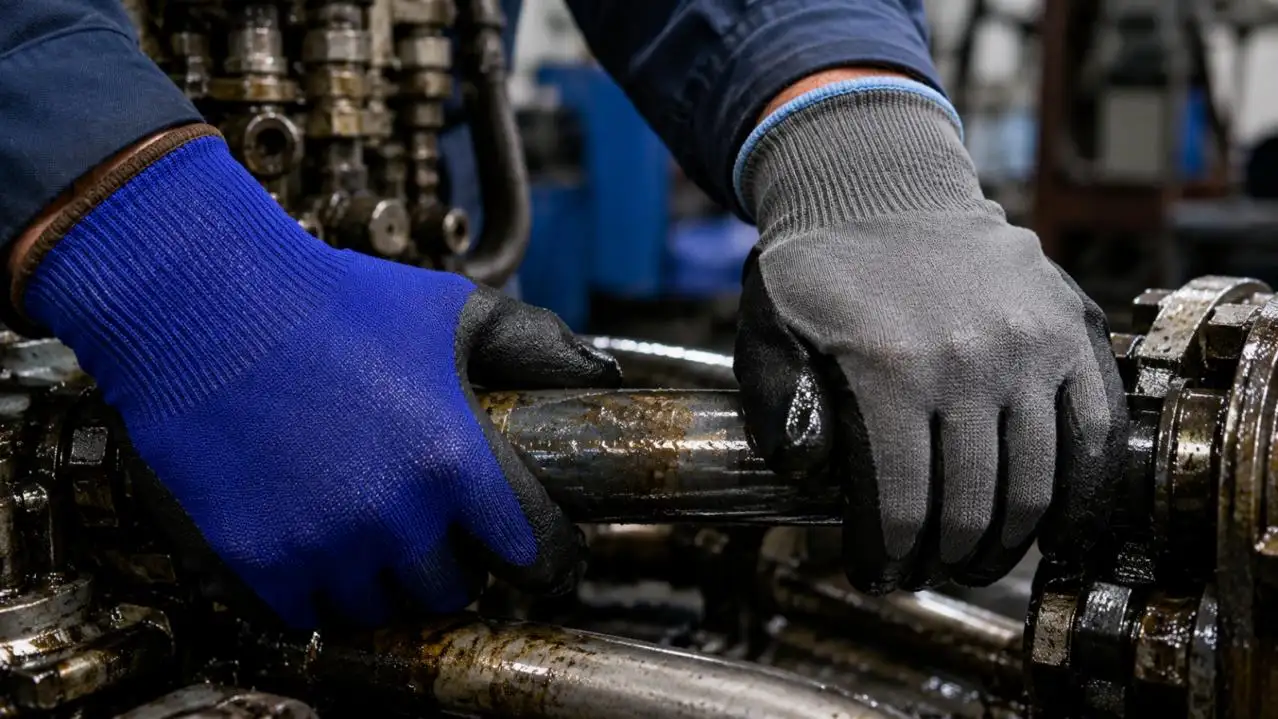
A textured sandy-nitrile surface is better suited where grip becomes more difficult:
•Oily sheet metal
•Wet components
•Fabrication environments
•Heavier industrial handling
NMSafety supports different PU, nitrile, sandy nitrile, and other coating configurations, which allows the coating to be matched to the liner rather than treating cut level and grip as separate product decisions.
Match the Complete Glove to the Workstation
For Cut Resistant Gloves Bulk in China, buyers should develop an application matrix before approving a purchase.
Application
Cut Risk
Dexterity
Environment
Practical Direction
Precision assembly
Medium
Very high
Dry
Fine gauge + thin coating
Sheet-metal handling
Medium-high
High
Light oil
Cut liner + nitrile
Glass handling
High
Medium
Dry/wet
High cut + textured grip
Heavy fabrication
High
Medium
Oily/abrasive
Reinforced liner + durable coating
Sharp component sorting
Medium-high
High
Dry
Fine-gauge cut liner
Also evaluate:
•Thumb-crotch reinforcement
•Palm-only vs 3/4 or full coating
•Cuff length and elasticity
•Size consistency
•Abrasion rating
•Tear resistance
•Puncture requirements
Cut, puncture, and needlestick resistance are different hazards and should not be treated as interchangeable specifications.
Fit, Wear and Replacement Determine Real Cost
A cheaper glove is not necessarily the lower-cost glove.
For bulk purchasing, calculate performance around usable service life, not only price per pair.
Replacement should be considered when:
•Liner fibers are exposed
•Coating has worn through
•Grip performance has significantly declined
•Seams or knitted structures are damaged
•Contamination cannot be safely removed
•The glove no longer fits correctly
Correct sizing also matters. Oversized gloves reduce control, while excessively tight gloves increase fatigue and may restrict finger movement.
NMSafety operates manufacturing bases in Jiangxi, Jiangsu, and Shandong, with 15 production lines across its published factory network. Its manufacturing system includes large-scale knitting capacity and supports multiple liner, gauge, and coating configurations, which is particularly relevant when one buyer requires several cut-protection levels within the same procurement program.
Closing Words
For buyers developing or expanding a cut-resistant glove range, NMSafety can support specification review, liner and coating selection, sample evaluation, OEM requirements, and volume production. Its multi-site manufacturing structure and broad cut-resistant glove capability provide a practical basis for evaluating long-term Cut Resistant Gloves Bulk in China programs rather than sourcing solely on price.
FAQs
Q1. Are NMSafety's cut resistant gloves flexible for OEM customization?
Yes. Our OEM/ODM offerings can be tailored for specific customization for gloves including fabric construction, color, branding, logo, packaging, etc. We'll finalize customization at the sampling stage and during the RFQ.
Q2. How many levels of cut resistance does NMSafety offer?
NMSafety's cut resistant gloves reach multiple levels of cut resistance as defined by ANSI, and provide solutions for low to high cut protection. When requesting samples, buyers should communicate the protective standard and the application.
Q3. What liner materials are used for NMSafety's cut resistant gloves?
Cut resistant gloves can be constructed using a broad range of liner materials. These include HPPE, aramid, glass fiber, steel fiber, and composite yarn systems. The choice of materials depends on required cut resistance, flexibility, thickness, and intended application.
Q4. Does NMSafety manufacture fine gauge cut resistant gloves?
Yes. NMSafety manufactures fine gauge cut resistant gloves with knitting of 18 gauge and 21 gauge. These fine gauge gloves are ideal for applications that require a high degree of tactility.
Q5. What coating options does NMSafety offer?
Depending on the construction of the glove, NMSafety offers the following coatings: PU, foam nitrile, sandy nitrile, smooth nitrile, latex, and PVC. The choice of coating should be based on the intended use of the gloves, and the prevailing working conditions.