Needle-resistant gloves are designed for an unusually difficult safety problem: stopping very sharp objects without making the worker's hands too stiff to work effectively. For buyers evaluating a Needle Resistant Gloves Factory in China, protection level is therefore only one part of the specification.
A practical glove must balance three factors:
Needle Protection ↔ Dexterity ↔ Comfort
Adding protective material can improve resistance to penetration, but it can also increase thickness, bending resistance and hand fatigue. The better approach is to select materials, reinforcement zones, liner gauge and coatings according to the actual hazard.
Hypodermic needles behave differently from many blunt puncture hazards. Their fine, sharp points can penetrate between fibers or through materials that may still perform well in conventional puncture testing.
ASTM F2878-19(2024) is the current ASTM test method for measuring the force required for a hypodermic needle to penetrate protective clothing material. The method allows testing with 21-, 25- or 28-gauge needles.
Why Ordinary Puncture Resistance Is Not Enough
A glove described simply as "puncture resistant" does not automatically provide the same protection against hypodermic needles. Buyers comparing products from a Needle Resistant Gloves Factory in China should therefore look at:
• Needle puncture test method
• Needle gauge used
• Resistance classification
• Protected area of the glove
• Cut resistance as a separate property
ANSI/ISEA 105-2024 also classifies hand protection for cut, abrasion and puncture performance, with updated labeling intended to make performance levels easier to identify.
Why More Needle Protection Can Reduce Dexterity
Needle resistance often requires additional protective structures. These can include high-performance fibers, steel fibers, glass fibers or localized steel fabric.
More reinforcement may mean:
• Greater overall thickness
• Higher resistance when bending the fingers
• Reduced fingertip sensitivity
• More force required to close the hand
• Increased heat during extended wear
For this reason, simply adding layers across the entire glove is not always the most practical solution.
Reinforcement Location Matters
The manufacturer must also determine where protection is required.
A glove may reinforce the:
• Palm
• Fingertips
• Fingers
• Sidewalls
• Entire hand
Targeted palm and finger reinforcement can provide protection in common contact zones while leaving other parts of the glove less restricted.
Material Selection Defines the Balance
Needle resistant gloves normally rely on a combination of materials rather than one fiber.
Material / Structure
Main Function
Design Consideration
HPPE
Cut-resistant structural fiber
Lightweight and flexible but may require additional needle reinforcement
Nylon
Base/support fiber
Helps fit and flexibility
Glass Fiber
Mechanical reinforcement
Can increase stiffness if heavily used
Steel Fiber
High-strength reinforcement
Requires careful integration for flexibility
Steel Fabric
Local needle barrier
Placement strongly affects dexterity
Latex Coating
Grip
Coverage can influence breathability
A capable Needle Resistant Gloves Factory in China therefore needs to engineer the complete glove structure—not simply select the strongest available yarn.
Does Glove Gauge Affect Dexterity?
Knitting gauge influences liner density and hand feel, but it should not be evaluated alone.
13-Gauge Construction
A liner constructed of 13-gauge offers a built structure that has the ability to sustain larger knitted reinforcements.
18-Gauge Construction
Since a liner of 18-gauge has an even finer knit, it is possible to provide a slimmer glove profile, which may increase finger mobility and improve sensitivity.
However, 18 gauge is not inherently more comfortable than 13 gauge. Ultimately, the comfort of a glove system is related to many other factors, including the composition of the fibers, reinforcement layers, coatings, and ergonomic effects.
Palm-Only vs. Wider Needle Protection
Before choosing a glove, buyers should ask:
Where is contact most likely to occur between the needle and the worker's hand?
Protection Design
Main Advantage
Main Trade-Off
Palm reinforcement
Improved flexibility
Limited coverage
Palm + fingers
Enhanced protection for working area
Stiffness
Full-hand protection
Extensive coverage
Increased bulk
Waste sorters, recyclers, and those working with uncontrolled sharps may benefit from extensive coverage while controlled activities may require more protection for finger mobility.
Protection for Needles
There are several factors that shape the protective rating of a needle resitant glove:
• Fit: Gloves provide control at the appropriate size.
• Finger dexterity: Users have need the ability to bend and move the fingers to grasp and manipulate the materials.
• Respiration: Multi-layered gloves trap heat and become less comfortable.
• Grip: Good gloves lessen the effect of grip.
• Hand fatigue: This is experienced when gloves are worn for extended periods of time.
Breathability is maintained to some extent with half and palm coatings.
How NMSafety Approaches the Design Balance
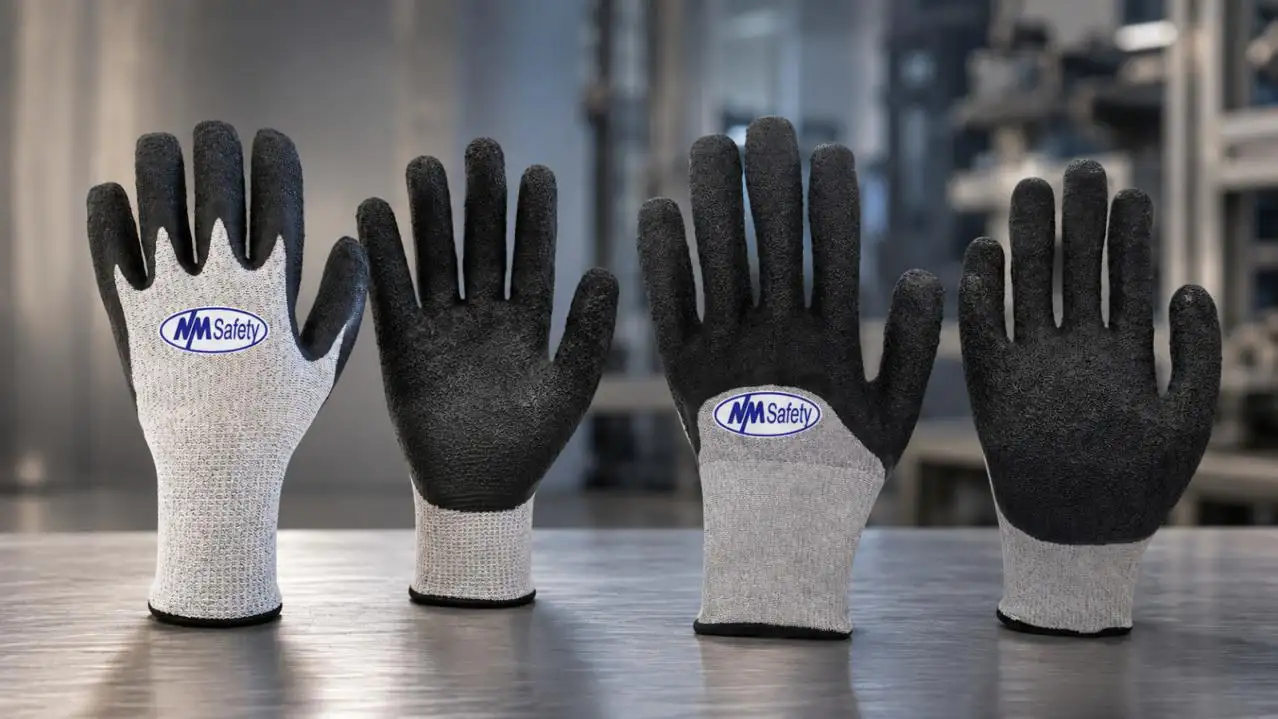
NMSafety currently lists two products in its needle-resistant glove category, illustrating how different liner architectures can address similar protection requirements.
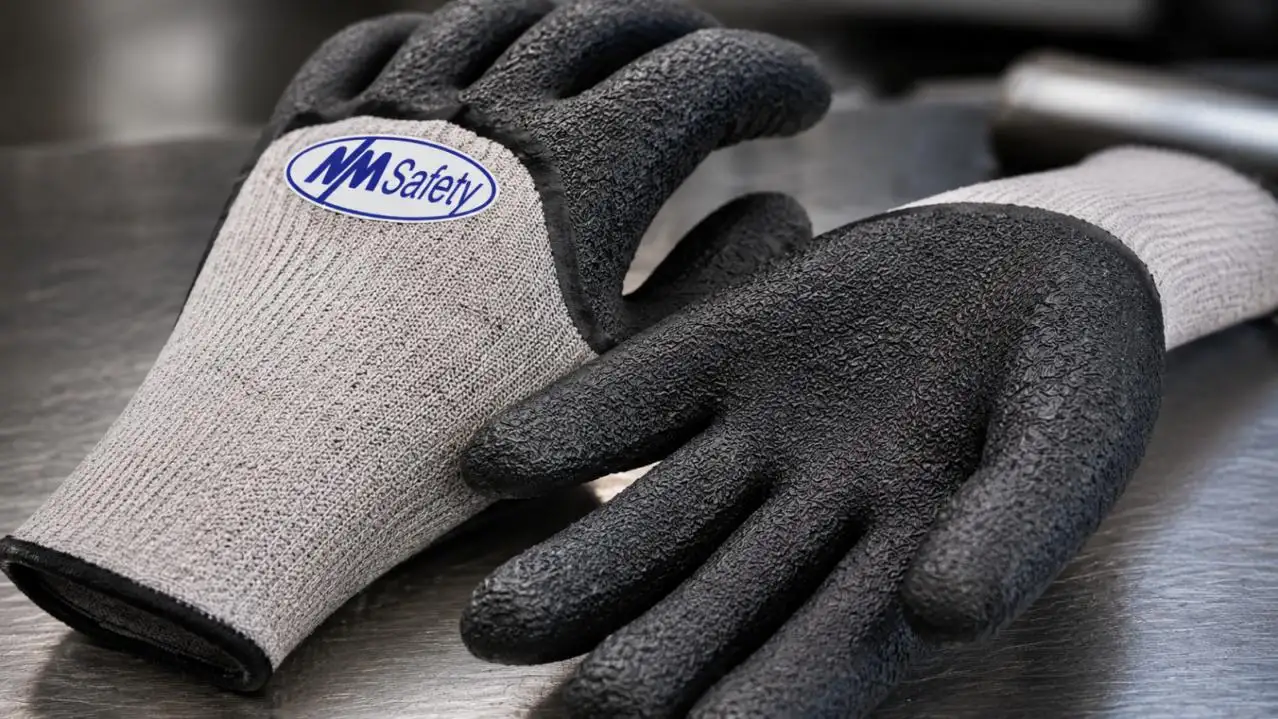
The DY1850NM/NR uses an 18-gauge nylon, HPPE and steel-fiber knitted liner with steel-fabric reinforcement on the palm and fingers and a crinkle latex half coating. NMSafety lists the glove as cut A9 and needle puncture resistance Level 5.
The DY1350NM/NR uses a 13-gauge nylon, HPPE and glass-fiber liner, again combined with steel-fabric reinforcement on the palm and fingers and crinkle latex coating. It is also listed by NMSafety as cut A9 and needle puncture resistance Level 5.
The comparison demonstrates an important design principle: a Needle Resistant Gloves Factory in China can adjust liner gauge, reinforcement fibers and protective architecture instead of relying on thickness alone.
Design Change
Needle Protection
Dexterity
Comfort
More reinforcement
↑
↓
↓
Finer liner
Depends
↑
↑
Steel-fabric reinforcement
↑
Depends
Depends
Targeted palm/finger protection
↑
Better than full coverage
↑
Thicker coating
Depends
↓
↓
Better ergonomic fit
—
↑
↑
Choosing the Right Needle Resistant Gloves
There is no single glove structure that is ideal for every workplace. Needle size, exposure area, cut hazards, handling precision, grip conditions and wearing time should all be considered together.
For buyers comparing a Needle Resistant Gloves Factory in China, the most useful questions concern test data, protected areas, material construction, liner gauge, coating design and real application requirements—not simply the highest advertised protection level.
NMSafety offers different needle-resistant constructions using reinforced palm and finger protection, engineered knitted liners and grip coatings. If you are developing gloves for recycling, waste handling, manufacturing or other sharps-exposure applications, you can discuss samples, protection requirements and OEM options with NMSafety before selecting the final glove structure.
FAQs
Q1. What is the difference between 13-gauge and 18-gauge needle resistant gloves?
The gloves made with 18-gauge liners are able to maintain a slimmer profile because 18-gauge liners are made with a finer knitted structure. The gloves made with 13-gauge liners are able to support a more robust structure because the gauge liner is larger. Which liner is better comes down to the application, dexterity, grip and level of protection.
Q2. What needle resistance levels does NMSafety have?
NMSafety has needle resistant gloves with some models having protection up to ANSI Level 5. Before purchasing gloves, customers should ensure the gloves are appropriate for the intended hazards and review applicable test data.
Q3. What materials are used in NMSafety needle resistant gloves?
Depending on the model, NMSafety combines materials such as:
• HPPE;
• Nylon;
• Steel fibers;
• Glass fibers;
• Steel fabrics;
• Latex;
• Grip coating.
The overall design is to maximize safety while providing ample flexibility and grip.
Q4. Does NMSafety offer ASTM F2878 needle puncture testing?
When applicable, performance against needle puncture should only be assessed by a recognized testing method such as ASTM F2878. Buyers should request the relevant tests and reports from NMSafety to help them evaluate a specific glove.
Q5. How does NMSafety improve needle protection without making gloves too rigid?
In addition to using thickness, NMSafety stabilizes and hardens specific high-risk areas (such as the palm and fingers) to protect against needles. NMSafety also protects against needles in specific low risk areas such as the back of the hand by leaving the gloves flexible and unobtrusive.