Home > BLOG > Industry Blog > Heavy Duty Gloves Factory in China: Test Reports and Performance Ratings Explained
Heavy Duty Gloves Factory in China: Test Reports and Performance Ratings Explained
14 Sep, 2026
By hqt
A glove can achieve a high cut rating yet provide insufficient impact coverage or poor control of oily components. For buyers evaluating a Heavy Duty Gloves Factory in China, the key question is whether documented performance matches the job—and whether bulk production matches the tested construction.
At NMSafety, we approach this assessment through material selection, protective structure and application requirements. "Heavy duty" describes intended use; meaningful purchasing specifications require named standards, verified results and production controls.
A Heavy Duty Gloves Factory in China may present European and American ratings on the same product. These ratings describe distinct properties and should be evaluated separately.
Standard
Performance Classification
Purchasing Implication
EN 388:2016+A1:2018
Abrasion, circular-blade cut, tear, puncture, straight-blade cut and optional impact
Read every relevant position; there is no single overall protection score
ANSI/ISEA 105-2024
Property-specific classifications, including cut levels A1–A9
Confirm which property a number describes and which method supports it
ANSI/ISEA 138-2019
Three back-of-hand impact levels
Check impact performance and coverage separately from cut resistance
The standards' scopes are explained by SATRA, ANSI and ISEA.
Read the Complete EN 388 Code
Using 4X43DP as an illustrative example:
• 4: Abrasion resistance level.
• X: No circular-blade cut result declared.
• 4: Tear resistance level.
• 3: Puncture resistance level.
• D: ISO 13997 straight-blade cut classification.
• P: Optional EN 388 impact requirements achieved.
X is not a zero rating. Where zero applies, it means testing did not achieve Level 1. A "P" does not establish protection across every finger or against crushing.
EN cut levels A–F and ANSI/ISEA cut levels A1–A9 have different classification thresholds. Compare the actual test method, measured result and classification instead of using a simple conversion chart.
Verify That the Report Covers the Quoted Glove
Reviewing a Heavy Duty Gloves Factory in China is similar to reviewing a document for a matching product.
Checkpoint
Evidence to Review
Discrepancy Requiring Clarification
Product identity
Reference, photographs and construction description
Similar in appearance but differ in liner or coating
Test scope
Standard edition, method and tested locations
Palm results presented as whole-glove protection
Laboratory
Report number, issuer and relevant accreditation scope
Unverifiable report or unrelated accreditation
Results
Measured values, units and assigned levels
Catalog rating unsupported by the report
Sample condition
Pretreatment, conditioning and laundering details
New-glove results used to claim wash durability
Document alignment
Report, label, instructions and specification
Conflicting ratings or product references
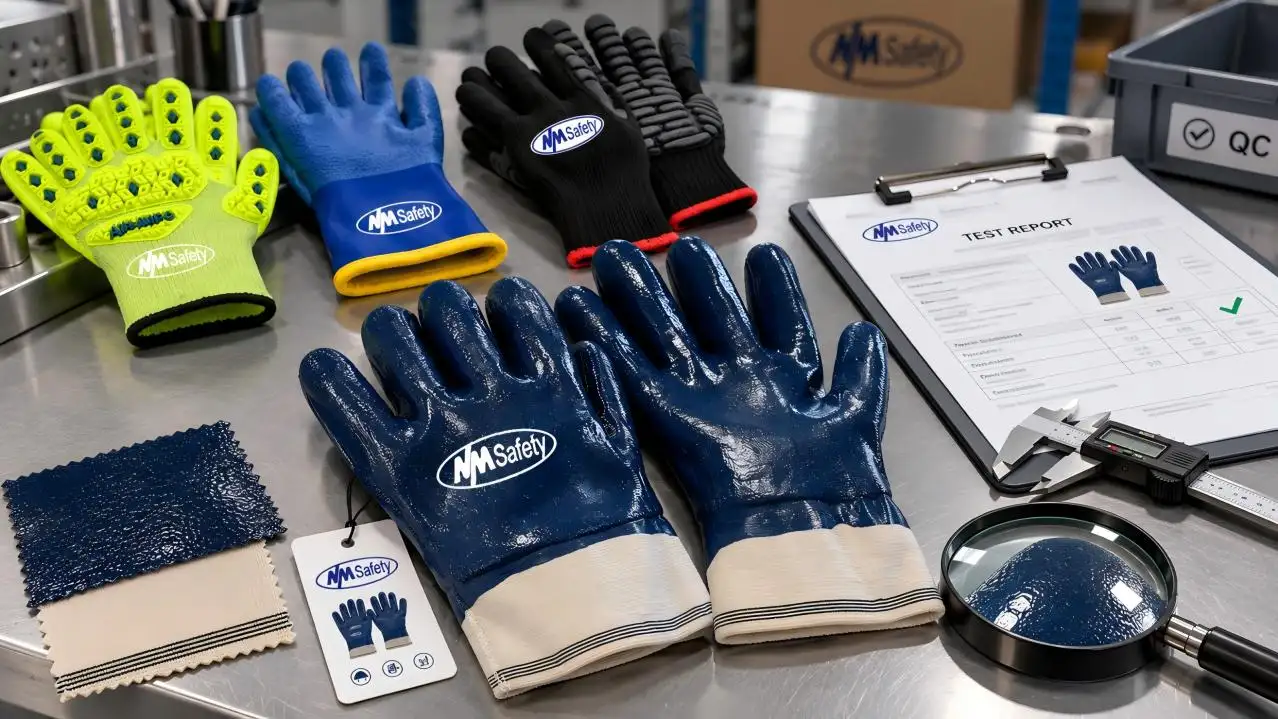
A test report provides sample performance. A product certification and declaration of conformity have different purposes.
Report date of issue in itself is not indicative of continuous validity. A change in the composition of yarn, the formulation of coating, reinforcement, or the protective geometry requires a technical evaluation and tests.
Match Protection to the Exposure
Selecting a Heavy Duty Gloves Factory in China requires a task-level specification. A higher cut classification does not compensate for an unsuitable grip surface or exposed impact zone.
Task
Priority Evidence
Design and Trial Checks
Sheet-metal handling
Cut and abrasion results
Edge-contact locations, grip security and dexterity
Oily equipment maintenance
Relevant mechanical and impact results
Contamination, finger coverage and tool control
Rough material handling
Abrasion and tear performance
Palm wear, seams and reinforcement placement
Cold outdoor handling
Applicable cold-protection evidence
Insulation, wet exposure and low-temperature flexibility
Keep three boundaries clear:
• Abrasion cycles are laboratory results, not a guaranteed service life.
• Conventional puncture resistance does not establish needlestick protection.
• Oil-resistant grip does not establish chemical permeation resistance.
After confirming required protection, conduct controlled trials with representative tools, workpieces and contamination. Record slippage, handling errors, pressure points and wear locations.
Evaluate NMSafety Designs Through Their Engineering Trade-Offs
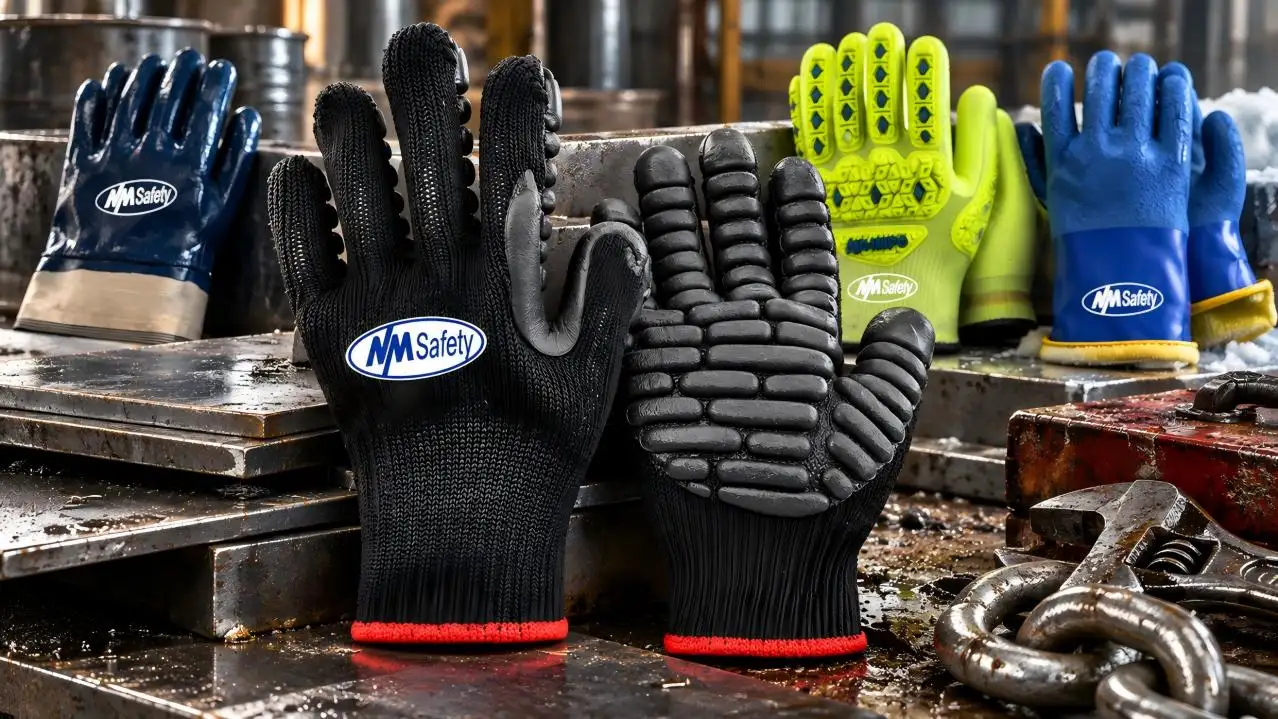
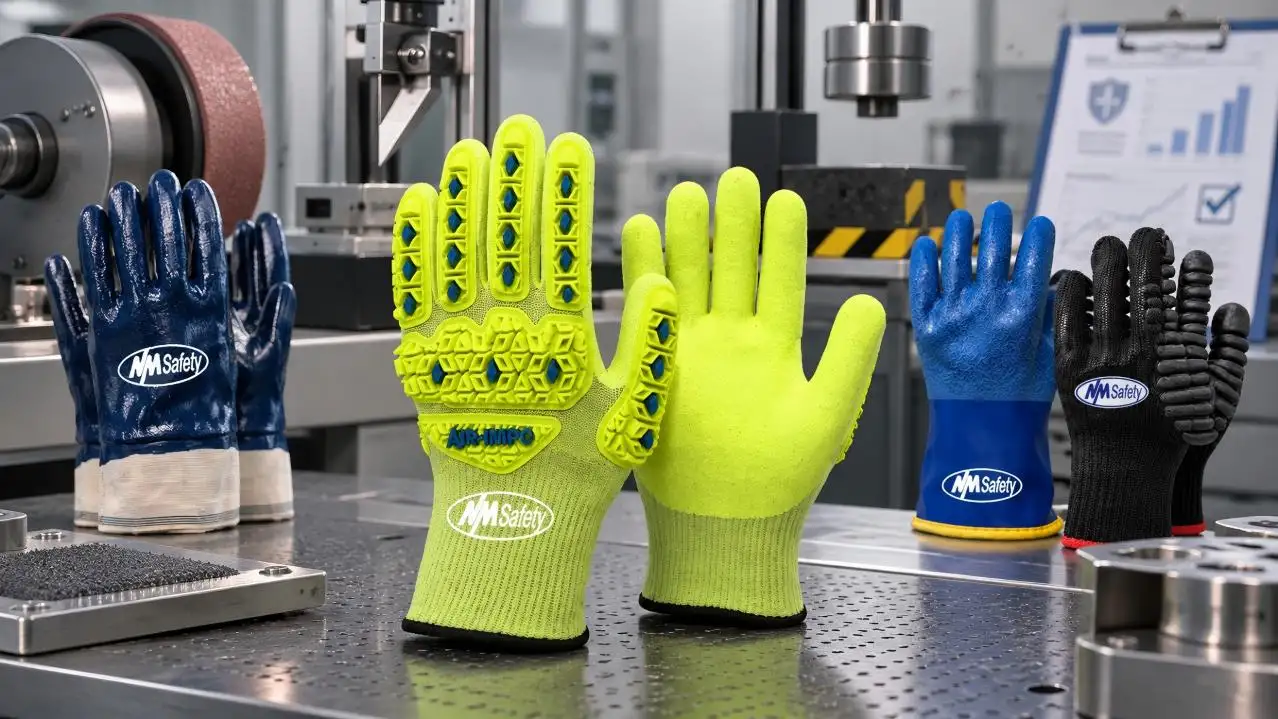
Our heavy duty glove range includes HPPE-blend liners, sandy nitrile coatings, TPR structures and thumb-crotch reinforcement on selected products.
Design Choice
Engineering Relevance
Verification Priority
HPPE-blend knitted liner
Supports cut-resistant construction
Balance tested protection with fit and finger movement
Sandy nitrile coating
Provides a textured gripping surface
Evaluate actual oily or wet contact conditions
TPR back-of-hand structure
Positions protective elements over selected areas
Confirm impact rating, coverage and articulation
Thumb-crotch reinforcement
Addresses a frequent localized wear point
Check attachment quality, bulk and flexibility
These options help us discuss application-specific constructions. Their presence alone cannot establish a protection level; each claim must correspond to the selected product.
Connect Test Samples to Bulk Manufacturing
NMSafety was established in 1998, with headquarters in Shanghai and factories in Jiangxi, Jiangsu and Shandong. Our company profile outlines this manufacturing network.
A Heavy Duty Gloves Factory in China must fulfill qualification requirements by discussing manufacturing. Ameasurable order requirements are as follows:
• Controller of materials: Agreed liner composition and coating specification.
• Controller of construction: Coating coverage, position and method of reinforcement and attachment.
• Controller of reference: Approved samples and documented acceptance criteria.
• Controller of change: Notification and review for material or construction substitution.
• Traceability: Batch identification relating deliveries to production records.
Routine inspection checks conformity to the agreed specification; it does not replace standardized performance testing.
Develop Your Glove Specification With NMSafety
A dependable Heavy Duty Gloves Factory in China should help connect workplace exposure, product evidence and repeat-order requirements.
Explore NMSafety's heavy duty gloves and share your operating conditions, target ratings and purchasing specifications. We welcome the opportunity to discuss suitable designs and supporting product information for a well-grounded selection.
FAQs
Q1. Does TPR on a NMSafety Glove Prove Its Impact Rating?
No. TPR identifies a design feature, while an impact rating requires supporting testing. Ask for the selected glove's impact results and confirm the protected areas, particularly where finger coverage matters.
Q2. What Heavy Duty Glove Designs Does NMSafety Offer?
NMSafety's range includes selected designs with HPPE-blend knitted liners, sandy nitrile coatings, TPR back-of-hand protection and thumb-crotch reinforcement. Features vary by product, so buyers should compare the construction of each shortlisted glove. See the heavy duty glove range.
Q3. Which Test Reports Should I Request When Buying NMSafety Gloves?
Request product-specific reports supporting the protection claims relevant to your application. These may include mechanical, cut or impact testing. Match the product reference, materials and construction in each report to the glove being quoted.
Q4. How Should I Compare EN 388 and ANSI/ISEA Ratings on NMSafety Gloves?
Compare each protective property separately. EN 388 markings and ANSI/ISEA classifications use different rating systems, so similar numbers do not necessarily indicate equivalent performance. Review the named test method and reported result for the selected product.
Q5. Do All NMSafety Heavy Duty Gloves Provide the Same Protection?
No. Protection depends on the individual glove's construction and documented test results. A cut-resistant design should not automatically be treated as impact-resistant, chemical-resistant or suitable for cold conditions.