Home > Uncategorized > Best Gloves for Waste Management & Recycling Crews
Best Gloves for Waste Management & Recycling Crews
17 May, 2026
By arafatshuvo509
Gloves for waste management should be selected by route, not bought as one generic SKU. Use cut-resistant coated gloves as the baseline, add puncture or needle-resistant protection for high-sharps routes, choose nitrile or full coatings for wet and oily handling, and manage replacement through inspection, laundering rules, and simple color coding.
Waste crews don’t handle clean, predictable materials. A curbside collector, MRF sorter, landfill worker, and transfer station crew member may all need hand protection, but not the same glove. The right program starts with the route, then matches cut resistance, puncture protection, coating, cuff style, and replacement rules to real worksite hazards.
The best gloves for waste management are cut-resistant coated work gloves with strong wet grip, abrasion resistance, and route-specific puncture protection. MRF and transfer station crews usually need higher cut and puncture resistance than basic residential collection crews.
Start with a cut-resistant coated glove as the everyday baseline. Then upgrade by route risk. A residential crew may need wet grip and abrasion resistance most, but a transfer station worker handling bulky waste may need higher puncture resistance, longer cuffs, or back-of-hand protection.
OSHA requires employers to select hand protection based on the hazards, task conditions, duration of use, and glove performance characteristics. That means the safest buying plan is not “one glove for everyone.” It’s a route-based program with clear upgrade rules.
Cut-resistant liner for glass, metal, and sharp plastic edges
Nitrile or full coating for wet bags, liquids, and oily waste
Puncture-resistant build for bulky waste and unknown bags
Needle-resistant glove only where sharps exposure is credible
Size range that workers will actually wear all shift
For a deeper cut and puncture comparison, send buyers to cut puncture gloves instead of repeating the full rating guide here.
What hand hazards are different in curbside, MRF, landfill, and transfer station work?
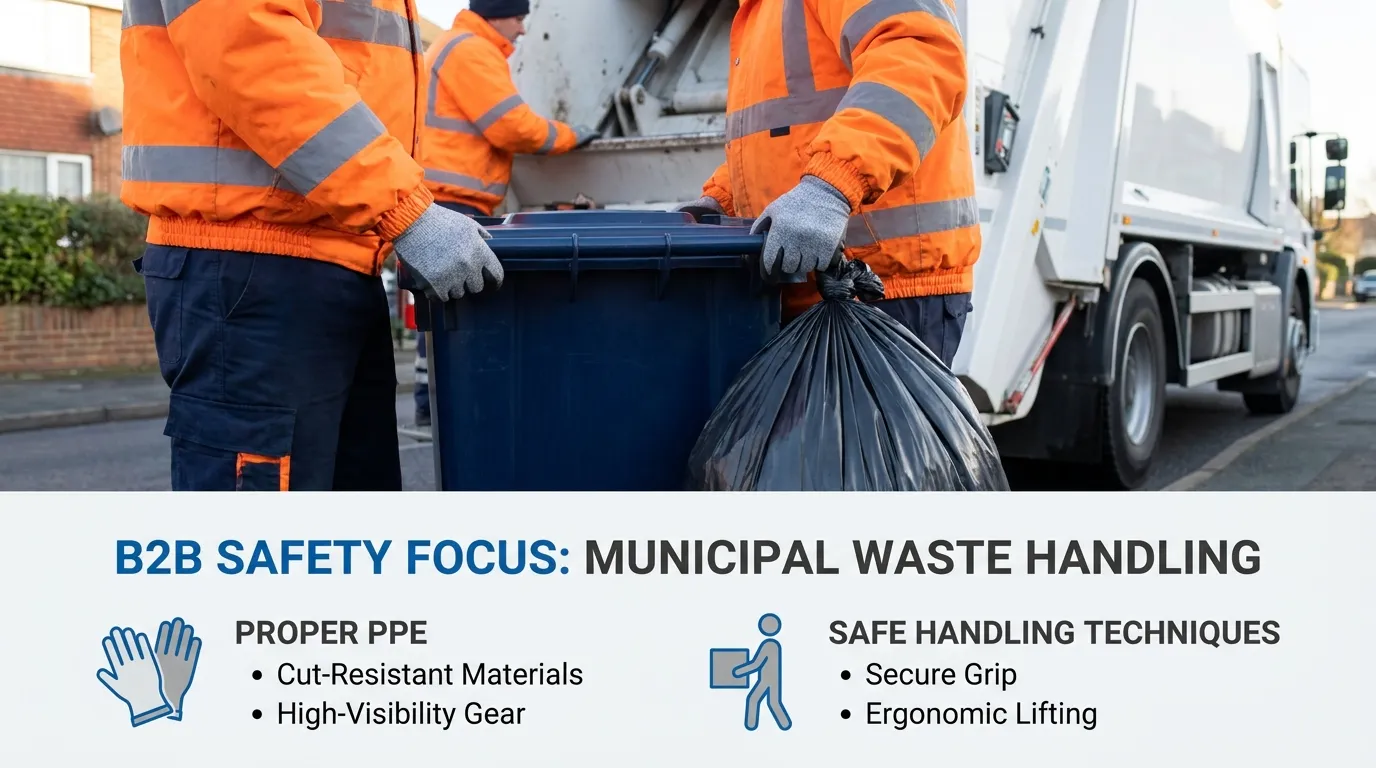
Waste glove selection should start with the route, not the glove catalog. Curbside work needs grip and abrasion resistance, while MRF, transfer station, and landfill jobs often need higher cut, puncture, liquid, or cold-wet protection.
The same crew may face different risks by location and shift. EPA’s waste overview shows how broad the waste stream can be, from municipal solid waste to medical waste, construction debris, and industrial materials. That mix is why glove specs should follow the job, not a generic product category.
Work area
Common hand hazards
Best glove direction
Residential curbside
Wet bags, cart edges, broken glass, cardboard
Cut-resistant nitrile-coated glove with strong grip
Commercial route
Oily bags, bottles, dumpster edges, wet cardboard
Higher abrasion nitrile coating with reinforced wear zones
MRF sorting line
Glass, cans, wire, plastic edges, contamination
Higher cut glove with tactile grip and puncture awareness
Transfer station
Bulky waste, wood, metal, appliances, sharps
Higher cut and puncture glove, longer cuff where needed
Landfill
Mud, moisture, tarps, equipment contact, long exposure
Full-coated or liquid-resistant glove matched to weather
One glove for every waste crew is usually a purchasing shortcut, not a safety strategy. It works only for low-risk, similar routes. Mixed MRF and transfer-station tasks need separate specs.
Do recycling and MRF crews need different gloves than curbside crews?
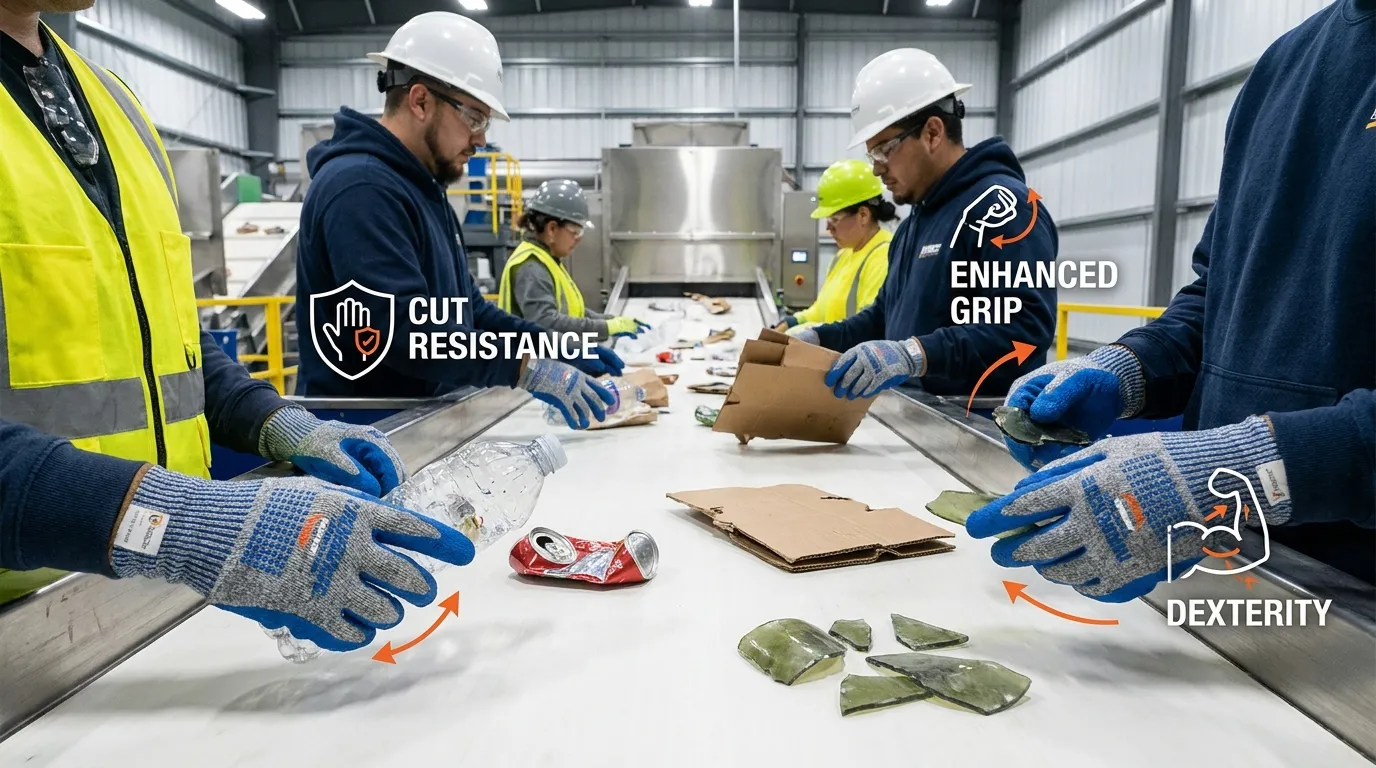
Yes. MRF and recycling sorters usually need a different glove than curbside collectors because they handle mixed material by hand on moving lines, where glass, metal, grease, and small sharps create a higher cut and puncture profile.
A curbside crew often handles bags, bins, carts, and containers. MRF workers touch the waste stream more directly. They may pick glass, cans, plastic, wire, and paper from a conveyor, often at speed. That changes the glove priority from basic grip to cut protection plus dexterity.
The glove can’t be so bulky that workers lose sorting speed. A high-cut liner helps, but the palm coating still needs enough feel for bottles, cans, and thin materials. This is where a trial matters. Let workers test grip, fit, and finger control before the fleet commits.
If the route looks like this
Choose this glove direction
Fast sorting of bottles and cans
Cut-resistant liner with tactile coated palm
Frequent glass fragments
Higher cut resistance with good fingertip coverage
Wet or greasy recyclables
Nitrile coating instead of smooth PU
Small metal or wire exposure
Add puncture-resistant features where practical
Sorting speed drops during trial
Reduce bulk before increasing protection again
Use the broader coated glove guide when buyers need help comparing coating families outside this waste-specific use case.
When should a waste fleet issue needle-resistant gloves?
Issue needle-resistant gloves where crews realistically encounter discarded needles, medical waste, encampment cleanup, public restroom waste, or hand sorting of suspicious bags. Do not treat them as a substitute for sharps containers, tools, training, and no-hand-pick rules.
Needle-resistant gloves are not always the best default. They make sense where sharps exposure is credible, but for basic curbside routes, over-specifying them can reduce dexterity and raise cost. The better approach is to assign them to routes with incident history or clear exposure risk.
CDC guidance says used sharps should go into closable, puncture-resistant, leakproof, labeled or color-coded containers. That matters because gloves are only the last barrier. They don’t replace tongs, containers, route training, and rules against hand-picking loose sharps.
Needle risk is a route condition, not a universal spec
Use needle-resistant gloves for a needle-risk cleanup route near parks, transit stops, public restrooms, or encampments. Pair them with tongs, sharps containers, and supervisor instructions. For normal bag and cart handling, a cut-resistant coated glove may be enough unless the route history says otherwise.
For a deeper explanation of layered needle protection, link the safety team to needle glove design.
Which coating works best for wet trash, oils, and recyclables?
For wet trash and oily recyclables, nitrile-coated gloves are usually the safer default than PU because they offer better oil and liquid handling. Crinkle latex can grip well, but latex allergy and chemical limits must be considered.
PU palm gloves are not the first choice for wet trash. They work for dry, precise handling, but nitrile or full-coated options are safer when bags, oils, liquids, and dirty carts are part of the shift. OSHA’s PPE selection guidance also warns that no glove material protects against every hazard, so coating choice must match the work.
A commercial restaurant route is a good example. Workers may grab oily bags, wet cardboard, broken bottles, and greasy dumpster edges. A nitrile-coated glove with higher abrasion resistance and reinforced wear areas is a better fit than a thin dry-grip glove.
Coating type
Best use
Watchout
Foam nitrile
Dry to light oil handling with breathability
May not block heavy liquid exposure
Sandy nitrile
Wet, oily, dirty, abrasive handling
Can feel less precise than smooth coatings
Crinkle latex
Strong dry and wet grip
Latex allergy and chemical limits
PU palm
Dry sorting and fine handling
Weak choice for wet trash and oils
Full coating
Wet, dirty, high-contact work
Can feel warmer during long shifts
For a focused grip comparison, use latex vs PU grip as the next read.
What SKU shortlist should purchasing use by route type?
Purchasing should build a short glove list by route, not by brand preference alone. The goal is to reduce confusion, keep ordering simple, and still give each crew the protection their work needs.
Use this route-based matrix as the core buying asset.
Route or work area
Main hazards
Baseline glove type
Upgrade trigger
Coating choice
Replacement trigger
Residential curbside
Wet bags, cart edges, light glass exposure
Cut-resistant coated glove
Frequent broken glass or complaints of palm wear
Foam or sandy nitrile
Smooth palm, holes, loose liner
Commercial route
Oily waste, bottles, dumpster edges
Higher abrasion coated glove
Restaurant or bar routes with heavy bottle waste
Sandy nitrile
Coating cracks, thumb crotch wear
MRF sorting
Glass, cans, wire, plastic edges
Higher cut glove with tactile palm
More hand cuts or sharp fragments
Nitrile palm with good fingertip feel
Cut liner damage, reduced grip
Transfer station
Bulky waste, metal, wood, sharps
Higher cut and puncture glove
Appliance, construction, or mixed bulky waste
Nitrile or full coating
Any puncture, torn cuff, heavy contamination
Landfill
Mud, moisture, tarps, long exposure
Full-coated or liquid-resistant glove
Cold, wet, or heavy equipment support work
Full coating
Hardening, odor, liquid breakthrough
Needle-risk cleanup
Discarded sharps, public waste
Needle-resistant glove
Known sharps route or incident history
Task-specific coating
After sharps contact or barrier damage
Keep the list tight. Three to five approved glove families are easier to train, stock, and inspect than a large catalog of similar products.
For coating-specific buying details, point purchasing to nitrile coated gloves rather than expanding the full coating guide inside this article.
How should fleets manage glove laundering, inspection, and replacement?
Waste fleets should treat gloves as managed PPE, not consumables with no rules. Inspect coating, liner, and puncture damage after shifts, replace compromised gloves immediately, and track failures by route so purchasing matches the real hazard.
A glove program fails when crews keep worn gloves too long. Coating wear reduces grip. Liner damage reduces cut protection. Punctures create hidden risk, especially after handling sharps, contaminated bags, or wet waste. OSHA’s bloodborne pathogens rule also requires glove replacement when gloves are torn, punctured, contaminated, or no longer work as a barrier where occupational exposure applies.
Use this inspection and replacement checklist at the end of each shift or before laundering.
Check palm coating for smooth spots, cracks, or peeling
Flex the glove and look for stiff or hardened areas
Inspect thumb crotch and fingertips for early failure
Look for punctures, cuts, or liner separation
Separate heavily contaminated gloves from normal laundry
Replace gloves after any sharps contact or barrier compromise
Track failures by route, crew, and glove model
Review repeat failures before reordering the same SKU
A simple log can show that one commercial route destroys palms twice as fast as residential routes. That gives purchasing a reason to upgrade that route without changing every glove in the fleet.
How can color coding reduce glove mistakes across waste crews?
Color coding helps crews grab the right glove without reading a spec sheet. Keep the system simple. Three or four colors are enough for most fleets, especially when colors match route sheets, storage bins, or supervisor checklists.
Avoid making the system too clever. If every small task gets a different color, workers will ignore it. Also avoid colors that hide contamination when visual inspection matters. The goal is quick recognition, not decoration.
Color code example
Assigned use
Supervisor check
Orange cuff
Residential curbside
Wet grip and palm wear
Blue cuff
MRF sorting
Cut liner and fingertip condition
Black cuff
Commercial routes
Oil grip and thumb crotch wear
Red cuff
Needle-risk cleanup
Sharps kit and container present
Green cuff
Landfill or transfer station
Full coating and cuff damage
Color coding works best when the glove bin, route sheet, and training card all use the same labels. Workers should not need to guess which glove belongs to which task.
What should a fleet manager check before approving a glove program?
A fleet manager should approve the glove program only after route hazards, worker fit, glove specs, and replacement rules are documented. The safest glove on paper can still fail if workers won’t wear it or if supervisors don’t know when to replace it.
Use this final approval checklist before ordering at scale:
Route hazard map is complete
Residential, commercial, MRF, transfer station, and landfill tasks are separated
Fit trial includes real workers from each route
Cut, puncture, coating, cuff, and size range are approved
Needle-resistant gloves are assigned only where sharps risk is credible
Laundering and replacement rules are written
Color coding is tied to route sheets and storage bins
Supervisors know what failed gloves look like
For broader cut rating and material selection, use the cut glove buyer guide as the handoff point. This article should stay focused on waste crews, not repeat the full cut-resistant glove framework.
What to Do Next
Start with your top three hand-injury risks, then match each route to one approved glove type. Don’t buy gloves for waste management from a catalog page alone. Run a small field trial with curbside, MRF, transfer station, and landfill crews before placing a large order.
Ask workers about grip, heat, finger control, cuff comfort, and wear. Then update your SKU list, laundering rules, and color code before rollout. A simple glove program that crews follow will beat a complicated one that stays on paper.
Frequently Asked Questions
Why Wear Waste Management Gloves?
Waste management gloves protect workers from cuts, punctures, abrasions, contamination, and wet or dirty handling. They matter because crews often handle unknown materials hidden inside bags, bins, carts, and recycling streams.
What Extra Features do Waste Management Gloves Have?
Waste management gloves should add cut resistance, puncture resistance, wet grip, abrasion resistance, and a coating matched to the route. Some crews may also need longer cuffs, full coating, impact protection, or needle-resistant layers.
What are the Properties of Nitrile?
Nitrile is valued for oil resistance, liquid handling, puncture strength, and latex-free use. For waste crews, nitrile coatings are useful where workers handle wet bags, oily recyclables, dirty carts, or mixed commercial waste.
What gloves should be used for waste handling?
Most waste handling starts with cut-resistant coated work gloves, then adds puncture, liquid, cold, or impact protection based on the route. Disposable gloves alone are not enough for sharp, heavy, wet, or abrasive waste work.
Do recycling workers need cut-resistant gloves?
Yes, recycling workers often need cut-resistant gloves because glass, cans, wire, plastic edges, and metal fragments can appear in sorting streams. The glove still needs enough dexterity for fast picking and separation work.
Are needle-resistant gloves necessary for every waste route?
No, needle-resistant gloves are best reserved for routes or tasks with credible sharps exposure. For general curbside work, a cut-resistant coated glove may be enough unless incident history or route conditions show needle risk.
Can disposable nitrile gloves be recycled after waste handling?
Usually, contaminated disposable gloves should not go into normal recycling streams. Disposal rules depend on contamination type and local regulations, so fleets should separate reusable work gloves from disposable hygiene or biohazard gloves.