Home > Uncategorized > Foam vs Sandy Nitrile Gloves: Which Grips Best?
Foam vs Sandy Nitrile Gloves: Which Grips Best?
08 May, 2026
By arafatshuvo509
Foam nitrile vs sandy nitrile gloves is not a one-winner choice. Foam nitrile is usually better for dry or lightly oily maintenance work where dexterity, comfort, and breathability matter. Sandy nitrile is usually better for wet, dirty, abrasive, or heavier oil handling. The safest buying decision is to test both on the same metal parts, oil level, and shift length.
If two glove SKUs look almost the same on paper, the coating texture can still change how they work on the floor. A maintenance buyer may see the same liner, same cut level, and same size range, then assume the rougher coating is always safer. That can lead to the wrong glove for tool control, small parts, or long shifts. The real answer starts with what foam and sandy nitrile actually do.
What is the real difference between foam nitrile and sandy nitrile?
Foam nitrile is usually softer, more breathable, and better for dexterity. Sandy nitrile is rougher and often better for heavier wet, oily, or abrasive handling. Match the coating to the task surface, not only the catalog name.
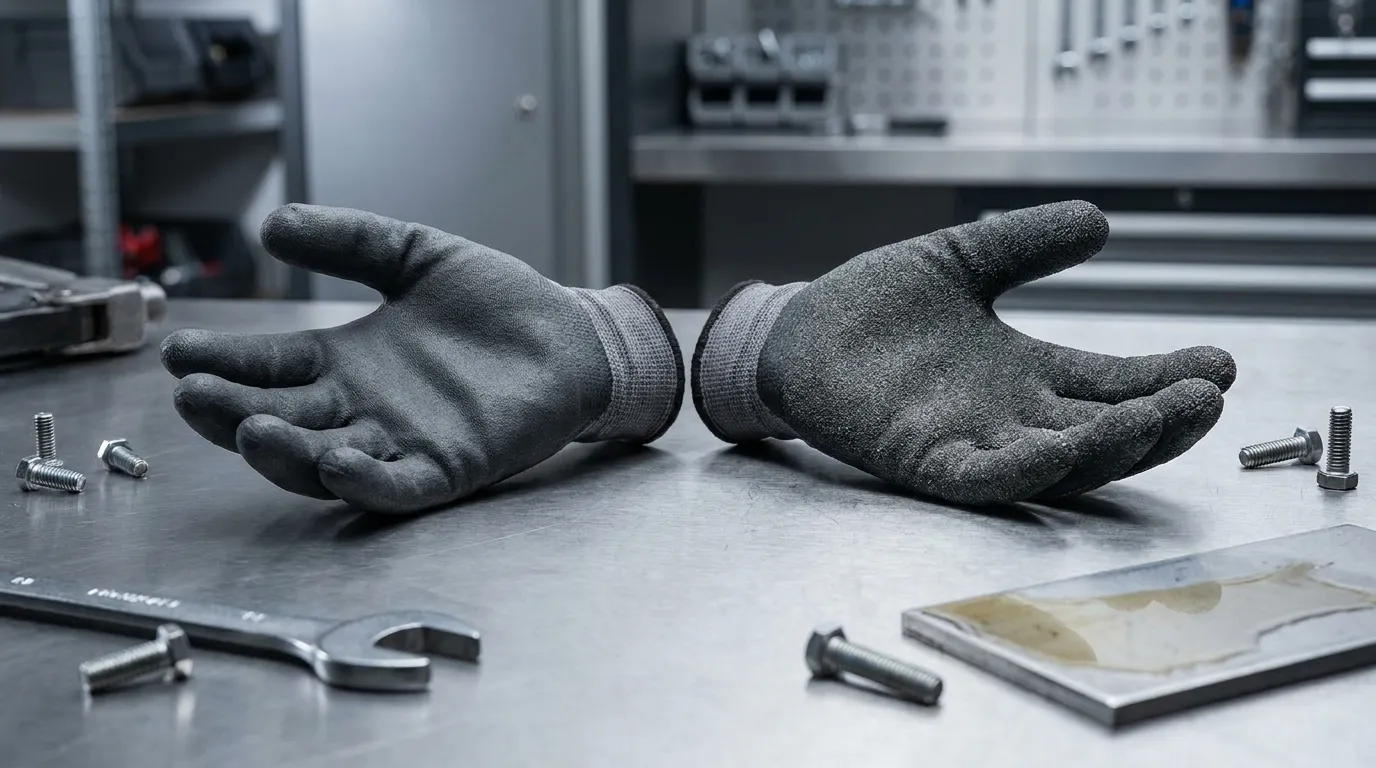
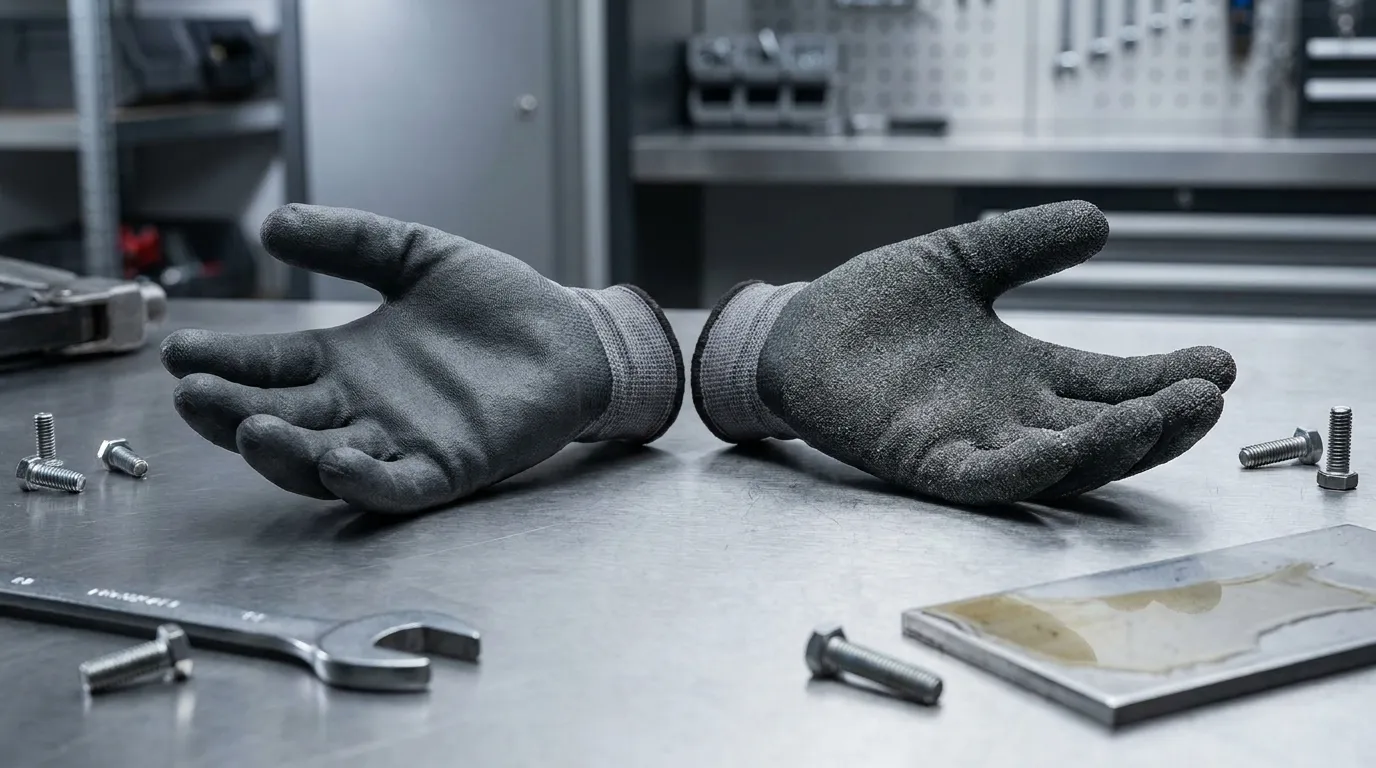
Foam nitrile has a porous, sponge-like surface. That texture can help manage light oil on a contact surface and still keep the glove flexible. Microfoam nitrile is usually thinner than regular foam, so it often feels better for small tools, bolts, clips, and inspection work.
Sandy nitrile has a rougher coating texture. It is built for more friction when the surface is wet, oily, dirty, or abrasive. The tradeoff is simple: the rougher texture can reduce fingertip feel, and some workers may notice more stiffness during fine maintenance tasks.
Coating type
Main feel
Best fit
Main tradeoff
Foam nitrile
Soft and flexible
Dry or lightly oily work
Can saturate in heavier oil
Microfoam nitrile
Thin and breathable
Precision maintenance
Less aggressive grip
Sandy nitrile
Rough and grippy
Wet, oily, dirty work
Less fine dexterity
Double-dipped nitrile
Heavier coverage
Heavy liquid contact
More heat and stiffness
Which coating grips best on dry, oily, and wet metal?
Foam nitrile is often the better pick for dry or lightly oily metal when dexterity matters. Sandy nitrile is usually safer for wet, dirty, or heavier oil handling where aggressive friction matters more than fingertip feel.
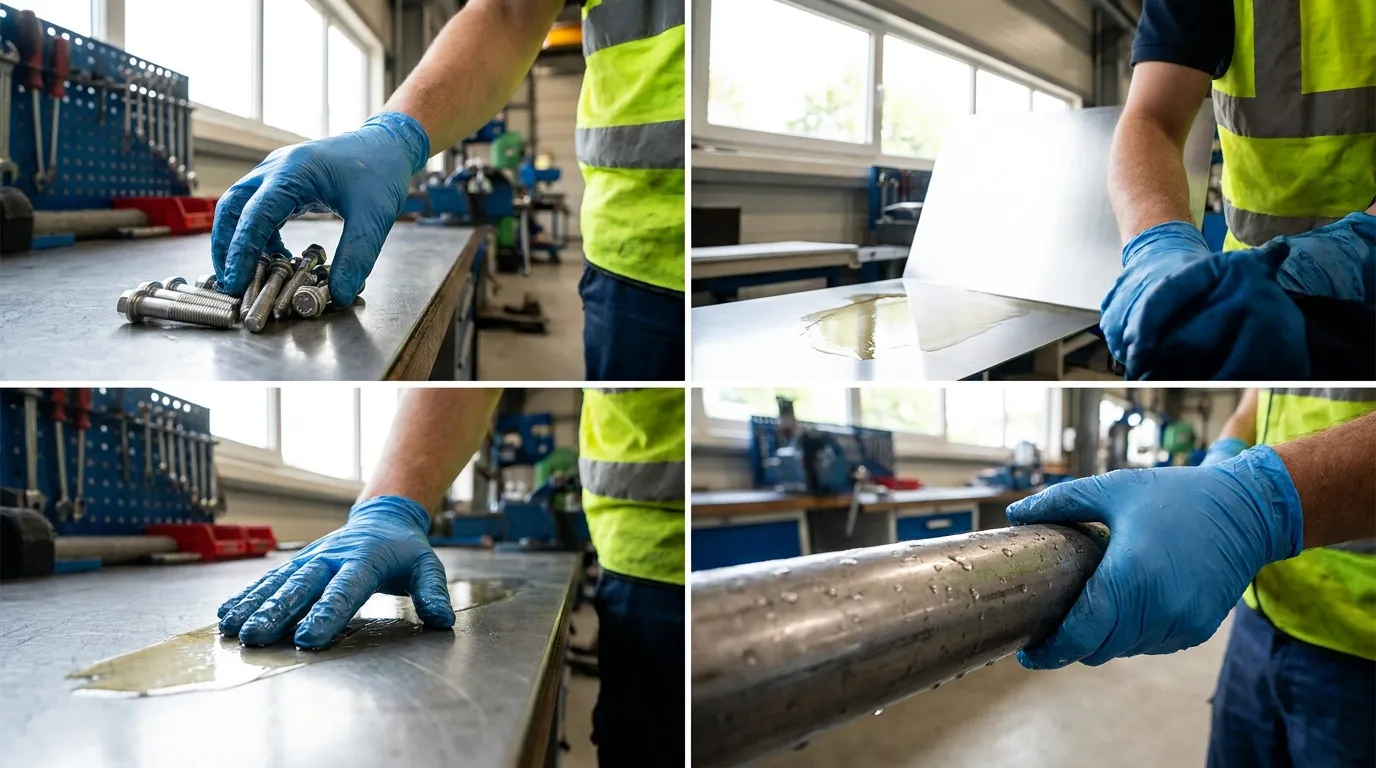
On dry metal, foam or microfoam nitrile can feel more controlled because the glove bends easily around small parts. For a maintenance worker handling bolts, hand tools, panels, or light assembly parts, that extra fingertip feel can matter more than a rough palm texture.
On wet or greasy metal, sandy nitrile often becomes the safer first choice. A rough surface gives the glove more bite when the part is slick. For oil field, repair, or dirty maintenance work, buyers can compare this choice with dedicated oil grip gloves.
Surface condition
Better first choice
Why
Watch for
Dry bolts
Foam nitrile
Better fingertip control
Check abrasion wear
Lightly oily sheet metal
Foam or microfoam nitrile
Good balance of grip and dexterity
Watch for coating saturation
Heavy oil on tools
Sandy nitrile
More aggressive surface friction
Less fine feel
Wet pipe
Sandy nitrile
Better bite on slick metal
Test worker comfort
Dirty abrasive parts
Sandy nitrile
Handles rougher contact better
Check cut rating too
Heavy liquid exposure
Double-dipped nitrile
Better liquid barrier
More heat and stiffness
A greasy sheet metal rack is a good example. Sandy nitrile may grip better, but the buyer still needs to check cut level and puncture risk. Coating texture does not replace the full safety spec.
Why is sandy nitrile not always the best grip choice?
Sandy nitrile is not always best because grip is only one part of glove performance. When the task needs fine control, long wear comfort, or high breathability, foam nitrile can be the better maintenance glove.
The myth comes from feel. Sandy nitrile feels rough, so buyers often assume it must grip better in every setting. That is not how shop work behaves. A glove can grip strongly on a wet pipe and still feel clumsy when the same worker handles a small sensor, nut, or fastener.
For a light oil maintenance bench, foam nitrile may be the smarter choice. A technician handling lightly oiled bolts for two hours needs grip, but also needs finger control. If dropped-part risk is low and the worker must feel thread starts clearly, foam can beat sandy in real use.
If the task is...
Pick first
Reason
Small fasteners and clips
Foam nitrile
Better fingertip feel
Wet pipe repair
Sandy nitrile
More bite on slick metal
Long dry maintenance shift
Foam nitrile
Less heat and hand fatigue
Greasy tool handling
Sandy nitrile
Better rough-surface grip
Mixed light oil and precision work
Test both
Task balance matters
Sandy works when oil, water, dirt, and abrasion dominate the job. Foam is safer when the worker needs control more than raw surface bite.
How should buyers compare coefficient of friction without fake lab claims?
A useful COF comparison must show the same glove size, metal surface, contaminant level, pull speed, and normal force. Without shared test conditions, foam vs sandy friction numbers are not reliable buying evidence.
Coefficient of friction, or COF, is a way to compare how much resistance exists between two surfaces. Static COF measures grip before movement starts. Kinetic COF measures resistance once movement has already started. These numbers can help, but only when the test setup is clear.
Do not compare a foam nitrile number from one supplier with a sandy nitrile number from another supplier if the test conditions are different. The surface, oil amount, test weight, speed, glove size, and coating age can all change the result.
ASTM D1894 covers static and kinetic COF testing for plastic film and sheeting. It can guide the idea of a controlled friction test, but it should not be presented as a universal glove test unless a qualified lab validates the method for gloves.
Suggested COF test table for maintenance buyers
Test condition
Foam nitrile result
Sandy nitrile result
Buyer note
Dry steel plate
Record static and kinetic COF
Record static and kinetic COF
Compare control and fingertip feel
Light oil on steel
Record static and kinetic COF
Record static and kinetic COF
Watch for foam saturation
Wet steel pipe
Record static and kinetic COF
Record static and kinetic COF
Check slip start point
Greasy wrench handle
Worker score, 1 to 5
Worker score, 1 to 5
Add real-use feedback
After 50 washes
Retest grip
Retest grip
Compare wear and grip loss
A foam glove that feels excellent in a light-oil test can become the wrong SKU if the coating saturates during a full shift. Test it in the actual maintenance condition before bulk ordering.
What should a 50-wash wear-test photo set show?
A 50-wash wear-test photo set should show how the coating changes over time, not only how the glove looks when new. Photograph the same glove areas before testing, then again after 10, 25, and 50 wash cycles. Keep the lighting, angle, and background the same each time.
This test should focus on palm center, fingertips, thumb crotch, coating edge, and the high-friction contact zone. Pair the photos with a grip retest, because a coating may look acceptable but feel smoother after repeated cleaning or work use.
Photo stage
Areas to capture
What to inspect
New glove
Palm, fingertips, thumb crotch
Original texture and coating coverage
After 10 washes
Same areas
Early smoothing or pore clogging
After 25 washes
Same areas
Cracks, flaking, texture loss
After 50 washes
Same areas
Grip loss, coating edge failure
After retest
Main contact zone
Real grip change on metal parts
This is also where the buyer should separate coating wear from safety rating. If the job has cut or impact hazards, compare the coating with the full glove design and related cut impact gloves. ISEA hand protection guidance treats abrasion, cut, puncture, and impact as separate performance concerns, so the coating is only one part of the decision.
Pick foam or sandy nitrile for each maintenance task
Pick foam nitrile when comfort, breathability, and small-part control matter most. Pick sandy nitrile when wet, oily, dirty, or abrasive handling creates a higher drop risk than the loss of fingertip sensitivity.
For many buyers, this section is the fastest way to choose. Start with the task, then pick the coating. If the same team handles both oily parts and precision components, order trial samples before locking the SKU.
Maintenance task
Pick this first
Why it fits
Tradeoff to check
Dry assembly work
Foam nitrile
Good control and flexibility
Abrasion life
Light oil maintenance bench
Foam nitrile
Handles light oil with better feel
Saturation after long use
Wet pipe repair
Sandy nitrile
Stronger grip on slick metal
Worker comfort
Greasy hand tools
Sandy nitrile
More bite on oily handles
Fine dexterity
Dirty abrasive parts
Sandy nitrile
Better rough-surface grip
Cut rating
Small fasteners
Foam nitrile
Better fingertip control
Lower wet grip
Long warehouse repair shift
Foam or microfoam nitrile
Less heat and hand fatigue
Grip in oil
Heavy oil cleanup
Sandy or double-dipped nitrile
More grip or more coverage
Less breathability
If the glove also needs back-of-hand impact protection, coating choice alone is not enough. The buyer should check impact glove ratings before comparing SKUs only by palm texture.
How should you run a small in-house grip trial before bulk ordering?
Run a small in-house grip trial with the exact glove sizes, liners, and coatings workers will use. OSHA says hand protection should be selected based on the hazards, task, conditions, and duration of use, so a real shift test is more useful than a catalog claim alone.
Use the same parts your team handles every day. Test dry bolts, oily sheet metal, wet pipe, greasy tools, and dirty parts. Ask workers to score grip, comfort, dexterity, heat, coating wear, and dropped-part risk from 1 to 5 after normal use.
Simple one-shift scorecard
Select 10 workers from the actual maintenance team.
Give each worker foam and sandy nitrile options in the correct size.
Test both gloves during a normal shift, not a five-minute desk test.
Score grip, dexterity, heat, fatigue, wear, and dropped parts from 1 to 5.
Compare task-fit scores before placing the bulk order.
A mining or rig-style task needs a harsher test than a clean warehouse task. For rough grip environments, compare the results with the demands covered in mining rig gloves.
When should the buyer stop comparing coatings and check the full glove spec?
Stop comparing foam and sandy coatings when the job includes cut, puncture, impact, chemical, heat, or heavy liquid risks. In those cases, palm texture helps grip, but it cannot replace the full glove rating or construction.
A worker moving oiled sheet metal may need sandy grip, but the sharper concern could be cut resistance. A worker handling wet pipe may need grip, but full coating or double dipping may matter more if liquid reaches the back of the hand.
Use this quick check before final approval:
Is there a cut hazard?
Is there a puncture hazard?
Is there back-of-hand impact risk?
Does liquid reach beyond the palm?
Does the glove need a specific ANSI or EN rating?
Will workers wear it for several hours?
For broader selection, use the NMSafety cut-resistant glove guide. ANSI/ISEA 105-2024 gives performance classification context for hand and arm protection, including mechanical properties such as abrasion, cut, and puncture. Coating texture should support the glove spec, not replace it.
How to Choose the Right Option
The best choice between foam nitrile vs sandy nitrile gloves starts with the surface your team touches most. Pick foam when the work is dry, lightly oily, precise, or long-shift. Pick sandy when wet, greasy, dirty, or abrasive handling creates a bigger slip risk.
Before buying a full carton or setting a standard SKU, run a one-shift trial. Test both coatings on the same parts, with the same workers, and under the same oil or water conditions. The right glove is the one that protects the worker and fits the task without slowing the job down.
Frequently Asked Questions
What is the difference between sandy grip and foam grip? Which provides a better grip?
Sandy grip is rougher and usually stronger in wet, oily, or dirty handling. Foam grip is usually softer, more breathable, and better for dry or lightly oily tasks where dexterity matters.
What exactly is the difference between microfoam and regular foam nitrile gloves?
Microfoam nitrile is usually thinner than regular foam nitrile and uses smaller pores on the coating surface. That often improves breathability, flexibility, and fingertip feel for precision work.
Are foam nitrile gloves good for oily metal?
Foam nitrile gloves can work well on lightly oily metal because the porous coating can help manage oil at the contact surface. In heavy oil, the pores may saturate, so sandy or double-dipped options may be safer.
Are sandy nitrile gloves always better than foam nitrile gloves?
No, sandy nitrile is not always better. It can grip aggressively in wet or oily work, but foam nitrile may feel better for small fasteners, tools, and long maintenance shifts.
Do coated nitrile gloves provide better grip than other gloves?
Coated nitrile gloves often provide strong grip, oil resistance, abrasion resistance, and puncture protection, but performance depends on the coating texture. Foam, sandy, smooth, dotted, and double-dipped nitrile are not interchangeable.
How do I test foam vs sandy nitrile before buying in bulk?
Test both gloves on the same dry, oily, and wet metal parts during a real shift. Score grip, dropped-part risk, fingertip control, hand heat, and visible coating wear before choosing the bulk SKU.