Home > BLOG > Industry Blog > Eco Friendly Gloves OEM in China: Sustainable Materials and Design Trends for 2026
Eco Friendly Gloves OEM in China: Sustainable Materials and Design Trends for 2026
12 Sep, 2026
By hqt
When sourcing eco-friendly gloves OEM in China, you need to set environmental targets for the product range. Using recycled materials for one aspect of product development is necessary but should not be the only consideration. Protection, grip, and durability should also be considered, as should consistency of manufacturing.
At NMSafety, we evaluate the materials and construction for our decisions. It will be possible to review traceability and environmental evidence to approve an OEM project using the direction of China's environmental policy for 2026.
The January 2026 publication of the State Council's Action Plan for Comprehensive Solid Waste Management promotes higher levels of recycled materials and improvements to standards and certification and the investigation of digital traceability. It also encourages the extension of the scope of eligible recycled materials and products included in government green procurement.
For glove procurement, the practical implication is greater focus on:
•Documented recycled feedstock.
•Clearly stated recycled content.
•Material batch records.
•Clear and concise finished product descriptions.
This plan provides policy direction that does not include a minimum level for recycled content for work gloves.
Product Carbon Footprint Management
The 2026 Government Work Report describes the Chinese government's work on strategies for carbon management of the government. In the June 2026 report of the Ministry of Ecology and Environment, the construction of accounting rules and data infrastructure, and the development of certification mechanisms, is explained.
This Report will facilitate the adoption of Eco Friendly Gloves OEM in China. Emissions may be reduced by using recycled materials in a product. However, the system in which the product is manufactured must be analyzed. Boundaries must be set for materials, the cost of production and transport, and a assumption of the service life in order to analyze the emissions of a system.
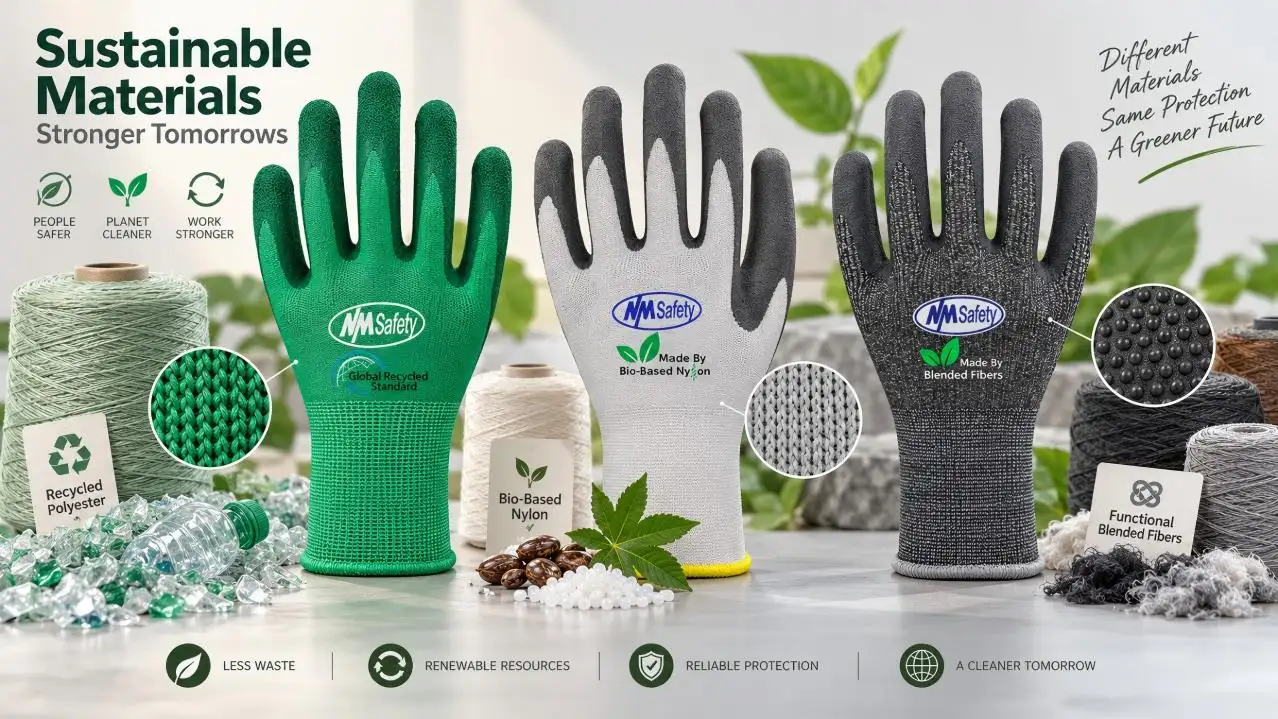
Sustainable Materials: Compare the Complete Construction
Material Route
Design Purpose
Technical Trade-Off
Evidence to Request
RPET polyester
Recycled feedstock for knitted liners
Yarn consistency, stretch recovery, and coating compatibility
Recycled percentage, calculation basis, and source records
Bio-based nylon
Feedstock partly or wholly from biological sources
Bio-based content does not establish biodegradability
Composition and verified bio-based proportion
Bamboo-derived fibers
Alternative liner material
Processing route and blend affect performance and environmental assessment
Exact fiber identity and blend percentages
Functional blends
Adds elasticity, insulation, or protection
Additional fibers change overall recycled content and recycling options
Full composition and finished-glove performance
Distinguish liner content from whole-glove content. If a liner constitutes 40% of glove mass and contains 80% recycled material, its recycled contribution equals 32% of total glove mass, assuming no recycled content elsewhere. This is an illustrative calculation.
Likewise, recycled material does not automatically make a coated glove recyclable, and bio-based material does not automatically make it biodegradable.
Design Directions for 2026 OEM Projects
Finer-Gauge Liners and Task-Specific Fit
Our range includes 15-gauge RPET and 18-gauge bio-based nylon constructions. These offer different development options, but gauge alone cannot establish thickness, comfort, or protection.
A sample evaluation should include:
•Finger Geometry: Excess fingertip material can prevent the operation of small parts.
•Palm Fit: There should be no tension, but too much excess material results in poor control.
•Coating Penetration: There should be no changes in the coating that could affect the hand feel and flexibility of the glove.
•Size Gradings: The approved size range should include the intended size(es).
Coating Selection based on Exposure
Coating Construction
Selection Focus
Trial Priority
Microfoam Nitrile
Flexibility, contact feel, and wear resistance
Grip and coating wear during representative handling
Sandy Nitrile
Textured contact surface
Grip with the relevant moisture/oil
Foam or Crinkle Latex
Surface texture and flexibility
Grip, abrasion and workplace compatibility
Nitrile Dots
Localized contact features
Dot adhesion, wear and handling
Coating coverage affects ventilation, flexibility and protection. A palm-coated glove is not automatically waterproof, and a nitrile coating does not automatically give a glove chemical protection.
Longer Usable Life and Reduced Packaging
For Eco Friendly Gloves OEM in China, durability should be tested alongside material substitution. Record coating abrasion, delamination, fingertip breakthrough, loss of grip, and contamination-related disposal.
Compare cost per accepted working hour under equivalent conditions. Cleaning should follow approved instructions, with retained fit and performance. Packaging reduction should not compromse protective transportation packaging or clear identification of the product.
Verification Before OEM Approval
Decision Dimension
Required Evaluation
Protection
Product-specific mechanical performance appropriate to the task
Grip and dexterity
Controlled trials with representative tools and components
Durability
Defined failure criteria and replacement records
Environmental claims
Content calculations, document scope, and batch correspondence
Manufacturing consistency
Agreed dimensions, coating coverage, and material-change controls
Commercial feasibility
Confirmed MOQ, customization, sampling schedule, and delivery
Environmental documentation cannot replace protective-performance evidence. Approve both the product and the supporting records.
About NMSafety: Manufacturing and Design Resources
Established in 1998, Nano-Metre Industrial Limited, known as NMSafety, is headquartered in Shanghai, China, with three factories in Jiangxi, Jiangsu, and Shandong. Our published factory information identifies facilities in Taihe, Ji'an, Jiangxi, and Rudong, Nantong, Jiangsu. Company profile ·
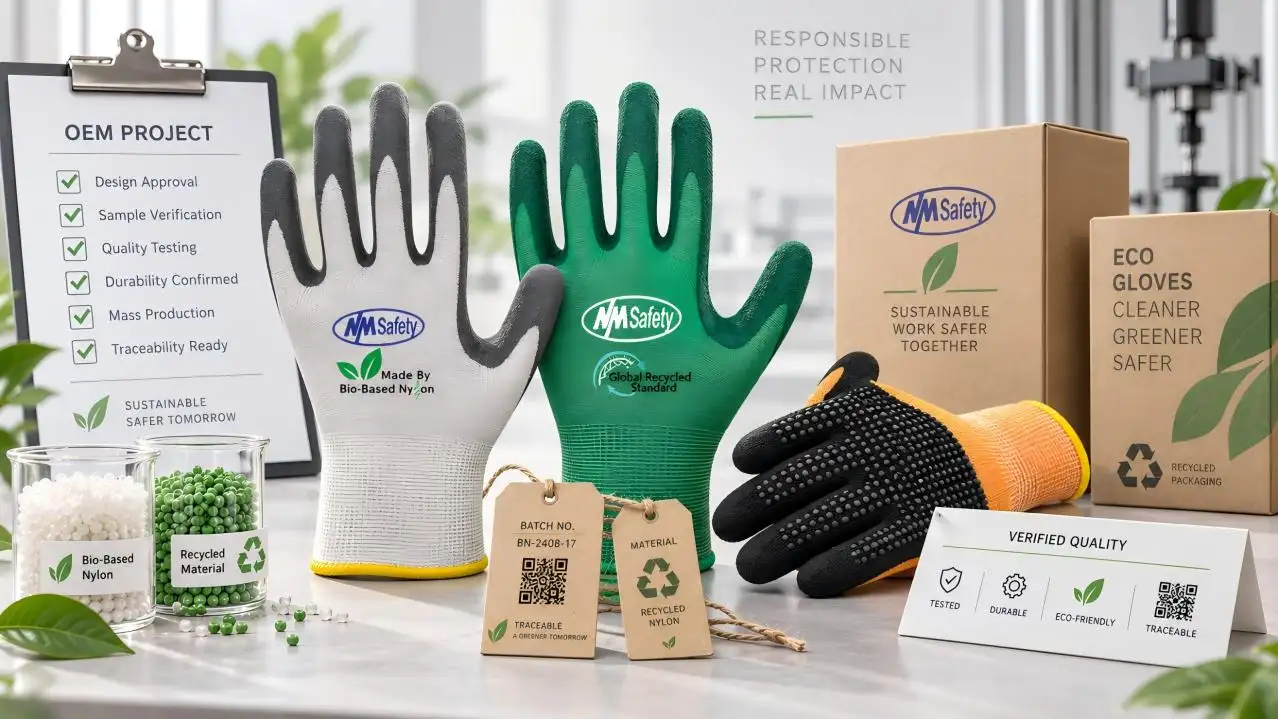
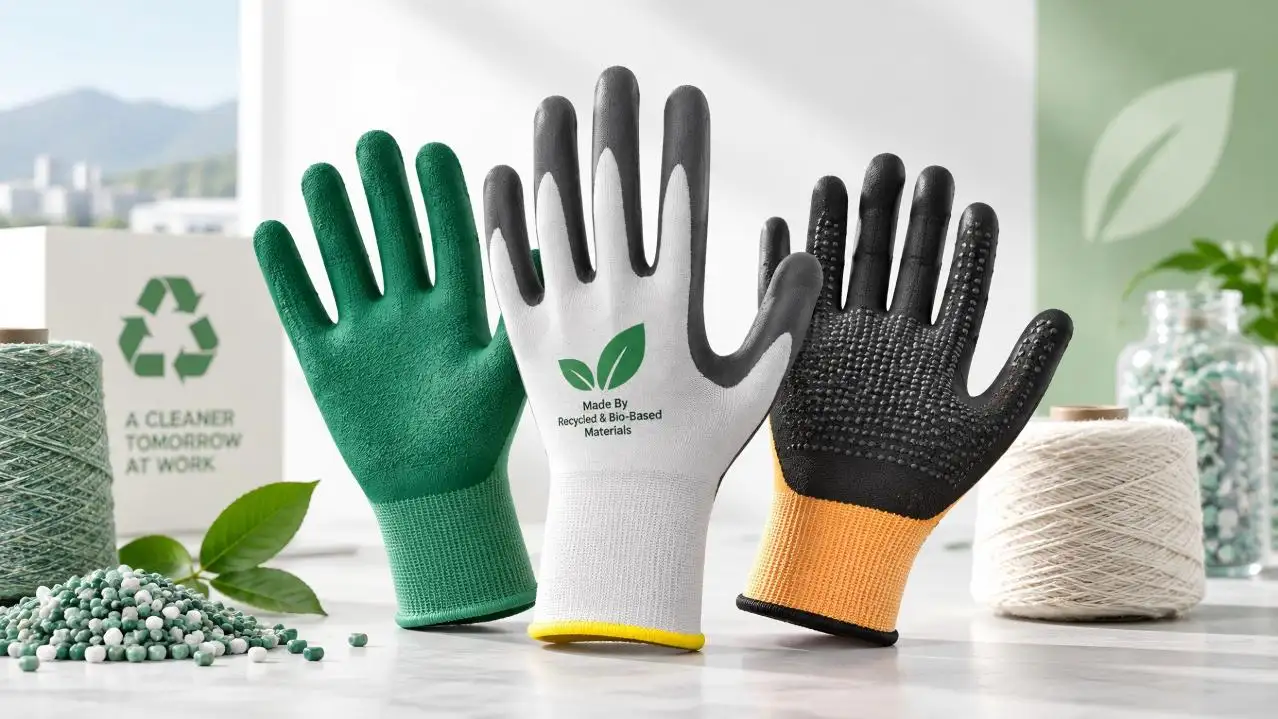
Our OEM/ODM services take care of designing, manufacturing, and delivering products. We provide options with RPET containing microfoam nitrile, nitrile dots, thermal acrylic combinations, and bio-based nylon liners. We provide variety to allow for sampling specific to the application rather than using a single material for all cases.
When Chinese Eco Friendly Gloves OEMs evaluate construction, their goal is to create a specified design with clearly defined acceptance criteria.
To help you further, provide your working conditions and protection needs, and any concerns you have regarding the environment. We can determine appropriate constructions for sampling and review your OEM project needs.
FAQs
Q1. Where Is NMSafety Located?
NMSafety is headquartered in Shanghai, China, with factories in Jiangxi, Jiangsu, and Shandong. Established in 1998, the company manufactures safety gloves and provides OEM/ODM services.
Q2. What Eco-Friendly Glove Materials Does NMSafety Offer?
NMSafety's range includes RPET recycled polyester, bio-based nylon, and bamboo liner options. Available constructions combine these materials with different coatings and functional fibers to address specific working requirements.
Q3. Does NMSafety Offer RPET Work Gloves?
Yes. NMSafety offers RPET knitted gloves with options including microfoam nitrile, sandy nitrile, and latex coatings. Buyers should confirm the recycled-content percentage and whether it applies to the liner or the complete glove.
Q4. Are NMSafety's Bio-Based Gloves Biodegradable?
Bio-based nylon describes the origin of some or all of the material's feedstock. It does not automatically establish biodegradability. Any biodegradation claim requires separate evidence covering the relevant product and disposal conditions.
Q5. What Coating Options Can Buyers Compare at NMSafety?
NMSafety's eco-friendly range includes microfoam nitrile, sandy nitrile, foam latex, crinkle latex, and nitrile-dot constructions. Selection should consider contact surfaces, moisture, flexibility, and wear. Chemical resistance requires product-specific verification.