Home > Uncategorized > Crinkle Latex vs PU Palm: Which Coat Outlasts?
Crinkle Latex vs PU Palm: Which Coat Outlasts?
16 May, 2026
By arafatshuvo509
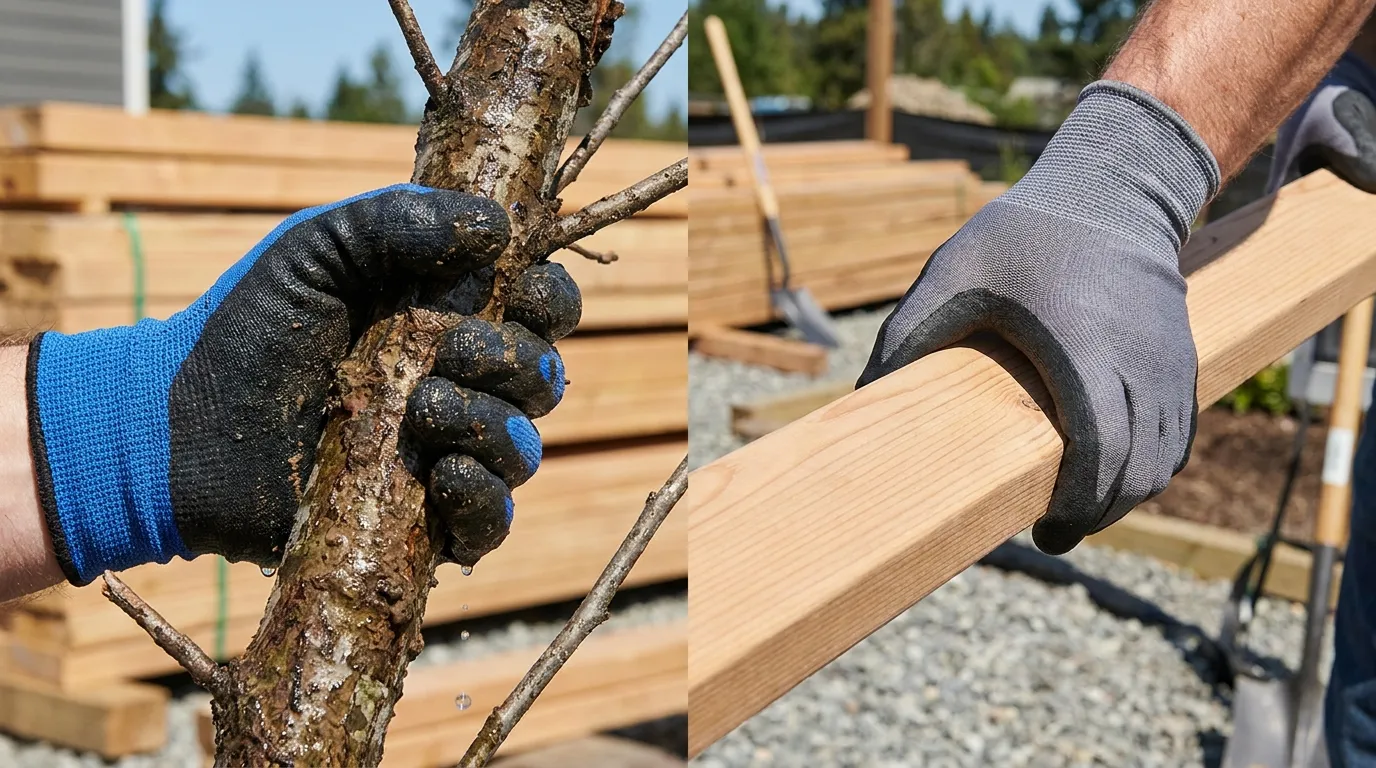
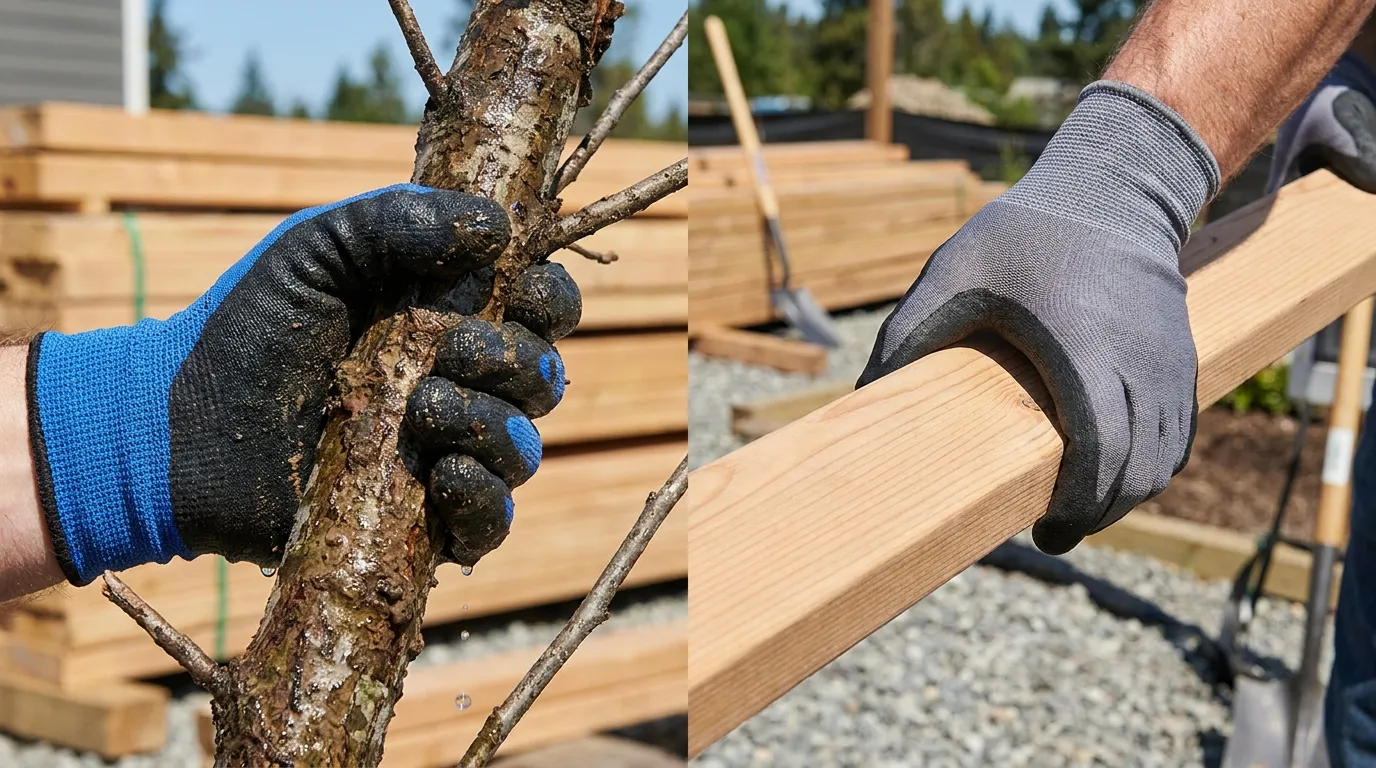
Crinkle latex vs PU palm coating comes down to rough wear vs clean precision. Crinkle latex is the better choice for landscaping, construction, wet bark, lumber, and abrasive outdoor handling. PU is better for clean, dry, detail-focused work where dexterity matters. For rough crews, crinkle latex usually gives the lower price per wear.
Glove coating choice gets expensive when the wrong pair goes to the wrong crew. A glove that feels great on cartons may break down fast on bark, concrete, or lumber. A grippy outdoor glove may feel too bulky for small parts. This comparison keeps the focus on real buyer questions: grip, wear, comfort, and replacement cost.
Crinkle latex vs PU palm coating: what is the quick answer?
Crinkle latex usually outlasts PU palm coating on rough outdoor materials because it is thicker, grippier, and better suited to abrasive handling. PU works better on clean, dry, precision work where thin feel and fingertip control matter more.
For landscaping and construction buyers, crinkle latex is usually the safer first choice for wet bark, lumber, blocks, fencing, and rough debris. PU palm coating is not weak by default. It just belongs in cleaner tasks where the coating is not dragged across harsh surfaces all day.
Job condition
Better choice
Why
Wet bark and branches
Crinkle latex
Raised texture helps grip uneven surfaces
Rough lumber handling
Crinkle latex
Thicker coating handles abrasion better
Masonry, block, concrete
Crinkle latex
Better rough-surface durability
Cartons and clean packaging
PU palm coating
Lighter feel and better dexterity
Electronics and inspection
PU palm coating
Better touch control and lower bulk
Crinkle latex wins the outdoor durability fight. PU wins the clean precision fight. The mistake is buying one coating for every worker and expecting the same result across every surface.
Why does crinkle latex survive rough bark and lumber better?
Crinkle latex is the better rough-material coating because the textured surface increases grip and the thicker natural rubber layer gives more cushion against abrasion. That matters when crews handle bark, lumber, blocks, fencing, or uneven construction materials.
The crinkle surface creates more contact points than a smooth palm. That helps workers hold wet branches, rough boards, stacked stone, and landscaping materials without squeezing as hard. Soft Touch describes crinkled latex as a coating that improves grip and abrasion performance for heavier work.
Natural rubber latex also has stretch and grip that fit outdoor handling. It can take friction from rough surfaces better than a thin PU palm in many jobsite conditions. That is why crinkle latex often feels more secure when workers lift lumber, pull fencing, or carry wet mulch bags.
Crinkle latex is not always the best choice. It works when grip and rough-material wear matter more than fine fingertip control. PU is safer when workers handle small parts, labels, clean cartons, or light assembly tasks.
For a wider grip comparison beyond latex and PU, buyers can review this best grip coating guide after choosing the main work environment.
Where does PU palm coating beat crinkle latex?
PU palm coating beats crinkle latex when the job is clean, dry, and detail-heavy. It is better for small parts, cartons, electronics, inspection, and assembly because workers get more touch sensitivity and less bulk.
PU is thin, light, and flexible. Workers can feel small parts better because the coating adds less bulk to the palm and fingers. That matters in electronics, product inspection, packing lines, tool sorting, and assembly work where grip is useful but precision matters more.
Task
Why PU works better
Electronics handling
Lower bulk and better fingertip feel
Inspection work
Better touch control for defects and edges
Packaging
Comfortable for repeated dry handling
Small parts assembly
Less palm thickness gets in the way
Clean warehouse picking
Good grip without heavy texture
PU is not a bad coating. It is just the wrong coating when crews drag palms across wet bark, lumber, concrete, and rough debris all day. In clean work, PU can reduce hand fatigue and help workers move faster.
For a deeper PU-only explanation, use this PU coating basics guide. For electronics and precision handling, this PU electronics gloves page fits the next question.
Which coating grips better on wet bark, wet lumber, and muddy jobsites?
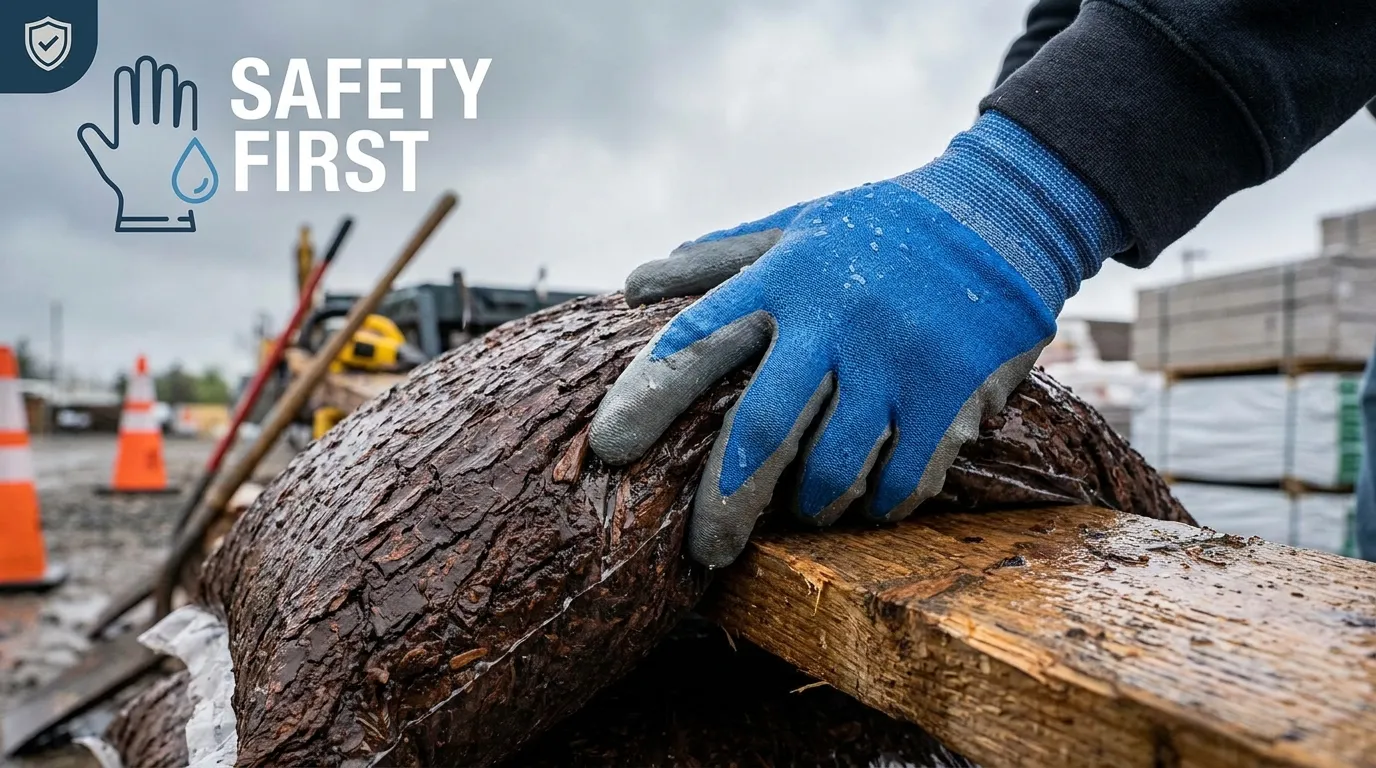
For wet bark and wet lumber, crinkle latex is usually the safer grip choice because the raised texture can keep contact with uneven surfaces. PU is better reserved for cleaner wet handling only when abrasion is low and precision matters.
Wet rough surfaces are hard on gloves. Water lowers friction, and rough material scrapes the palm at the same time. Superior Glove explains that crinkle latex can help wet grip because the texture gives water a place to move instead of staying trapped flat under the palm.
If the crew handles...
Better coating
Decision note
Wet bark and mulch bags
Crinkle latex
Grip and abrasion matter most
Wet lumber
Crinkle latex
Raised texture helps on uneven boards
Concrete block or stone
Crinkle latex
Rough surface can wear PU faster
Clean damp cartons
PU palm coating
Use when abrasion is low
Oily parts
Check nitrile
Latex and PU may not be the right camp
A landscaping mulch crew is a good example. Workers carry damp bark bags, branches, stones, and edging boards. Crinkle latex gives them a better grip surface and more palm protection. PU may feel nicer at first, but rough wet work can eat through that advantage quickly.
Oil changes the decision. If the work includes oily metal, grease, or chemical exposure, buyers should compare coating chemistry before ordering. That question belongs closer to nitrile selection than this latex vs PU decision.
What does a 30-day wear comparison look like?
A 30-day comparison should track replacement triggers, not just the first-day feel. For rough outdoor crews, crinkle latex should be judged by grip loss, palm thinning, tears, and whether workers can still handle wet or uneven materials safely.
Do not treat 30 days as a universal promise. A crew using gloves for heavy outdoor handling will wear them differently from a clean warehouse team. OSHA’s hand protection rule also points buyers back to the task, conditions, hazards, and duration of use when choosing gloves.
30-day scenario
Surface type
Moisture level
Coating stress
Likely winner
Replacement trigger
Landscaping crew
Bark, branches, stone
Often wet
High abrasion
Crinkle latex
Grip drops or palm thins
Framing crew
Lumber, plywood
Mixed
High rubbing
Crinkle latex
Coating tears at fingers
Masonry crew
Block, concrete
Dry to damp
Very high abrasion
Crinkle latex
Palm surface wears smooth
Warehouse packaging
Cartons, labels
Mostly dry
Low abrasion
PU palm coating
Coating peels or fingertips wear
Electronics assembly
Small clean parts
Dry
Low abrasion
PU palm coating
Loss of tactile control
A framing crew may need crinkle latex for moving lumber and plywood. The same company may still buy PU for finishing, inspection, tool sorting, or light assembly. That split is often smarter than forcing one glove onto every task.
Coating choice does not replace cut-level selection. If the job includes sharp edges, blades, sheet metal, or glass, send that broader decision to the cut-resistant glove guide.
How do you calculate price per wear for crinkle latex vs PU?
Price per wear is the pair price divided by usable shifts. If a $3.20 crinkle latex pair lasts 8 shifts, it costs $0.40 per wear. If a $2.10 PU pair lasts 3 shifts outdoors, it costs $0.70 per wear.
The cheaper glove is not always the cheaper buy. A low unit price can look good on a quote, then lose money through faster replacement, lower grip, and more worker complaints. Price per wear gives the buyer a clearer way to compare coatings.
Sample glove
Pair cost
Usable shifts
Price per wear
Decision note
Crinkle latex
$3.20
8
$0.40
Better value in rough outdoor work
PU palm coating
$2.10
3
$0.70
Cheaper per pair, higher rough-use cost
Buyer’s actual glove
Your cost
Your shift count
Cost ÷ shifts
Use your crew’s replacement data
This is sample math, not a market average. A warehouse team may get long life from PU because the work is dry and clean. A landscaping team may replace PU faster because the coating meets wet bark, grit, and uneven surfaces every shift.
Which coating should you choose for landscaping or construction crews?
Choose crinkle latex for landscaping and construction crews handling rough, wet, or uneven materials. Choose PU for cleaner work where dexterity, low bulk, and tactile control matter more than maximum outdoor grip.
For landscaping, crinkle latex should usually be the default. Crews handle mulch bags, wet bark, branches, pavers, edging, fencing, and rough tools. Grip loss can slow the crew and make lifting feel less controlled.
For construction, split the decision by task. Lumber, block, demolition debris, fencing, and rough site handling lean crinkle latex. Inspection, packaging, clean finishing, and small parts lean PU. Buying one glove for every task can waste money because each coating wears differently.
Crew or task
Better choice
Why
Landscaping
Crinkle latex
Wet rough grip and better outdoor wear
Lumber handling
Crinkle latex
More grip on rough boards
Masonry and block
Crinkle latex
Better fit for abrasive surfaces
Packaging and cartons
PU palm coating
Clean dry handling with good comfort
Inspection and assembly
PU palm coating
Better fingertip feel
Mixed construction team
Both
Match glove to job zone
A mixed construction buyer should not treat coating choice like a single-company standard. Order crinkle latex for rough outdoor handling and PU for inspection, sorting, packaging, or light assembly. That keeps each glove in the work it was built to handle.
What safety and comfort checks should buyers make before ordering?
Coating is only one part of glove selection. Buyers should also check hazards, cut risk, fit, wear time, allergy risk, and the surface workers handle most often. OSHA’s hand protection standard ties glove choice to the task and conditions of use.
Latex allergy is the first check for crinkle latex. If workers are sensitive to natural rubber latex, PU or nitrile may be safer choices. If the work includes oil, grease, or chemical contact, compare latex with nitrile before buying. This latex vs nitrile guide fits that question.
Use this quick checklist before placing a bulk order:
What surface does the crew handle most: bark, lumber, block, cartons, or small parts?
Is the work wet, dry, oily, or mixed?
Do workers need high grip or fine fingertip feel?
Is there a cut hazard that needs ANSI or EN388 review?
Will latex allergy be a concern?
How many shifts does each pair last in the real job?
Does the glove still fit well after hours of use?
OSHA’s PPE guidance also points buyers to grip, comfort, size, protection type, and abrasion needs. For glove buyers, that means the right coating should match the job, not only the catalog description.
How to Choose the Right Option
For this crinkle latex vs PU palm coating decision, start with the surface. If the crew handles wet bark, lumber, blocks, fencing, or outdoor debris, choose crinkle latex first and track replacement by shift. If the crew handles clean cartons, small parts, electronics, or inspection work, PU is the cleaner fit.
The best next step is simple: test both coatings with the actual crew for one work cycle. Record pair cost, usable shifts, grip complaints, and replacement triggers. Then buy based on price per wear, not just price per pair.
Frequently Asked Questions
What are PU coated gloves best for?
PU coated gloves are best for clean, dry, precision work where workers need touch sensitivity and low bulk. They fit electronics, inspection, packaging, and light assembly better than rough landscaping or lumber handling.
Best gloves for wet conditions?
For wet rough materials, crinkle latex is usually the better glove coating. Its raised texture helps maintain grip on uneven surfaces, while PU is better for cleaner tasks with less abrasion.
Does PU palm coating last as long as crinkle latex?
PU usually does not last as long as crinkle latex on abrasive outdoor materials. It can still last well in clean, dry handling where the coating is not dragged across bark, concrete, lumber, or block.
Is crinkle latex good for construction work?
Yes, crinkle latex is a strong fit for many construction tasks involving rough, wet, or uneven materials. It is less ideal for oily work, latex-sensitive workers, or small-part handling that needs high fingertip control.
How do I calculate price per wear for work gloves?
Divide the pair price by the number of usable shifts before replacement. A $3.20 pair lasting 8 shifts costs $0.40 per wear, while a $2.10 pair lasting 3 shifts costs $0.70 per wear.
Should I choose latex, nitrile, or PU for oily work?
For oily work, nitrile often deserves a separate look because latex and PU are not always the best match. This article compares crinkle latex and PU, but oily tasks should be checked against a latex vs nitrile guide.