Home > Uncategorized > Winter Gloves for Oil & Gas Workers in the Field
Winter Gloves for Oil & Gas Workers in the Field
10 May, 2026
By arafatshuvo509
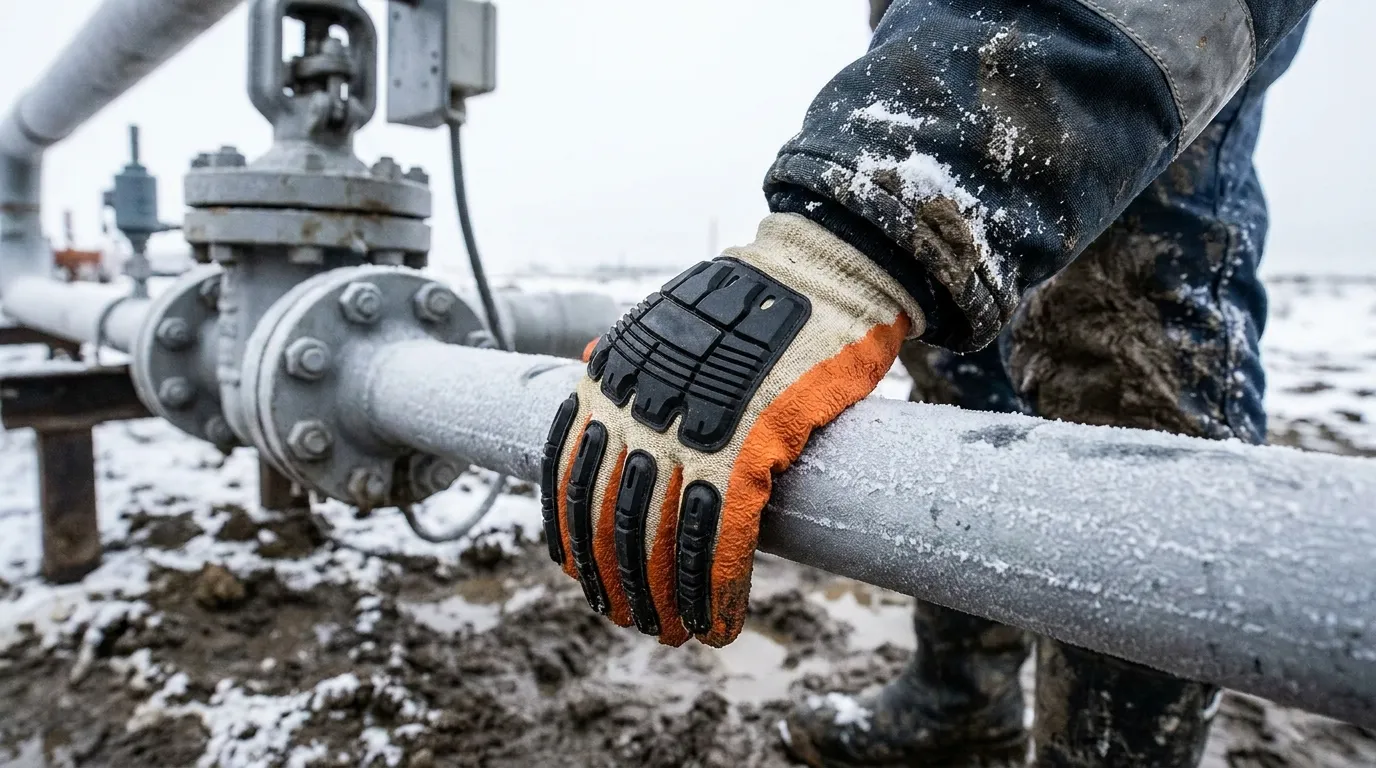
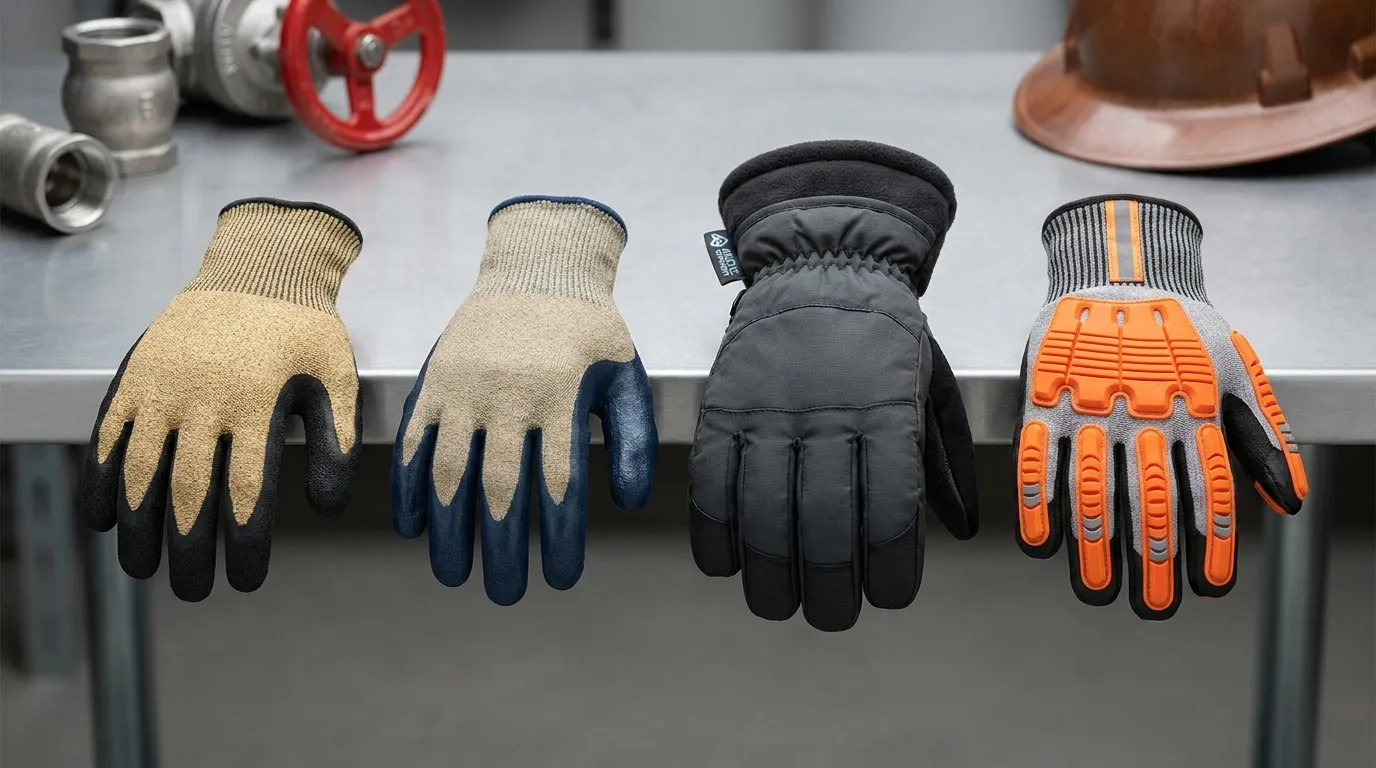
Winter gloves for oil and gas workers should combine insulation, oil-grip coating, impact protection, cut resistance, and weather protection without killing dexterity. For most upstream and pipeline crews, start with an insulated nitrile-coated glove, add TPR back-of-hand protection for pipe and rigging tasks, and reserve mittens for standby or low-dexterity exposure.
Cold hands slow work down, but numb hands also create safety problems. A crew member who removes bulky gloves to handle valves, radios, or tools is no longer protected. For winter rig and pipeline contracts, the better question is not “Which glove is warmest?” It is “Which glove can workers keep on during the real task?”
What should winter gloves for oil and gas workers protect against first?
Winter gloves for oil and gas workers should first protect against cold stress, wetness, oil grip loss, impact, cuts, and abrasion. A warm glove that cannot grip oily pipe or protect knuckles is not enough for rig or pipeline work.
Oil and gas winter work stacks hazards together. A worker may handle cold steel, oily pipe, wet hoses, chain, valves, fuel, and hand tools in the same shift. OSHA’s cold stress guidance also points to wind, wetness, dampness, and poor clothing choices as factors that make cold exposure worse.
For HSE teams, the first step is a task hazard map. Do not start with a catalog photo. Start with the hand movements workers repeat in the field.
Cold exposure and wind chill
Wet gloves from snow, rain, mud, or spray
Oil, grease, diesel, or drilling residue on surfaces
Pinch points from pipe, couplings, valves, and tools
Sharp metal edges, cable, flanges, and abrasion
Workers removing gloves because they are too bulky
The safest winter glove package protects against the main hazard without creating a new one. The warmest glove is not always the safest glove. It works for standby exposure, but it becomes a liability if workers remove it to handle valves, radios, or tools.
How do insulation and dexterity stay balanced in field work?
Choose the warmest glove that still lets workers grip, signal, adjust fittings, and use tools without removing hand protection. For oil and gas crews, dexterity is part of safety, not a comfort extra.
Insulation should keep hands warm enough for the shift plan, but it cannot block basic movement. A glove that feels good during a short fitting can become unsafe after two hours of valve work, hose handling, or tablet inspection. That is why trial wear matters before a winter mobilization.
Waterproofing also needs care. A waterproof glove can keep snow and slush out, but trapped sweat can make liners damp. Once the liner is wet, warmth drops and workers may swap gloves too late. For subzero or freezer-style exposure, crews may also need deeper guidance on extreme cold gloves.
Work condition
Better glove direction
Watch-out
Long outdoor exposure with light hand movement
Heavier insulation or mitten option
Poor dexterity during sudden tasks
Pipe handling and coupling work
Insulated glove with grip and impact protection
Too much bulk around fingers
Tablet inspection or light controls
Lighter insulated glove, possible touchscreen spec
Less warmth during long exposure
Wet snow, slush, or spray
Waterproof or water-resistant shell
Sweat buildup inside the glove
Rotating field crews
Spare dry pairs per worker
One wet pair can ruin the shift
A simple rule helps: choose the glove workers can keep on. If workers keep pulling it off to feel a fitting, type into a tablet, or grip a tool, the spec is not field-ready.
When do oil and gas crews need TPR impact protection?
Use TPR impact gloves when workers handle pipe, couplings, valves, heavy tools, rigging hardware, or equipment with pinch points. In winter, numb fingers make impact and crush exposure harder to react to quickly.
TPR means thermoplastic rubber. On work gloves, it usually appears as raised guards across the back of the hand, knuckles, and fingers. For oil and gas field crews, this matters most around pipe, tongs, hoses, chain, valves, hammer unions, and rigging hardware.
The CDC reported severe injuries in oil and gas extraction, including many upper-extremity injuries. That does not mean every winter glove needs the same impact level, but it does show why hand protection deserves careful selection in this industry.
If the crew handles...
TPR need
Glove direction
Pipe, casing, tubing, or heavy couplings
High
Insulated impact glove with oil-grip palm
Hose coupling or fueling work
Medium to high
Waterproof or liquid-resistant impact glove
Valve checks and gauge reading
Medium
Flexible impact glove with good finger bend
Tablet inspection or documentation
Low to medium
Dexterity-first glove, add impact if site rules require it
Standby watch with little handling
Low
Warm glove or mitten, task-permitting
TPR is not optional for every crew, but it should be treated as standard for pipe handling, rigging, hose coupling, and heavy tool work in winter. The key is flex. Back-of-hand guards should protect workers without stopping natural finger movement.
Which palm coating gives the safest grip around oil, mud, and wet pipe?
Sandy nitrile is usually the safest first choice for oily, wet, and greasy field handling. Nitrile foam works better when crews need more dexterity and only moderate oil exposure.
Oil grip and water grip are not the same thing. A coating that grips well in rain may perform poorly on greasy steel. For upstream and pipeline work, nitrile-coated palms are often a strong starting point because they resist oil better than many general-purpose coatings.
For wet outdoor exposure, the glove body also matters. A good palm coating cannot fix a soaked liner or loose cuff. If the job includes rain, snow, washdown, or slush, compare glove builds built for waterproof winter grip.
Palm option
Best fit
Main caution
Sandy nitrile
Oily pipe, wet steel, greasy tools
Can feel less precise than thinner coatings
Nitrile foam
Moderate oil, tool work, inspection
Not always enough for heavy oil film
Latex crinkle
Wet outdoor grip and rough surfaces
Weaker fit for oil-heavy tasks
PVC
Liquid contact and full coating needs
May reduce dexterity
Treated leather
General cold work and durability
Can absorb oil or water if not maintained
The safe choice is the coating that matches the surface. For field crews, ask suppliers to test grip on the actual job material: pipe, hose, valve handwheels, chain, tools, and wet metal.
Do winter oilfield gloves need cut resistance, FR compatibility, or chemical protection?
Winter oilfield gloves need cut resistance, FR compatibility, or chemical protection only when the task demands it. Do not turn every glove into a heavy multi-hazard glove unless the crew actually faces those hazards.
Cut resistance matters around sharp metal, cable, flanges, sheet edges, insulation, and damaged pipe coatings. For broader rating logic, hand off the deep technical detail to a cut-resistant glove selection guide instead of repeating all cut standards inside this field article.
FR-compatible shells matter near hot-work areas, flare-risk zones, or tasks where site rules require flame-resistant PPE. Chemical or liquid protection matters near fuel, drilling fluids, hydrocarbons, or washdown. Each claim should be backed by supplier documentation, not just product wording.
Spec by task, not by department
A pipeline welder’s helper, an NDT inspector, a fueling worker, and a pipe-handling crew may all work on the same site. They do not always need the same glove. One group may need cut-resistant winter gloves, another may need oil grip and dexterity first.
OSHA’s hand protection interpretation points buyers back to hazards, conditions, duration, manufacturer data, and worker feedback. That is the right buying logic here. The glove spec should follow the task, not the job title.
Are mittens ever better than gloves on a rig or pipeline spread?
Mittens can be warmer for standby, watch, snowmobile, or low-dexterity exposure, but gloves are safer for tool handling, valve work, pipe handling, and rigging. Use mittens only where the task does not require precise finger control.
Mittens keep fingers together, so they can hold warmth better in extreme cold. That helps during low-movement exposure, security watch, snowmobile transfer, or waiting time. But they can become unsafe when the worker needs finger control.
Mittens are useful, but they should not be the default for active rig or pipeline tasks. They are safer for low-dexterity exposure than for hands-on mechanical work.
Task
Mitten acceptable?
Glove required?
Safety note
Standby watch in severe cold
Yes
No
Keep gloves nearby for sudden handling tasks
Snowmobile or ATV transfer
Sometimes
Sometimes
Depends on controls and site policy
Valve adjustment
No
Yes
Needs grip and finger control
Pipe handling
No
Yes
Needs grip, cut, and impact protection
Tablet inspection
No
Usually yes
Touchscreen need must be specified
Rigging
No
Yes
Needs dexterity and back-of-hand protection
Fuel handling
Rarely
Yes
Needs grip and liquid-resistance logic
If mittens are allowed, define exactly where. Do not leave it to worker judgment during a busy shift.
What glove spec should an HSE manager put into a winter rig RFQ?
An HSE manager should write the RFQ around tasks, exposure, and proof of performance. A good winter glove RFQ asks for more than size, color, and insulation.
Start with site conditions: expected temperature range, wind exposure, wet exposure, oil contact, work duration, and task list. Then ask suppliers for documentation on coating, liner, cuff, cut rating, impact protection, waterproofing, FR compatibility, and chemical claims where relevant.
Minimum RFQ details to request from suppliers
Temperature and wet-weather use range
Palm coating type, such as sandy nitrile or nitrile foam
Back-of-hand impact protection details
Cut and abrasion rating documentation
Waterproof or water-resistant construction
Cuff style and wrist closure
FR-compatible or chemical-resistant documentation, if required
Full size range and worker fit samples
Trial pairs before bulk order
Replacement guidance after wetting, oil saturation, or coating wear
For outdoor winter crews with mixed tool work, the buying team can compare this against broader outdoor winter glove selection. If the order is imported in bulk, check classification paperwork early. A CBP glove ruling shows that glove classification can depend on construction and HTS details.
Task
Cold exposure
Oil or wet exposure
Impact need
Cut need
Recommended build
Pipe handling
High
Medium to high
High
Medium to high
Insulated nitrile impact glove
Hose coupling
High
High
Medium to high
Medium
Waterproof nitrile impact glove
Valve work
Medium
Medium
Medium
Low to medium
Flexible insulated grip glove
NDT inspection
Medium
Low to medium
Low
Low to medium
Dexterity-first insulated glove
Fueling
Medium
High
Medium
Low
Liquid-resistant grip glove
Hot-work adjacent task
Medium
Variable
Medium
Medium
FR-compatible task glove
Standby watch
High
Low
Low
Low
Warm glove or mitten option
How would this selection work on a North Sea or Alberta winter site?
The right winter glove package changes by site. A wet offshore deck and a dry Alberta pipeline spread both create cold stress, but the glove priorities are not identical.
North Sea deck crew example
A North Sea hose-coupling crew may face wind, spray, cold steel, oil film, and heavy fittings in the same task. The right starting point is an insulated waterproof glove with sandy nitrile grip and TPR back-of-hand protection. The glove should also allow enough finger movement to connect, disconnect, and inspect couplings without removal.
This crew should not rely on mittens during active coupling work. Mittens can be staged for standby periods, but active hose and deck work needs grip, impact coverage, and finger control.
Alberta pipeline crew example
An Alberta pipeline tie-in crew may face dry cold, snow, wind chill, pipe staging, truck loading, and long outdoor exposure. The first priority is thermal protection that workers can keep on during pipe handling. Cut resistance and oil-grip palms may be needed if the crew handles sharp edges, coated pipe, chain, or oily equipment.
For this site, spare dry pairs matter. Even dry cold work can turn wet through sweat or snow contact. OSHA cold-stress guidance supports warm breaks, dry clothing, and work planning during cold exposure.
Inspection and hot-work adjacent examples
An NDT inspection team may need a lighter insulated nitrile foam glove for tablet use, ladder access, and pipe scanning. If touchscreen use matters, write that into the RFQ. Do not assume a thick winter glove will work on digital devices.
A hot-work adjacent refinery maintenance crew needs more caution. If sparks, heat, or flame exposure are part of the task, use a documented FR-compatible or heat-rated glove. Do not treat a generic insulated glove as flame protection.
What should crews inspect before and during a winter shift?
Replace or dry winter oilfield gloves when liners are wet, coating has worn through, TPR is cracked, seams open, or grip drops on oily pipe. A glove that looks intact can still fail if insulation or grip is compromised.
Winter glove checks should happen before the shift and during warm-up breaks. Workers should look for wet liners, stiff coatings, cracked TPR, open seams, oil saturation, and loss of grip. A glove that slides on pipe or tools should come out of service for that task.
Build replacement into the winter plan. OSHA recommends safe work practices such as warm breaks, dry clothing, and monitoring for cold stress. For gloves, that means spare dry pairs, a place to dry wet PPE, and worker feedback after trial use.
Use this quick field check:
Are the liners dry?
Is the palm coating still textured?
Are TPR guards attached and flexible?
Are seams and fingertips intact?
Does the glove still grip oily or wet tools?
Can the worker perform the task without removing it?
Is the glove still matched to the assigned task?
What to Do Next
For winter gloves for oil and gas crews, start with the work, not the catalog. List the tasks, surfaces, weather, oil exposure, and hand hazards for each crew. Then match insulation, nitrile grip, TPR impact protection, cut resistance, and FR-compatible options only where they fit the job.
Before placing a bulk order, run a short field trial. Give workers sample sizes, test the gloves on real tools and pipe, collect feedback, and check how the gloves perform after wetting, oil contact, and long exposure. That step can prevent costly PPE that workers do not keep on.
Frequently Asked Questions
What EN 388 rating do I need for oil and gas work gloves?
Many oil and gas field tasks need cut, abrasion, and impact protection, but the exact EN 388 rating should follow the job hazard assessment. Pipe handling, rigging, and sharp metal work usually need higher protection than inspection or light maintenance.
Which coating is best for oily environments in oil and gas?
Sandy nitrile is often the best first choice for oily, wet, and greasy handling because it supports grip on slick surfaces. Nitrile foam can work better for moderate oil exposure when crews need more finger movement and tool feel.
What is TPR impact protection and why is it essential for oil and gas?
TPR impact protection means raised thermoplastic rubber guards on the back of the hand, fingers, and knuckles. It matters when workers handle pipe, couplings, valves, and heavy tools where crush and pinch hazards are common.
How do I choose the right gauge for oil and gas applications?
Choose lower-gauge, heavier gloves when insulation and durability matter most, and higher-gauge gloves when dexterity matters more. For winter field crews, the best choice is usually the warmest glove workers can keep on while handling tools safely.
Can oil and gas work gloves be used with touchscreen devices?
Some oil and gas gloves can work with touchscreens, but heavy insulation, waterproof membranes, and thick coatings often reduce touchscreen performance. For inspection crews using tablets, specify touchscreen need during procurement instead of assuming every winter glove will work.
Are mittens safer than gloves in extreme cold?
Mittens can be warmer, but they are not automatically safer for oil and gas tasks. Use them for standby or low-dexterity exposure, and use gloves for valves, tools, pipe handling, radios, controls, and rigging.