Home > BLOG > Industry Blog > What is the Real Difference between ANSI and EN388 Glove Standards?
What is the Real Difference between ANSI and EN388 Glove Standards?
15 May, 2026
By hqt
Workers need gloves, not as accessories, when they enter high-risk areas. They serve as a shield against mechanical risks, cuts, abrasions, punctures, and chemicals. This is why the knowledge of ANSI vs EN388 glove standards is so important to businesses, safety managers, warehouse crews, and industrial workers.
The hand of glove safety regulations is now playing the center stage in occupational hand safety, be it in construction sites or manufacturing plants. Companies are seeking durable, certified protective gloves that are comfortable, grippy, flexible, and reliable in protection. In the meantime, the customers are likely to confuse American glove safety standards and European glove standards.
The fact is, both ANSI and EN388 are necessary. However, they differ in testing processes, rating scales, and safety classifications.
Glove Standards and Their Role in Industrial Safety
The present-day industries work in harsh conditions where hand protection is essential in the workplace. Metal cuts, abrasiveness, machine vibration, oily substances, and cutting tools are hazards that endanger workers on a daily basis.
Without the right standards of protective gloves, injuries can take place within a few seconds. This is the reason why the PPE compliance standards have increased in the world. Industrial glove certification is not optional nowadays and is aimed at companies that are concerned with safety compliance testing and hand safety at the workplace.
Protective work gloves are thoroughly tested on:
• Blade cut resistance
• Abrasion resistance testing
• Tear strength analysis
• Puncture protection
• Grip performance
• Mechanical hazard resistance
• Dexterity and flexibility
• Glove durability performance
The aim is easy: enhance occupational safety gloves and minimize injuries, downtime, and liability.
Familiarity with ANSI Glove Standards
ANSI is the short name of the American National Standards Institute. Glove testing in the United States is usually done in accordance with ANSI/ISEA 105. This system is interested in the degree of performance of safety gloves to different hazards.
Safety gloves that are ANSI-certified are typically worn in:
• Manufacturing facilities
• Oil and gas.
• Automotive plants
• Warehouses
• Construction projects
• Heavy machinery industries
• Metal fabrication
The ANSI glove classification system takes into account:
• ANSI levels of cut resistance.
• ANSI abrasion resistance
• ANSI puncture resistance test.
• Chemical resistance
• Heat protection
What is the EN388 Glove Standard?
The main European standard of glove testing is EN388, which is used to test mechanical risk gloves. The certification is applied to determine the performance of gloves concerning physical hazards in daily industrial use. EN388 glove certification is popular in:
• Europe
• Middle East industries
• International PPE markets
• Global manufacturing sectors
Unlike ANSI, EN388 mechanical hazard testing is interested in multiple classes of performance at the same time.
EN388 Testing Categories
EN388 gloves are tested on:
1. Abrasion-resistant gloves
2. Blade cut resistance
3. Tear-resistant gloves
4. Puncture-resistant gloves
5. ISO 13997 cut test
6. Impact protection gloves
This system assists buyers in comprehending information on glove protection levels in a short time.
EN388 Abrasion Resistance Test
The EN388 abrasion test is a test that determines the number of cycles that a glove can endure before the material starts to break down.
This is especially important to:
•Construction work gloves
•Warehouse safety gloves
•Manufacturing safety gloves
•Mechanical assembly gloves
•Work gloves of heavy-duty.
The test gloves with high abrasion resistance are likely to last longer in the tough working conditions.
Major Differences between ANSI and EN388 Glove Standards
ANSI Standards
•Widely used in North America.
•Gives much consideration to ANSI cut resistance levels.
•Rates on A1 to A9.
•Offers cut force measurements in detail.
•Popular in the industrial markets in America.
EN388 Standards
•Used in the European and global markets.
•Combines tests on various mechanical hazards.
•Has alphabetic and numeric ratings.
•Incorporates ISO 13997 cut testing.
•Typical of CE-certified gloves.
The two systems help in compliance with industrial safety and compliance with protective equipment.
What Glove Standard do you need?
Your industry, hazards, and compliance requirements determine the type of safety gloves to use.
In the case of North American industries, safety gloves that are certified by ANSI are commonly used.
EN388 glove certification is necessary in the case of European PPE compliance or international exports.
Most of the contemporary certified cut-resistant gloves are now able to meet both standards.
This offers companies improved workplace safety gloves that are compatible with international PPE standards.
Glove compliance testing is a test that ensures uniform glove performance in terms of durability in the real-life industrial environment.
The importance of Glove Material Performance
The comfort, safety, flexibility, and productivity depend on the performance of the glove material. Workers should have gloves that provide:
•Holding on to wet conditions.
•Breathability
•Dexterity
•Long wear life
•Tear resistance
•Puncture resistance
•Flexible movement
Poor-quality gloves reduce productivity and the chances of workplace injuries. This is why the majority of the manufacturers of industrial safety gloves are currently focusing on high-performance safety gloves on the basis of nitrile and microform technology.
Why Nitrile-Coated Gloves are taking over Industrial PPE
Nitrile gloves are now one of the most reliable solutions to industrial hand safety.
Nitrile provides:
•Better puncture protection
•Improved oil resistance
•Stronger abrasion resistance
•Enhanced flexibility
•Latex-free safety
•Superior glove durability testing results
Nitrile gloves are already used in industries in:
•Automotive manufacturing
•Construction
•Warehousing
•Aerospace
•Oil industries
•Agriculture
•Maintenance work
High-level Hand Protection using NM Safety Gloves
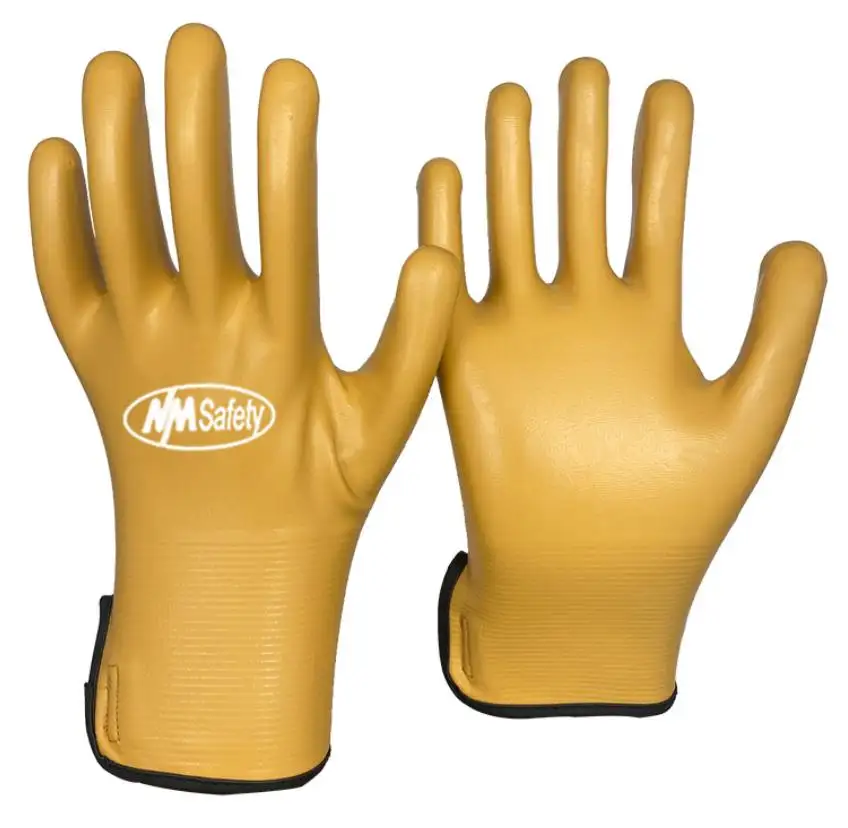
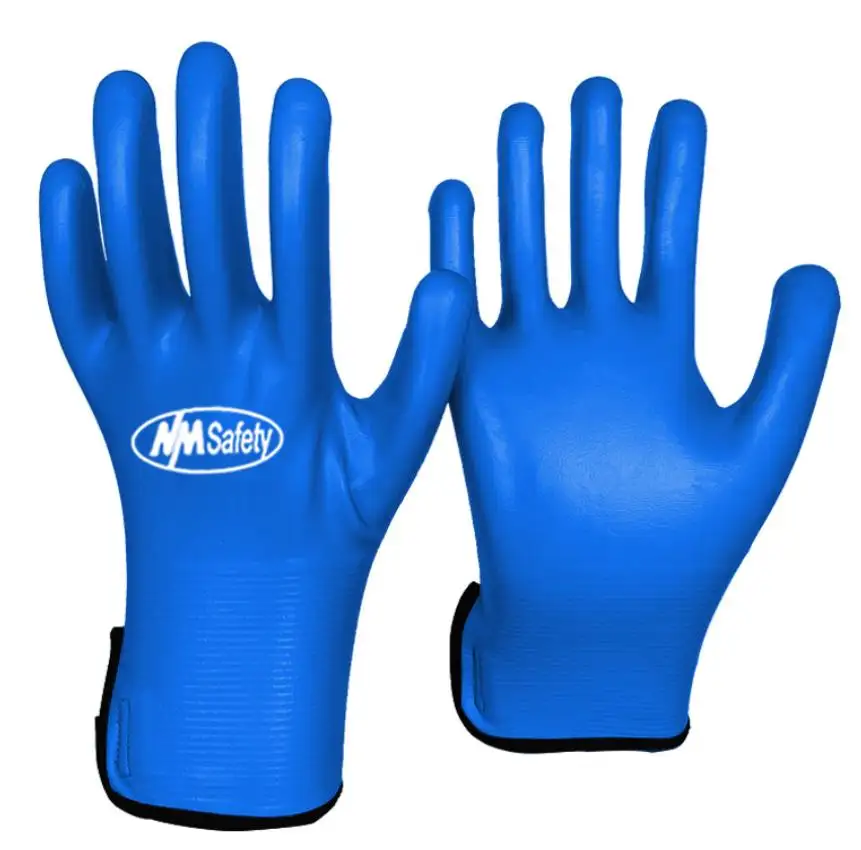
One such product is the Micro foam Nitrile Fully Coated Gloves NY1359FRB by NM Safety. These are certified PPE gloves that are flexible, grippe, comfortable, and offer mechanical hazard protection all in a single enhanced design.
The glove has the following specifications as per the product specifications:
•15-gauge nylon and spandex liner.
•Nitrile full coating microform.
•EN388:2016 rating 4121X
•Lots of flexibility and dexterity.
•Velcro wrist strap that can be adjusted.
•Very good grip in dry, wet, and oily conditions.
•Breathable glove structure
•Comprehensive hand coverage
The 360-degree microfoam nitrile coating offers reliable hand protection in industries and is light and comfortable.
Conclusion
ANSI vs EN388 glove standards is not a question of either one of the two systems. It is about the awareness of how each certification can help to make workplaces safer, increase PPE compliance standards, and improve the confidence of workers.
Should you be in need of high-performance safety gloves, which are durable, with the proven EN388 glove certification, and the newest microfoam nitrile technology, then take into account the high-quality solutions that NMSafety provides. Their new industrial hand protection products are tailored to the new industries that do not compromise on safety, comfort, or performance.