Home > Uncategorized > High-Risk Work Environment Advanced Hand Protection
High-Risk Work Environment Advanced Hand Protection
11 Jun, 2026
By hqt
Hand injuries at the workplace continue to be among the most prevalent safety issues in all healthcare institutions, law enforcement, waste management, and industrial workplaces. Accidental needle stick injuries are one of the most dangerous of these hazards as they may expose the workers to infections, contaminants, and long-term health hazards. Needle puncture resistant gloves are important here.
In contrast to regular work gloves, these special gloves are designed to offer excellent hand protection against needles, hypodermic syringes, sharp metal objects, and other puncture risks.
The new needle-resistant gloves are made of high-technology fibers, steel reinforcing, and new coating technologies that provide high protection without compromising comfort and dexterity.
To those organizations that value the safety of their workers, the purchase of high-quality needle puncture protection PPE is not only a safety precaution, but it is also a good business decision.
Why Needlestick Protection is More Important than Ever
Thousands of workers are injured with needles, syringes, and other sharp objects every year. Such accidents take place in many industries and may have serious outcomes, such as contact with blood-borne pathogens and infectious material.
Needle injury prevention gloves have a promising future due to the increasing work environments that are more concerned with the reduction of occupational injuries without compromising productivity.
Some of the most common causes of puncture injuries on the hands include:
•Inappropriate disposal of needles.
•Sharps concealed in garbage.
•Handling contaminated materials
•Metal fabrication processes
•Search and collection of evidence.
•Waste sorting and recycling activities.
•Clinical waste management and medical procedures.
The need to use specialized needle stick protection gloves can greatly minimize the risk of injuries and assist employers in satisfying workplace safety requirements.
What is the difference between Needle Puncture Resistant Gloves?
Most individuals believe that needles are automatically covered by cut-resistant gloves. In reality, cut resistance and puncture resistance are two separate performance categories. A glove that works well with blades might not necessarily prevent a hypodermic needle.
The high level of protection against needle stick is developed by the use of several layers of gloves, which combine to provide resistance to sharp objects.
Protective materials are important and include:
•HPPE (High-Performance Polyethylene)
•Glass fiber reinforcement
•Steel fiber technology
•Kevlar needle-resistant glove materials
•Construction of steel mesh needle-resistant gloves.
•Finger and palm protection areas reinforced.
The materials provide a shielding effect that can withstand needle penetration and still be flexible to perform everyday tasks.
Learning about ASTM F2878 Needle Resistant Gloves
ASTM F2878 needle-resistant gloves are specifically tested to be resistant to hypodermic needles. This testing procedure offers a valid measure of the capability of a glove to avoid needle stick injuries in a controlled environment.
In assessing protective gloves, safety managers should be keen on products that have undergone testing as per the accepted standards.
ASTM-tested gloves have the following benefits:
•Verified puncture resistance
•Consistent product performance
•Improved workplace compliance
•Enhanced worker confidence
•Effective sharps injury prevention.
ANSI Needle Puncture Resistant Protection Ratings and Gloves
The American National Standards Institute (ANSI) offers performance classifications that assist users in comprehending the level of protection. ANSI needle puncture resistant gloves are commonly classified in terms of their puncture resistance. The greater the rating, the greater the protection against puncture hazards.
Moreover, cut resistance ratings are significant since most workplaces expose workers to various hazards at the same time.
ANSI A5: provides good cut protection
Cut level A9 needle-resistant gloves are the most cut-resistant gloves available.
High cut resistance coupled with puncture resistance is a complete safety solution to challenging workplaces.
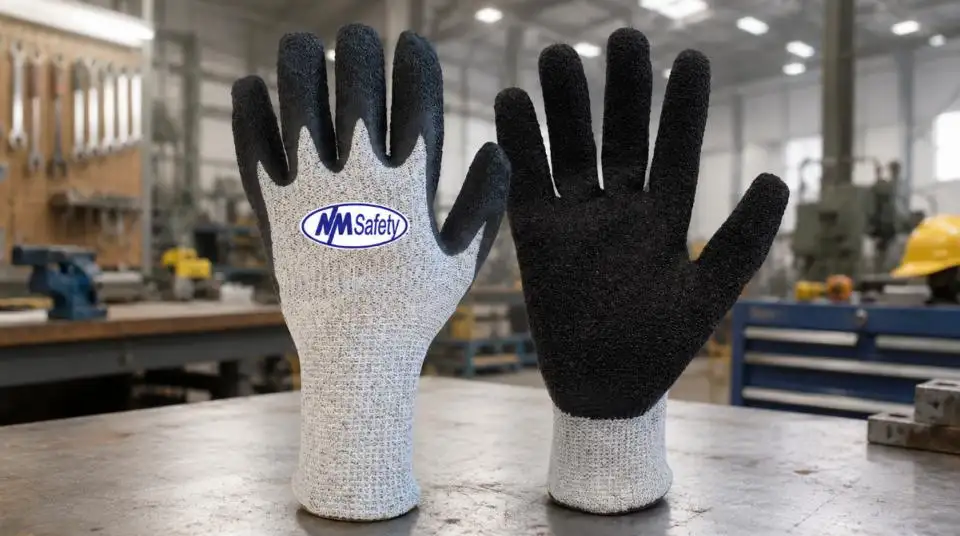
NMSafety Level 5 Needle Puncture Resistant Gloves
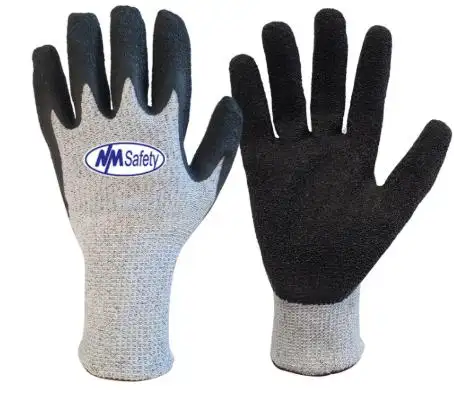
The NMSafety DY1350NM/NR is one of the top solutions in the industry that can be offered to workers who have to deal with the risk of puncture every day. The glove features:
•13-gauge nylon, HPPE, and glass fiber liner.
•Crinkle latex coating to provide better grip.
•Palm and finger reinforcement with steel fabrics.
•ANSI Cut Resistance A9.
•ANSI Needle Puncture Resistance Level 5.
•Great comfort and flexibility.
•Several sizes to fit better.
The steel fabric reinforcement gives extra protection in the high-risk contact areas to ensure workers remain safe without losing mobility. These gloves are especially applicable in the glass manufacturing, metal handling, and industrial production industries.
Industries that require needle-resistant gloves
Puncture hazards are unique to different industries. The choice of the right glove will be determined by the risk level and the work environment.
Healthcare Applications
Healthcare professionals are exposed to needles, scalpels, and contaminated sharps daily.
Typical protection measures are:
• Medical needle-resistant gloves
• Healthcare needlestick-resistant gloves
• Healthcare safety gloves
• Prevention gloves (needlestick injury).
• Hospital protective gloves
• Clinical waste handling gloves
These gloves assist the medical workers in mitigating unintentional exposure when attending to the patients and when disposing of waste.
Characteristics to consider when selecting needle-resistant gloves
Not all protective gloves offer the same level of performance. In assessing products, one should take into account the following factors:
Protection Standards
Look for:
• ASTM F2878 certification
• EN 388 puncture resistant gloves certification
• ANSI cut resistance values.
Comfort and Dexterity
When comfortable, workers will tend to wear gloves more frequently.
Look for:
• Ergonomic designs
• Breathable liners
• Flexible materials
• Lightweight construction
Grip Performance
A good glove must be able to grip even with difficult materials.
Popular coatings include:
• Crinkle latex
• Sandy nitrile
• Foam nitrile
• Polyurethane
Beyond Compliance: Saving Hands that Keep Industries Moving
One needlestick injury may have long-term effects, but the appropriate protection will significantly decrease the risk. Modern Needle puncture resistant gloves are made of high-quality materials, with performance standards, and comfort to provide a safer working environment to medical workers, police officers, sanitation workers, and industrial teams.
With the ever-changing nature of hazards in the workplace, companies that invest in effective defense against needle stick injuries accrue beyond compliance. They foster trust, enhance performance, and show a true interest in the welfare of workers.
Conclusion
Trust NMSafety to provide reliable hand protection solutions designed to perform under harsh conditions when safety is paramount. NMSafety offers Level 5 needle puncture resistant gloves to Level 10 cut-resistant technologies to ensure organizations remain safeguarded against the most challenging workplace risks. Check out the entire assortment of safety gloves today and find out why NMSafety is the choice of professionals all over the world.