Home > Uncategorized > Best Gloves for Sharp Metal: Cut + Grip Picks
Best Gloves for Sharp Metal: Cut + Grip Picks
20 May, 2026
By arafatshuvo509
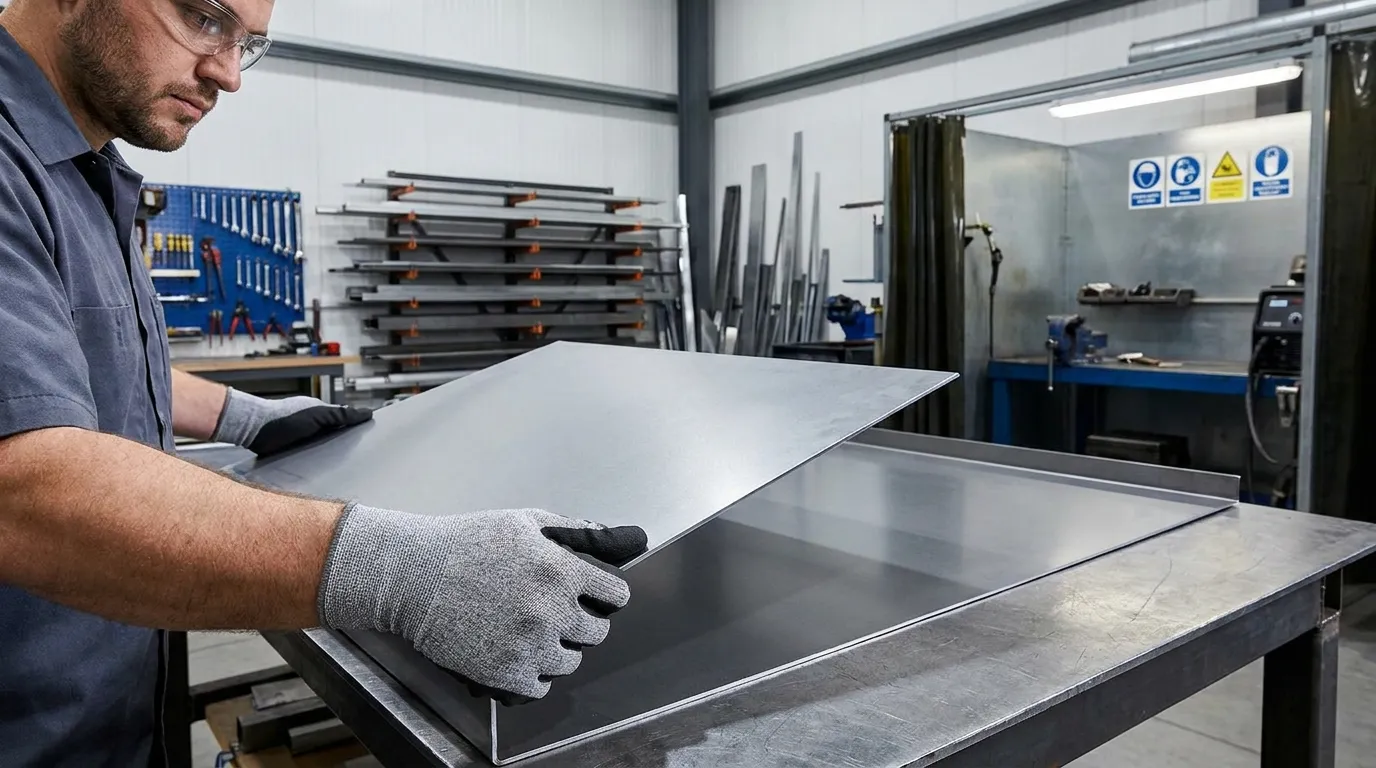
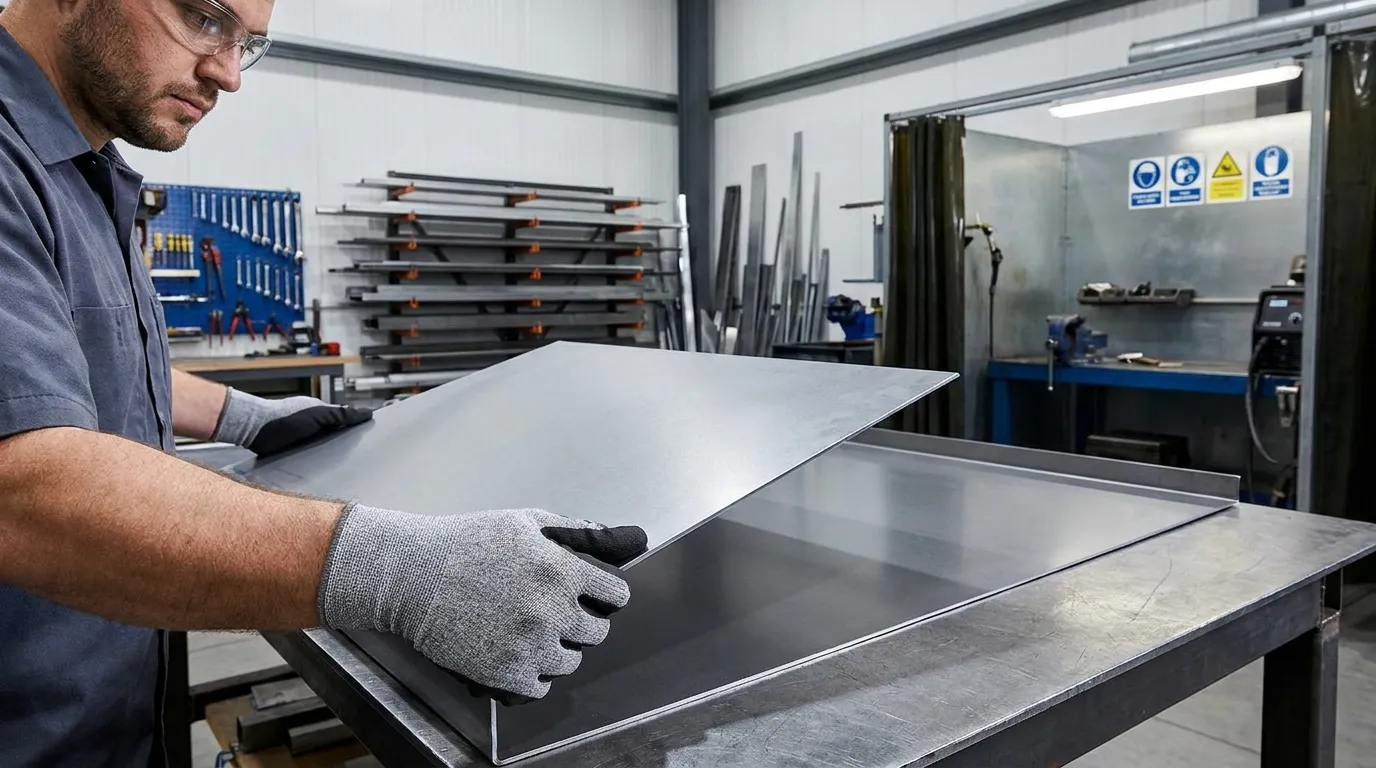
The best gloves for sharp metal are ANSI A6 or higher cut-resistant gloves with an HPPE shell and foam-nitrile palm. This setup gives metal-shop and recycling workers strong cut protection, better grip on oily or damp edges, and usable dexterity for stamping, deburring, sheet handling, and scrap sorting. Add sleeves when wrists or forearms contact sharp edges.
Sharp metal injuries usually happen fast: one slipped grip, one burr, one sheet edge, or one hidden scrap piece in a bin. The right glove has to do more than resist cuts. It also needs to grip oily parts, let workers handle smaller pieces, and cover the exposure area. Use this guide to choose a practical glove spec for real metal work, not just a high number on a product label.
For sharp metal, start with an ANSI A6 or higher cut-resistant glove using an HPPE shell and foam-nitrile palm. This gives strong cut resistance, better oily grip, and enough dexterity for stamping, deburring, sheet handling, and recycling work.
That should be the default starting point for most metal-shop and recycling-yard teams. OSHA requires hand protection when workers face hazards like severe cuts, lacerations, abrasions, punctures, burns, and harmful temperatures, so glove selection should match the actual task, not just the product name.
For a safety lead, the base spec should look like this:
ANSI A6 or higher cut resistance
HPPE shell for cut protection with lower bulk
Foam-nitrile palm for grip on dry, damp, or lightly oily metal
Snug fit that workers can keep on during real tasks
Sleeve review when wrists or forearms touch sharp edges
Use the broader cut glove ratings guide when you need a full explanation of cut levels. This article stays focused on sharp metal tasks: stamping, deburring, sheet handling, and recycled-metal sorting.
What ANSI cut level should sharp-metal gloves have?
Use ANSI A6 as the normal starting point for sharp metal. Move toward A7 or higher when workers handle stamped edges, mixed scrap, repeated sharp contact, or parts that cut through A5 gloves too quickly.
ANSI/ISEA 105 classifies hand protection properties, including cut resistance, puncture resistance, and abrasion resistance. The current system runs from A1 to A9, with higher numbers meaning higher cut resistance under the test method. For sharp metal work, A6 is a safer baseline than low or mid cut levels.
The ANSI blog on ANSI/ISEA 105-2024 gives useful examples: A6 is designed for handling sharp metals, and A7 is suitable for tasks such as metal stamping and recycling sorting. ISEA also explains that A4 to A6 fit cut hazards that may require stitches, while A7 to A9 fit harsher injury risks.
Metal task
Practical starting point
When to upgrade
Light deburring
A5 or A6
Upgrade if cuts appear or burrs are heavy
Sharp sheet metal
A6
Upgrade if edges are long, oily, or hard to control
Metal stamping
A6 to A7
Use A7+ for frequent sharp-edge handling
Recycled-metal sorting
A7 or higher
Upgrade for unknown scrap, rust, or jagged pieces
A5 is not always enough for sharp metal. It can work for controlled light handling, but A6 is the safer default when edges are sharp, oily, or handled repeatedly.
Which glove material works best for sharp metal?
HPPE is the best default material for sharp metal because it balances high cut resistance, low bulk, and shift-long comfort. Use Kevlar when heat is part of the job and steel fiber or mesh only for extreme cut hazards.
HPPE stands for high-performance polyethylene. It is common in cut-resistant gloves because it can deliver strong cut protection without making the glove feel too thick. That matters in deburring, stamping, and sheet handling, where workers still need to feel parts and keep control.
Use this quick material guide before choosing a glove line:
Material
Best use
Watch-out
HPPE
General sharp metal handling
Needs the right cut level and palm coating
Kevlar
Cut plus some heat exposure
May feel warmer or bulkier
Dyneema
Lightweight cut-resistant gloves
Check the exact ANSI rating
Steel fiber
Severe cut risk
Can reduce comfort and flexibility
Metal mesh
Extreme cutting hazards
Not ideal for general shop dexterity
Leather
Abrasion and general handling
Not enough as the only cut spec
Steel fiber or mesh is not always the best upgrade. It works when cut severity is extreme, but HPPE A6 or A7 is often better when workers still need dexterity. For rougher handling tasks, compare options against heavy-duty gloves, but keep cut level as the main decision point.
Why use foam-nitrile palm coating for metal grip?
Foam nitrile is a strong palm coating for sharp metal because it improves grip on dry, damp, and moderately oily parts while keeping the glove flexible. For oily stamping or recycling work, it is usually safer than a smooth or dry-only coating.
Sharp metal becomes more dangerous when it slips. A glove may have a high cut rating, but if the palm coating cannot hold oily stamped parts or damp sheet edges, the worker still has a serious problem. That is why palm coating matters almost as much as cut level.
Foam nitrile is a practical default because it gives grip without making the glove too stiff. It fits many metal tasks where parts have light oil, coolant, dust, or moisture. For deeper coating choices, the nitrile palm coating guide should handle full material comparison.
Palm coating
Better fit
Less ideal for
Foam nitrile
Oily, damp, and mixed metal handling
Heavy chemical exposure without extra rating
Sandy nitrile
Rough or oily parts needing stronger bite
Very fine precision work
PU coating
Dry precision handling
Oily or wet metal surfaces
Latex coating
Dry grip and general work
Oil-heavy metal tasks
For oily metal bins, do not choose a dry-only palm just because it feels flexible. Test foam nitrile first and check whether workers can hold parts without squeezing too hard.
What should you choose for sheet metal, stamping, deburring, and recycling?
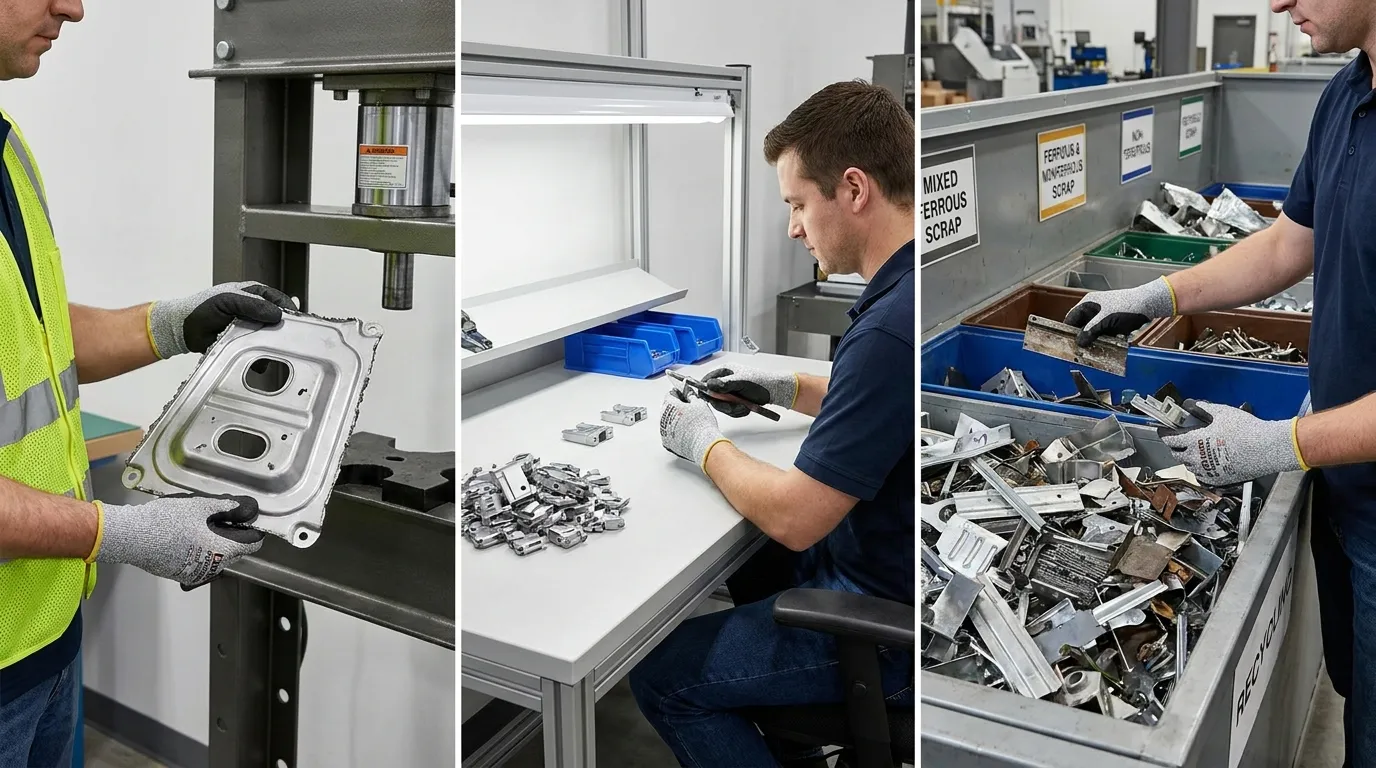
The right sharp-metal glove changes by task. Use ANSI A6 HPPE with foam nitrile as the starting point, then move up or add features when the work adds sharper edges, oil, impact, or forearm exposure.
This is where many buying decisions go wrong. A glove that works at a deburring bench may fail in a recycling yard. A glove that protects well during stamping may feel too bulky for small-part finishing. Match the glove to the job before issuing it across the whole team.
For a stamping line, start with A6 HPPE and foam nitrile. If the palm coating shows cuts too quickly, move the same team to A7 and retest grip, comfort, and wear rate.
When do sharp-metal workers need sleeves, not just gloves?
Gloves protect the hand, but sharp sheet edges and scrap bins often expose the wrist and forearm. Add cut-resistant sleeves when workers reach across metal edges, sort recycled metal, or carry sheets against the arm.
A glove-only solution is incomplete when workers reach into scrap bins or carry sheet edges against the arm. In those jobs, sleeves are not an accessory. They are part of the protection system, because the injury path moves above the cuff.
Use a sleeve callout when these conditions appear:
Workers carry long sheet metal close to the forearm
Hands reach into mixed scrap bins
Recycling sorters handle unknown sharp pieces
Wrist scratches appear near the glove cuff
Parts slide along the lower arm during loading
For sheet metal loading, an A6 glove may protect the palm but leave the forearm exposed. That job needs a glove plus cut sleeves, especially when panels are long, thin, or hard to balance.
When should you add impact, heat, or abrasion protection?
Cut resistance is not the same as impact, heat, or abrasion protection. Add impact protection for back-of-hand strike risks, heat-rated gloves for hot metal or welding, and abrasion-focused palms when rough scrap destroys gloves quickly.
Do not ask one glove to solve every hazard. A glove can be strong against cuts and still be wrong for hot metal, dropped parts, or rough scrap. OSHA’s PPE guidance also focuses on matching protection to the hazard, task, conditions, and duration of use.
Use these if-then rules:
If workers handle heavy stamped parts with pinch points, consider impact protection.
If workers touch hot parts or welding surfaces, use heat-rated welding gloves.
If the task has both oil and sharp edges, keep foam or sandy nitrile in the trial set.
ANSI/ISEA 138 covers impact protection for the back of the hand, which is a different need from cut resistance. A recycling-yard sorter may need both: cut protection for jagged scrap and impact protection when metal pieces shift or fall.
How should a safety lead test gloves before buying in bulk?
Test sharp-metal gloves on the actual tasks before buying in bulk. A good trial checks cut level, grip on oily parts, dexterity, comfort, sleeve need, wear rate, and whether workers will keep the gloves on.
OSHA 1910.138 says glove selection should consider the task, conditions, duration of use, hazards, and potential hazards. That means catalog specs are only the first filter. The real test happens on the stamping line, deburring bench, sheet rack, or sorting station.
Use this 7-day trial checklist before placing a larger order:
Trial step
What to check
Pass signal
Day 1: assign samples
Give 2 to 3 glove models per task
Workers compare real options
Day 2: grip test
Dry, damp, and oily parts
Less slipping and less over-gripping
Day 3: dexterity check
Small parts, edges, tools
Workers keep gloves on
Day 4: sleeve review
Wrist and forearm contact
No scratches above cuff
Day 5: wear check
Palm coating, yarns, holes
No early breakdown
Day 6: worker feedback
Heat, fit, fatigue, feel
No major comfort complaints
Day 7: final choice
Match glove to task
Clear standard by workstation
For coated glove choices beyond this article, use the coated glove selection guide. Keep this trial focused on sharp metal work and the team’s real handling conditions.
What are the warning signs that gloves are not working?
The clearest warning signs are cuts through the palm coating, exposed yarns, slipping parts, worker complaints, and scratches above the glove cuff. Any of these means the glove spec, coating, size, or coverage area needs review.
OSHA’s cuts and lacerations guidance warns that cut-resistant gloves are not cut-proof. That matters in sharp metal work because a higher cut rating can reduce risk, but it does not remove the need for safe handling and proper replacement.
Watch for these field signals:
Coating sliced open after short use
Workers grip harder because parts slip
Gloves get oily and lose palm control
Small holes appear near fingertips
Workers remove gloves for precision work
Wrist or forearm scratches appear
One task wears gloves much faster than others
If deburring workers remove gloves to feel small parts, the glove may be too bulky. Test a thinner A5 or A6 option and compare injury reports, grip, and compliance before making the final call.
What to Do Next
Choosing the best gloves for sharp metal starts with a simple rule: protect against the cut, then test grip and coverage on the actual task. For most metal shops, ANSI A6+ HPPE with a foam-nitrile palm is the right first sample set. Move to A7+ for stamping, scrap sorting, or repeated sharp-edge contact.
Before buying in bulk, run a short shop-floor trial. Check oily grip, comfort, dexterity, sleeve need, and wear rate. Then set one glove standard per task, not one glove for the whole facility.
Frequently Asked Questions
What cut resistance level is best for metal fabrication?
ANSI A6 is a strong starting point for sharp metal, while A7 or higher fits heavier stamping, scrap sorting, or repeated sharp-edge contact. A4 or A5 may work for lighter handling, but only after task testing.
Are Kevlar gloves good for metal fabrication?
Kevlar gloves can work well when heat exposure is part of the job, but HPPE is often the better default for sharp metal where dexterity and low bulk matter. For extreme cut hazards, steel-fiber or reinforced options may be safer.
Do cut-resistant gloves also protect against heat?
Not always. Cut resistance and heat resistance are separate protection needs, so hot metal, welding, or thermal exposure should use gloves rated for heat as well as the required cut level.
How do I clean and maintain cut-resistant gloves?
Follow the manufacturer’s laundering instructions and replace gloves when grip weakens, coatings wear through, yarns show, or cuts appear. Do not keep using gloves just because the shell still looks mostly intact.
What gloves should you wear when working on sheet metal?
For sharp sheet metal, use cut-resistant gloves with enough dexterity to grip edges without slipping. ANSI A6 HPPE with a foam-nitrile palm is a strong default, and sleeves should be added when sheet edges contact the wrist or forearm.
Are cut-resistant gloves cut-proof?
No. Cut-resistant gloves reduce risk, but they do not fully remove cut potential, so workers still need correct handling, guarding, training, and task-matched PPE.
How do I choose the right safety hand gloves?
Match the glove to the task, hazard, conditions, duration, and worker dexterity needs. For sharp metal, that means testing cut level, palm coating, grip, comfort, cuff coverage, and sleeve need before bulk purchase.