Home > Uncategorized > Which Glove Coating Wins for Grip & Dexterity?
Which Glove Coating Wins for Grip & Dexterity?
14 May, 2026
By arafatshuvo509
Which glove coating is best for grip depends on the surface. For one mixed-shift SKU, start with sandy nitrile when oily or wet parts are common, and microfoam nitrile when dexterity matters more. Use PU for dry precision work, crinkle latex for dry or wet grip without oils, and chemical-resistant nitrile only after checking chemical compatibility.
Grip failure usually shows up as dropped parts, slower handling, or workers squeezing harder than they should. A line supervisor needs a glove that works on the real floor, not only in a catalog. The right choice comes from matching coating material, finish texture, and surface condition before ordering cartons for the whole team.
For mixed dry, wet, and oily shifts, start with sandy nitrile if grip is the priority and microfoam nitrile if dexterity is the priority. PU is better for dry precision, and latex should be avoided where oils or allergy concerns exist.
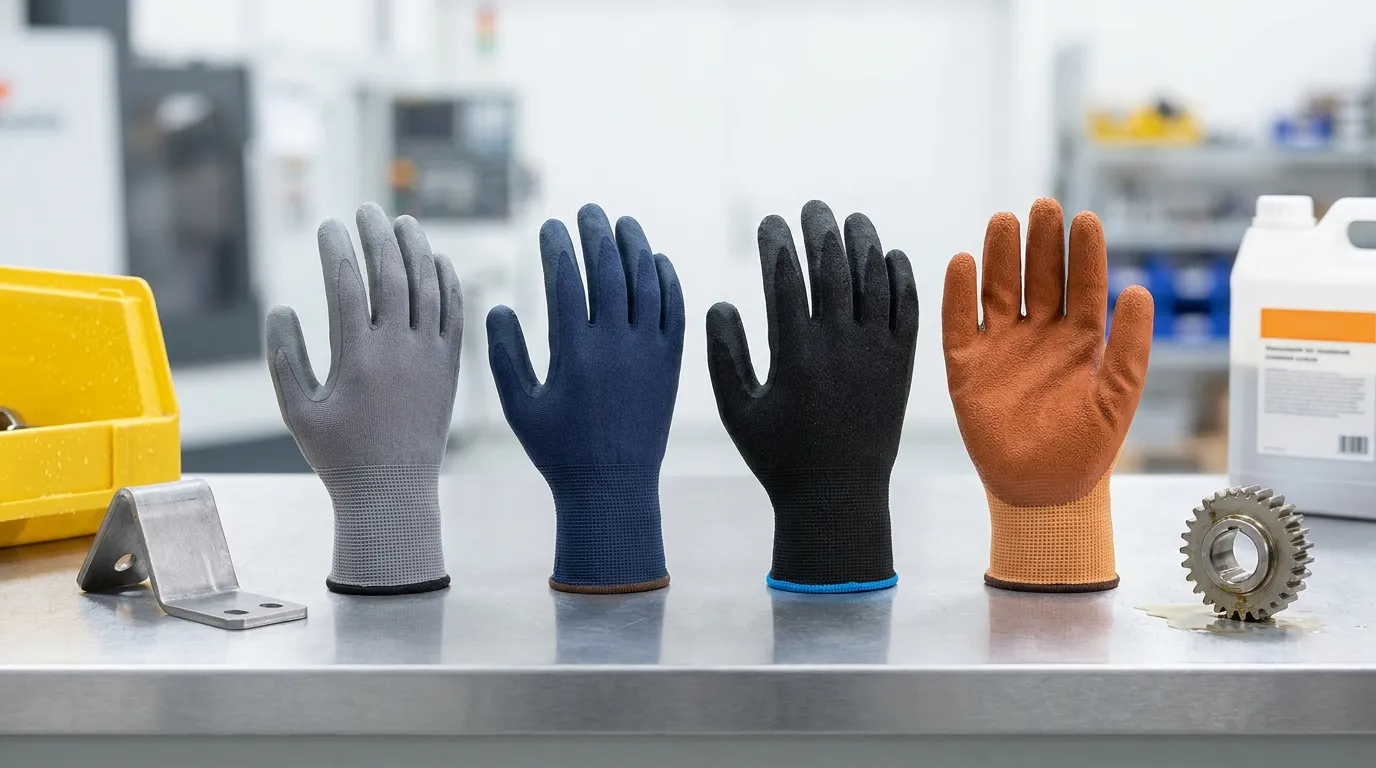
Sandy nitrile is a strong first sample when workers handle oily metal, wet parts, plastic totes, or mixed surfaces across the same shift. Its textured finish adds friction, so operators don’t need to squeeze as hard when parts feel slick.
Microfoam nitrile is the better first sample when the task needs more fingertip feel. It usually feels lighter than sandy nitrile and works well for light oil films, assembly, packing, and general handling. For dry, small-part work, PU can feel even more precise.
Coating is only one part of glove selection. Cut level, liner material, puncture risk, abrasion, and sizing belong in the broader cut-resistant glove buyer guide.
Which Coating Should You Choose for Dry, Wet, Oily, and Chemical Surfaces?
The best grip coating changes by surface: PU or microfoam nitrile for dry precision, sandy nitrile for oily work, crinkle latex or sandy nitrile for wet work, and chemical-resistant nitrile when chemicals are present.
Use the surface as the first filter. A glove that grips dry cartons may not grip oily parts. A glove that handles oil may feel too thick for small fasteners. OSHA’s glove selection guidance includes grip needs, dry or wet conditions, chemical contact, contact duration, fit, comfort, and abrasion risk, so surface testing should come before bulk buying.
Surface condition
Best coating choice
Best finish
Dexterity level
When not to use it
Dry precision work
PU or microfoam nitrile
Smooth PU or microfoam
High
Avoid PU if oil, grease, or liquid exposure is common
Wet handling
Crinkle latex or sandy nitrile
Crinkle or sandy
Medium
Avoid latex if allergy policy or oil contact is a concern
Oily handling
Sandy nitrile
Sandy textured
Medium
Avoid if the task needs very fine fingertip feel
Chemical contact
Chemical-resistant nitrile
Textured, full, or 3/4 coating
Low to medium
Do not choose by grip alone without checking compatibility
For oil-heavy stations, send readers to a deeper guide on oil handling gloves. The short rule is simple: if the part has oil, grease, or coolant on it, test sandy nitrile first. If the oil is light and workers need better hand feel, test microfoam nitrile next.
How Do Foam, Sandy, Smooth, and Crinkle Finishes Change Grip?
Finish matters as much as material. Smooth PU or flat nitrile can feel precise, foam nitrile helps with light oil films, sandy nitrile adds friction, and crinkle latex improves dry or wet grip when oils are not present.
Many buyers compare nitrile, PU, and latex as if the coating alone decides grip. That misses the finish. Two nitrile gloves can behave very differently if one has a smooth palm and the other has a sandy palm.
Finish type
Common coating
Best use
Grip feel
Dexterity tradeoff
Smooth
PU, flat nitrile
Dry assembly, labels, small fasteners
Clean and controlled
Best fingertip feel, weaker on slick surfaces
Foam or microfoam
Nitrile
Light oil, dry handling, packing
Balanced grip and breathability
Better feel than sandy, less bite on heavy oil
Sandy
Nitrile
Oily metal, wet parts, mixed handling
Strong textured grip
Less fine touch than PU or microfoam
Crinkle
Latex
Dry or wet handling without oil
Strong surface bite
Oil resistance and allergy concerns
PU is often the dry-precision choice because it feels thin and flexible. For a deeper product-level explanation, use the PU coating basics guide before choosing it for an assembly line.
Sandy nitrile is not always the best choice. It works when oil, wet parts, or slippery handling are common, but microfoam nitrile is often safer for long precision shifts where workers need fingertip control.
Can One Glove SKU Really Cover Mixed Shifts?
One SKU can work for mixed shifts when hazards are similar and chemical contact is limited. If oil is common, choose sandy nitrile; if precision dominates, choose microfoam nitrile; if chemicals vary, do not force one SKU.
A single SKU can reduce purchasing confusion, but only when the work is similar across stations. If one team handles dry cartons and another handles chemical containers, one glove may become a weak compromise.
If the shift looks like this
First sample to test
Backup sample
Reason
Dry parts, labels, small clips
Smooth PU
Microfoam nitrile
Best fingertip feel for precision work
Light oil plus assembly
Microfoam nitrile
Sandy nitrile
Better balance of grip, feel, and breathability
Oily metal parts all day
Sandy nitrile
Double-dipped nitrile
Stronger grip on slick surfaces
Wet cartons and plastic totes
Sandy nitrile
Crinkle latex
Better surface bite for wet handling
Chemical wipe-down or containers
Chemical-resistant nitrile
Task-specific glove
Chemical compatibility comes before grip
For teams choosing between light dry handling and mixed oil exposure, compare PU vs nitrile before locking the SKU.
Here’s a simple example. In an automotive cell, workers handle dry brackets in the morning and oily machined parts after lunch. If oil appears every day, sandy nitrile should be the first trial glove. If oil is only a light film and workers install small clips, microfoam nitrile deserves a side-by-side test.
A single SKU is useful for purchasing control, but it becomes unsafe when chemical exposure or cut hazard changes by station. In that case, two correct SKUs beat one compromised SKU.
What Should a Supervisor Test Before Switching Gloves?
Test gloves on the same surfaces your team touches every day. A catalog claim is useful, but it cannot replace a quick floor test with the actual part, oil, water, carton, or chemical container.
Start with three samples: smooth PU, microfoam nitrile, and sandy nitrile. Ask operators to use each glove for the same short task, then score grip, dexterity, sweat, fatigue, and visible wear. OSHA notes that glove fit and coating texture can affect grip and control, so the test should include both handling performance and comfort.
Benchtop Slip-Test Photo Set
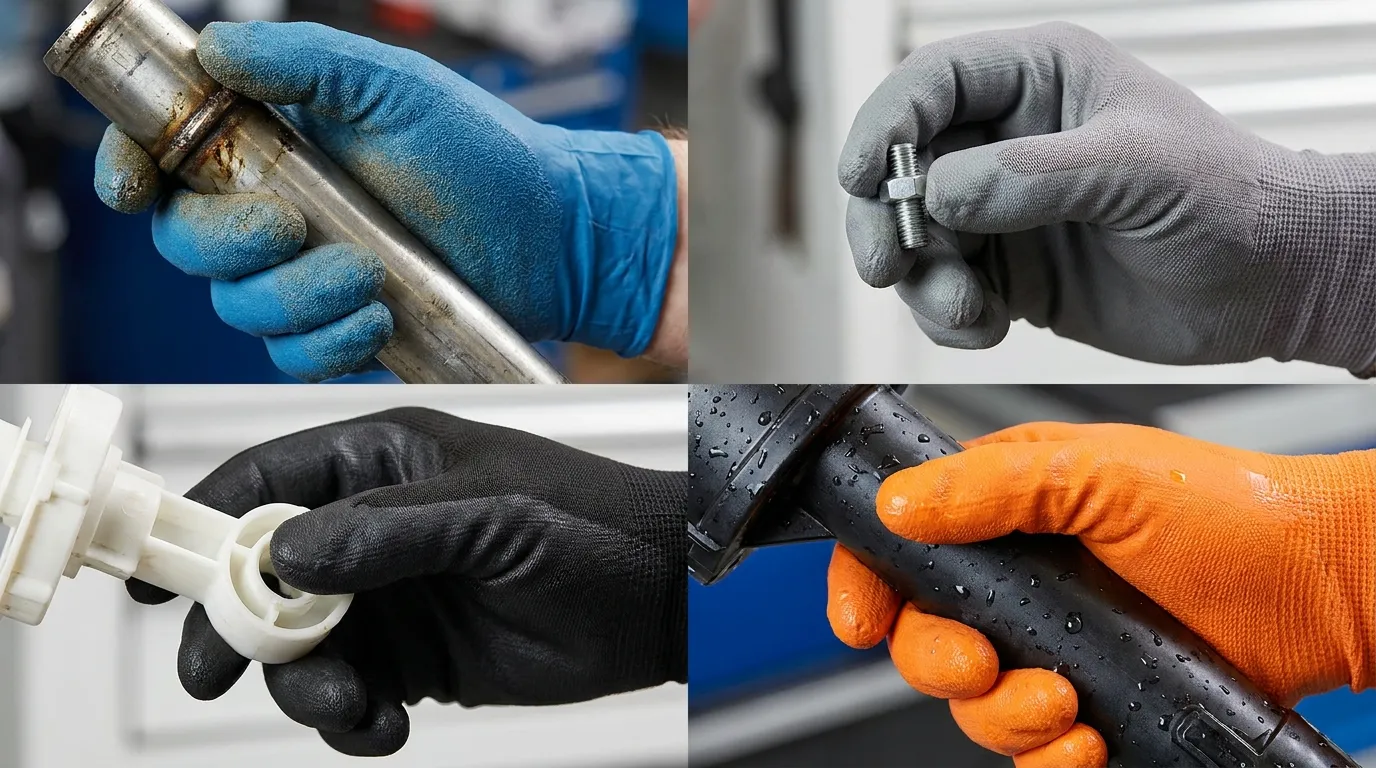
Set up a simple photo set before the trial. Use the same table, lighting, object, hand position, and camera angle for every glove. The goal is not a lab result. It’s a clear visual record your team can compare before ordering.
Photo
Test surface
Object
What to capture
What to score
Photo 1
Dry metal
Bracket or pipe
Normal grip angle
Dry grip and fingertip control
Photo 2
Wet plastic
Tote or bottle
Same hand position
Wet grip and slipping
Photo 3
Oily metal
Oiled part or tool
Same object weight
Oil grip and squeeze effort
Photo 4
Chemical container
Empty labeled container
Safe handling posture
Grip, coating feel, compatibility check
Use a 1 to 5 score for each category. For example, an electronics line may give PU a 5 for dexterity but a 2 for oily grip. Sandy nitrile may score 5 on oily metal but 3 on small screws. That makes the buying decision clearer than a general “best grip” label.
For chemical wipe-down work, do not test with unknown chemicals casually. Use safe containers, check the glove maker’s chemical chart, and confirm contact time before assigning a glove.
When Is the Grippiest Glove Not the Best Glove?
The grippiest glove is not always the safest choice. If the coating is too thick, poorly fitted, chemically incompatible, or uncomfortable, workers may lose dexterity, grip harder, or remove the glove during the task.
A glove can have strong grip and still be wrong for the job. Thick coatings can reduce finger control. Full coatings can trap heat. A glove that feels sticky on a dry test part may slow workers down when they handle small clips, labels, or screws for hours.
Use this check before choosing the “highest grip” sample:
Does the glove fit the operator without bunching at the fingertips?
Can workers pick up small parts without removing the glove?
Does the coating match the oil, water, or chemical on the surface?
Does the glove stay comfortable after real task time?
Does the station need cut protection beyond coating grip?
PU feels great in dry assembly work, but it should not be treated as the universal grip winner. It is a dry-precision choice, not the default for oily or chemical-contact work. For buyers comparing latex comfort against nitrile oil resistance, the latex vs nitrile guide is the better next read.
Chemical-resistant gloves need extra care. OSHA’s hand protection guidance says chemical glove effectiveness should be checked through manufacturer information or product literature, so grip should never be the only buying reason for chemical tasks.
Getting the Next Step Right
The best answer to which glove coating is best for grip comes from the surface, not the product name. Test sandy nitrile first when oil or wet handling is common. Test microfoam nitrile when workers need grip with better hand feel. Use PU for dry precision, and use chemical-resistant nitrile only after compatibility checks.
Before standardizing one SKU, run the photo set with real parts and real operators. If one glove wins grip but fails dexterity, comfort, or chemical fit, choose a second SKU for that station.
Frequently Asked Questions
Which glove coating is best for grip?
Sandy nitrile is usually the best grip-first choice for mixed wet and oily handling. For dry precision work, PU or microfoam nitrile may feel better because they keep more finger control.
What glove coating is best for oily parts?
Sandy nitrile is the safer oily-part choice when grip matters more than maximum fingertip feel. Foam or microfoam nitrile can work well for light oil films, especially when dexterity and breathability are important.
Are PU coated gloves good for grip?
PU coated gloves are good for dry grip and precise handling, especially small parts and assembly work. They are not the best default when wet, oily, or chemical contact is common.
Is nitrile or latex better for grip?
Latex can give strong dry and wet grip, but nitrile is usually better when oil, grease, abrasion, or chemical exposure matters. Latex also needs allergy consideration before standardizing it across a team.
Is foam nitrile or sandy nitrile better?
Sandy nitrile is better for stronger grip on slippery or oily parts, and foam nitrile is better when light oil control, flexibility, and breathability matter. The right choice depends on oil level and dexterity need.
Can one glove work for dry, wet, and oily tasks?
One glove can work if the hazards are moderate and similar across shifts. For a single SKU, sandy nitrile is the safer grip-first default, but chemical exposure or high cut risk may require a separate glove.
Do chemical-resistant gloves also give good grip?
Some chemical-resistant nitrile gloves can give useful grip, especially with textured or embossed finishes. Still, chemical compatibility must be checked against the actual chemical, contact type, and contact duration before buying.