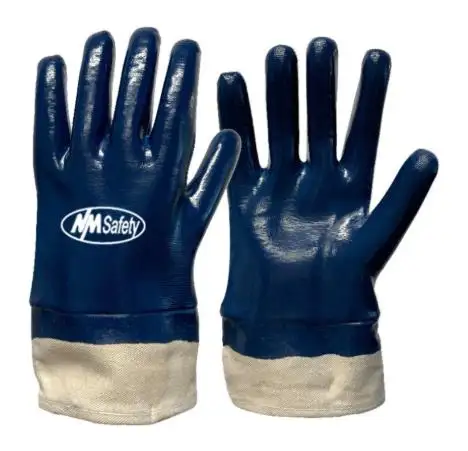
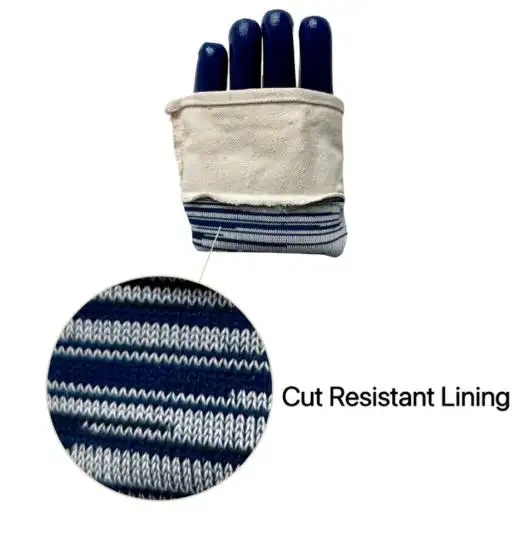
Cut Resistant ESD Gloves are ESD safe gloves that are specific to protect workers against two significant risks:
Electrostatic discharge (ESD) that may destroy delicate electronic parts.
Mechanical risks and sharp edges that may hurt hands when handling tasks.
These gloves are made with a combination of the PPE technology of the static-dissipative and cut-resistant fibers, such as UHMWPE, HPPE, or conductive carbon yarns. The result is a glove that ensures both electrostatic discharge protection and cut protection in one solution.
Simply put, they are applied where:
The safety of electronic assembly is important.
Precision handling gloves are needed.
The gloves used in statistical control should not allow the components to fail.
There is a need for sharp object handling gloves.
These find extensive applications as ESD work gloves in electronics, PCB, semiconductor, and industrial manufacturing industries.
Precision Work and Industrial Safety ESD Gloves
Cut Resistant ESD Gloves have evolved beyond mere protective equipment in contemporary industries where accuracy is coupled with hazard. They have become a critical component of electronics manufacturing, semiconductor handling, PCB assembly, and industrial safety settings. A dual-protection solution is required when workers are handling sharp components and sensitive electronic parts simultaneously.
This is where these high-tech gloves come in, with a combination of electrostatic discharge protection and cut-resistant safety performance to produce dependable hand protection in high-risk workplaces.
At NM Safety, we know the importance of maintaining a balance between performance, safety, and comfort. This is why our line of ESD protective gloves, anti-static gloves, and cut protection gloves are up to the actual industrial challenges.
Completely coated surface with nitrile to increase the durability.
Good grip performance in wet and oily conditions.
Reinforced cut resistance for mechanical safety
Intended to be used in industries and assembly.
Why are Cut Resistant ESD Gloves Important in the Contemporary Industry?
The current industries require more than mere protection. They need multi-purpose PPE that guarantees:
Electrostatic discharge protection
Cut and abrasion resistance.
Good dexterity to do fine work.
Industrial safety compliance.
This combination minimizes accidents at the workplace and enhances productivity in:
Benefits of Using Cut Resistant ESD Gloves
Shields against static damage of sensitive components.
Minimizes the risk of hand injuries from sharp objects.
Enhances handling and grip.
Meets ESD safety standards.
Improves efficiency in accurate work.
Suitable for multiple industries
How to Choose the Best Cut Resistant ESD Gloves?
To choose the appropriate pair, it is always important to consider:
Industry needs (electronics, semiconductor, industrial)
Level of cut resistance required.
ESD compliance standards
Comfort and flexibility
Grip performance coating.
The selection of the appropriate glove guarantees safety and efficiency in the long term. Cut Resistant ESD Gloves are not merely a protective item in the busy and fast-paced industrial world, but a cornerstone of safe and effective production. Since PCB assembly ESD gloves are used to safeguard human hands, and semiconductor handling gloves are used to safeguard delicate electronic parts, both solutions safeguard both human hands and delicate electronic parts simultaneously.
Conclusion
In electronics manufacturing, clean rooms or mechanical assembly lines, the correct cut resistant ESD gloves will provide safety, accuracy, and reliability in the long term.
Find long-lasting, industry-proven products that are used in electronics, semiconductor, and industrial applications. Go to NMSafety today and improve your workplace safety with the trusted protection that is performance-built.