Home > Uncategorized > Impact Gloves for Oil & Gas Workers and Drillers
Impact Gloves for Oil & Gas Workers and Drillers
05 May, 2026
By arafatshuvo509
Impact gloves for oil and gas should be chosen by task risk, not by appearance. Use Level 2 impact gloves for mixed maintenance and pipeline tasks where dexterity matters, and Level 3 for drilling floors, heavy pipe, chains, and repeated crush exposure. Add sandy nitrile or mud-grip palms for oily tools, plus cold-weather or hi-vis variants when the site conditions demand them.
Oil and gas crews work with pipe, valves, chains, hoses, fittings, tools, and steel surfaces that can injure hands fast. A glove that feels safe in a catalog may fail on a wet pipe rack or cold rig floor. The right choice starts with the worksite hazard, then moves into impact level, grip coating, liner, and field trial feedback.
What injuries should oil and gas impact gloves stop first?
Oil and gas impact gloves should first address pinch, crush, and back-of-hand strike hazards. The right glove combines certified dorsal impact protection, oil-grip coating, and enough cut or puncture resistance for the task.
Start with the injury pattern, not the glove name. In drilling and pipeline work, hands are often near moving pipe, couplings, valves, hoses, chains, tools, and hard steel edges. That creates three common risk zones: pinching between parts, crushing under weight, and back-strikes against equipment.
OSHA requires employers to choose hand protection based on the hazards of the task, work conditions, duration of use, and possible hazards involved. That matters here because an impact glove is only useful when it matches the actual job, not only a general “oilfield” label.
Heavy tools, flanges, dropped parts, pipe handling
Higher impact rating and stable palm grip
Back-strike
Hands hitting steel, equipment, or hard surfaces
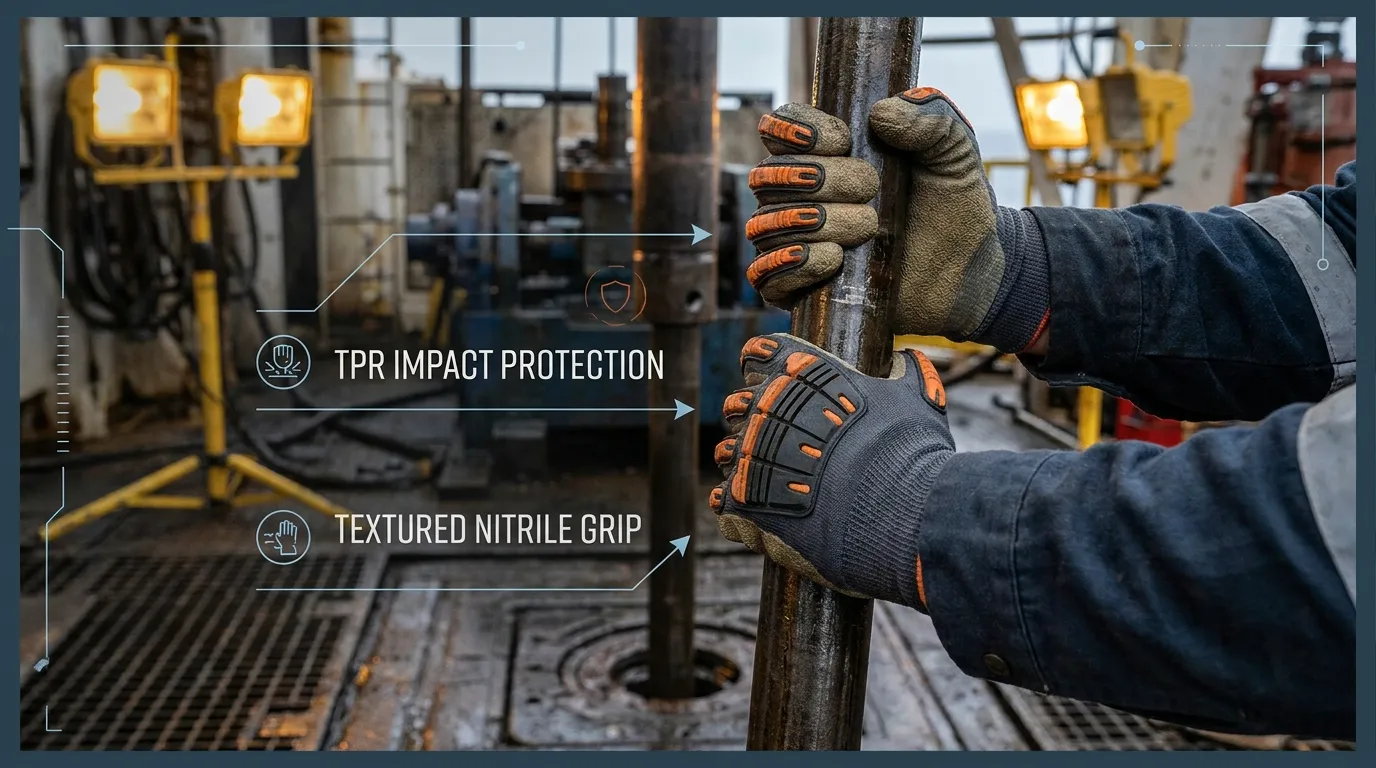
TPR or padded dorsal protection
Cut or puncture
Burrs, wire rope, gasket edges, sheet metal
Cut-resistant liner or puncture support
The International Safety Equipment Association lists offshore oil and gas among industries where impact hand injuries are a concern. BLS injury data also shows hands are a major body part involved in days-away workplace injury cases, including cuts, fractures, bruises, and crushing injuries.
Which jobs need impact Level 2 and which need Level 3?
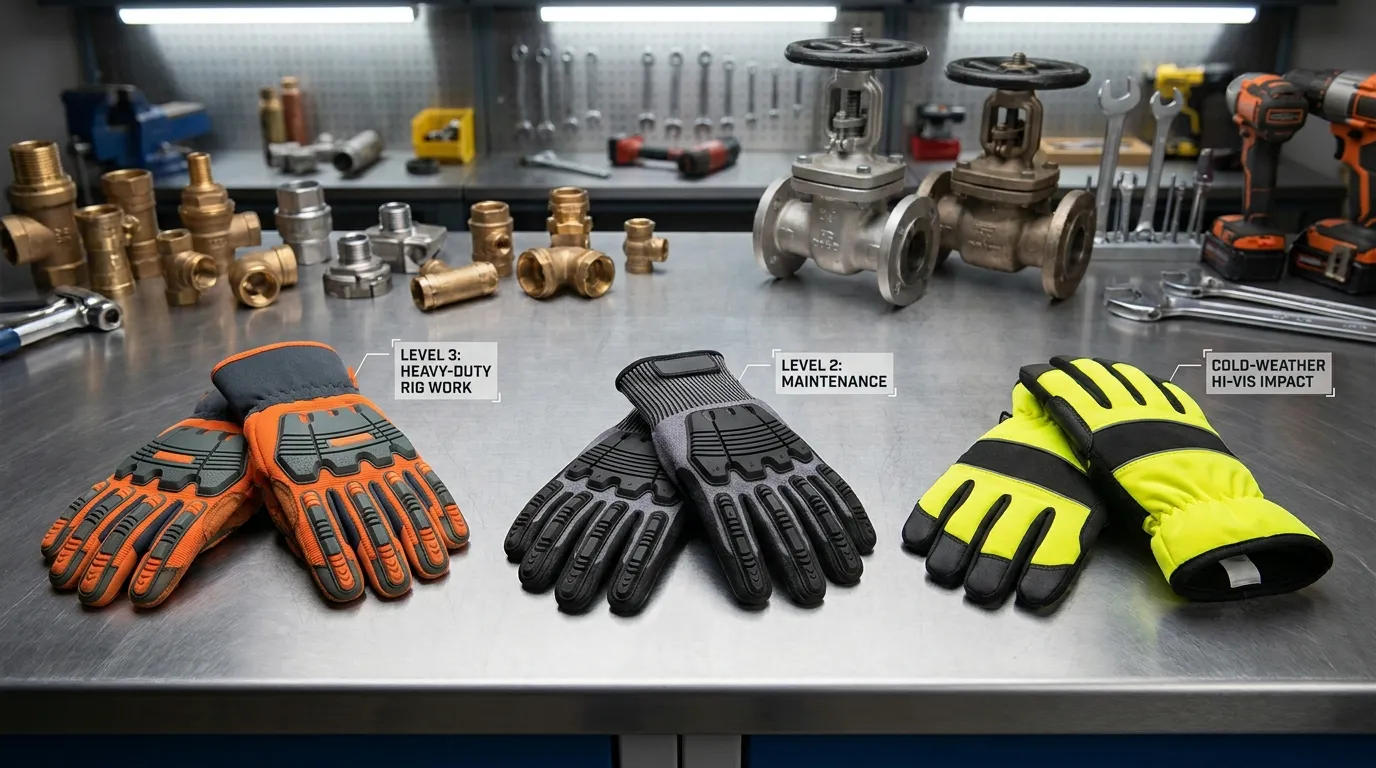
Choose Level 2 for mixed maintenance, pipeline inspection, and moderate impact tasks where dexterity matters. Choose Level 3 for rig floors, heavy pipe handling, chain work, and repeated crush or back-strike exposure.
ANSI/ISEA 138 classifies impact protection from Level 1 to Level 3. Level 3 is the highest impact classification, but it shouldn’t be treated as the automatic choice for every worker. A glove that is too bulky can reduce grip feel, finger control, and crew acceptance.
For a full rating breakdown, send readers to the dedicated ANSI impact levels guide. In this article, the practical question is simple: how much impact protection does the task really need?
Level 2 impact tasks
Level 2 can fit mixed work where impact risk is present but dexterity still matters. Pipeline inspection, NDT checks, general maintenance, valve work, light tool handling, and some service tasks may need a lighter impact glove with better finger movement.
A Level 2 glove can be safer than Level 3 when the worker needs probe control, touchscreen entry, small fastener handling, or long wear time. Protection only works if the crew keeps the glove on.
Level 3 impact tasks
Level 3 makes more sense when the worker faces repeated high-impact exposure. Rig floor pipe handling, chain work, tongs, heavy coupling, roughneck tasks, and repeated back-of-hand strikes need more protection across fingers, knuckles, and the back of hand.
Task
Main injury pattern
Suggested impact level
Notes
NDT inspection
Back-strike, light pinch
Level 2
Keep fingertip control and touchscreen function
Valve maintenance
Pinch, cut, tool impact
Level 2 or 3
Choose by tool weight and strike exposure
Pipeline coupling
Pinch, crush
Level 3
Add oil grip and cold option if needed
Rig floor pipe handling
Crush, back-strike
Level 3
Use full dorsal coverage
Chain and tong work
Crush, pinch, strike
Level 3
Check finger-side protection
General yard work
Abrasion, light impact
Level 2
Avoid over-bulky gloves
What palm coating works best around oil, mud, and wet pipe?
For oily pipe, greasy tools, and drilling residue, start with sandy nitrile or a purpose-built mud-grip palm. Use nitrile foam when dexterity matters more, and reserve latex crinkle mainly for wet outdoor cold work.
The palm coating decides whether the glove can hold the job. Oil and gas crews often handle pipe, hose, tools, fittings, and valves with drilling mud, grease, water, or hydrocarbon residue on the surface. A strong back-of-hand design will not help if the palm slips.
Sandy nitrile is usually a strong first choice for oily metal because the textured surface can improve grip on slick parts. Nitrile foam can feel lighter and more flexible, so it may suit inspection, maintenance, or tool work where fine movement matters. Use the site’s impact glove checklist when comparing coating, liner, cuff, and rating options.
Work condition
Better coating choice
Why it fits
Oily pipe or greasy tools
Sandy nitrile
Stronger grip on slick metal
Drilling mud and rough handling
Mud-grip palm or PVC dot grip
Higher friction under dirty conditions
Light oil plus dexterity need
Nitrile foam
Better feel and finger movement
Wet outdoor work
Latex crinkle or textured nitrile
Good wet grip, but check oil limits
Cold wet pipeline work
Thermal liner plus textured palm
Keeps grip usable in cold conditions
Sandy nitrile is not a universal coating. If a crew needs touchscreen use, small tool control, or long inspection shifts, a lighter palm may be the better field choice. Test grip with the actual pipe, tool, or valve surface before approving bulk orders.
How should cut, puncture, and impact protection work together?
Impact protection covers the back of the hand, fingers, and knuckles. Cut and puncture protection handle a different hazard: sharp edges, wire rope, sheet metal, gaskets, burrs, and rough metal parts.
This is where many glove specs become confusing. ANSI impact level and cut level are not the same rating. A glove can have strong back-of-hand protection but still be a poor match for sharp material handling if the liner is weak.
The broader cut-resistant glove guide should handle full cut-level selection. This article only needs the field rule: combine impact protection with the cut or puncture rating needed for the task.
Work exposure
Impact need
Cut or puncture need
Example glove direction
Pipe handling
High
Medium to high
Level 3 impact with cut-resistant liner
Valve repair
Medium
Medium
Level 2 or 3 with reinforced liner
Wire rope or sheet metal
Medium
High
Higher cut level plus impact zones
Gasket removal
Low to medium
Medium
Cut protection with enough grip
Inspection and reporting
Low to medium
Low to medium
Dexterity-focused impact glove
Material choice matters too. HPPE can feel lighter and cooler, while Kevlar is often chosen where heat or higher toughness is part of the worksite decision. For a deeper material comparison, use the HPPE vs Kevlar guide instead of overloading this article.
When should crews use cold-weather or hi-vis impact gloves?
Use cold-weather impact gloves when outdoor work reduces grip, finger movement, or tool control. Use hi-vis impact gloves when crews work near moving equipment, night shifts, low light, or hand-signal communication zones.
Cold changes glove performance. A glove that works well in warm shop conditions may become stiff outdoors, especially when the palm is wet or the worker is handling cold pipe. For winter pipeline work, look for insulation that protects the hand without making the palm too bulky.
A pipeline coupling crew in cold weather needs more than impact pads. They need grip that works on wet metal, a thermal liner that does not block finger movement, and a cuff that stays secure when reaching or lifting.
Use a cold-weather variant when:
Workers lose grip because fingers are cold
Gloves stay wet during outdoor work
Pipe, valves, or tools are cold to the touch
Crews remove gloves because standard liners feel too thin
The task needs both impact protection and thermal comfort
Hi-vis impact gloves are also a practical choice around equipment. They can help supervisors, signalers, and nearby workers see hand position during night shifts, pipeline spreads, loading zones, or rig tasks with moving parts.
Hi-vis gloves are not only a color preference. On low-light worksites, visible hands can support communication and reduce confusion around machines, vehicles, and suspended parts.
How can an HSE manager write the glove spec?
A usable oil and gas glove spec should state the task, impact level, cut level, palm coating, liner, cuff, cold or hi-vis needs, size range, and required test documentation. Avoid approving gloves from photos alone.
A clear spec helps procurement buy the right glove and helps supervisors enforce the same standard across crews. The spec should name the work task first, then the rating and construction details. This follows the OSHA approach of matching hand protection to the hazard, not the product category.
Do not write one loose requirement such as “impact gloves for oilfield work.” That leaves too much room for the wrong palm, weak liner, poor cuff, or low-impact coverage.
Sample spec line:
Oil and gas impact glove for rig and pipeline handling, ANSI/ISEA 138 Level 2 or Level 3 by task, sandy nitrile or mud-grip palm, cut-resistant liner, reinforced thumb crotch, secure cuff, optional thermal liner, optional hi-vis shell, size range S to 2XL, test documentation required.
HSE approval checklist
Define the task group: rig floor, pipeline, maintenance, inspection, or yard work
Set impact level: Level 2 for moderate impact, Level 3 for repeated high impact
Add cut or puncture requirement based on sharp-edge exposure
Choose coating based on oil, mud, wet metal, or dry tool use
Confirm cold-weather or hi-vis needs before ordering
Require visible rating marks and supplier test documents
Run a field trial before bulk approval
Record crew feedback on grip, fit, dexterity, and wear
A two-week crew trial can be simple. Give two glove SKUs to 20 workers across rig floor, valve maintenance, and inspection teams. Score grip, dexterity, comfort, TPR damage, coating wear, and removal-from-service rate before final approval.
What should crews inspect before and after each shift?
Crews should inspect impact gloves before use and remove them when the grip, liner, or impact zones no longer protect the hand. A damaged glove can give workers false confidence.
Back-of-hand protection should stay attached and flexible. If TPR is cracked, lifting, or missing, the glove should be removed from service. The palm also matters. If sandy nitrile or mud grip has worn smooth, the worker may lose control of oily tools or pipe.
Use these glove care checks as a field habit, especially when gloves are reused across dirty or oily shifts.
Shift inspection and removal checklist
Check TPR guards for cracks, lifting, or missing sections
Check palm coating for smooth wear, peeling, or hardening
Check the liner for cuts through the shell
Check the thumb crotch for holes or thinning
Check for oil saturation, strong odor, stiffness, or grip loss
Check cuff closure and wrist fit
Check sizing, especially if the glove rotates during grip
Remove the glove if it no longer holds tools safely
This inspection should be quick enough for daily use. A glove that fails grip or fit should not stay in service only because the back-of-hand pads still look intact.
What should buyers ask suppliers before approval?
Before approving bulk oil and gas impact gloves, ask for test reports, rating marks, coating options, sample sizes, field-trial support, lead time, and batch consistency. The best spec is one crews can wear safely for the full task.
Supplier questions should focus on proof, consistency, and field fit. A good oil and gas glove supplier should explain rating marks, coating choices, liner materials, sizing, and replacement consistency without forcing the buyer to guess.
Ask for sample runs before committing to a full order. One glove may look right in photos but fail when workers handle oily pipe, cold valves, or touchscreen reports. Use a short buying checklist to compare more than price.
Buyer approval questions
What ANSI/ISEA 138 or EN 388 test documents are available?
Where are the impact zones placed on the fingers, knuckles, and back of hand?
Is Level 2 or Level 3 available for the same glove family?
Which palm coating is best for oil, mud, and wet pipe?
Is there a cold-weather version with similar grip?
Is a hi-vis version available for low-light crews?
What size range is available for field trials?
Can the supplier maintain the same liner, coating, and rating across repeat orders?
What are MOQ, lead time, and batch traceability details?
For a rig floor pipe-handling crew, the approval may land on Level 3 impact with sandy nitrile and full dorsal coverage. For an NDT crew, a lighter Level 2 glove with better fingertip control may be the better choice.
What to Do Next
The right impact gloves for oil and gas workers come from task matching, not a single highest-rating rule. Start by listing the crew’s main hand hazards: pinch, crush, back-strike, cut risk, oil exposure, cold, and visibility. Then choose Level 2 or Level 3 impact protection with the coating and liner that fit the job.
Before bulk ordering, test samples on the actual worksite. Watch how crews grip pipe, use tools, handle valves, and inspect equipment. The glove that passes those real tasks is the safer buying decision.
Frequently Asked Questions
What are impact gloves?
Impact gloves are PPE designed to reduce injuries from blunt force, pinching, crushing, and back-of-hand strikes. They usually use TPR, padding, or molded guards over the knuckles, fingers, and back of hand.
How do impact gloves work?
Impact gloves work by absorbing and spreading force before it reaches the hand. TPR guards, foam padding, and reinforced zones help reduce transmitted impact, while the palm coating keeps the worker’s grip stable.
What are the standards of impact-resistant gloves?
The main U.S. impact reference is ANSI/ISEA 138, which classifies impact protection from Level 1 to Level 3. Level 3 is the highest impact classification, but the right level still depends on the task.
Which coating is best for oily environments in oil and gas?
Sandy nitrile or purpose-built mud-grip palms are usually the first choices for oily pipe, greasy tools, and drilling residue. Nitrile foam can work for lighter oil exposure when dexterity is more important.
What EN 388 rating do I need for oil and gas work gloves?
The exact EN 388 rating depends on cut, abrasion, puncture, and impact exposure. For oil and gas tasks, buyers should check both mechanical protection and impact marking, then match the rating to the actual task.
Can oil and gas work gloves be used with touchscreen devices?
Some oil and gas gloves can support touchscreen use, but not all coated impact gloves do. Thick sandy nitrile, waterproof layers, or heavy TPR can reduce fingertip sensitivity, so touchscreen use should be specified before ordering.